Humpback whales, known as acrobatic giants of the sea due to their jumps, splashes, and tail displays, require protection for their only known breeding site in the Philippines—the Babuyan Sea Corridor in the northern part of the country.
According to data from the non-profit cetacean research organization Balyena.org, a female humpback whale named Mary F. Hill, first identified in 2003, has returned to this corridor for 11 breeding seasons as of April. Researchers recorded her with a calf in 2016 and again in 2023, reported Joe Marie Asesbes, founder and lead researcher of the organization.
Like many other individuals in the Western North Pacific population, she migrates seasonally between feeding grounds in colder northern waters, such as Russia in summer, and warmer breeding areas in Japan and the northern waters of the Philippines in autumn.
The Secretariat of the Marine Sanctuary Network (MSN) noted that since humpback whales depend on multiple habitats along migration routes, protecting only breeding sites provides only partial security. Nevertheless, this allows for the protection of vulnerable calves and reduces disturbance to the whales during breeding and feeding.
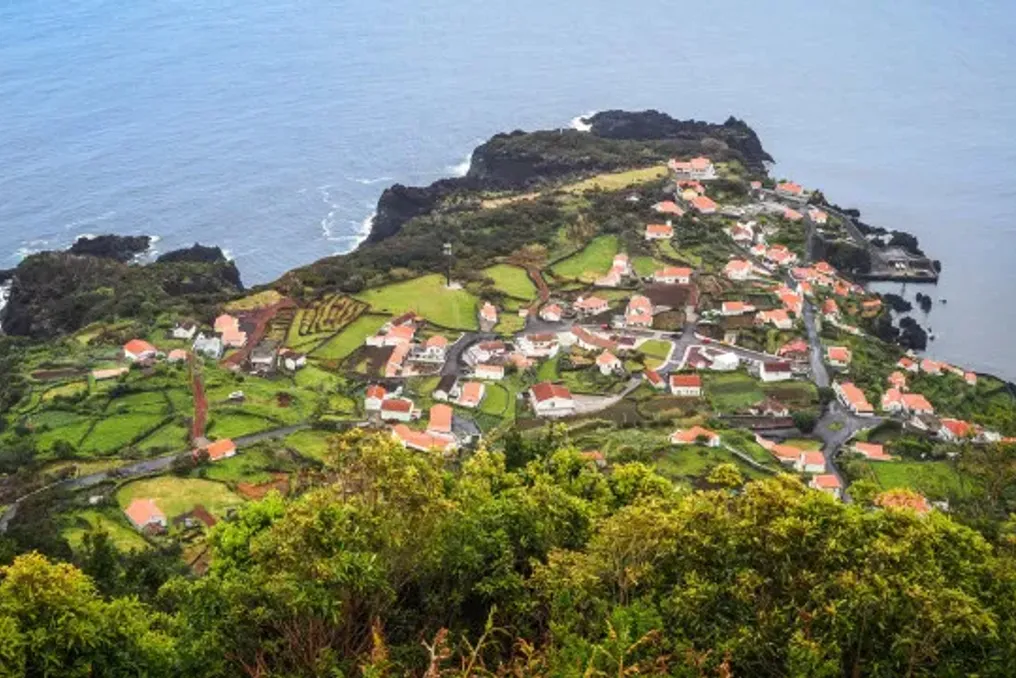
However, in the Babuyan archipelago, located tens of kilometers from the largest Philippine island, Luzon, there are only two Marine Protected Areas (MPAs). These MPAs are situated along the southern coast of Calayan, one of the main islands of the archipelago, and cover only 1,677 hectares out of nearly 1.7 million hectares of the Babuyan Sea Corridor. Although there are other MPAs within the corridor, the Babuyan Islands are a key area for studying and monitoring the country's humpback whale population, and their presence near the islands during the breeding season is well documented.
Nevertheless, Asesbes pointed out that the lack of data collection inside the MPAs makes it difficult to determine whether these protected areas overlap with the sites that humpback whales typically use. She emphasized that whales 'require large territories even during breeding,' adding that creating marine protected areas for their protection is necessary, but they must be in the right place, have the right size, and be effectively managed.
The International Union for Conservation of Nature (IUCN) classifies humpback whales as least concerning globally. However, individuals visiting the waters near the Babuyan Islands belong to the Distinct Population Segment of the Western North Pacific, which is classified as endangered under US legislation and as vulnerable in the national list of threatened species of the Philippines. Asesbes noted that they face major threats in their region, and the population estimate in 2016 was around 1,000 whales.
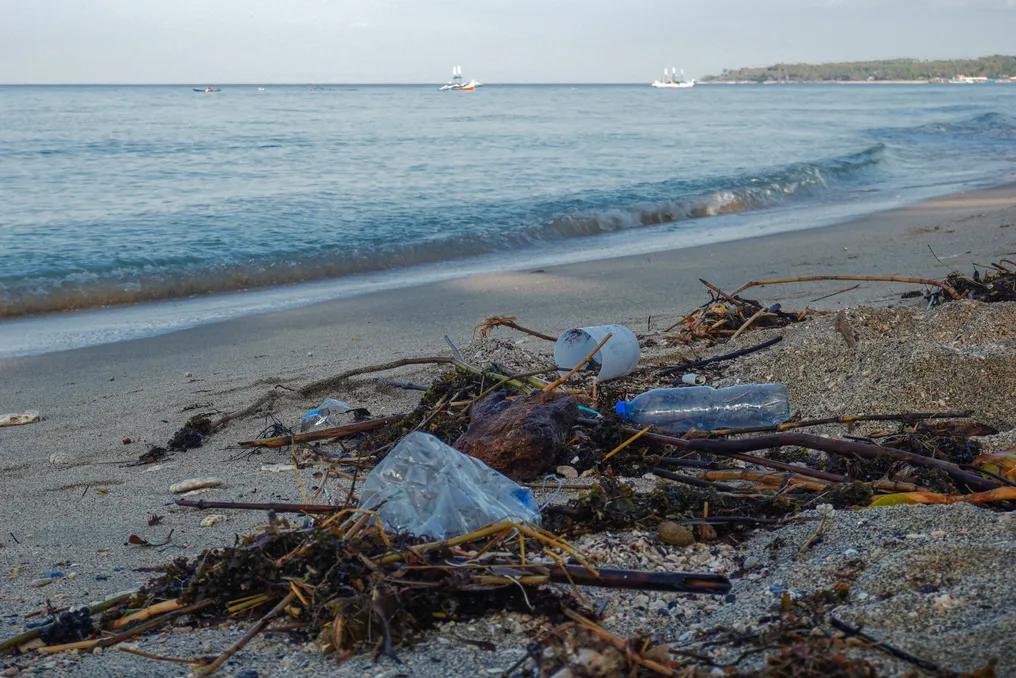
Asesbes, who has been working on cetacean conservation in the Babuyan Sea Corridor for over two decades, stated that threats to marine mammals in the area have changed over time. Until the 2010s, these included blast fishing and intense vessel traffic. Blast fishing has ceased, but increasing vessel traffic remains a problem. Furthermore, marine debris, including discarded fishing gear known as 'ghost gear,' has become a new threat, posing risks of ingestion and entanglement, according to Asesbes.
Climate change is another threat. A 2022 study suggests that rising sea surface temperatures may threaten humpback whales, which primarily breed in waters with temperatures of 21–28°C and tend to return to the same breeding grounds. The repeated return of Mary F. Hill demonstrates this pattern.
Ocean warming can also trigger starvation among whales, according to Asesbes. A 2025 study on Southeast Pacific humpback whales notes that they partially rely on ecological cues and memory of oceanic conditions at feeding sites to synchronize their migration with seasonal peaks in prey availability.
However, climate change 'is changing ocean temperatures faster than whales can adapt, causing a mismatch between the timing of whale arrival at a site and the availability of food such as krill and small fish,' she explained.
Without sufficient food, female humpback whales struggle to maintain a healthy pregnancy. This leads to reproductive failure or affects their health and, consequently, their ability to feed their calves, noted Asesbes.
The Babuyan Sea Corridor was recognized by the International Union for Conservation of Nature (IUCN) as an Important Marine Mammal Area (IMMA) by the IUCN Working Group on Marine Mammal Conservation. An IMMA is a distinct marine habitat considered important for one or more species and defined by scientists as having conservation potential. However, unlike government-defined MPAs, IMMAs do not provide legal protection.
Erich Hoit, co-chair of the Working Group, stated that climate change poses serious challenges for marine mammal conservation. Since ocean warming alters marine ecosystems, IMMAs will need to be reviewed and re-evaluated in each region approximately every 10–15 years.
He told Dialogue Earth: 'Breeding grounds are the primary concern. Without these habitats and some protection where they are located, humpback whales will not be able to continue their recovery from a state of severe population decline.'
The two MPAs in the Babuyan Islands, covering 1,677 hectares, were established by a municipal ordinance in 2011 to assist in managing coastal and fishery resources, according to information provided by the Calayan Municipal Office of Environment and Natural Resources, which oversees most of the Babuyan archipelago islands.
Asesbes commented: 'Comparing these figures to the total area of the BMC (Babuyan Sea Corridor) of nearly 1.7 million hectares gives an idea of how little is actually protected.' She added that the MPAs are not fully controlled or implemented, and they do not solve the problems facing the area.
Hoit said that the IMMA program was partly created to address this gap in marine mammal conservation. His long-term research led him to realize that 'existing MPAs for whales and other marine mammals were too small, limited to coastlines and islands, and did not reflect what the combination of available data and expert assessment showed as the most critical areas for protection.'
Wilbert Gumarad, an employee of the Calayan Municipal Office of Environment and Natural Resources, acknowledged the difficulties in managing MPAs. He told Dialogue Earth: 'MPAs helped regulate fishing and became fish spawning grounds. However, they were not properly established. There is no proper demarcation; there are no buoys. You cannot see the actual boundaries.'
Fisherman Roel Wurme, 50, said that those using non-motorized boats, like him, usually fish close to shore and avoid protected areas.
Gumarad also highlighted financial difficulties. Funds are needed to mark boundaries, hire specialized patrols, and raise awareness about the benefits of protected areas.
The application of measures is further complicated by the location of designated fishing protection zones, or no-take zones, reported Gumarad. These fish spawning zones within the MPAs were designated by the municipal government and national environmental and fisheries agencies. They are located along common boat routes and in front of community unloading areas, making them susceptible to violations, he said.
The MSN Secretariat, which collaborates with Philippine organizations to strengthen MPA management, noted that as migratory species, whales depend on 'connectivity'—or unimpeded movement between breeding, foraging, resting, and feeding sites. 'If whales can move freely and safely between these habitats, their population resilience and recovery are ensured.'
It added that more protected areas could be established in the Babuyan Sea Corridor and managed as a connected network to maximize ecological benefits. A 2023 study showed that conservation and fisheries outcomes improve with increased protection and connectivity. Networks of connected MPAs can provide increases in fish stocks and catches comparable to one large MPA, provided both are fully protected. In connected networks, positive conservation and fisheries results appear between protected areas after 10 years of full and strong protection.
Such MPA connectivity can benefit fishing communities, such as the municipality of Calayan, where over 2,600 fishermen are registered, according to data obtained by Dialogue Earth from the Municipal Agriculture Office. Data showed that Calayan produced over 700 tons of fish in 2025—enough to feed the entire population for more than a year, based on the average national annual fish consumption of 34 kilograms per person.
Asesbes admitted that establishing or expanding MPAs to a sufficiently large size to protect humpback whales is 'extremely difficult.' Furthermore, 'since the population of humpback whales visiting the BMC is highly migratory, a single MPA cannot fully cover their range.'
She added that the ideal would be to designate the entire Babuyan Sea Corridor as an MPA. But a more realistic approach is to start with key areas, such as shallow bays for foraging. She also mentioned that Balyena.org is discussing with local stakeholders the possibility of creating an MPA around Camiguin Island, another large island in the Babuyan archipelago, where humpback whales were observed during the breeding season.
There are also efforts to expand protection at the community level. According to Gumarad, several barangays—small districts that constitute the most local level of government—in Calayan and on Camiguin Island have declared their own reserves. While this indicates growing interest in protecting marine resources, these areas have not yet received accreditation because their geographical zones and designated activity areas still require proper identification and assessment by national authorities, he said.
Asesbes expressed hope: 'We hope that in the coming years we can focus on these communities willing to create MPAs on their territories and guide them through the entire process. Start small... and eventually develop a larger, humpback whale-focused zone.'
The Mayor of Calayan Municipality, Joseph Llopis, emphasized the role of local communities in MPA management. He noted that while technical guidance will come from the national government, 'operation and protection... must be the responsibility of the community.'
However, creating more MPAs is only part of the solution. The MSN Secretariat called for a regional and cross-border approach that ensures effective management and connectivity of protected areas, protecting not only breeding, foraging, resting, and feeding sites, but also the routes whales use to move between them.
Hoit stated that governments are only beginning to use IMMA information to enhance marine mammal conservation. He urged communities to use it as a basis for advocating for stronger conservation measures.
Asesbes concluded: 'When you protect the habitat [of whales] in any form, such as through marine protected areas, you protect everything else within it.'