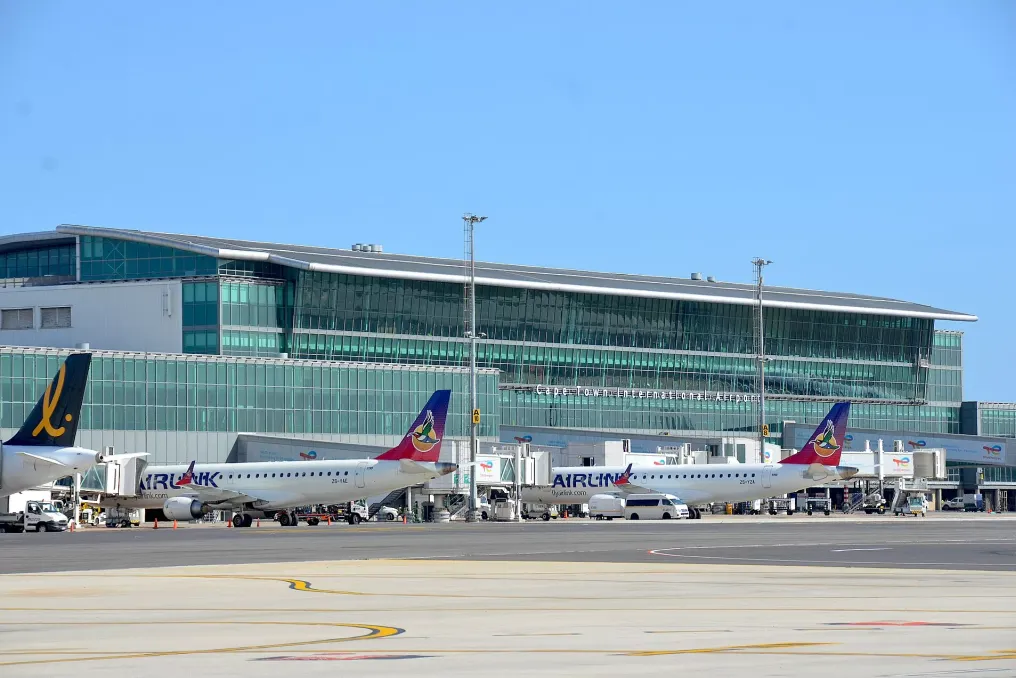
Due to the increasing passenger flow in Cape Town, Airports Company South Africa (ACSA) is developing plans to increase the airport's capacity. Over 10 billion rand has been allocated for the modernization of Cape Town International Airport, which includes the creation of a new runway and the expansion of both domestic and international terminals to reduce congestion during peak seasons.
These investments are part of a broader ACSA infrastructure project program valued at 21.7 billion rand, covering the company's entire airport network. The planned work aims to increase the airport's throughput, improve air traffic movement, and resolve infrastructure issues during peak periods.
This expansion occurs against the backdrop of advancing plans to create a second international airport in the Western Cape. The proposed Cape Winelands Airport, located near Durbanville, is developing as an additional aviation hub for the region, which will have its own infrastructure for passengers, cargo, and commercial activities.
The most significant part of the Cape Town International Airport program is the new main runway, estimated to cost 6.39 billion rand. According to Daily Investor, ACSA plans to appoint a contractor in December 2026. The proposed runway will be 3,500 meters long and 60 meters wide, with its trajectory shifted by 11.5 degrees east.
This change in direction is intended to enhance air traffic efficiency and create additional space within the airport grounds for future terminal development. The project also includes high-speed taxiways and a partial parallel taxiway, as these elements are designed to reduce the time an aircraft spends on the runway, helping to improve turnaround time and flight movement during peak hours. The new runway will comply with Code F requirements, allowing it to accommodate larger, next-generation aircraft.
Changes are also expected to affect domestic passengers: plans include the construction of both an arrivals area and a departures area. The new domestic arrivals terminal is estimated at 2.39 billion rand, and the departure terminal expansion is budgeted at 500 million rand. Construction is slated to begin in April 2027, pending regulatory approvals and completion of procurement procedures. These works aim to increase passenger processing capacity and improve internal terminal movement, including additional internal contact gates, more jet bridges, and expanded apron areas for aircraft parking.
The international terminal is also included in the program, with phased improvements valued at 863 million rand. Planned works include additional aircraft parking spots, modernization of immigration facilities, improved bus gates, and expansion of retail and lounge areas. Other improvements expected include increased security screening capacity, enhanced baggage claim facilities, updated restrooms, and the addition of family and prayer areas.
ACSA states that the projects will be implemented in phases to minimize inconvenience for passengers and airlines during construction. According to ACSA's 2025/2026 annual report, Cape Town International Airport serves 27.6% of the total passenger traffic across the ACSA airport network. The airport has faced growing demand, particularly noticeable in terminals during peak periods and in flight slot availability. Growth in international tourism, along with the launch of new routes and increased airline capacity, has contributed to the rise in passenger numbers.
The Cape Town Air Access partnership, which brings together tourism, trade, and government organizations, has also worked on attracting new international routes and encouraging airlines to expand existing services. This growth opens up economic opportunities for the Western Cape but simultaneously creates additional strain on infrastructure, as limited flight slots and terminal overcrowding can restrict the airport's ability to expand further. Increased capacity can support tourism, business travel, and trade, enabling airlines to launch additional routes.
The runway and terminal projects are not the only developments planned for the airport grounds. ACSA has also begun expanding cargo capacity at Cape Town International Airport, awarding the first three sections of warehouse space for cargo through a public tender. A hotel complex on the airport premises has also been approved and is in the design, construction, and operation phase. The long-term vision includes the development of an aerotropolis, integrating transport infrastructure with commercial and residential facilities in the airport area.
While Cape Town International Airport prepares for expansion, the private Cape Winelands Airport is developing on the former Phisantekraal airfield, approximately 13 km northeast of Durbanville. This facility currently operates as a general aviation site, including flight training. Its owner and operator is RSA. Aero, which plans to transform it into an international commercial airport through a multi-billion rand project previously estimated at around 10 billion rand. The proposed development includes a new 3,500m runway, a passenger terminal, cargo facilities, aircraft hangars, and modernized fuel infrastructure. Plans also include the placement of hotels, a helipad, warehouses, and logistics facilities. Developers intend to make this airport a center for tourism and business travel, supporting commercial activity in the northern part of the Western Cape.
The director of Cape Winelands Airport, Mark Wilkinson, previously stated that the second airport could help alleviate congestion at Cape Town International Airport and reduce carbon emissions. However, this project is at a different stage than the confirmed ACSA infrastructure program. Planning and preparation work includes airport design, engineering works, environmental processes, road connectivity, and commercial development. The first phase of operation is planned for 2028, although final timelines and the scale of development will depend on the progress of necessary processes.