Blinkit app's potential to access data on phone apps, battery, and Wi-Fi
Read more
Aaj Tak
www.aajtak.in

Blinkit app's potential to access data on phone apps, battery, and Wi-Fi

When using the Blinkit application, users order necessary goods, such as milk or bread, and receive delivery within minutes. However, a question has arisen about what information the app collects about the user's smartphone beyond the ordering process.

A new discussion has emerged regarding what data applications can track: the list of installed programs, the connected Wi-Fi network, the battery charge level, and the font size used on the screen. Content creator Anika Beri stated that she checked the code of the Blinkit Android application and found that such data is being collected.

According to Anika, the application checks information about other programs on the phone, screen settings, Wi-Fi network connections, and battery charge levels. She suggested that based on these signals, conclusions could be drawn about the user's age, household composition, and the urgency of their orders, which seems quite alarming.

This incident attracted attention, and the Blinkit Android team had to respond on social media. The company assured that the purpose of collecting this information is not for marketing or exploiting user needs. Instead, the data is used to speed up the application's operation, integrate with other services, and simplify usage for different categories of people.

Anika Beri demonstrated in her video that she performed decompilation of the Blinkit Android application. Decompilation, or reverse engineering, is an attempt to understand the internal structure and technical mechanisms of a finished application's code. She claims that the Blinkit application is capable of checking information about approximately 21 other applications on the phone, including programs such as Instagram, Zomato, WhatsApp, and Slack.

According to her claims, knowing which applications are installed allows one to infer the user's interests, occupation, and other activities. For example, the presence of certain work applications may indicate a person's profession or hobbies.

The most intriguing aspect is the connection to the screen. Anika noted that the Blinkit application analyzes accessibility settings such as font size, screen scaling, and screen reader usage. She explained that people who use large fonts may have difficulty reading small text, while screen reader users listen to text aloud.

In her opinion, based on these settings, assumptions can be made about a person's age and purchasing behavior. She also added that customers who prefer large fonts might more often choose standard options.

However, despite these statements, there is no evidence presented to confirm these claims. Using a large font does not automatically mean the user is older or that they are not comparing prices.

Another important point of contention is the statement regarding Wi-Fi. Anika asserted that the Blinkit application can store information by linking the Wi-Fi network name (SSID) to the user's location. If a person orders through Blinkit while on a home Wi-Fi network, and then another family member places an order from the same Wi-Fi, the application might assume that both accounts are linked to the same home by using network and geolocation data.

Anika insisted that such information could be used to understand purchasing habits and identify people living in the same house. Nevertheless, Blinkit refuted these accusations. The company explained that checking the Wi-Fi name is intended for quick location determination. This allows the application to launch faster by using previously saved data instead of waiting for geolocation via GPS.

The company emphasized that Wi-Fi data is not used for identifying families or for marketing purposes.

The most striking element of the entire dispute is the connection to the battery. Anika stated that the Blinkit application tracks information about the phone's battery and central processing unit (CPU). She raised the question of whether the application can use the fact of low battery charge to stimulate impulse purchases. There is a suggestion that if a person only has 5 percent battery left and urgently needs an item, the application might take advantage of this situation.
Similar stories

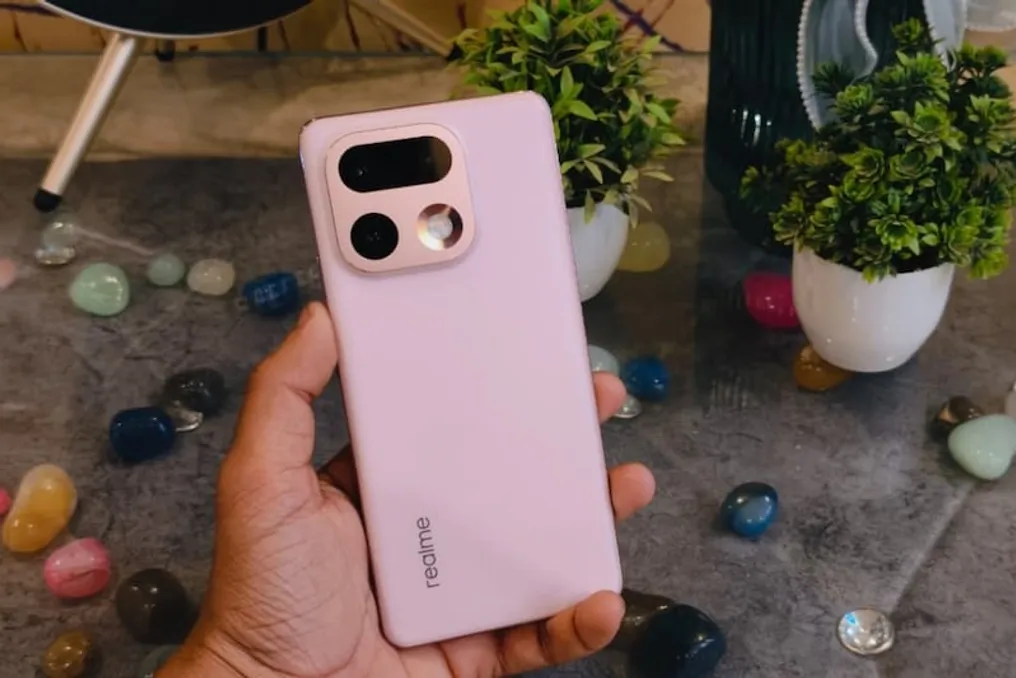
Realme is preparing the Realme 17 Pro smartphone with a 10,000 mAh battery; first photo leaks appear
Read more
www.aajtak.in

Realme is preparing the Realme 17 Pro smartphone with a 10,000 mAh battery; first photo leaks appear

Realme is preparing to present a big surprise for users concerned about fast battery drain. The first images of the next model in the mid-range lineup—the Realme 17 Pro—have appeared online. According to reports, the main focus of this model is on a 10,000 mAh battery.

According to the leaks, the photos show a matte black design for the device. The camera module has also undergone changes compared to previous models. In addition to the design and camera, there is discussion about the presence of an AMOLED display with a 144Hz refresh rate, a MediaTek Dimensity processor, and 65W fast charging.

The supposed live photos of the Realme 17 Pro were published by tipster Abhishek Yadav on the social network X. These pictures show the back view of the phone with a matte finish, whose color resembles dark gray or matte black. The side edges of the device are made in a flat style, which gives it a modern and clean look.

Modifications are also expected in the camera area on the back panel. There is a square camera block provided, but the position and appearance of the lenses have changed. The module includes two long cutouts and an LED flash beneath them. The design of this block is reminiscent of the latest OnePlus smartphones.

On the front panel, a central cutout (punch hole) is installed for the selfie camera, and thin bezels are visible around the screen. It is important to note that these images are preliminary leaks, and the final design may differ by the time of release.

The main feature of the Realme 17 Pro may be the stated 10,000 mAh battery. Currently, most smartphones are equipped with batteries ranging from 5,000 mAh to 7,000 mAh, so such capacity could be very attractive to those who frequently need to recharge.

For comparison, the Realme 16 Pro model had a 7,000 mAh battery, which means a potential increase in the new device's capacity of approximately 43 percent. Nevertheless, the battery life will depend on many factors, including screen brightness, internet usage, gaming, and background applications. Despite this, 10,000 mAh could be a significant improvement for active users.

According to the leaks, the Realme 17 Pro may support 65W fast charging. It should be noted, however, that the previous model, the Realme 16 Pro, offered 80W charging. This may indicate a possible reduction in charging speed despite the increase in battery capacity. The exact time required to fully charge 10,000 mAh using 65W is not yet known.

In addition to the battery, the Realme 17 Pro is expected to be equipped with a 144Hz refresh rate AMOLED display. A higher refresh rate ensures smoother image display when using the phone, whether browsing social media or gaming. There are also rumors that the phone will be equipped with the MediaTek Dimensity 7300 processor, built on 4nm technology. However, one cannot expect a radical increase in performance based solely on the processor's name.

Regarding the camera of the Realme 17 Pro, it may feature a 32MP front module. If so, the resolution will be lower than that of the previous model's 50MP front camera. This may suggest that the company focused its efforts on the battery, but users will have to compromise on selfie quality. The status of the main camera remains uncertain: the Realme 16 Pro used a 200MP sensor, but there is no confirmation whether the new phone will retain this feature.

Realme has not announced an official release date or price for the Realme 17 Pro. Therefore, there is no precise information about its price in India yet. For comparison, the Realme 16 Pro was released in India in January 2026 with a starting price of 31,999 rupees. Considering the new features, such as the increased battery and other improvements, the price of the new device may change, but at the moment, any assumptions about the cost are speculative.

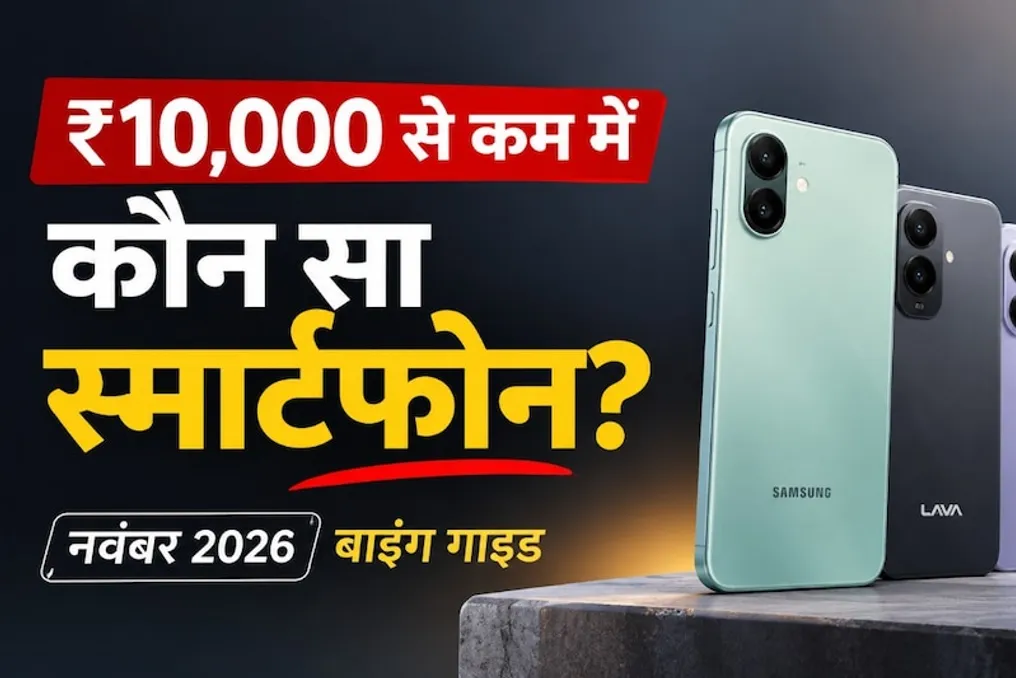
Review of the best smartphones under 10,000 rupees: Top 5 options
Read more
www.aajtak.in

Review of the best smartphones under 10,000 rupees: Top 5 options

The budget smartphone segment priced up to 10,000 rupees always presents a challenging task. At this price point, one can find a device with a large battery, a good screen, and an acceptable camera, but combining these features with 5G support, a fast processor, and long software support is difficult. As phone prices rise, fewer suitable models are available in this category. Therefore, we have compiled a list of several smartphones that offer a good balance of price and quality.

In November 2026, brands such as Samsung, Lava, itel, and Fire-Boltt offered various options in this price range. We selected five models so that users can review their cost, specifications, and drawbacks to help choose a suitable option.

If 5G connectivity is a priority, the Samsung Galaxy M06 5G is one of the most interesting options in this budget. In November, the variant with 4GB of RAM and 128GB of storage was available in some online stores for approximately 9,379 rupees, although this price depends on promotions and may change during purchase.

The phone is equipped with the MediaTek Dimensity 6300 processor. This is a significant advantage for this price category, as many other phones on the list are 4G models intended for basic use. It features a 6.7-inch HD+ display, a 50-megapixel main rear module, and an 8-megapixel front camera. The 5,000 mAh battery supports 25W charging. According to Samsung, the Galaxy M06 5G will receive four generations of Android OS updates and four years of security updates, which sets it apart from other offerings in the budget segment.

The smartphone brand Fire-Boltt has entered the smartphone market. The Boltt Evo model offers a large battery and a high refresh rate display within this budget. In November, the variant with 4GB of RAM and 64GB of storage was listed for approximately 9,999 rupees.

The phone uses the Unisoc T7250 processor. It is equipped with a 6.79-inch HD+ IPS LCD display supporting a 120Hz refresh rate. The rear camera has a 50-megapixel main sensor and a 2-megapixel macro camera, while the front selfie camera is 8 megapixels. Its main feature is the 6,000 mAh battery. It runs on Android 16 and supports 4G connectivity, meaning it lacks 5G capability. A drawback is the slow 10W charging, which may take a long time to recharge such a large battery. At about 233 grams, the phone is also not considered lightweight.

The itel Zeno 300 is suitable for those looking for a large battery and fast charging at a low price. In November, the variant with 4GB of RAM and 64GB of storage cost around 9,549 rupees.

It is equipped with the Unisoc T7100 processor. The phone has a 6.56-inch HD+ IPS LCD display supporting a 90Hz refresh rate. For photography, it features an 8-megapixel rear camera and a 5-megapixel front camera. The advantage of this model is its 6,000 mAh battery and 18W charging support, exceeding the charging capacity of the Boltt Evo in this list. However, its camera system is quite simple, and 64GB of storage might seem limited nowadays. Furthermore, it lacks 5G support.

The Lava Virat V1 is another option on this list. In November, the price for the 4GB RAM and 64GB storage version fluctuated between 9,745 and 9,999 rupees.

The phone has a 6.75-inch HD+ IPS LCD display supporting a 90Hz refresh rate. It is equipped with the Unisoc SC9863A processor, 4GB of RAM, and 64GB of storage. For photography, it features a 13-megapixel rear camera and a 5-megapixel front camera. The 5,000 mAh battery supports 10W charging. One of the phone's features is the IP64 rating, which provides protection against dust and water splashes, although it cannot be considered fully waterproof. It runs on Android 15. The Unisoc SC9863A chipset is entry-level and can handle calls, WhatsApp, and regular applications, but issues may arise when running multiple apps simultaneously or during intensive gaming. Weaknesses also include the 10W charging speed.

If your budget is less than 9,000 rupees, you can consider the itel Zeno 100 Pro. In November, the 3GB RAM and 64GB storage version was available in the price range of 8,199 to 8,599 rupees.

The phone uses the Unisoc T7100 processor. It has a 6.56-inch HD+ IPS LCD display supporting a 90Hz refresh rate. Regarding the camera, it features an 8-megapixel rear module and a 5-megapixel front camera. The battery has a capacity of 5,000 mAh and supports 10W charging. Despite the low price, this model has compromises: it has 3GB of RAM and 64GB of storage. In 2026, using multiple applications simultaneously with 3GB of RAM may lead to phone slowdown. The slow 10W charging is also a drawback. Additionally, it lacks 5G support. Therefore, it should only be considered for those whose budget is strictly limited to under 9,000 rupees and who need the phone only for basic tasks. If there is room to spend a little more, it is better to choose the 4GB RAM option.

Popular