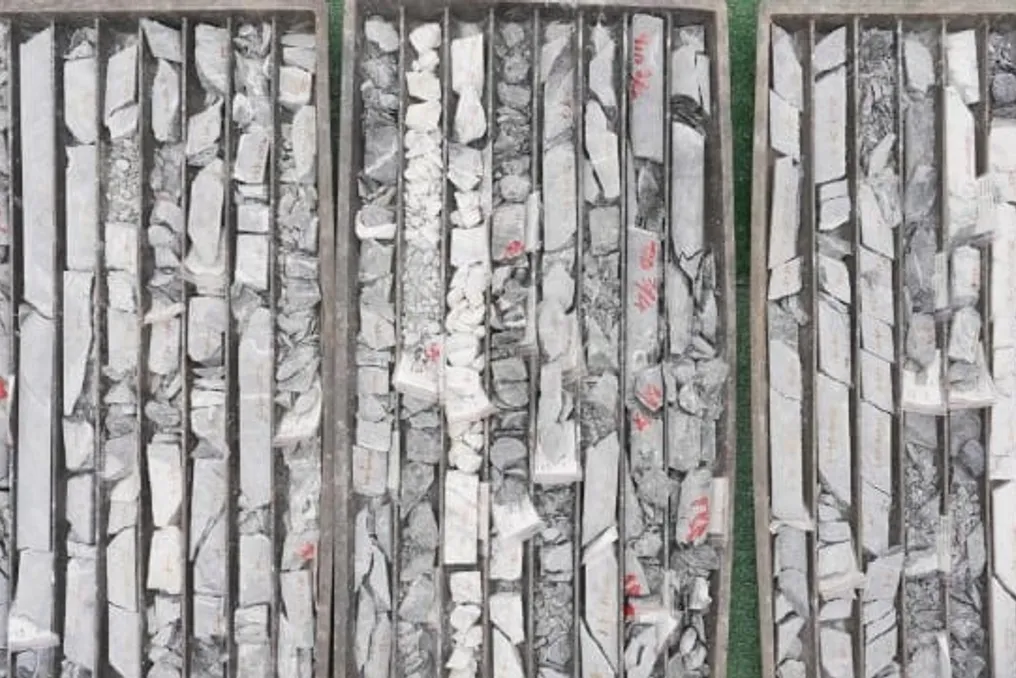
China discovers largest gold reserves since 1949, estimated at $165 billion
Read more
Olhar Digital
olhardigital.com.br

China discovers largest gold reserves since 1949, estimated at $165 billion

Recently discovered deposits in two provinces of China may contain over 2 thousand metric tons of gold. The largest of these, located in Dadonggou, Liaoning Province, contains over 1400 tons and is the most significant individual find in the country since 1949.

The gross estimated value of these reserves reaches $165 billion USD (915.75 billion Brazilian reais), based on the gold price at the end of November 2026. Another mine in Hunan is capable of increasing the total value of both finds to nearly $300 billion USD (1.65 trillion Brazilian reais).

The discovery was reported by China's Ministry of Natural Resources in November 2025, when an estimate of 1444 tons of gold was given. This volume exceeded previous forecasts and made Dadonggou the largest individual deposit in the country since 1949.

Part of this gold was identified back in the 1980s, but at that time, the remnants were considered uneconomical. Subsequent research showed that they were part of a continuous mineral structure. According to an article published in China Mining Magazine, all drilled wells found gold during the latest exploration campaign.

The mineralized zone is about 3 thousand meters long and 1.5 thousand meters wide. Its geological features were analyzed in a 2026 study published in Ore Geology Reviews, led by Du Jia from Beijing University of Science and Technology. The team studied data from over 200 boreholes, field observations, and quartz crystals.

The analysis showed that Dadonggou differs from many deposits in the region. In the latter, gold is found in inclined quartz veins, whereas in the new deposit, the ore is distributed in horizontal or gently dipping phyllite zones, a fine-grained metamorphic rock.

Researchers classify Dadonggou as an orogenic gold deposit formed by fluids released in deep layers of the Earth's crust. The main formation phase occurred at the beginning of the Cretaceous period, during the transition from a compressive to a tensional crustal regime. During this process, gold-saturated fluids circulated through extensional faults and spread through the phyllite layers. The metal accumulated in planes of rock weakness at temperatures ranging from 250°C to 350°C and an assumed depth of 6 to 12 kilometers.

The study also indicates that movements along the Tan-Lu fault, which limits the western boundary of the region, may have contributed to the formation of these structures. According to researchers, areas with extensional faults, fractures, and similar rocks should be considered for future gold exploration.

In Hunan province, the Wanggu deposit may contain over a thousand tons of gold if new research confirms initial estimates. The discovery, announced in 2024, was classified as 'supergiant' by the state agency Xinhua. Initially, geologists identified 300 tons of metal at a depth of up to 2 thousand meters. The total estimate could exceed a thousand tons at a depth of up to 3 thousand meters.

The initially estimated reserves of over 600 billion yuan ($83 billion USD) could reach approximately $114 billion USD (632.70 billion Brazilian reais) at gold prices at the end of November 2026. Combined, Dadonggou and Wanggu approach a gross estimated value of $300 billion USD. This calculation accounts for all gold in the reserves, not just what is actually extracted, which depends on mining costs and the volume that can be mined.

China also announced in December 2025 the discovery of gold on the seabed off the coast of Shandong Province. However, authorities did not disclose the size of these reserves.


Similar stories

Central Bank of China continues to increase gold reserves amid falling global prices
Read more
www.aajtak.in

Central Bank of China continues to increase gold reserves amid falling global prices

Despite the sharp drop in the price of gold, China continues to actively purchase the precious metal, maintaining this trend for the past twenty-four months. The Central Bank of China is carrying out large-scale gold purchases.

According to the World Gold Council's gold market update for October 2026, the People's Bank of China purchased about 26 tons of gold. This was the largest monthly gold purchase by the bank since October 2023.

Despite a significant decline in the prices of precious metals, the central bank of China continued to replenish its gold reserves in October. Thanks to these purchases, China's official gold reserves increased to 2,435 tons, accounting for 8.1% of its foreign exchange reserves. This purchasing process has been ongoing for 24 months.

It is noteworthy that China is increasing purchases during a period of declining global gold prices. This has also affected the value of China's gold reserves. Analysis of international bullion prices shows a substantial correction. According to WGC data, in October, the LBMA gold price fell by 6.3% against the US dollar, and the Shanghai benchmark gold price decreased by 5.9% against the yuan. By October of this year, gold had lost 7.1% against the dollar and 9.4% against the yuan.

Furthermore, Chinese gold Exchange Traded Funds (Gold ETFs) added 6.3 tons of gold in October, marking the fourth consecutive month. The value of these additions amounted to approximately $784 million. China's total volume of metallic ETFs reached a record 310 tons; however, due to falling prices, the assets under management decreased by 4%, totaling $40 billion.

China is increasing its gold reserves even when it becomes cheaper. Behind this strategy is Beijing's desire to strengthen its economy and enhance its position on the world stage. Constant gold purchases are part of China's long-term economic strategy, not merely an investment decision.

The main goal is to reduce dependence on the US dollar and include safe assets like gold in its foreign exchange reserves. Gold is traditionally considered a safe haven during crises or global tensions, and its control is independent of any other state.

Despite the weakening gold prices, central bank purchasing activity globally remains high. According to Jefferies estimates, WGC data shows that in the third quarter of 2026, central banks acquired a net of 321.2 tons of gold, the highest figure since the fourth quarter of 2024. Previously, 296.3 tons were purchased in the second quarter, and only 57.7 tons in the first quarter. This demonstrates the role of gold in reserve diversification, especially amid geopolitical uncertainty and changes in the monetary environment.

Gold and silver prices fell: current rates presented in Delhi, Mumbai, Chennai, Ahmedabad, and Lucknow
Read more
www.aajtak.in

Gold and silver prices fell: current rates presented in Delhi, Mumbai, Chennai, Ahmedabad, and Lucknow

On November 18, significant drops were observed in the prices of gold and silver on precious metal markets, including the commodity and jewelry markets. Specifically, on the MCX exchange, the price of gold fell by more than 3000 rupees, while the cost of silver decreased by over 6000 rupees.

This decline occurred as the wedding season has not yet begun, leading buyers to question the current prices for 24, 22, and 18-karat gold in their respective cities.

On Wednesday, gold continued to fall in the Delhi jewelry market for the seventh consecutive day. The price of 10 grams of 24-karat gold dropped by 2800 rupees, reaching 1,35,800 rupees. The price for 22-karat gold was 122,300 rupees, and 18-karat gold reached 100,000 rupees. Meanwhile, silver became cheaper by 5000 rupees, settling at 1,64,500 rupees.

In Mumbai, the price for 10 grams of 24-karat gold was 1,33,260 rupees, while 22-karat gold cost 1,22,150 rupees for 10 grams. 18-karat gold was valued at 99,940 rupees for 10 grams. The cost of silver in Mumbai was also 1,64,500 rupees.

In Chennai, 10 grams of 24-karat gold were valued at 1,36,030 rupees. The price for 22-karat gold was 1,24,690 rupees for 10 grams, and 18-karat gold was sold at 1,02,040 rupees. Silver in Chennai cost 1,64,500 rupees per kilogram.

In Ahmedabad, 10 grams of 24-karat gold cost 1,36,090 rupees. 22-karat gold had a price of 1,24,740 rupees for 10 grams, and 18-karat gold was 1,02,070 rupees for 10 grams. The price of silver in Ahmedabad was set at 1,64,500 rupees.

In Lucknow, 10 grams of 24-karat gold cost 1,33,410 rupees. 22-karat gold was valued at 1,22,200 rupees for 10 grams, and 18-karat gold was priced at 1,00,100 rupees for 10 grams. The cost of silver in Lucknow was also 1,64,500 rupees.

Gold prices dropped today: current rates for 18, 22, and 24 karat presented in major cities
Read more
www.aajtak.in

Gold prices dropped today: current rates for 18, 22, and 24 karat presented in major cities

Those planning to purchase gold are advised to review today's prices. On November 13, 2026, the cost of gold decreased across the country. The price of 24-karat gold fell by 131 rupees per gram, and prices for 22-karat and 18-karat gold also decreased.

According to Goodreturns, on Friday, the price of 24-karat gold was 13,849 rupees per gram. The price of 22-karat gold dropped to 12,695 rupees per gram, and 18-karat gold was priced at 10,387 rupees per gram. Compared to November 12, 22-karat gold became cheaper by 120 rupees, and 18-karat gold by 98 rupees per gram. These prices are listed per gram; additional manufacturing fees and relevant taxes may be charged when purchasing jewelry, and the final cost may vary across different jewelry stores.

Current rates for 24, 22, and 18-karat gold are provided in nine major Indian cities, including Delhi, Mumbai, and Chennai.

In the country's capital, Delhi, on November 13, 2026, the price of 24-karat gold was recorded at 13,864 rupees per gram. The cost of 22-karat gold was 12,710 rupees, and 18-karat gold was sold at 10,402 rupees per gram. In Delhi, prices for all three karats of gold were the highest among the mentioned cities.

In Mumbai, the price of 24-karat gold is 13,849 rupees per gram, 22-karat is 12,695 rupees, and 18-karat is 10,387 rupees per gram. These figures correspond to the national averages. In Pune, on November 13, 2026, 24-karat gold was sold at 13,849 rupees per gram, while 22-karat and 18-karat gold cost 12,695 and 10,387 rupees, respectively.

In Kolkata, on November 13, 2026, 24-karat gold was sold at 13,849 rupees per gram, with 22-karat gold costing 12,695 rupees, and 18-karat gold at 10,387 rupees per gram. Similar rates were recorded in Bangalore: 24-karat gold costs 13,849 rupees per gram, and 22-karat and 18-karat cost 12,695 and 10,387 rupees.

In Hyderabad, 24-karat gold is valued at 13,849 rupees per gram, 22-karat at 12,695 rupees, and 18-karat at 10,387 rupees. In Chennai, the price of 24-karat gold reached 13,849 rupees per gram; 22-karat gold costs 12,695 rupees per gram, and 18-karat is 10,390 rupees per gram.

Data on gold prices is available for Vadodara and Ahmedabad.

Popular