Investigation launched in Bhopal after online nurse certificate issued under fictitious name in Madhya Pradesh
Read more
The times of India
timesofindia.indiatimes.com

Investigation launched in Bhopal after online nurse certificate issued under fictitious name in Madhya Pradesh

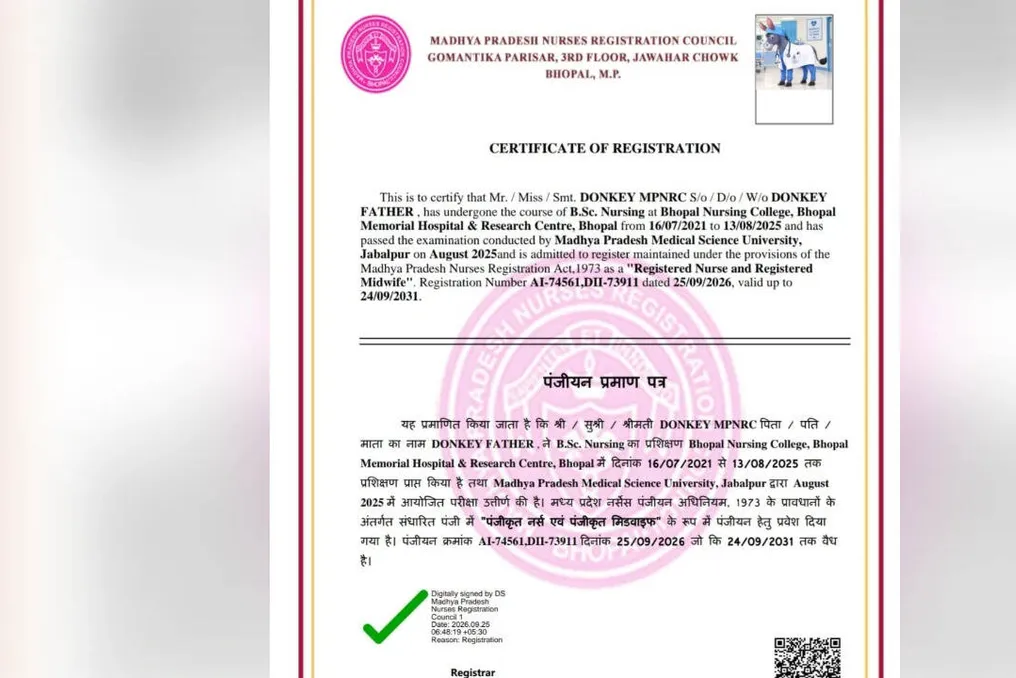
The Bhopal police have initiated an investigation after a nursing registration certificate was issued under the name 'DONKEY MPNRC'. MPNRC stands for the Madhya Pradesh Nurses Registration Council.

On Friday, officers from the TT Nagar police station in Bhopal accepted a complaint from Ravi Parmar, Vice President of the National Students' Union of India (NSUI), the Congress party's youth wing. Parmar appeared at the police station along with Akshey Tomar, the NSUI district president of Bhopal, following receipt of a notification. He also provided documents and digital evidence related to the case.

According to investigator Ragvendra Singh Sikarkar, the police registered Parmar's complaint and forwarded a notification to the MPNRC. Sikarkar told PTI: 'We will gather evidence and act according to the law.'

Meanwhile, Parmar stated that he applied under the name 'DONKEY MPNRC' to 'test' the council's online registration portal. The application used the following details: father's name as 'DONKEY FATHER', mother's name as 'DONKEY MOTHER', and caste listed as 'ANIMAL'.

He alleged that the portal lacked sufficient verification mechanisms, allowing applicants to receive nursing registration certificates without proper scrutiny. The portal accepted the application, processed a payment of 2050 rupees, and issued a digital nursing registration certificate on September 25. This certificate, bearing application number RG26103957 and registration numbers AI-74561 and DII-73911, is valid until September 24, 2031.

Parmar informed PTI that he filed the complaint with the police on October 1 after discovering the alleged loophole. He emphasized that he had no intention of obtaining a false registration for anyone, but rather conducted the procedure to draw the authorities' attention to the system's deficiencies. He also stated that a representative from the MPNRC has not yet appeared at the police station.

NSUI has demanded a technical audit of the entire registration process, as well as an investigation into the roles of the council's officials, staff, and the technical agency responsible for managing the portal.

Similar stories

R67m Partnership Improves Livestock Health and Traceability in Rural Areas
Read more
foodformzansi.co.za

R67m Partnership Improves Livestock Health and Traceability in Rural Areas

The partnership between Red Meat Industry Services (RMIS), Kagiso Trust, and FirstRand Empowerment Fund provides practical support to livestock farmers, focusing on animal health, skills development, community involvement, and improving access to the formal red meat value chain.

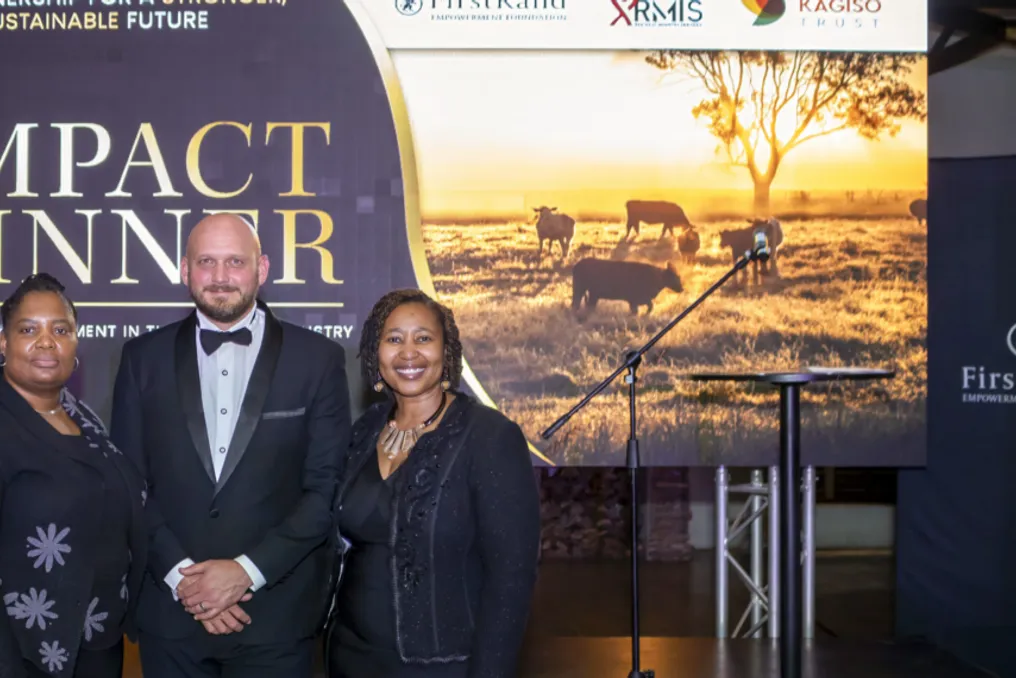
An event dedicated to this partnership took place at the RMIS Impact Gala Dinner in Tierpoort, Gauteng, on Tuesday, November 24th. There, industry stakeholders discussed the progress made since the initiative began and identified opportunities to expand its impact.

Dewald Olivier, CEO of RMIS, noted that the partnership exceeded expectations, demonstrating the value of collaboration between industry organizations, development partners, and financial institutions. He emphasized that the goal is to realize a common vision whose results are already visible, even though the joint work started before the official launch.

Olivier highlighted the importance of the red meat industry for food security and the economy as a whole, noting that about 96% of South Africa's red meat production is consumed domestically, while increasing exports remains an important task for the industry.

Dr Phillip Oosthuizen, COO of RMIS, presented the project's progress, explaining that the implementation focused on three key areas: community development, supporting technical specialists in animal health, and improving animal identification.

Out of a total funding of R67 million, funds were redirected to strengthen animal health services, including support for technical specialists. Approximately R13 million was allocated for employing such specialists for 12 months.

Oosthuizen reported that these specialists played a crucial role in solving practical problems related to vaccine distribution and animal vaccination, especially in areas with limited access to veterinary services and transport. Thanks to this initiative, approximately 230,000 animals have been vaccinated, involving over 750 premises.

He stressed that vaccination is not enough; animal identification and reliable record-keeping are critically important. According to him, 'animal vaccination is important, but we also need to identify them and record this information digitally. Without proper records, an identification chip has limited value.'

In response, RMIS is integrating animal identification into its digital ecosystem, helping farmers create more accurate herd records and increase the visibility of their animals in the value chain.

The community development component was initially targeted at the Eastern Cape, with plans to expand to four provinces. Oosthuizen stated that building relationships with local communities was a prerequisite for farmers to understand and accept the proposed measures.

He remarked: 'The most important thing is the relationship. It is relatively easy to provide technical assistance, but the real work is building connections with communities and ensuring their participation.'

RMIS plans to further invest in animal health technical specialists, including training and support to help them build sustainable businesses or secure employment in the public and private sectors.

Kone Gugushe, CEO of FirstRand Empowerment Fund, stated that this partnership demonstrated how organizations with shared values and goals can jointly address challenges facing the livestock industry. She particularly highlighted the importance of strengthening the industry's capacity in managing animal health issues, improving market access, and supporting export growth.

Dr Mankodi Moitse from Kagiso Trust emphasized that significant development requires more than just financial aid. It needs partnerships that recognize community potential and create opportunities for people to participate in the economy. He added: 'Behind these numbers are people. We want to present a future where a young person who finishes school knows there is a path to employment, economic participation, and breaking the cycle of poverty.'

Partners also pointed to opportunities to develop the initiative in future phases and explore blended finance models to support livestock farming.

Uzbekistan to implement electronic verification of veterinary and sanitary certificates for import permits
Read more
uzdaily.uz

Uzbekistan to implement electronic verification of veterinary and sanitary certificates for import permits

The Committee for Veterinary Medicine and Livestock Development announced that Uzbekistan will begin using electronic verification of veterinary and sanitary certificates for goods storage facilities when processing import permits starting December 1, 2026.

This verification will be carried out through the Onehealth.uz information system. According to the new procedure, enterprises engaged in relevant activities are obliged to obtain veterinary and sanitary certificates through the Licensing Information System before the specified date.

The requirement applies to specialized slaughterhouses, as well as organizations involved in the production, storage, and sale of animal products and raw materials. The certificates must confirm that these enterprises comply with veterinary and veterinary-sanitary norms and standards.

The Committee advised businesses to arrange for the necessary documents in advance to avoid delays in processing import permits and additional administrative procedures.

Popular