Japanese consumers return to using notebooks to record passwords due to data leak concerns
Read more
Tecnoblog
tecnoblog.net

Japanese consumers return to using notebooks to record passwords due to data leak concerns

Consumers in Japan have started using physical notebooks again to write down passwords for various digital services. Stores such as Hands and Daiso have noticed a significant increase in demand for these items, even among younger age groups, driven by growing apprehension about data leaks.

According to a recent article published by Nikkei, the revenue of certain models sold by Hands registered a 50% year-on-year growth, considering only last month's sales. This high demand has even caused stock shortages of products in the retailer's online channel.

The interest in these notebooks stems from the fear of reusing the same password across multiple services. The report establishes a link between this search for paper notes and consumers' heightened concern over the exposure of their personal data.

Initially, at Hands, these notebooks were mainly sought after by customers aged 60 or older, aiming to prevent forgetting credentials. However, the demographic of buyers has expanded recently. Daiso also reported an increase in purchases made by individuals in their 20s and 30s.

One of the mentioned products is the Password Book, manufactured by Hightide. This notebook has 62 pages, with each page accommodating space for two entries, allowing for the organization of access to platforms such as email, online shopping, and banking institutions. The cost of this item is 660 yen, which is equivalent to approximately R$ 23 at the current exchange rate.

Daiso offers another option, a 38-page model available for 110 yen, corresponding to about R$ 3.80.

Japan has faced recent incidents related to consumer data. In November, Muji, a Japanese retailer of clothing, furniture, and household goods, announced that up to 27.26 million customer records from its app and online store could have been exposed following unauthorized access.

Recording passwords on paper changes how users store their credentials. The NCSC, the British cybersecurity center, acknowledges that notebooks can be useful in certain circumstances but advises users to evaluate where these notes are kept and who has access to them.

Hightide itself clarifies that its product is intended for recording and organizing private information, without offering any guarantee of protection. Risks such as loss or theft persist for those who concentrate credentials in a single notebook.

In contrast, password managers provide features such as creating distinct combinations and automatic filling in the correct location. The NCSC points out that this autofill feature helps reduce the risk of providing credentials to fraudulent websites. Furthermore, the body recommends implementing two-factor authentication and using passkeys whenever available. These digital keys use the device's own security to authorize access, reducing the need to memorize or type passwords.

Similar stories

Cell phone sales are expected to drop drastically in 2026 due to memory shortage
Read more
tecnoblog.net

Cell phone sales are expected to drop drastically in 2026 due to memory shortage

Cell phone sales are projected to suffer a record decline in 2026, according to Counterpoint Research. The consultancy estimates a 13.9% reduction in global smartphone shipments compared to 2025. This trend is driven by memory shortages, which are increasing costs and decreasing the availability of low-cost devices.

Furthermore, the survey indicates that there will be no short-term recovery. The projection points to another 6% drop in 2027, followed by a predicted growth of 6% in 2028.

The main cause of this pressure lies in memory. Suppliers are prioritizing the allocation of their production capacity for artificial intelligence and server applications, competing for resources with components intended for cell phones. This limited supply results in higher device prices and hinders the profitable sale of entry-level phones.

A study released in November showed that memory now constitutes 54% of the component cost of a basic smartphone, a significant increase from the 20% recorded in the third quarter of 2025. This calculation refers only to manufacturing, excluding expenses and retail margins.

To counteract the rising costs, manufacturers are increasing prices and focusing their efforts on a smaller number of models and on prioritized markets. Although premium category devices have shown greater resilience, they cannot compensate for the losses observed in popular segments.

In Latin America, the consultancy noted that consumers are postponing cell phone upgrades or opting for repairs following recent price adjustments. This behavior illustrates how increased costs can alter user purchasing decisions.

Another Counterpoint report, recently released, revealed that shipments fell by 22% in the third quarter of 2026 compared to the same period in 2025. The consultancy attributes this performance to slower local production, caused by the restriction in memory supply. In the first half, the country had already registered an annual contraction of 11%.

According to Counterpoint's segmentation, models costing less than US$ 249 represented 78% of national shipments in the first half. However, the price range between US$ 100 and US$ 249 saw a 37% growth in volume, reaching 61% of the market. Part of this movement is attributed to readjustments, which may cause the same device to migrate to a higher price range.

Price increases have already been visible in popular models. For example, the Galaxy A07 4G 256 GB became more expensive at the Samsung store, considering official values, without applying discounts or promotions.

Nanjing University criticized for camera system that monitored student attention
Read more
tecnoblog.net

Nanjing University criticized for camera system that monitored student attention

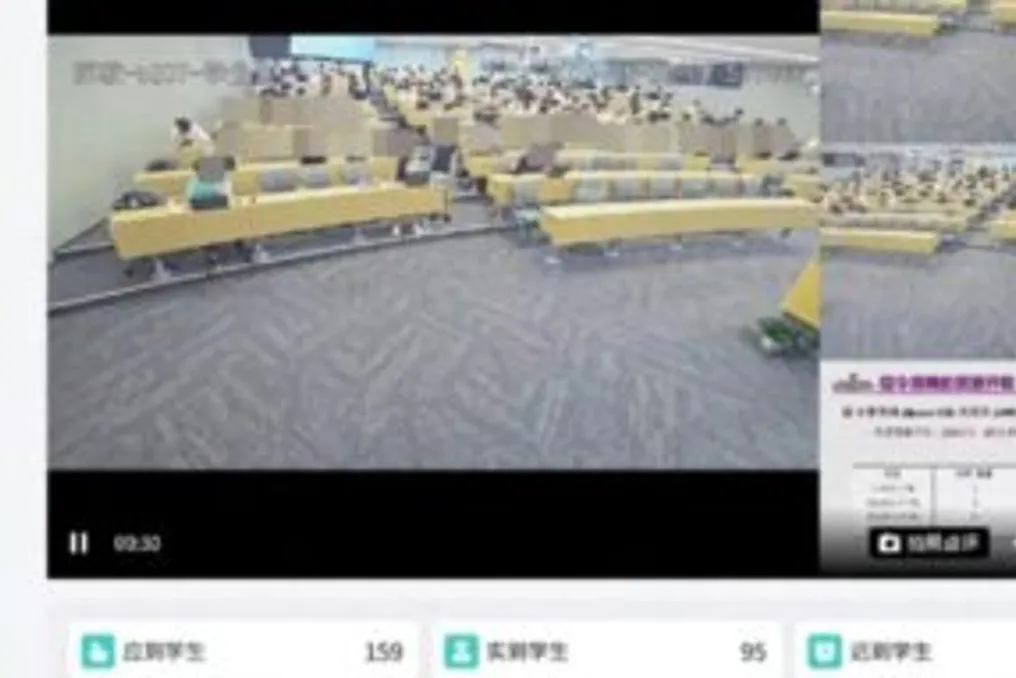
Nanjing University, located in China, has become the subject of criticism due to a camera system designed to record attendance and quantify the percentage of students with their heads up. The institution itself stated that it stopped using this indicator and denied any link between attendance monitoring and academic grades.

The modernization project cost 31.5 million yuan, which is equivalent to nearly 28 million Brazilian reais at the current exchange rate, as detailed in a procurement document. This budget was allocated to upgrading 113 classrooms, in addition to a control center and common areas, including various equipment for teaching activities.

Jiangsu Mobile Information System Integration was the winner of the tender in June. According to the university, the equipment installation took place during the summer vacation period. The contract specifications included functionalities such as facial detection and recognition, people counting, and calculating the head-up rate. The total scope comprised 122 items, encompassing screens, class recording, and analysis via artificial intelligence.

The controversy gained prominence in early November after the dissemination of communications regarding a week of attendance tracking and a screenshot displaying indicators of presence, tardiness, and student posture. Students expressed concern that this data might impact their evaluations or that facial information could be shared improperly.

In a statement issued on November 4th, the university refuted the claim that attendance was linked to student assessment. Furthermore, it was stated that the institution does not collect biometric data or perform facial recognition without obtaining proper permission.

Xiong Bingqi, director of the Institute of Research in 21st Century Education, told Haibao News that forcing students to keep their gaze forward does not improve classes that already lack engagement. For him, the greater relevance lies in the quality of the content taught and the interaction established between teachers and students, surpassing the need for surveillance.

When justifying the technological modernization, the university mentioned objectives such as improving audio and video quality, broadcasting classes, and allowing students to review material. It emphasized that it recognizes various learning methodologies and, for this reason, no longer maintains the head-up rate metric.

In the Brazilian context, data collection in classroom environments also generates debate. The National Data Protection Agency (ANPD) ordered the suspension of facial recognition use for attendance registration in public schools in Paraná, classifying such practice as excessive.

Training for Japanese Companies Being Created in Syrdarya
Read more
uza.uz

Training for Japanese Companies Being Created in Syrdarya

In Syrdarya, it is now possible to receive vocational and language training for young people who wish to work in Japan. A new direction of cooperation has been defined for training specialists who meet the needs of Japanese companies, as well as for their professional and language preparation within the region.

Popular