Swami Shrivasthav impressed listeners with his poems in the 'Sahitya Aajtak' program
Read more
Aaj Tak
www.aajtak.in

Swami Shrivasthav impressed listeners with his poems in the 'Sahitya Aajtak' program

As part of the 'Sahitya Aajtak 2026' event on Friday, poet and performer Swami Shrivasthav participated in the program. During a session titled 'Ghar ke Vaste', he captivated the audience with his works.

Swami Shrivasthav charmed all listeners with songs such as 'Hai Kahani Ye Hamem Tumko Sunani...', 'Chale Krishna Jab Vrindavan...', and 'Aaj Fir Yaad Tum Aa Rahe Ho...'.

Similar stories

Authors Share Stories of Their Creative Journey: From First Poems to Songs
Read more
www.aajtak.in

Authors Share Stories of Their Creative Journey: From First Poems to Songs

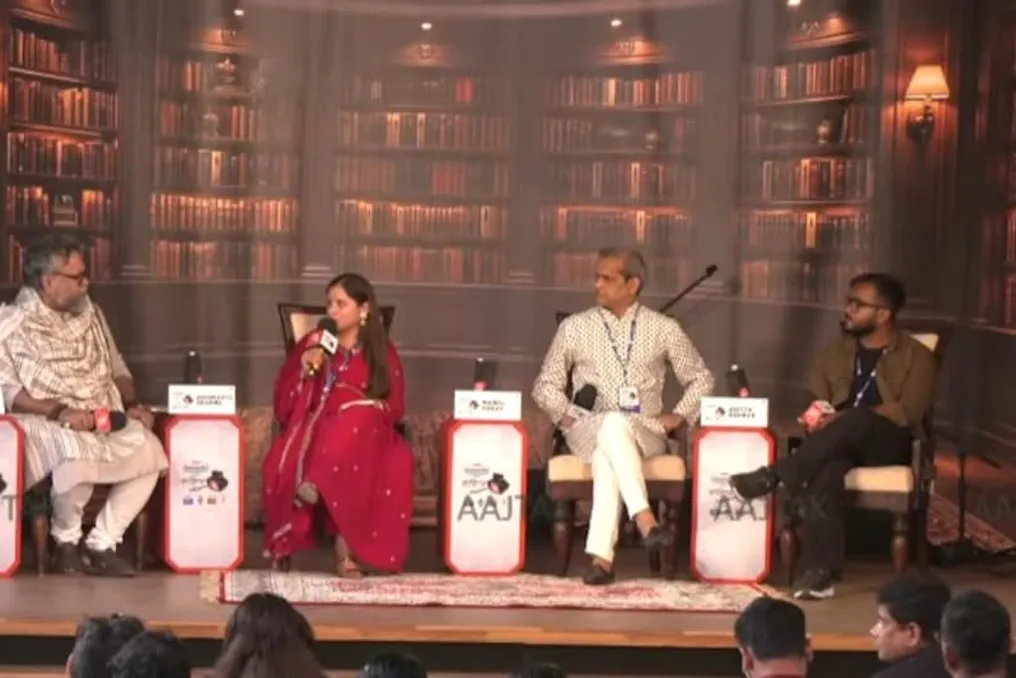
During the session 'Without Borders — The First Poem, The First Love' at the 'Sahitya Aajtak' event, poet Aishwarya, young poet Aditya, and composer Manoj Yadav participated. All three shared their experiences related to their first works, the beginning of their creative endeavors, and their emotional journey.

Aishwarya recounted how the idea to write poetry arose while she was coding. She explained that when a strong emotion overwhelms her, she cannot express it properly to other people, so she began recording her thoughts. Aishwarya noted: 'There are many people like me who do not feel the need or cannot properly express their feelings to others, so I started writing. The advantage of poetry is that you can say everything that worries you without revealing your name. You can express everything you think without dedicating it to anyone.' She also mentioned that she started writing poems even before she began coding, and for her, poetry became a natural way of expressing feelings.

Aditya Rahar, speaking about his path as a writer and poet, admitted that he does not yet consider himself a poet. He stated: 'I am not yet able to call myself a poet; perhaps very few people consider themselves self-proclaimed poets.' Although he started writing poems, he lacked the courage to label his early works as such. When people started saying he wrote well, he felt that he might be creating something good.

He spoke about his early writing, noting that emotions were absolutely pure back then. He wrote what he felt as a person. Aditya reported that his first book has already been published and is well-received on Amazon. His poems are often sent to him, and reading them often suggests that the author is experiencing some pain and laying out their feelings on paper without embellishment.

Composer Manoj Yadav talked about his creativity and his journey to Mumbai. He shared that much of his life's path was paved by his father. His father moved to Mumbai and settled there, which opened up a path for Manoj's development in the city. Recalling his early days, Manoj said: 'When you have no choice, you want to be the best at what you know. I used to go to neighbors' houses to watch TV and listen to songs on the next-door radio, and I learned everything by listening to everyone. I give all the credit for this to my father.'

He also discussed his mentor and inspiration. Manoj noted that he learns something from everyone he hears. In his opinion, if a person can hear and understand two good things from someone, that person becomes their mentor. He added that every person present on this platform is a mentor and guide for him.

Discussing the difficulties composers face, Manoj Yadav mentioned the constraints when writing songs for films. Sometimes a composer has to exclude their favorite lines from a song, which is the saddest experience for him. Every time a song plays, he remembers that favorite line that was excluded from the final version, and that line will never be heard by the world, even though it is very close to his heart.

Kumar Vishwas presented his Ramkatha at the 'Sahitya Aajtak' event
Read more
www.aajtak.in

Kumar Vishwas presented his Ramkatha at the 'Sahitya Aajtak' event

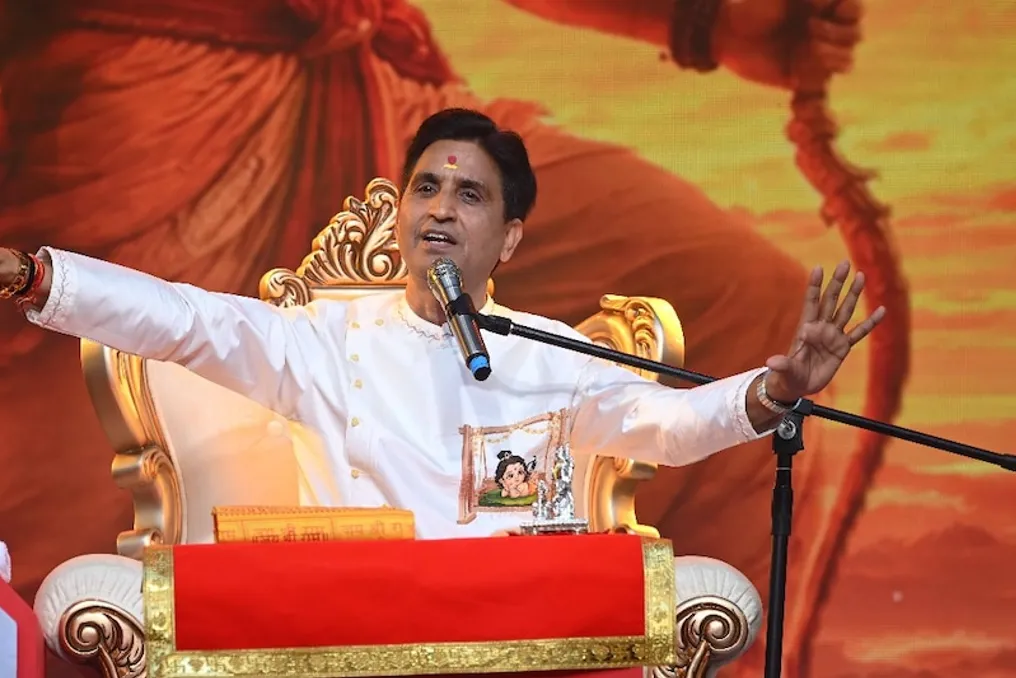
The 'Sahitya Aajtak' 2026 event began on November 27 in slightly cold weather, marking the start of a grand literary gathering. The commencement of this event was marked by a flow of Ramkatha that impressed the audience with its emotional impact. In his special presentation titled 'Apne-apne Ram,' Kumar Vishwas noted that the story of Shri Rama demonstrates the fine line between achieving success and attaining true meaning in life. This thought of the popular poet-thinker, who deeply understands the Ram history, was met with a thunderous ovation from the audience.

Kumar Vishwas discussed Ramkatha, the origin of literature, and the contribution of Maharishi Valmiki. He emphasized that literature is about involving everyone and expressing everyone's feelings. He called Ramkatha the greatest example of literature. During his speech, he also vividly explained the difference between God Rama and Krishna.

Vishwas stated that the Ramayana is the first poem and the first literature in the world; before it, there were only Vedic mantras, but no poetry. He recounted the story of the first verse uttered from the lips of Maharishi Valmiki. One morning, Valmiki emerged from the Tamsa river after bathing when he saw a pair of birds immersed in love. At that moment, the hunter shot an arrow at one of the birds. After the bird's death and hearing its mournful cry, a verse sounded from Maharishi Valmiki's mouth. This verse was written in the Anashtupa meter. Valmiki wondered how such rhythm and rhyme appeared in his words. He shared this story with Maharishi Narada. Narada told him that this was poetry, a divine gift, and the consciousness of art.

When Valmiki asked what to do with this talent, Devarshi Narada advised him to describe a person who would guide humanity in the future. For this, he suggested describing Rama, the son of King Dasharatha, born into the Ikshaku clan. Narada said that thanks to Maharishi Valmiki, feelings found language, and poetry appeared on the lips of the world. He also noted that Maharishi Valmiki was not an ordinary Rishi; even Lord Rama bowed his head before him and touched his feet. Kumar Vishwas mentioned the role of Maharishi Valmiki in the lives of Mother Sita and Lava-Kusha.

He uttered the words: 'It is Valmiki whose touch transforms a sorrowful verse. It is Valmiki whose creation brings Rama to the world.' Kumar Vishwas added that both Krishna and Rama are important in life. When asked about the difference between Rama and Krishna, he answers with one phrase: 'Rama is a dream, and Krishna is the self.' The audience reacted approvingly to this statement.

Explaining the significance of Ramkatha, he asserted that the Ramayana cannot be viewed merely as the biography of God Rama. Ramkatha is an elixir that strengthens the human soul. Kumar Vishwas insisted: 'If any foreigner calls Shrimad Valmiki's Ramayana a biography of Rama, tell him that Ramkatha is not a biography, but an elixir. If medicine is the immunity of the body, then Ramkatha is the immunity of the soul.'

Kumar Vishwas noted that there are over 300 Ramkathas worldwide, which various poets and writers depicted in their own ways. The great poet Maharishi Valmiki wrote Rama first. He was followed by authors such as Goswami Tulsidas, Kaviraja Kamban, Bhavabhuti, Kalidasa, Maharishi Vyasa, and Bhasa. He concluded that 'the dream that humanity has seen until now—the most meaningful, the most complete, and the most sublime—is the dream of Rama.'

To explain a person's relationship with God, Kumar Vishwas used the example of health. He explained that a doctor can name the symptoms of an illness and prescribe medicine, but health has no distinct signs. A healthy body is health itself. Using this analogy, he said that Rama cannot be perceived merely as a means of escaping troubles. Rama is not a cure, but health. Kumar Vishwas stressed that a person should not get used to remembering God only in difficult times; remembrance of God should be constant in life. The most important thing is the feeling of gratitude towards God.

During the event, he also shared an anecdote from his speech. A young woman asked him why she should pray if morning prayers take half an hour, and why she should bow her head before her mother (God). Through this incident, Kumar Vishwas clarified the importance of faith and gratitude towards God.

Ramayana film producer reveals details of Sunny Deol's participation as Hanuman
Read more
www.aajtak.in

Ramayana film producer reveals details of Sunny Deol's participation as Hanuman

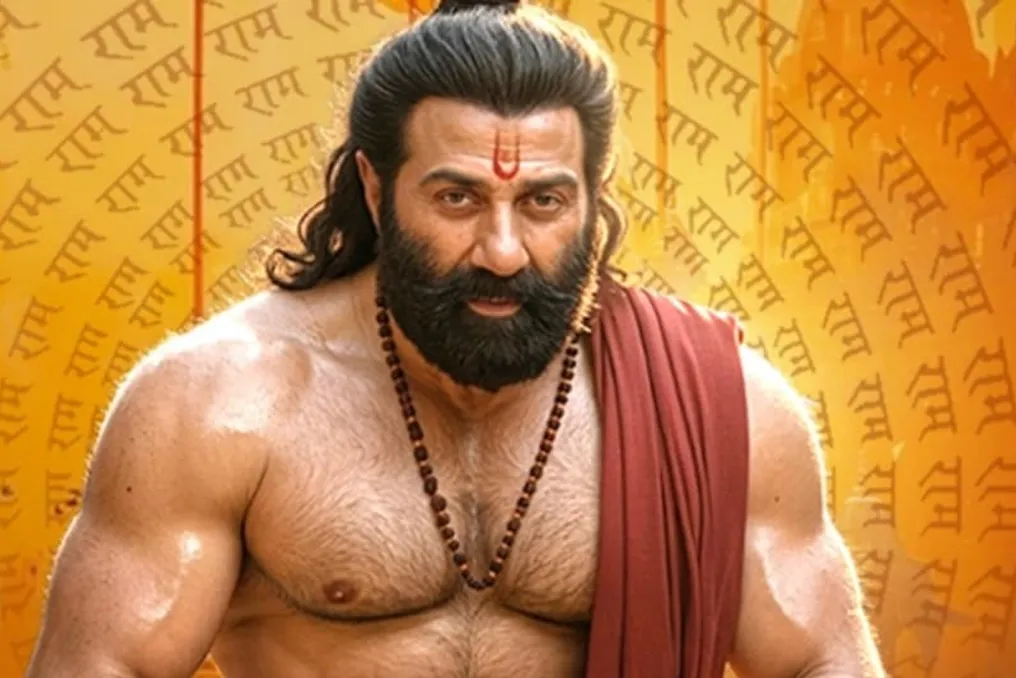
Nitesh Tiwari's mega-budget film 'Ramayana Part 1' generated immense enthusiasm among viewers due to its latest scenes. The finale of the first film featured a brief scene with Sunny Deol in the role of Hanuman, who performs a jump and loudly exclaims 'Jai Shri Ram.' This has created strong anticipation for the second episode.

The film, starring Ranbir Kapoor, Sai Pallavi, and Yash, reportedly achieved significant box office success, earning 170 billion rupees worldwide in just 17 days after its release. Although the plot is based on the epic Ramayana, audiences eagerly await the display of grand scale, magnificent visual effects, and majestic character portrayals.

The filmmakers, producer Namit Malhotra and director Nitesh Tiwari, shared interesting details about 'Ramayana Part 2.' They explained why Sunny Deol was chosen for the role of Hanuman and why only a small glimpse of him was shown at the end of the first part.

Namit Malhotra noted that Hanuman is one of the most beloved characters in the entire Ramayana, comparing his popularity to the Iron Man of India. He explained that the crew intentionally did not show Hanuman's full role in the first part. In the creators' view, Hanuman's presence in the next episode will elevate the film to a completely new level, so they wanted to create suspense by showing only a hint and leaving the audience with questions about Lord Rama's future actions.

Before Sunny Deol, Dara Singh had the greatest fame in the role of Hanuman. The selection of Sunny Deol for this iconic role was a major decision by the team. Director Nitesh Tiwari emphasized that this character must combine innocence, closeness to the people, and incredible strength. He stated that Sunny Deol's image in India possesses similar traits, allowing him to best embody this immortal hero.

Namit Malhotra also highly praised Sunny, noting that throughout his career, he has starred in films where his characters began innocently and then became so powerful that they could shake mountains. He added that despite Sunny lacking experience in superhero roles, his popularity among the masses rivals that of superheroes. The creators are confident that 'Ramayana' Part 2 will reach a new level in terms of both plot and spectacle, as that is where the true great saga will begin.

Cinematographer Pankaj Kumar also raised fan expectations regarding the portrayal of Hanuman. In an interview with Variety India, he assured that Sunny Deol's presence in the second part will fully justify the long-awaited anticipation. Pankaj mentioned that many magnificent and large-scale scenes involving Hanuman have already been shot, and watching them on the big screen will be an unforgettable experience for the audience.

He also clarified that showing a brief version of Hanuman in the first part was originally part of the script, and his appearance was deliberately limited within the narrative.

Popular