Tractor sales increased during the holiday season: over 100 thousand units sold
Read more
Aaj Tak
www.aajtak.in

Tractor sales increased during the holiday season: over 100 thousand units sold

A significant increase in tractor sales was observed during this holiday season, similar to what is happening with motorcycle and car sales. Tractors were actively sold during the 2026 holiday season.

According to data from the Federation of Automobile Dealers (FADA), various companies sold 103,809 tractors in the Indian market over 42 days. In the same period last year, 101,532 tractors were sold, indicating no significant quantitative difference. Compared to 2025, this year saw only 2,277 more units sold, representing an increase of 2.24 percent. This marks the second consecutive year that tractor sales have exceeded the 100,000 unit mark.

However, the growth looks more noticeable compared to 2024. At that time, tractor registrations reached 88,488 units during the holiday season. This year, tractor registrations increased by 17.31 percent compared to 2024. Details of this growth are presented below.

Sales data by model is not currently available. However, there is data on October sales. According to FADA, Mahindra Tractor Division sold 18,263 units with a market share of 23.03 percent. Swaraj Division sold 14,206 units, and Swaraj's market share is 17.92 percent. Thus, Mahindra's total share in the tractor segment is about 40 percent.

International Tractors, the manufacturer of Sonalika Tractor, sold 10,364 units in October 2026, holding a market share of 13.07 percent. Tafe ranked fourth, selling 9,256 units, corresponding to a market share of 11.67 percent. Escort Tractor showed a share of 10.51 percent, selling 8,331 units in October. Additionally, John Deere sold 6,439 units, Isar Tractors sold 4,858 units, and CNH Industrial sold 3,992 tractors.

It should be noted that this year the holiday season ran from October 11 to November 21. Last year, in 2025, the holiday season started on September 22 and continued until November 2, whereas in 2024, it took place from October 3 to November 13. Annually, the holiday season is considered to be 42 days long. The period from Navratri to 15 days after Dhanteras is called the holiday season.
Similar stories

Tata Punch EV sales increased by 274% in October due to growing demand for electric vehicles in India
Read more
www.aajtak.in

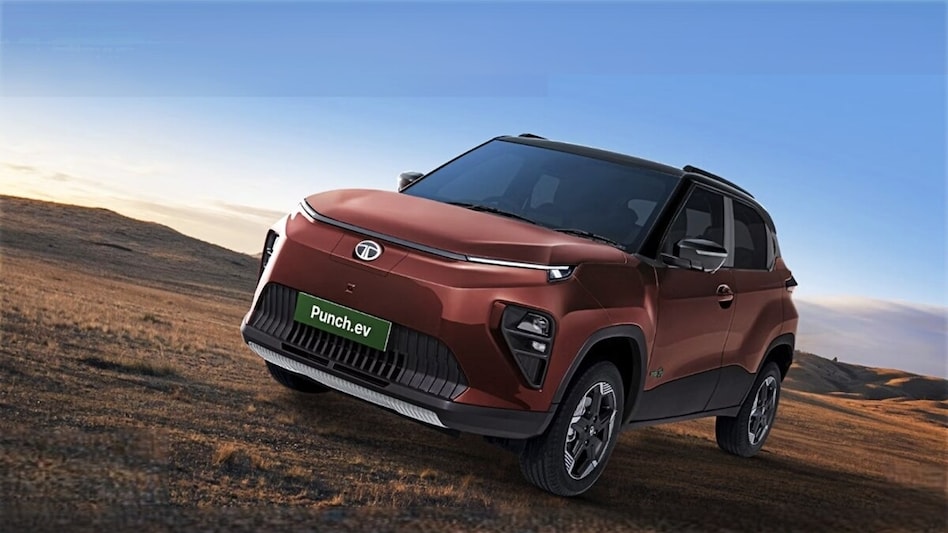
Tata Punch EV sales increased by 274% in October due to growing demand for electric vehicles in India

The demand for electric vehicles in the Indian market continues to grow. In October, the segment showed a 75% increase compared to the previous year. According to auto experts, companies sold a total of 39,170 vehicles this month, with the Tata Punch EV being the most popular model.

The Punch EV is the best-selling electric vehicle in the country and became the first electric car to exceed monthly sales of 5,000 units. October was a good month for many models, whose sales reached four-digit figures. Next, we examine how the Tata Punch EV managed to secure a leading position.

The Tata Punch EV is the second most affordable electric vehicle in Tata's portfolio. In October 2026, 5,060 units of this crossover were sold, compared to only 1,353 in October 2025. Previously, this model held a significantly lower rank in the best-selling cars list.

The question arises as to what allowed Tata to increase Punch EV sales by 274% in October of this year. The growth in Punch sales was not limited to October; it has been observed since the release of the updated Punch Facelift version.

The price of the Tata Punch EV starts from 9.79 lakh rupees including the showroom. When purchased through the BaaS program, the vehicle starts from 6.59 lakh rupees, with an additional charge of 2.6 rupees per kilometer for battery charging. At this price point, the Punch becomes an attractive option.

This car is particularly interesting for those looking for an automatic city driving car. The base model of the Tata Punch EV is equipped with all necessary features. The car is available in two battery options—30kWh and 40kWh—which provide a claimed range of 365–375 kilometers and 468 kilometers, respectively.

The base configurations are equipped with features such as multi-mode regenerative braking, two driving modes, a 10.16-inch dashboard display, smart watch connectivity, Hill Hold Assist, i-High Beam Alert, front electric windows, ORVM with turn signal indicator, TPMS, adjustable rear seat headrests, 6 airbags, rear parking sensors, ESP, ABS-EBD, and an electric tailgate, making this car an excellent choice.

Festival sales exceeded expectations, 5.5 million cars sold in 42 days
Read more
www.aajtak.in

Festival sales exceeded expectations, 5.5 million cars sold in 42 days

Unlike last year, when GST discounts stimulated mass purchases, the market showed unexpected growth this year. Although sales slowed down during Navratri, the festivals of Dhanteras and Diwali drastically changed the situation, leading to the sale of 55.25 lakh cars in just 42 days. This figure is the largest in the history of the market.

A new significant factor was the sharp rise in electric vehicle sales, which increased by more than 52%. This indicates that consumers in India are changing not only the vehicle itself but also their approach to transport selection.

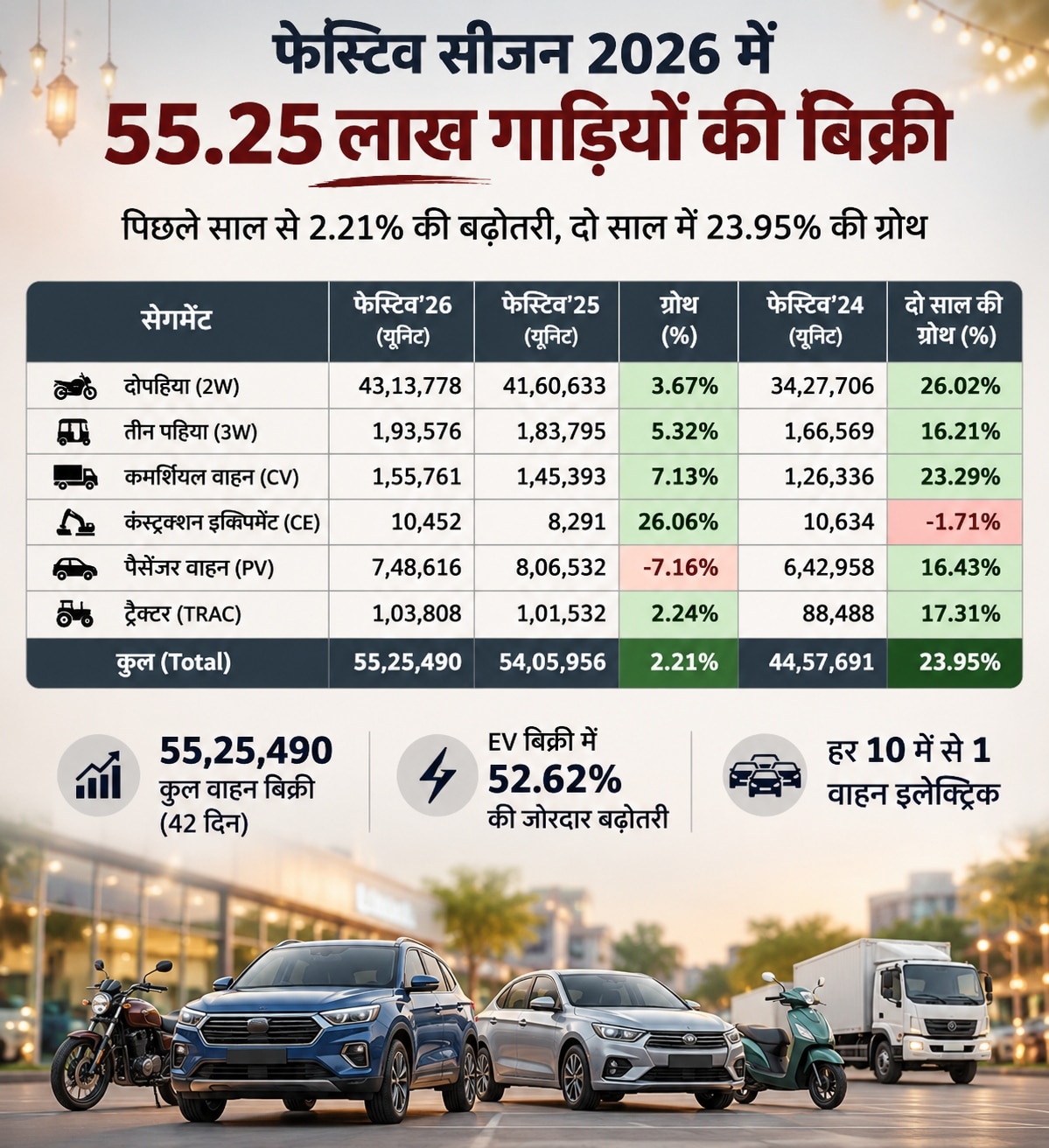
According to data from the Federation of Automobile Dealers Associations (FADA), 55,254,90 units of transport were sold during the 42-day festival season, setting a record. The growth in demand for electric vehicles was particularly noticeable: for the first time in one festival season, over 500,000 electric vehicles were sold.

FADA Chairman Sai Giridhar noted that the 42-day festival season of 2026 will be memorable for the Indian auto retail market. Despite impressive sales last year thanks to GST 2.0, this year saw an increase of 2.21% in retail car sales. Total sales reached 55,254,90 units, setting a new festival season record.

Compared to the 2024 festival season, the current period demonstrated an impressive sales growth of 23.95%, indicating sustained high consumer interest in purchasing cars after the introduction of GST 2.0, and now growing demand.

The start of this year's festival season was somewhat sluggish. The impact of last year's record sales was particularly noticeable during Navratri, which affected the market. Passenger vehicle sales decreased by more than 18% during Navratri. However, as Dhanteras and Diwali approached, buyer activity significantly increased.

This influenced the overall season figures: the initial decline in the passenger car segment was reduced by more than half. Furthermore, the overall auto retail market, which was in negative territory during Navratri, turned positive towards the end of the festival period as customers actively purchased cars in the final days.

Sales growth this season was not limited to one segment. Sales increased in most categories, including two-wheelers, commercial vehicles, three-wheelers, and tractors. According to FADA, two-wheeler sales grew by 3.67%. The commercial vehicle segment showed a growth of 7.13%, and three-wheeler sales increased by 5.32%. Tractor sales grew by 2.24%, while the construction equipment segment showed the strongest result with a growth of 26.06%.

The passenger car segment was the only major segment to record an annual decline during this festival season. Car and SUV sales fell by 7.16%. This is attributed to the implementation of GST 2.0 last year. Last year, when Navratri began on September 22, new GST rules came into force across the country, leading to a significant drop in vehicle prices and a buying boom. This did not happen this year, and prices for passenger cars continue to rise compared to last year.

Nevertheless, when compared to the 2024 festival season, passenger car sales still showed confident growth of 16.43%.

The main story of this festival season was electric vehicles. EV segment sales soared by 52.62%, and for the first time in one festival season, EV sales exceeded the 500,000 mark, setting a new record. Electric motorcycle sales grew by 61.10%, and electric passenger cars (cars and SUVs) by 72.91%. Sales of electric commercial vehicles doubled. Thus, approximately one in every ten cars sold this season was electric.

Analysis of data over two years shows a 67.55% growth in electric vehicle sales. This suggests that the demand for EVs no longer depends solely on government programs or subsidies; consumers are actively adopting electric vehicles due to low operating costs, improved range, and expanded market choice.

India's car sales volume in October 2026: Segment growth amid mixed brand results
Read more
www.aajtak.in

India's car sales volume in October 2026: Segment growth amid mixed brand results

October 2026 proved to be a favorable month for automotive brands in the Indian market, although this success was not universal across all companies. An analysis of the top 15 automotive companies showed that they sold 524,226 units over the past 31 days. Compared to October of last year, when 466,814 units were sold, the segment experienced a year-on-year growth of 12.3%. Furthermore, compared to September, October sales improved by 14.1%, as these 15 companies sold 459,457 units in September.

Nevertheless, not all companies demonstrated positive momentum; six out of fifteen companies showed negative growth, and a new brand appeared on the list. Maruti Suzuki leads in sales volume for the segment, while Jeep ranks at the bottom of the list. According to the Auto Pandit report, Maruti Suzuki sold 212,384 units in October 2026, achieving a year-on-year growth of 20.5%.

Tata Motors is in second place, having sold 73,894 units, showing an increase of 20.9% compared to October of last year. Mahindra sold 73,338 vehicles, demonstrating a year-on-year growth of 2.4%. Hyundai sold 62,799 units with a growth of 16.7%. Kia Motor was fifth, selling 33,462 units, increasing sales by 13.2%.

Meanwhile, Toyota sales declined: the brand sold 29,521 units, representing a drop in sales of 26.7% year-on-year. MG Motors showed a growth of 25.3%, selling 8,013 units. Skoda faced a decrease in sales of 5.4%, selling 7,805 units in October 2026. Honda increased sales by 19%, selling 7,609 vehicles, while Renault recorded a decline, selling 4,577 units.

Nissan demonstrated significant sales growth of 37.4%, selling 3,594 units. VinFast is a new player on this list and sold 3,023 vehicles, with the entire portfolio of this company consisting of electric vehicles. Volkswagen sales fell by 28%, totaling 2,913 units. Citroen sold only 1,008 units in October. The lowest figure on the list was Jeep, which managed to sell only 286 units in October.

Popular