Huawei plans to introduce HBM design to compete with Samsung and SK hynix
Read more
TechNode
technode.com

Huawei plans to introduce HBM design to compete with Samsung and SK hynix

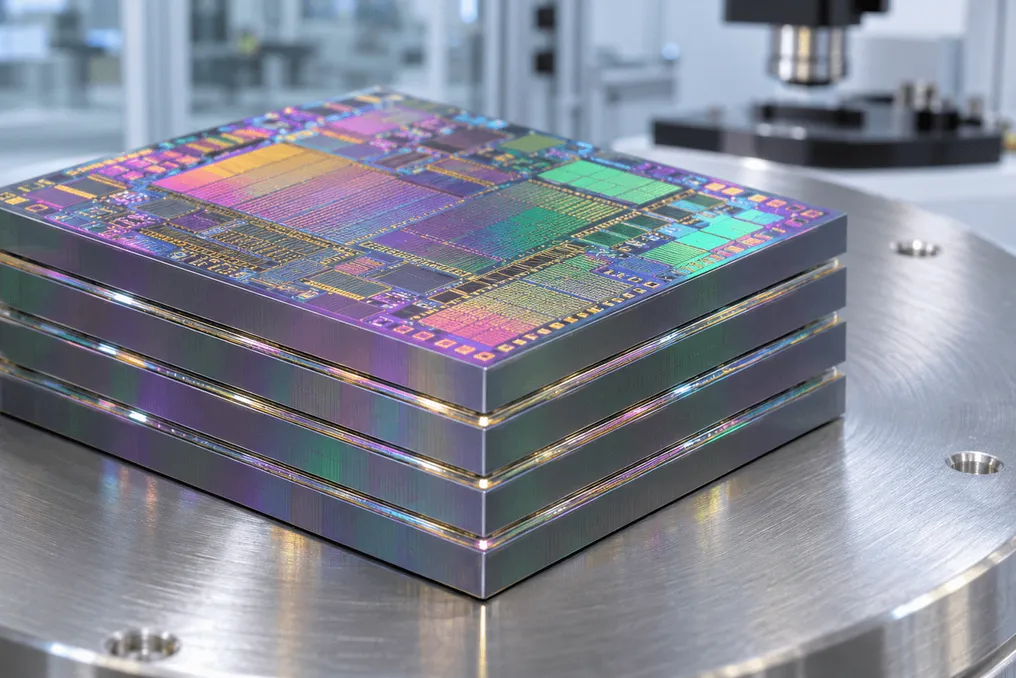
According to a report published on Thursday, Huawei intends to introduce a high-bandwidth memory (HBM) design that will have twice the data contact density compared to chips currently mass-produced by Samsung and SK hynix.

The presentation of this research is scheduled for a semiconductor conference in San Francisco in February. HBM memory provides AI processors with large volumes of data necessary for training and inferencing.

Increasing the data connection density could potentially provide wider bandwidth between memory and processors, making this design relevant for Huawei's broader AI chip development. However, the report does not specify how close this technology is to commercial production.

Developing its own HBM would allow Huawei to address a significant gap in China's semiconductor supply chain. Restrictions from the US prevent Samsung, SK hynix, and Micron from supplying HBM to Chinese customers, increasing pressure on domestic companies to create alternatives as overseas supplies decrease. Huawei's research expands its semiconductor focus beyond processors to include the necessary supporting memory technology.

Similar stories

Huawei presents four papers for ISSCC 2027 conference on LogicFolding, Stacked IVR, and Custom HBM
Read more
pandaily.com

Huawei presents four papers for ISSCC 2027 conference on LogicFolding, Stacked IVR, and Custom HBM

Huawei Technologies has submitted four papers to the official Preview Program of the IEEE International Solid-State Circuits Conference (ISSCC) for 2027. This program draft is dated November 23, 2026, and the conference itself is scheduled for February 14-18, 2027, at the Marriott Marquis Hotel in San Francisco.

According to the program, all four presentations from Huawei will take place on Tuesday, February 16. It is important to note that these entries are slots for conference talks, not announcements of products or launches of high-speed memory (HBM) chips or devices. The figures in the titles reflect the program's wording and do not yet have final implementation work or details.

Details of the Submitted Papers

Session 8.5, scheduled for 10:05 AM, is titled 'Hybrid-Connected Flagship Mobile SoC with Full On-Chip Modular Segmentation.' This paper is attributed to Huawei teams from Beijing, Shanghai, Shenzhen, and Chengdu. The title describes a flagship mobile system-on-chip that integrates hybrid connectivity with full on-chip modular segmentation, but it does not define a finished product or manufacturing process node by itself.

Session 9.7, which will take place at 10:30 AM, is dedicated to 'Enhanced Reliability of 33A 3D-Stacked IVR, Enabling Kilowatt-Class Power Delivery and 59W System Power Reduction for AI Processors.' This presentation is from the Huawei team in Shenzhen. The program phrasing refers to a 33-ampere three-dimensionally stacked integrated voltage regulator, kilowatt-class power delivery, and a 59-watt system energy reduction for artificial intelligence processors; these statements remain at the level of titles before the actual paper is presented.

Session 13.8, scheduled for 11:20 AM, is titled 'Fractional N Ring PLL with 71.3 fs Delay for 212.5 Gbps 3D-Friendly Wired Links.' This paper also originates from Shenzhen and mentions phase jitter of 71.3 femtoseconds for a fractional N ring-based Phase-Locked Loop designed for 212.5 gigabit per second wired channels compatible with 3D.

Finally, Session 22.6, at 4:00 PM, presents 'Custom HBM with 64 Channels and 4096 DQ, Featuring Memory Controllers and 5-Layer Wafer-on-Wafer Hybrid Interconnect.' The program describes a custom-designed HBM featuring 64 channels, 4096 DQ contacts, integrated memory controllers, and a five-layer Wafer-on-Wafer hybrid interconnect. IT Home reported these four entries on November 25, referencing the same official program. An assessment of any of the four developed solutions is only possible after the official papers and presentations are delivered at the conference.

Huawei integrates Chinese chip design tools into a real project
Read more
technode.com

Huawei integrates Chinese chip design tools into a real project

Huawei announced at its forum on innovation and intellectual property in Beijing on Tuesday that it successfully linked software from developers of Chinese Electronic Design Automation (EDA) tools into a functioning toolchain, which was tested on a real chip project.

He Qing, Chairman and General Manager of Phlexing, characterized this work as the first successful example of integrating a domestic EDA toolchain in the industry.

Phlexing, based in Hangzhou, has been developing specialized tools jointly with Huawei for several years. The GloryEX software allows for extracting the resistance and capacitance of chip connections, helping engineers calculate signal propagation paths within the project. Additionally, GloryBolt verifies power integrity by assessing the reliability of energy distribution in the chip.

These checks are part of the verification process that the design must undergo before being handed over for manufacturing. Furthermore, Huawei integrated Phlexing's software with other Chinese EDA tools, ensuring coordination among chip designers, fabrication plants, and packaging companies within a unified design workflow. The collaboration also covers technologies for projects combining various manufacturing processes and three-dimensional structures.

Huawei Unveils G1, Its First Continuous Glucose Monitor After Class III Approval in China
Read more
pandaily.com

Huawei Unveils G1, Its First Continuous Glucose Monitor After Class III Approval in China

Huawei officially announced the release of its first continuous glucose monitoring (CGM) system, G1, via a teaser posted on its consumer business official account on Weibo on November 13. The company stated that this product will provide a professional and intelligent experience for managing blood glucose levels. Huawei has not yet published an English product page, and information regarding price and availability is absent.

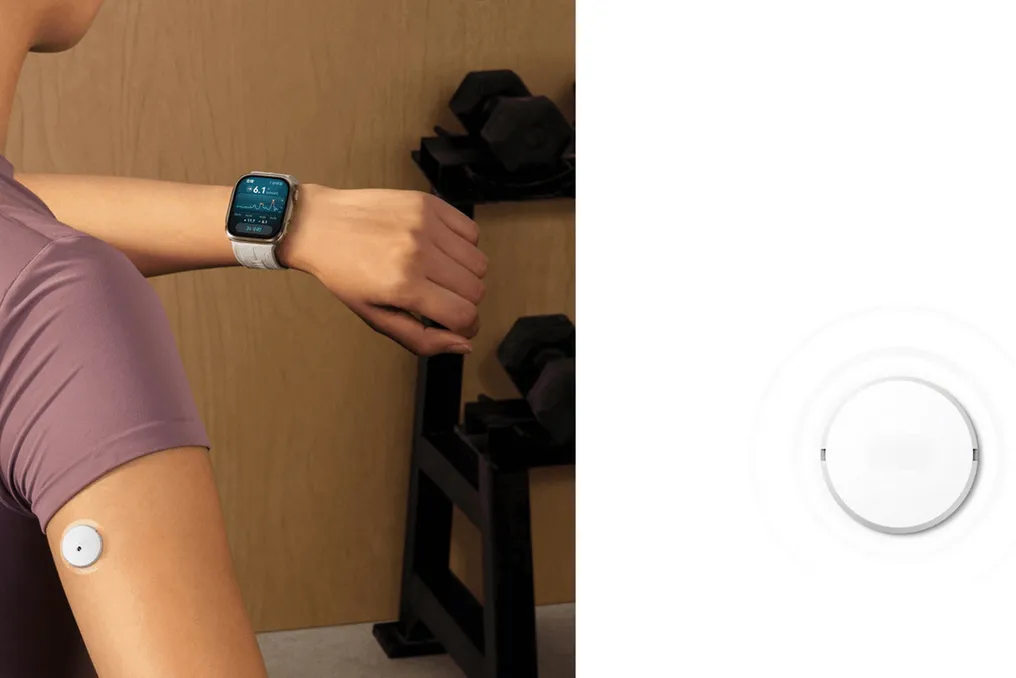
The official poster lists three key features of the device: 24-hour continuous glucose monitoring, the ability to view readings on both phones and smartwatches, and alerts for abnormal glucose levels. Images show a small circular sensor worn on the back of the upper arm, with data displayed on a Huawei watch.

This announcement followed the receipt of regulatory approval. On October 30, the National Medical Products Administration (NMPA) of China included Huawei Device Co., Ltd.'s continuous glucose monitoring system in the list of recently approved Class III registered devices. This class is the highest in China's medical device system and corresponds to the level of cardiac stents and artificial joints. G1 is the first Huawei device to receive Class III registration.

Previously, the company's devices had received Class II approvals, which related to a wrist blood pressure monitor, software for sleep apnea screening, and software for pulse wave recording that detects atrial fibrillation and premature beats.

Device Details and Purpose

According to registration data reported by Chinese media, the device is intended for adults aged 18 and older suffering from diabetes. It continuously or periodically measures glucose levels in interstitial fluid, retains real-time readings for trend tracking, and warns users when levels exceed set thresholds. The device is designed for single-patient use, does not require user calibration, and can be worn for up to 16 days.

Some technical specifications remain unconfirmed. Previous leaks reported by IT Home indicated that the sensor uses a soft subcutaneous filament with a glucose oxidase electrode, has a Mean Absolute Relative Difference (MARD) below 10%, lags behind blood glucose levels by approximately five to fifteen minutes, conceals the needle, and can be used while swimming. Huawei has not confirmed these figures.

Huawei has been involved in glucose monitoring for several years. The WATCH 4 series, released in 2023, offered a high sugar risk assessment that evaluated risk without providing actual glucose values. The CGM sensor provides these values directly, although, like all CGMs, it measures interstitial fluid, which lags behind blood glucose during rapid changes in levels.
Popular