Differences between international and Brazilian esports championships: investment and culture
Read more
Olhar Digital
olhardigital.com.br

Differences between international and Brazilian esports championships: investment and culture

The esports scene in Brazil has proven its ability to compete at a high level, boasting world champions, an engaged community, and highly qualified professionals. However, when comparing major international competitions with national ones, disparities are observed that go beyond just the athletes' performance.

A crucial distinguishing factor lies in the attraction and retention of investments. Major global events, such as League of Legends Worlds and VALORANT Champions, manage to attract brands from various sectors, including those with no direct link to the games. In the Brazilian context, despite commercial interest in elite tournaments, smaller competitions face challenges in ensuring their continuity.

It is essential to understand that sponsorship must go beyond merely financing the competition or raising the prize pool. It enables investment in infrastructure, hiring specialists, and planning for future seasons. If financial input remains sporadic, it becomes difficult to build a solid competitive ecosystem.

Another relevant point is discipline. In established markets, such as South Korea's League of Legends scene, there is a consolidated culture of competitive preparation built up over decades. Punctuality, dedication to training, respect for the coaching staff, and openness to feedback are essential traits for a team's advancement.

However, the responsibility cannot fall solely on the players. The organizations themselves must provide appropriate working conditions, professional support, and career planning. One cannot demand maximum performance from an athlete if they have to juggle training with another job because they cannot sustain themselves financially through competitive play.

Major international championships are the result of an ecosystem that is built long before the elite level. University competitions, amateur tournaments, and Tier 3 (T3) championships play a vital role in talent renewal and professional development.

In Brazil, it is still necessary to strengthen the link between these grassroots environments and large organizational structures, creating development paths for players, coaches, and analysts. Furthermore, it is necessary to invest in professional specialization, given that in smaller tournaments it is common for one person to assume multiple roles, which can harm service quality and cause workload overload.

Not all aspects point to disadvantages for Brazil. From the perspective of an esports broadcast professional, the preparation of Brazilian casters often surpasses that of international professionals. National narrators and commentators display deep technical knowledge, improvisation skills, mastery of player trajectories, and aptitude for turning a match into entertainment.

The work begins long before the live broadcast, involving statistical analysis, past matchups, team characteristics, and specific details about each competitor. Brazilian content creators also stand out for their creativity and ability to build bonds with the community, maintaining public interest even outside competition periods. This closeness to the viewer is a valuable asset of Brazilian esports and should be exploited commercially more vigorously.

Often, what is lacking is not professional quality, but rather investment proportional to the excellence already demonstrated. A possible solution involves implementing a collective development strategy, involving tournament organizers, sponsors, developers, and the organizations themselves.

For this, some elements are crucial: Brazil does not need to fully replicate foreign models; it needs to identify the best practices of these models and integrate them into what the country already executes with excellence. Talent, creativity, prepared professionals, and a community capable of turning tournaments into great spectacles already exist. The next step is to build a structure commensurate with the current professionals, instead of waiting for them to maintain extraordinary results with limited resources.

Similar stories

University esports leagues aid in the training of new professionals in the sector
Read more
olhardigital.com.br

University esports leagues aid in the training of new professionals in the sector

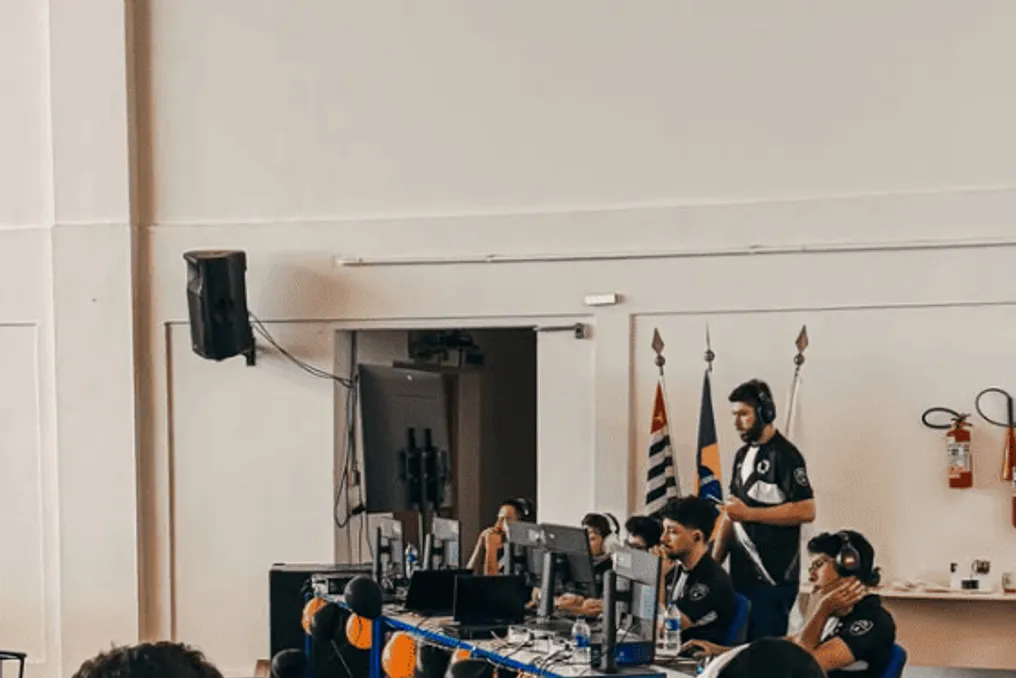
When thinking about university sports, one often refers to modalities such as football, basketball, or volleyball. However, electronic sports have also gained ground in Brazilian universities, establishing teams, championships, and structures focused on student development.

Games like League of Legends, VALORANT, and Counter-Strike are part of this ecosystem, where university students can compete while balancing training with their academic studies. However, the relevance of this scenario transcends the mere pursuit of titles, as university leagues serve as a gateway to the esports job market, benefiting even those who do not aspire to be professional players.

Just as it happens in traditional sports, students represent their respective institutions in confrontations against other universities. Generally, teams are structured by athletic clubs or student groups dedicated to esports, which conduct selection processes, define training routines, and manage various competitive modalities.

In São Paulo, the Paulista University Esports League (LUPE) is a notable example, promoting competitions aimed at higher education students in the state. In collaboration with AcadArena, this league has an Inclusive VALORANT opening tournament scheduled for November 28, 2026, following the standards of the Riot Games Game Changers circuit.

Initiatives like these promote the democratization of access to university competitions, increase diversity in the competitive environment, and stimulate the emergence of new talents in the esports universe.

Campinas features two prominent university esports organizations: PUC-Campinas Cardinals and Unicamp Tritons. Cardinals, founded in 2016, represents PUC-Campinas in competitions and develops activities that go beyond players, covering areas such as communication, design, management, and audiovisual production.

Unicamp Tritons, established in 2015, has been part of the Brazilian university competitive scene since its inception. This organization has a history of participating in national and international university tournaments, in addition to having experience with sponsorship, receiving support from SiDi, the technology institute of Campinas, in 2019.

These two cases illustrate how the academic environment can function as a space for creating competitive structures and for improving professional skills.

There is an important distinction between playing ranked matches and acting representing a team in a championship. In the university context, participants begin to experience responsibilities analogous to those in the professional scene, such as meeting training schedules, analyzing opponents, receiving feedback, and developing collective strategies.

Additionally, participation in championships allows for the building of a competitive record, the establishment of contacts, and gaining visibility. Just like in Tier 3 (T3) championships, the university environment can serve as a showcase for new talents.

Although there is no guaranteed direct connection between university leagues and major professional championships, the value of these competitions lies in the accumulated experience and the ability to develop necessary aptitudes at more advanced levels.

Another significant benefit is the possibility of balancing competitive development with academic training. In a market marked by instability and the short lifespan of many player careers, having a degree can expand professional options both inside and outside of esports.

One of the greatest contributions of the university setting may be introducing students to professions that do not always receive comparable attention to athletes. An esports organization requires individuals responsible for various tasks: a marketing student can gain experience managing social media; someone from communications can try narration or broadcast production; and business administration students can work with sponsorship negotiation and project management.

Such experiences can turn into a professional portfolio even before graduation. The university environment also offers the chance to test different roles, identify affinities, and understand the practical functioning of the esports industry.

When discussing the formation of new talents in esports, the focus usually falls on players who will join large organizations. However, the growth of the industry also depends on the training of good managers, communicators, coaches, and technology specialists.

Universities possess a particularly valuable characteristic in this regard: they bring together people from different fields of knowledge in one place. With institutional support, adequate infrastructure, commercial partnerships, and consistent competitive calendars, university organizations can increase their contribution to the advancement of the market.

The challenge lies in creating conditions for these initiatives to maintain their longevity, even after the graduation of the students responsible for their administration. More than just forming future champions, university leagues have the potential to shape the professionals who will be behind the next championships, as professionalizing esports implies preparing not only those who play at a high level but also those who make the entire industry operate.

Benfica President criticizes refereeing and television rights law, alleging loss of competitiveness
Read more
rtp.pt

Benfica President criticizes refereeing and television rights law, alleging loss of competitiveness

The president of Benfica expressed dissatisfaction with the refereeing and criticized the legislation regarding television rights. Rui Costa stated that the concentration of these rights will lead to a decrease in the competitiveness of Portuguese football.

Brazilians work on major AAA game productions like God of War and World of Warcraft
Read more
olhardigital.com.br

Brazilians work on major AAA game productions like God of War and World of Warcraft

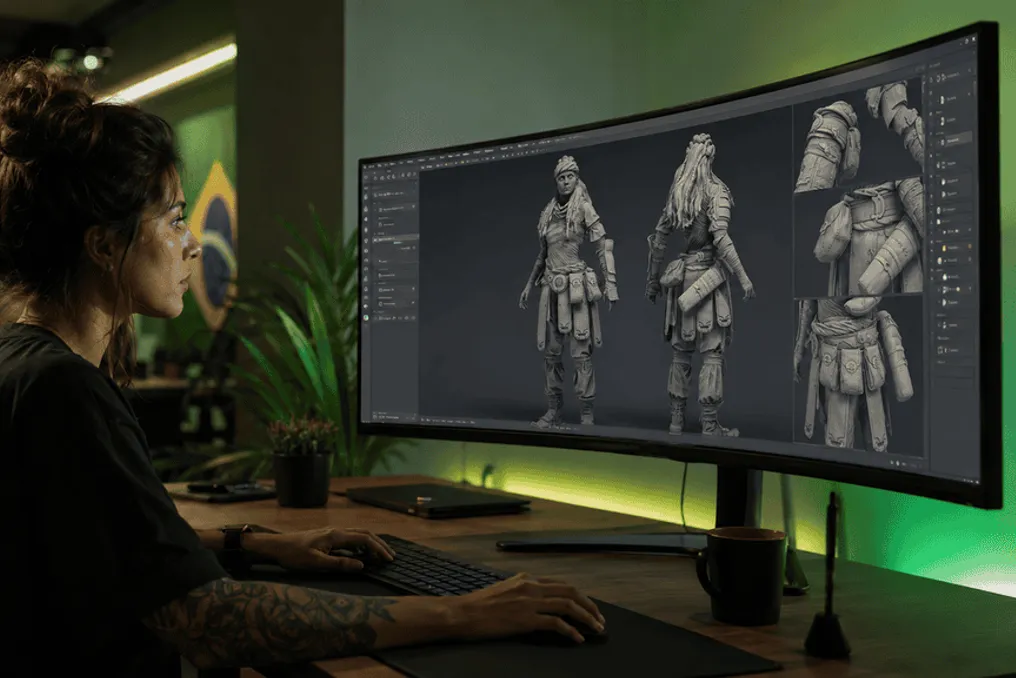
When thinking about renowned franchises like God of War and World of Warcraft, attention usually turns to large international developers. However, Brazilian professionals also play important roles in this sector, whether working directly in foreign studios or collaborating on specific phases of large-scale productions.

A notable case is that of Raf Grassetti, a Brazilian artist who dedicated ten years to Santa Monica Studio, which belongs to Sony. He served as the lead art director on God of War (2018) and art director on God of War Ragnarök (2022).

After leaving Sony, Grassetti worked at a Netflix game studio, which was later discontinued. In December 2024, he announced his return to PlayStation, this time to join Naughty Dog, responsible for the titles The Last of Us and Uncharted. His career illustrates how Brazilian talents manage to take on creative leadership positions in some of the industry's biggest works.

In addition to collaborators working abroad, Brazilian companies also contribute directly to the development of international games through outsourcing, known as external development. In this format, large producers hire specialized studios to execute tasks such as art, animation, programming, visual effects, and other stages of creation.

Kokku, a company based in Recife, is an example of this, having participated in projects such as Horizon Forbidden West and Call of Duty. Other national developers, including Puga Studios, Diorama, and Flux Games, also provide services to the global market.

According to an article published by Canaltech in May 2026, the growth of this segment is linked both to the increasing technical maturity of Brazilian studios and the greater demand for international partnerships. Rodrigo Terra, president of the Brazilian Association of Digital Game Developers (Abragames), emphasized that cost competitiveness, quality of delivery, and proximity to time zones with the United States and Europe benefit national companies.

Participation in international productions allows Brazilian studios to access advanced technologies, complex projects, and establish commercial relationships with global corporations. However, this model brings challenges, such as the possibility of difficulty in investing in proprietary intellectual property due to dependence on external contracts, in addition to pressure on working conditions caused by the search for lower costs.

For the Brazilian industry, the future goal is to capitalize on this experience to increase the production of original games. The contribution of professionals like Raf Grassetti and studios like Kokku proves that Brazil is already part of the AAA games production chain, even if its name is not prominently displayed on the game covers.

Popular