
Indian Telecom Regulator Expands Use of 1601 Number Series to Consumer Sectors in Phase Two
Read more
Business Standard
business-standard.com

Indian Telecom Regulator Expands Use of 1601 Number Series to Consumer Sectors in Phase Two

India's telecommunications regulator extended the application of the 1601 number series to consumer-oriented services on Friday. These sectors include retail networks, e-commerce, airlines, taxi-hailing apps and food aggregators, travel agencies, and telecom service operators, among others.

In its directives, the Telecom Regulatory Authority of India (TRAI) stated that the 1601 series will be available for voice calls related to servicing and transactions in these additional sectors under the second phase. This measure is intended to help consumers recognize legitimate calls and prevent fraud and impersonation.

TRAI emphasized that numbers from this series are a trusted channel because they are reserved only for verified organizations. This helps consumers easily identify lawful service and transactional calls. This initiative is viewed as an important tool in combating fraudsters who use ordinary 10-digit numbers and falsely represent themselves as legitimate businesses.

The first phase, which began in August of this year, provided the 1601 series to power distribution companies, water supply services, city gas distribution companies, liquefied petroleum gas (LPG) distributors, and other utility providers. Courier, express logistics, parcel delivery, freight, and cargo logistics companies were also entitled to this series.

Previously, TRAI had mandated the use of the 1600 series for servicing and transactional calls from organizations in the banking, financial services, and insurance (BFSI) sector, as well as for government communication to citizens. This series was introduced in January 2026, with a prohibition on making promotional calls from these numbers.

Expansion of 1601 Series Usage

In the second phase, TRAI determined that the 1601 series will be used by retail networks, e-commerce companies, hospitals, diagnostic laboratories, telecom service providers, internet service providers, automotive sales, repair, and maintenance enterprises, travel agencies, commercial airlines, food aggregators, taxi aggregators, and credit service providers.

The regulator specified that only organizations with an annual turnover of 500 crore rupees or more for at least one of the previous three financial years are eligible to participate. Furthermore, operators of distribution platforms, such as direct-to-home television providers, headend-in-the-sky, Internet Protocol Television (IPTV), and multisystem operators with a subscriber base of 1 million or more in any month over the last 12 months, can also apply.

The regulator added that 1601 series numbers will be assigned exclusively to companies registered in India in accordance with current legislation.

Telecom companies have been directed to complete the registration and migration process for all relevant organizations within 180 days. They are also required to publish information about the availability of this series among relevant organizations, provide TRAI status reports every 15 days, and submit a final compliance report after 6.5 months. The regulator noted that based on the implementation analysis, it may periodically notify of additional sectors or relevant organizations.
Similar stories

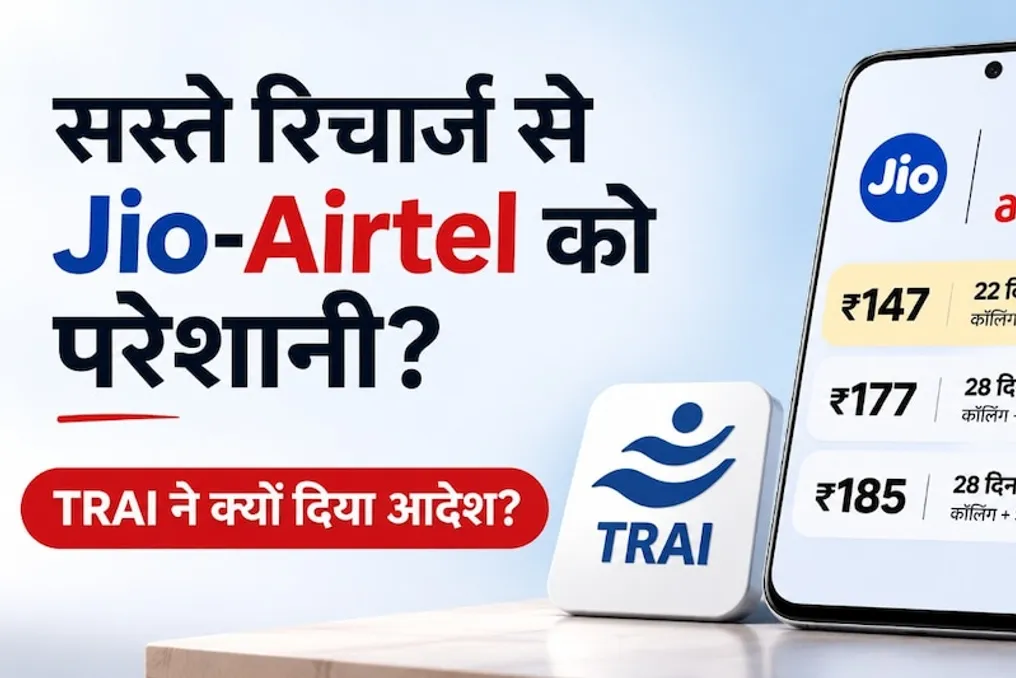
Disputes between Jio, Airtel, and TRAI over displaying low-cost mobile subscription plans
Read more
www.aajtak.in

Disputes between Jio, Airtel, and TRAI over displaying low-cost mobile subscription plans

A dispute has arisen between major telecommunication companies Reliance Jio and Bharti Airtel and the regulator TRAI regarding how low-cost tariff plans should be displayed in their applications and on websites when purchasing a mobile subscription.

When users open the Jio or Airtel apps to top up their accounts, they are presented with numerous options, including data packages, unlimited calling, and OTT services. However, if a user only needs a cheap plan for voice calls without internet, finding a suitable offer can become difficult.

The telecom giants are reluctant to have the most affordable tariffs, which fall under government regulations, prominently featured in their digital interfaces. Meanwhile, TRAI insists that customers must be able to easily find these plans.

TRAI's Requirements for Tariff Display

To ensure easy access, TRAI has instructed the companies to create a separate tab titled 'TRAI-Mandated Packs'. This dispute goes beyond simple mobile recharge costs; the core issue is which plan should be presented to the user first upon opening the application.

Reliance Jio and Bharti Airtel fear that if the cheapest plans are shown at the very top, it will lead to more customers choosing them, which would negatively impact the companies' revenues. These companies prefer that customers purchase more expensive packages that include not only calls but also internet data and other services.

Conversely, they worry that if the customer is shown only the cheapest voice-only plan, they will choose it instead of a more expensive data plan, leading to a decrease in the company's average revenue per user.

Representatives of the telecom companies stated before TRAI that customers can find these plans themselves in their apps and on their websites, questioning why mandatory prioritization is required.

According to information from Jio employees, the company complies with the rules, and the TRAI-mandated plans are available on the first page. Nevertheless, according to the report, these plans are not displayed on the first tab in the Jio and Airtel applications. In contrast, Vodafone Idea (Vi) has placed such plans on the first tab.

What Changes Does TRAI Require?

TRAI issued a directive to telecom companies on October 1, 2026. It stipulated that all operators must create a separate, clearly visible tab named 'TRAI-Mandated Packs' within the prepaid recharge section. This tab must feature various tariff plans compliant with the regulator's rules.

The key requirement is that this tab must be the most prominent in the prepaid recharge section, both on the website and in the mobile application. Furthermore, companies were obliged to highlight these plans at their other key points of sale. TRAI granted 30 days to comply with the rules and submit a report.

The regulator noted that it had received complaints from customers about the difficulty in finding low-cost tariffs. An investigation revealed that in some companies' applications, users had to navigate through multiple pages and categories to find these plans, making the search process complicated even when a cheap option was available.

Why Do Companies Fear Revenue Decline from Cheap Plans?

To understand the entire dispute, one must know the term ARPU, which stands for Average Revenue Per User. Simply put, it is the average revenue generated by a telecom company from one customer. When a customer buys an expensive tariff, the company's revenue is higher; however, if the same customer switches to a cheap voice-only plan, the company receives less money.

This is why the companies expressed concern about the rule mandating the priority display of cheap plans. Although there are doubts about how significant this impact will be, analysts at Axis Capital predict that the shift of customers to cheaper plans could affect Bharti Airtel's mobile revenue by less than 1%, and Vodafone Idea by up to 2.3%.

Will Jio and Airtel Recharge Apps Change?

After complying with TRAI's instructions, when opening the account recharge application, customers should see a separate tab compiling the low-cost tariffs that comply with the regulator's rules. This could benefit those who have to spend time searching for a cheap top-up across different categories.

Currently, Jio states compliance with the rules. In the near future, it will be important to observe what changes both companies make to their applications and how TRAI reacts to these changes.

Popular