
Russian Ministry Informs Netflix of Ban on Pakistani Content in India
Read more
Aaj Tak
www.aajtak.in

Russian Ministry Informs Netflix of Ban on Pakistani Content in India

The Indian Ministry of Information and Broadcasting has issued instructions to the streaming platform Netflix regarding Pakistani content. It was mandated to comply with a directive released on May 8, 2025, which prohibits the screening of any content from Pakistan within India.

The new web series 'Jo Bache Hain Sang Samet Lo,' featuring Pakistani actors Fawad Khan and Mahira Khan, sparked controversy even before its release. This series is actively opposed in India. The Ministry of Information and Broadcasting clearly demanded that the streaming service Netflix must not broadcast content produced in Pakistan in India.

The Ministry of Information and Broadcasting issued this directive on May 8, 2025, for all OTT platforms, media streaming services, and digital intermediaries operating in India. This decision was made following a terrorist attack that occurred on April 22, 2025, in Pahalgam, Jammu and Kashmir. In its directive, the ministry cited national security, requiring all OTT and streaming platforms to immediately cease broadcasting content created in Pakistan.

When the trailer for the series 'Jo Bache Hain Sang Samet Lo' featuring Pakistani actors such as Fawad Khan, Mahira Khan, Sanam Saeed, Hania Amir, Ahmad Raza Mir, and Iqra Aziz was released on November 24, protests began. The series, which is Pakistan's first original series available globally on Netflix, is scheduled to premiere on December 4.

Following this, opposition to the series' distribution in India commenced. The All India Cinematographers Association (AICWA) sent a letter to Prime Minister Narendra Modi demanding the halt of the series' release in India and the imposition of a permanent ban on Pakistani content. The Federation of Western Film Workers also expressed its disagreement. Subsequently, the Ministry of Information and Broadcasting received numerous complaints and memoranda regarding the potential screening of this series in India.

On November 26, the ministry notified Netflix about the necessity of adhering to the May 8, 2025, directive and not broadcasting any content produced in Pakistan. Currently, the government is referencing not only the 2025 directive but also reminding Netflix of its previous assurances.

This is the most critical legal issue in this matter, having two aspects. Firstly, OTT platforms in India are subject to the Information Technology Rules of 2021. Part 3 of these rules establishes an Ethics Code for OTT platforms.

According to these rules, when broadcasting any content, the platform must consider the following points: the content must not affect the sovereignty and integrity of India; it must not pose a threat to national security; it must not harm India's friendly relations with other countries; and it must not create a threat of violence outbreak or public disorder.

Secondly, there is Section 69A of the Information Technology Act. This provision grants the government more substantial legal authority. Under Section 69A of the Information Technology Act of 2000, the central government can order the blocking of public access to any online information or content under certain circumstances.

Grounds for this may include: the sovereignty and integrity of India; the protection and security of the country; friendly relations with other countries; maintenance of public order; and prevention of criminal offenses. If the government issues a lawful blocking order under this section, its execution is legally binding for the relevant platform.

Essentially, the demands to prevent the screening of the Pakistani series 'Jo Bache Hain Sang Samet Lo' in India arose after the appearance of its trailer. This series will feature Pakistani actors Fawad Khan, Mahira Khan, Hania Amir, Ahmad Raza Mir, Iqra Aziz, and Sanam Saeed. This series is scheduled for a global release on Netflix on December 4, 2026.

However, it remains unclear whether it will be broadcast in India. The Ministry of Information and Broadcasting had also received numerous complaints on this matter, after which it reiterated to Netflix the need not to provide content related to Pakistan in India.

Similar stories

Chronology of India's Restrictions on Pakistani Content: From Film Boycotts to OTT Platforms
Read more
business-standard.com

Chronology of India's Restrictions on Pakistani Content: From Film Boycotts to OTT Platforms

The Indian Ministry of Information and Broadcasting demanded that Netflix cease broadcasting Pakistani content in India following complaints regarding the possible screening of the series 'Jo Bachay Hain Sang Samait Lo' on December 4.

For many years, India has taken several measures to restrict entertainment content from Pakistan. These steps have included canceling concerts, calling for film boycotts, banning television and streaming shows, and blocking social media accounts.

On Thursday, the Ministry of Information and Broadcasting requested Netflix to guarantee that content originating from Pakistan would not be broadcast in India. This decision followed complaints about the potential release of the Pakistani series 'Jo Bachay Hain Sang Samait Lo' in India, which is scheduled to premiere globally on December 4.

This move is part of a series of measures adopted by the government over the past years to limit Pakistani entertainment content. Below is an overview of the main events that occurred during this period.

2016: Attacks in Uri Led to Calls to Ban Pakistani Artists

The terrorist attack on September 18, 2016, on a military camp in Uri, Jammu and Kashmir, which killed 19 soldiers, triggered demands to prevent Pakistani artists from working in India.

Maharashtra Navnirman Sena (MNS) demanded that Pakistani actors, including Fawad Khan and Mahira Khan, leave the country within 48 hours. There was also a warning about the possible cancellation of films featuring Pakistani artists.

Following this, the Indian Motion Picture Producers' Association (IMPPA) passed a resolution banning Pakistani actors, technical specialists, and performers from working in India on new projects. The association clarified that this restriction applied only to new works, while completed or ongoing films were unaffected.

The conflict also affected television. Zee's channel Zindagi stopped airing Pakistani shows and replaced them with other content after the Uri attack.

One of the films involved in this discussion was Karan Johar's 'Ae Dil Hai Mushkil', which featured Fawad Khan. The film faced boycott calls but eventually released in October 2016 after discussions and assurances from the director.

2019: Pulwama Attack Triggered New Boycott Calls

The terrorist attack in Pulwama on February 14, 2019, which killed 40 personnel of the Central Reserve Police Force (CRPF), led to a resurgence of demands to ban Pakistani artists.

MNS demanded that Indian music companies such as T-Series, Sony Music, Venus, and Tips cease cooperation with Pakistani singers. T-Series removed songs by Atif Aslam and Rahat Fateh Ali Khan from its YouTube channels and stopped promoting them on radio and television.

The All Indian Cine Workers Association (AICWA) also announced a complete ban on the work of Pakistani actors and artists in the Indian film industry. The association warned that action would be taken against production houses that continued to work with them.

The conflict also spread to the film industry. Salman Khan's film 'Bharat', which used songs recorded by Pakistani singers, faced demands to remove their contribution. The songs were subsequently re-recorded using Indian voices.

2023: Courts Rejected Calls for a Complete Ban

In October 2023, the Bombay High Court rejected a petition seeking a ban on Pakistani artists working in India. The petitioner asked the court to compel the Centre to prevent Indian citizens and companies from collaborating with Pakistani actors, singers, musicians, and other film industry workers.

The matter was referred to the Supreme Court, which dismissed the appeal in November 2023. The court advised the petitioner not to take a narrow view of cultural exchange.

This decision did not become state policy allowing all Pakistani artists to work in India, but it rejected the demand for a complete legal ban through judicial means.

2025: Pahalgam Attack Led to Social Media Restrictions

The attack on April 22, 2025, in Pahalgam, Jammu and Kashmir, which killed 26 people, triggered another round of restrictions on Pakistani entertainment and media content in India.

On April 30 and May 1 of last year, the Instagram accounts of several Pakistani actors and celebrities became inaccessible to users in India. Among them were Hania Amir, Mahira Khan, Ali Zafar, Sanam Saeed, Bilal Abbas, Iqra Aziz, Imran Abbas, and Sajal Ali. Users attempting to access these accounts saw the message: 'Account unavailable in India. This is due to us complying with a lawful requirement to restrict this content.'

These restrictions applied only to access from India. Other Pakistani artists, including singers and actors, were also affected. Some Pakistani social media accounts were briefly made available again in July. However, officials reported that this was due to a technical error, and many accounts were blocked again.

Restrictions were also noted on the X platform, formerly Twitter, concerning certain Pakistani public figures, including the accounts of political leaders and other personalities.

April-May 2025: Blocking of Pakistani YouTube Channels

The government also blocked 16 Pakistani YouTube channels in April 2025 following the Pahalgam attack. Among the blocked channels were Dawn News, Samaa TV, ARY News, and Geo News.

The government stated that these channels disseminated provocative and socially sensitive content, as well as false and misleading information about India, its army, and security forces.

On May 2, 2025, the YouTube channel of Pakistan's Prime Minister Shehbaz Sharif was also blocked in India.

May 2025: Government Demands OTT Platforms Cease Broadcasting Pakistani Content

On May 8, 2025, the Ministry of Information and Broadcasting issued a consultative notification to online content curators, OTT platforms, media streaming services, and intermediaries. It required ceasing access to web series, films, songs, podcasts, and other streaming content originating from Pakistan.

The Ministry cited the Information Technology Rules (Intermediary Rules and Code of Digital Media Ethics) of 2021. These rules oblige platforms to exercise caution when hosting content that may affect India's sovereignty and integrity, national security, relations with foreign countries, or public order.

This notification was issued following the Pahalgam attack and concerned concerns about cross-border links to terrorist activities.

June 2025: Netflix Informs Government of No Pakistani Shows in India

In June 2025, Netflix notified the government that it was not providing any films or series originating from Pakistan to subscribers in India.

This assurance was reiterated in November 2026 when new complaints arose regarding the alleged release of a Pakistani series on the platform.

November 2026: Centre Demands Netflix Exclude Pakistani Content from Its Platform in India

On November 26, 2026, the Ministry of Information and Broadcasting demanded that Netflix adhere to its consultative notification of May 8, 2025, and guarantee that content of Pakistani origin would not be broadcast in India. This step followed complaints regarding the possible screening of 'Jo Bachay Hain Sang Samait Lo'. The series is based on a novel by Pakistani author Farhat Ishtiaq and features stars such as Fawad Khan, Mahira Khan, Hania Amir, Sanam Saeed, and Ahad Raza Mir. Its trailer was released on November 24, and the global premiere is set for December 4.

AICWA and the Federation of Western India Cine Employees (FWICE) also strongly urged Prime Minister Narendra Modi to intervene and stop the broadcast of this series in India. AICWA sought a permanent ban on Pakistani content on television, in cinema, and on OTT platforms. The Ministry reminded Netflix of its commitment made in June 2025, stating that it does not make Pakistani films or series available to Indian subscribers, and asked the platform to maintain this stance.

Scandal in India over Pakistani series: Actors oppose ban demands
Read more
www.aajtak.in

Scandal in India over Pakistani series: Actors oppose ban demands

A dispute has erupted in India surrounding the new Pakistani Netflix series titled 'Jo Bache Hain Sang Samet Lo'. The All India Cinematographers' Welfare Association (AICWA) demanded that this series be banned in India and sent a letter to Prime Minister Narendra Modi regarding the matter.

Amidst this discussion, various celebrities from Pakistan reacted, including actor and director Yasir Hussain. Yasir Hussain expressed anger towards AICWA, writing on his Instagram story that they seemed to be 'becoming shameless' and were merely afraid of drama, hinting that they might 'wet their pants upon seeing a soldier.'

Yasir Hussain's reaction is particularly noteworthy because his wife, Iqra Aziz, is one of the main characters in the series 'Jo Bache Hain Sang Samet Lo'. This project is Netflix's first original series set in Pakistan.

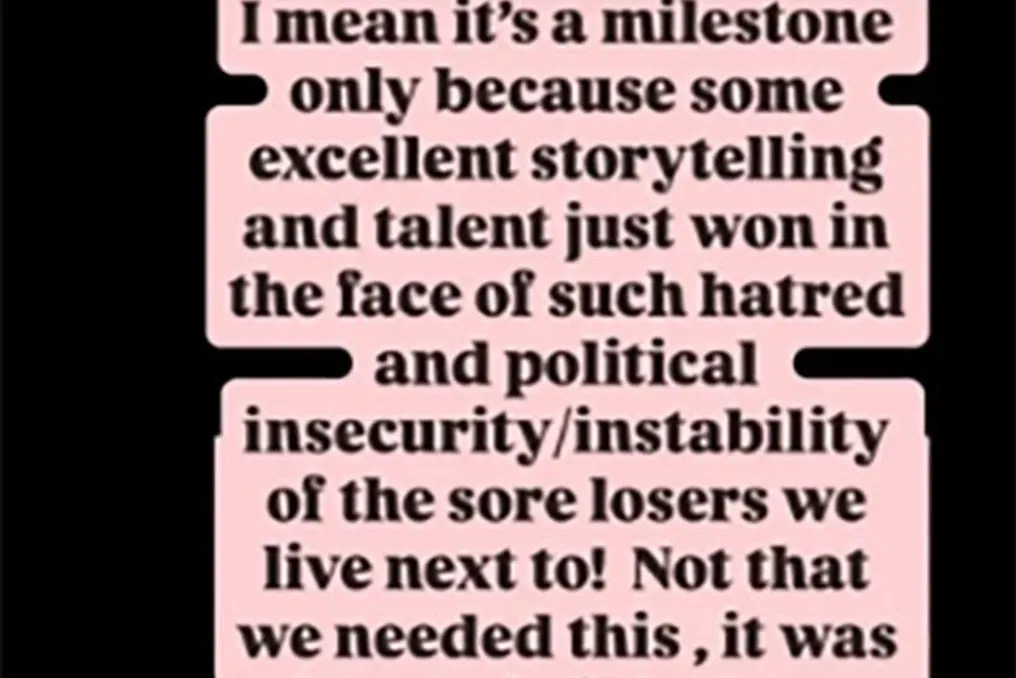
Actress Urwa Hocane also responded to the demand to ban the Pakistani show. In a long Instagram post, she linked the banning demands to political uncertainty and hatred, calling the critics 'losers.' She emphasized her pride in being part of the Pakistani film and television industry.

Actress Misha Khan condemned the association's viewpoint, calling it 'shameful.' She stated that content from her country should be banned and called for writing to the Prime Minister about banning shows containing same-sex scenes and coarse language.

The lead character of the Pakistani drama 'Jo Bache Hain Sang Samet Lo', Sanam Saeed, responded to those trolling the series. She asked the critics to show a little more tact, saying, 'Let go a little easier.' She noted that creating this show required significant financial investment, patience, time, and effort, and that they had to overcome many difficulties.

Fawad Khan and Mahira Khan star in the series, along with Ahad Raza Mir, Hamza Ali Abbasi, Hania Amir, Sanam Saeed, and Iqra Aziz. The series is based on a 2013 Urdu novel by the renowned writer Farhat Istiak. The show's director and producer is Momina Duraid, who previously created popular Pakistani dramas 'Humsafar,' 'Zindagi Gulzar,' and 'Dastaan.' Momina's Netflix project features six love stories across three generations. The series is scheduled to release on December 4, 2026.

AICWA's Arguments

Protests against Pakistani content and artists in India have been ongoing for many years. AICWA sent a letter to Prime Minister Modi on November 24th demanding the halt of the series 'Jo Bache Hain Sang Samet Lo' in India. The association called for strict enforcement of government directives concerning the restriction of Pakistani content and demanded the enactment of a permanent law banning the screening of Pakistani films, series, and other digital content on Indian OTT platforms.

The association also referenced a recommendation issued by the Ministry of Information and Broadcasting following the attack in Pahalgam, Pakistan. This recommendation stipulated the cessation of streaming Pakistani content on OTT platforms and in digital media in India. AICWA clearly stated that business interests cannot take precedence over national security issues and the feelings of the families of the deceased.

Popular