How to start an organic farm: 7 tips from someone who studied agriculture on weekends
Read more
The Better India
thebetterindia.com

How to start an organic farm: 7 tips from someone who studied agriculture on weekends

Dipak Sabharwal spent nearly two decades working at large corporations such as GE, PepsiCo, and Tata. However, observing the use of pesticides on a family farm, along with his mother's cancer diagnosis, made him question what people eat.

In 2012, while still working at GE, he began making weekend trips to family farms in Pushkar, Rajasthan. For almost four years, he studied agriculture and conducted soil experiments.

A journey that started as a personal concern eventually turned into a business. In December 2018, he became a co-founder of Earthy Tales Organics Private Limited to make organically grown food more accessible to urban families.

Before deciding what to grow, Dipak advises studying the condition of the land. It is necessary to conduct soil and water analysis, check its history, and find out what chemicals might have been used. As he states, 'organic farming starts with the soil, not with certification or branding.'

Natural farming involves much more than just giving up synthetic fertilizers and pesticides. Seed selection, compost, water management, livestock, pest control, harvesting, storage, and transportation are all important. He emphasizes: 'natural farming is not just about avoiding chemicals. It is an integrated system.'

Convincing farmers to change their methods takes time. Since a poor harvest can affect the entire family's income, they need support that goes beyond training sessions. He explains: 'Farmers do not trust words. They trust consistency.'

Achieving a good harvest does not guarantee business success. Entrepreneurs must understand consumer demand, realistic prices, and potential buyers even before sowing. At Earthy Tales, Dipak noticed that customers initially purchased fresh fruits and vegetables. Once they trusted the source, they began buying daily necessities such as atta, pulses, oils, spices, and ghee.

Agriculture rarely goes exactly according to plan. Rain, heat, pests, and diseases can affect the harvest, and demand may not match supply. Dipak recalls: 'I thought that if we had a good product, the rest would follow. But food doesn't work like that.'

Packaging, transportation, losses, and unpredictable yields can negatively impact the farming business. The founder believes that good intentions alone are not enough to keep it running. 'You cannot build a farmer-centric business if the business itself is not financially sustainable.'

The soil needs time to recover, farmers need time to trust new methods, and customers need time to change habits. Dipak's four years of weekend farming experience taught him that significant changes cannot be rushed.

He concludes: 'Patience in this business is not an option. It is part of the model.' His journey demonstrates that organic farming is not just about growing quality crops, but about creating a system that works for the soil, the farmers, and the consumers.

Similar stories

Former army major shares six simple tips for growing fresh basil in a 6-inch pot at home
Read more
thebetterindia.com

Former army major shares six simple tips for growing fresh basil in a 6-inch pot at home

If you buy fresh basil for pasta, use a few leaves, and the rest wilts in the refrigerator, a small balcony pot can provide you with fragrant leaves anytime. Extensive gardening is not required to grow this Italian herb.

Dr. Mayur Mandrah, a former military officer and creator of gardening materials, shared six simple recommendations based on his experience caring for his own basil plant.

When choosing a pot, ensure that the roots have enough room to grow. Dr. Mayur uses a six-inch container, but the key is having sufficient space for the plant and drainage holes at the bottom to drain excess water. He prefers clay pots, although fiber and plastic containers are also suitable. His pot is equipped with about four drainage holes so that excess water can flow out instead of accumulating around the roots.

For the planting substrate, he mixes equal parts vermicompost and coconut fiber. The compost provides necessary nutrients, while the coconut fiber helps retain moisture, giving the roots a balanced start.

Watering depends on weather conditions and soil drying speed. During the rainy season, he waters the plant about once a week. In summer, the plant may require watering every two to three days. When using a clay pot in summer, he advises watering every three to four days, emphasizing that these are his personal intervals, not a strict rule. It is important to check the soil regularly and never allow it to become overwatered.

Next, find a sunny spot. Dr. Mayur recommends about three to four hours of sunlight daily. Morning sun is good, followed by shadier hours during the hottest periods. If you are growing basil indoors, place the pot near a kitchen window that receives morning sun. The gardener prefers a balcony because he has noticed that indoor plants tend to develop smaller leaves.

He also follows a simple fertilization schedule: on Wednesdays, he sprays with seaweed extract and magnesium sulfate, also known as Epsom salt. Monthly, he adds a little vermicompost to the soil. The final step is regular pruning. When harvesting leaves, pinch or cut the top growing tips. This stimulates the development of side shoots, helping the plant become bushier rather than tall and sparse. Dr. Mayur notes that his own basil branched out well thanks to frequent harvesting by his wife. Regular trimming of the top allows one to enjoy fresh leaves while encouraging new growth.

Farmer Manoj Tiwari Shares Agricultural Experience and Soil Conservation Tips
Read more
www.aajtak.in

Farmer Manoj Tiwari Shares Agricultural Experience and Soil Conservation Tips

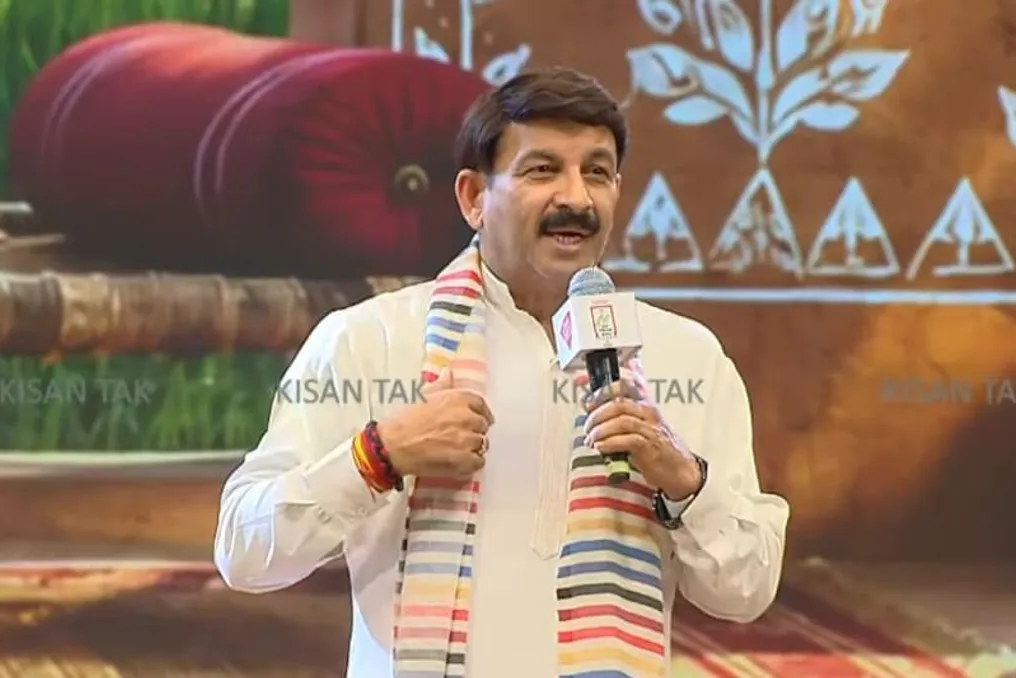
During the 'Bharat Agriculture Conference 2026' organized by India Today Group, Bharatiya Janata Party (BJP) MP and Bhojpuri actor Manoj Tiwari shared his experience related to agriculture. He emphasized that farming is not just a tradition but an activity closely linked to science and new technologies. Tiwari urged farmers to pay attention not only to good harvests but also to soil health.

He expressed concern over the excessive use of chemical fertilizers and called on farmers to use fewer fertilizers and regularly check the condition of their fields. Manoj Tiwari mentioned that his family has always been involved in agriculture, and he himself is a farmer. He shared that he personally sows seeds, operates tractors, and repairs field boundaries.

Despite living in Delhi, he feels a deep attachment to his village and its soil. He noted that the tradition of farming is still maintained at his home, and his 94-year-old mother continues to manage these affairs. The family also keeps cows and buffaloes.

Manoj Tiwari pointed out that agricultural methods are rapidly transforming, and farmers are increasingly integrating new scientific approaches into traditional farming. Drones are now used for spraying fertilizers and other substances. Furthermore, options such as aquaculture are opening up new income sources for farmers, and agricultural produce from villages is being exported abroad.

He strongly requested farmers to refrain from the excessive application of chemical fertilizers. Tiwari compared this to taking care of one's own health, stressing that monitoring the state of the land is equally important. Farmers must understand exactly which nutrient and in what quantity their soil requires.

Highlighting the importance of organic fertilizers, he stated that animal manure is extremely beneficial for fields. He mentioned that many people pour it down drains, whereas it can be used to improve soil fertility. He added that his mother always advised using manure in the fields.

He also mentioned the initiative to promote cereal grains, or Shrianna. Tiwari noted that people have begun to realize the importance of these grains; products previously considered ordinary food now hold a special place in restaurant menus.

Manoj Tiwari reported that the views of rural youth are changing. Previously, relatives expected them to find jobs, but now his nephews are asking for help in purchasing tractors instead of looking for work to improve farming practices. He cited the cultivation of bamboo as an example, noting that bamboo was previously classified as a tree but is now included in the category of agriculture, creating new opportunities for farmers.

Popular