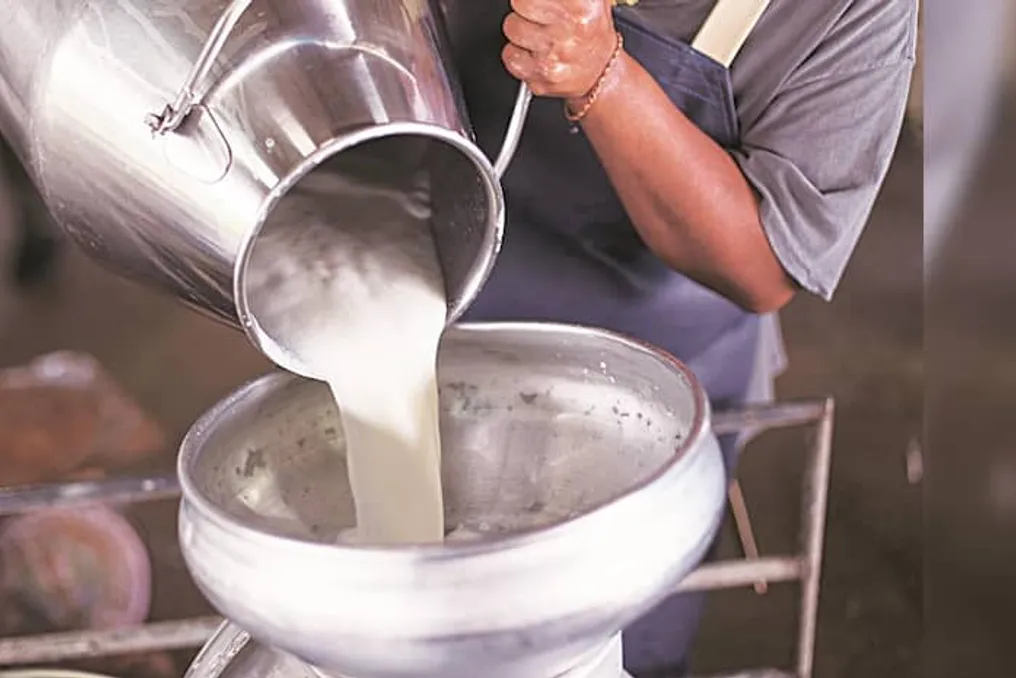
Farmer's cow from Karnal produces up to 75 liters of milk per day and attracts attention at the Dairy Fair
Read more
Aaj Tak
www.aajtak.in

Farmer's cow from Karnal produces up to 75 liters of milk per day and attracts attention at the Dairy Fair

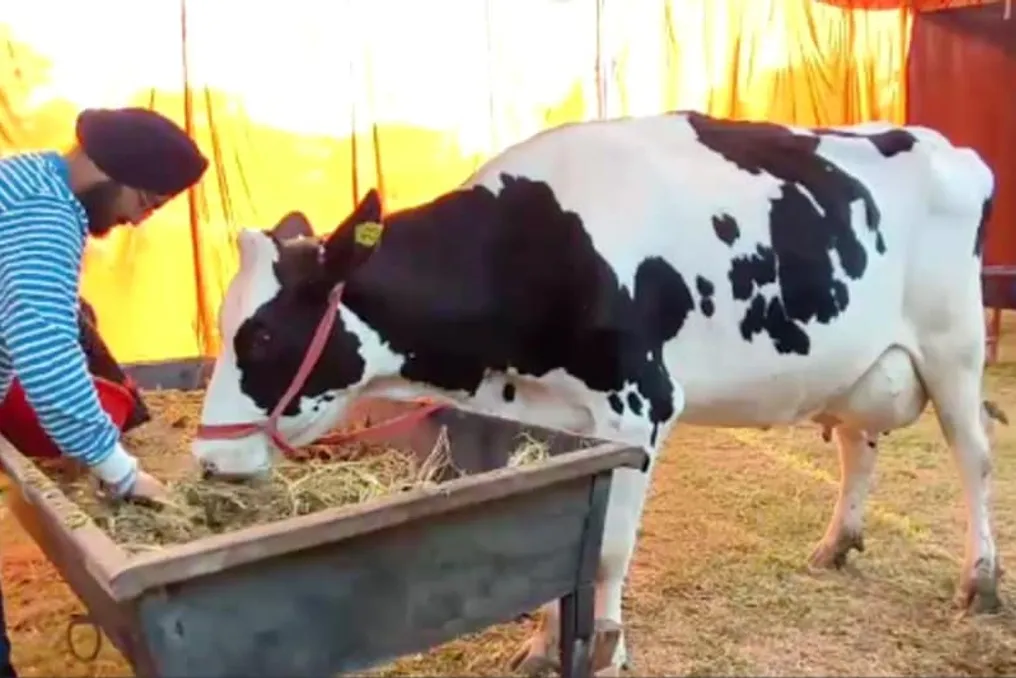
At the National Dairy Fair held in Karnal, Haryana, a special cow became the center of attention for visitors. This cow is capable of producing between 70 and 75 liters of milk per day.

Young farmer Ramandeep Singh brought this cow to the fair. His family has been involved in livestock farming and dairy operations for three generations.

According to Ramandeep Singh, his cow belongs to the HF breed, which stands for Holstein-Friesian. Milk is extracted from her three times a day. He noted that her productivity is higher than that of other cows, while feed consumption is relatively lower.

Ramandeep Singh shared that his family has been engaged in animal husbandry for three generations. For them, cows are not just a means of milk production but members of the family. He emphasized that all animals on the farm receive the same level of care as family members.

He also stated that there are good earning prospects in the dairy business, and his family has long been connected to this activity.

The young farmer provided information about his cow's diet. She is given salad and compound feed daily, and the milk is collected three times a day.

According to Ramandeep, this cow has previously won first place at various fairs and has been repeatedly awarded for high daily milk production volume.

Ramandeep Singh believes that with diligence and proper care, one can achieve a good income in animal husbandry. His family has been doing this for three generations and continues to develop this field.

His cow's ability to produce such a large amount of milk at the National Dairy Fair became a topic of discussion among the public.

Similar stories

Why the Red Sindhi Cow is Considered Special for Milk and How Much Milk It Produces Daily
Read more
www.aajtak.in

Why the Red Sindhi Cow is Considered Special for Milk and How Much Milk It Produces Daily

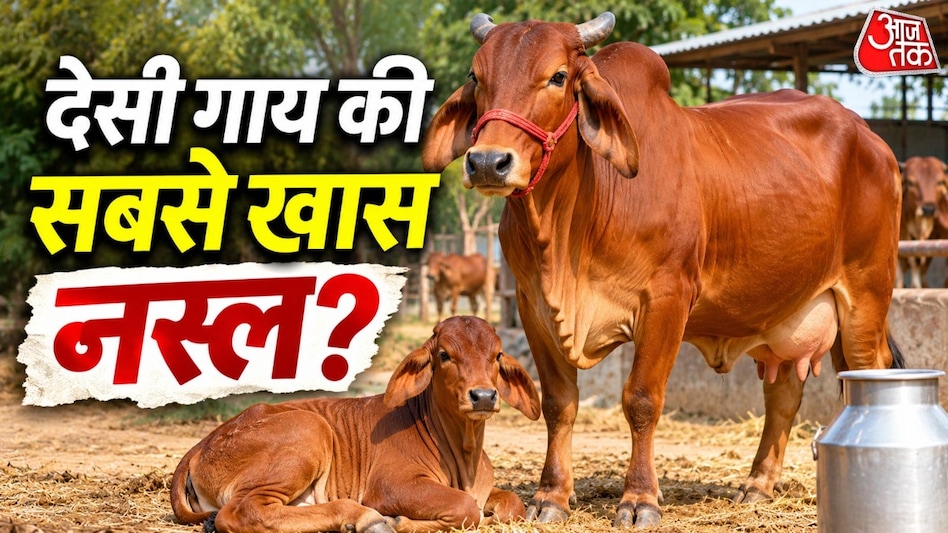
There are many cattle breeds in India, but some breeds are known for their milk, good health, and ease of keeping. The Red Sindhi cow is one of these special breeds. Its color is red or dark brown. This breed can easily live even in hot weather and has high milk productivity, which makes it popular among livestock farmers. Primarily, the Red Sindhi cow is raised for milk. Another feature of this breed is that it belongs to the ancient local breeds of India. Next, we look at the habitat of the Red Sindhi cow, its daily milk yield, and maintenance costs.

The name Red Sindhi cow comes from the Sindh region in Pakistan. Initially, this breed was widespread in the Sindh region, but now it is bred in many states of India. Its body is red: in some cows it is light red, and in others it is dark red or brown. It has a slightly broad forehead, long ears, and a sturdy build. Horns are usually small and thick. It tolerates heat well, so it can be kept in hot areas.

The Red Sindhi cow belongs to good local milk-producing breeds. Generally, a healthy Red Sindhi cow can produce about 10–12 liters of milk per day. However, for some high-quality and well-cared-for cows, the volume can be higher. Its milk is also valued for its high fat content. The milk volume depends on the cow's age, diet, breed, and level of care. There can also be a difference in milk quantity between first-lactating cows and those that have already calved.

There are several reasons why people raise Red Sindhi cows. Firstly, it is its ability to tolerate heat, allowing it to live comfortably in a warm climate. Secondly, because it is a local breed, it has good resistance to many local diseases, although vaccination and treatment remain necessary. Thirdly, with proper nutrition and care, it yields a significant amount of milk. Furthermore, compared to some other breeds that require more care, its maintenance can be more economical. Finally, it is one of the leading local breeds raised in India for milk production.

To obtain quality milk, it is crucial to provide the cow with proper nutrition. Its diet should include green and dry grass, as well as grain in the required amount. Additionally, clean drinking water must always be available. The milking cow should also be provided with a mineral mix and a balanced feed according to its needs. Regular veterinary check-ups and vaccinations are also mandatory.

Raising Red Sindhi cows can be a good source of income through milk sales. However, the profit from this activity depends on many factors: how many liters of milk the cow produces, the local price of milk, the costs of feeding, and the overall health of the animal. Therefore, before purchasing a cow, it is essential to check its breed, age, milk productivity, and health. The Red Sindhi cow cannot be determined solely by its color.

Gokul Milk Union raises prices for buffalo and cow milk, farmers express dissatisfaction
Read more
business-standard.com

Gokul Milk Union raises prices for buffalo and cow milk, farmers express dissatisfaction

The Kolhapur District Cooperative Milk Producers Union, known as Gokul Milk Union, decided to immediately increase the retail price of buffalo milk by 6 rupees per liter and cow milk by 4 rupees per liter, according to Chairman Rajesh Patil on Saturday.

This decision was unanimously adopted by all 25 directors due to the drought situation and the difficulties faced by farmers, noted Patil, who is a former member of the local legislative assembly.

The union also decided to increase the procurement rates paid to milk producers: by 3 rupees per liter for buffalo milk and by 2 rupees per liter for cow milk, calling this increase 'historic.' Patil clarified that the revised tariffs will take effect from November 21 and remain valid for approximately 131 days until March. The council will conduct monthly reviews of the situation and make further decisions based on circumstances.

He added that a significant decrease in milk availability across Maharashtra, including the Kolhapur district, is expected, and the union will have to take appropriate measures.

Producers' Dissatisfaction

Nevertheless, milk producers expressed their disagreement, arguing that the increase in procurement rates is insufficient to cover rising costs for cattle feed and fodder. One farmer reported that bags of cattle feed cost between 2100 and 2200 rupees, and three to four such bags are required for daily maintenance of a dairy farm. Furthermore, five bundles of fodder cost 20 rupees.

This farmer also pointed out that he received 63 rupees per liter of milk sold at a price of 78 rupees per liter, questioning how producers could profit from this price difference. He insisted that the additional amount should have been transferred directly to the farmers. The farmer stated that the drought and lack of rainfall have compounded the difficulties, making the cost of maintaining livestock unbearable. He accused the union of stating that 'the increase mainly benefited the union, not the milk producers.'

Rajesh Patil, with the support of the ruling Mahayuti party, was elected chairman of Gokul Milk Union after defeating Shashikant Patil-Chuyekhar from Samvichari Aghadi in a close election held in November, by a margin of 16 votes to 13.

Milk bank success in Macau requires enhanced promotion of breastfeeding
Read more
noticiasaominuto.com

Milk bank success in Macau requires enhanced promotion of breastfeeding

The Association for the Promotion of Breastfeeding and Child Care in Macau (APACIM) welcomed the announcement of the milk bank's creation but stressed that active promotion of breastfeeding will be necessary to ensure a sufficient number of donors.

The establishment of the milk bank, which APACIM has been pursuing for several years, was announced by the Chief Executive, Sam Ho Fai, during the presentation of the Government Action Plans (LAG) for 2027.

The association's chairperson, Virginia Tam, commented on the event, noting that the COVID-19 pandemic delayed the project's implementation. She expressed hope that this would provide significant support to the current government regarding breastfeeding issues.

Virginia Tam suggested that Macau's decision might have been inspired by Hong Kong's experience, where a maternal milk bank began operating in 2025. This bank assists premature or medically ill infants, not healthy newborns.

According to the LAG report, the bank in Macau will be located in a public hospital and will primarily serve infants with special needs or those who are premature. Virginia Tam called this a 'genuine public health necessity,' emphasizing that 'the most vulnerable should be fed breast milk.'

She rejected the idea of linking this measure to low birth rates or declining fertility. Nevertheless, despite not seeing a direct link between the new measure and the drop in local birth rates, Virginia Tam believes the future success of the milk bank depends on strengthening breastfeeding advocacy and having a sufficient number of mothers willing to breastfeed and donate milk.

The association also expressed a wish that along with any potential recovery in birth rates, the inclination towards breastfeeding would also increase, stressing that the desire to have children is not necessarily linked to the desire to breastfeed.

The association's proposal for the milk bank dates back about ten years, when breastfeeding was actively supported and promoted. According to Virginia Tam, the level of desire to breastfeed no longer matches the figures recorded 'eight or ten years ago,' leading her to advocate for a return to the culture of breastfeeding promotion that existed before the COVID-19 pandemic.

Health services data indicates that while almost all infants in Macau begin breastfeeding (90.17% in 2025), only a few continue to feed exclusively on breast milk in the initial months. The exclusive breastfeeding rate up to four months dropped from 26.18% in 2021 to 9.64% in 2025.

Given that maternity leave in Macau is 90 days, which is 'still below' the World Labour Organization's recommendation (98 days), Virginia Tam believes that a primary reason for the reluctance to breastfeed is the lack of workplace support. She noted that although there are government campaigns to create favorable conditions for feeding at work, mothers often face difficulties pumping milk during working hours in practice.

In this regard, she proposed incentivizing employers to support family policies in the workplace, including providing feeding breaks, and strengthening pre-natal education 'to raise awareness of the benefits of breastfeeding, combined with government financial support.'

Virginia Tam also expressed concern about the influence of postnatal care homes on breastfeeding, noting that the popularity of these centers, where mothers spend their first month recovering, has increased since the pandemic, and many of them are 'not very conducive to breastfeeding.' She acknowledges that many prefer a 'less stressful recovery period for mothers,' which can lead to separation from infants and early introduction of bottles, subsequently hindering direct breastfeeding.
Popular