Object 1998 KY26 Piques Astronomers' Interest Due to Unexplained Movements
Read more
Olhar Digital
olhardigital.com.br

Object 1998 KY26 Piques Astronomers' Interest Due to Unexplained Movements

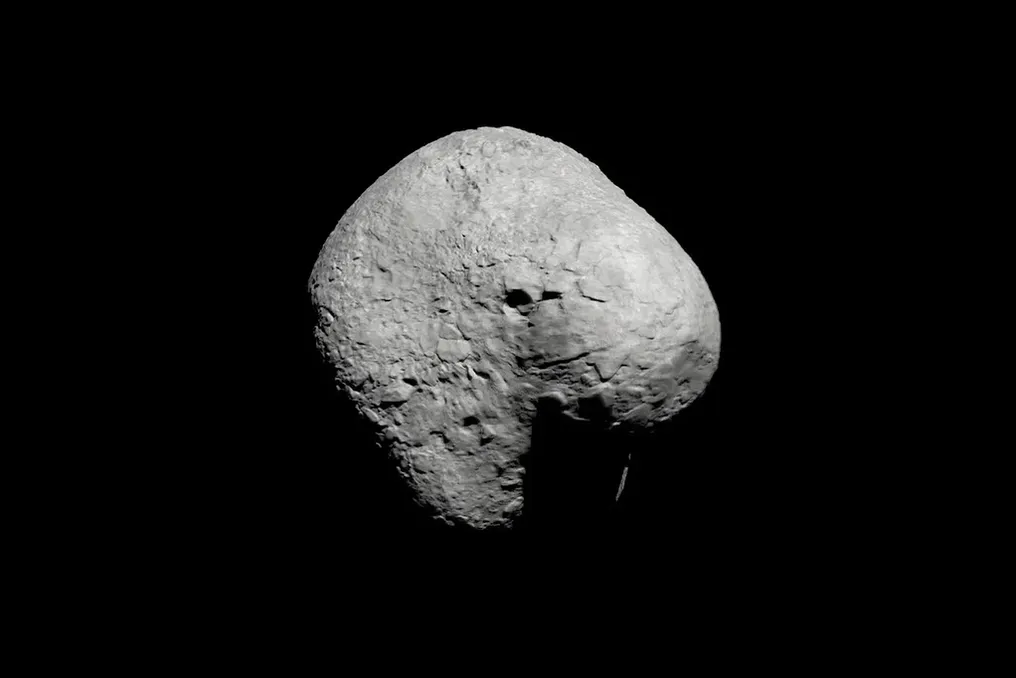
The celestial object 1998 KY26 exhibits accelerations that cannot be explained solely by gravity. With a diameter of about 11 meters, it has previously been linked both to a comet and an obsolete Soviet spacecraft.

While researchers study its behavior, the Japanese space agency canceled a mission that was set to allow for a close observation of the object in 2031.

Object 1998 KY26 was discovered in 1998 by astronomer Tom Gehrels from the University of Arizona. Initially, it appeared to be a typical asteroid. However, doubts arose when researchers noticed slight deviations in its trajectory relative to the movement predicted by Johannes Kepler's laws.

One early theory suggested it was a dark comet—a body that shows acceleration similar to comets but lacks a detectable tail or coma. In this scenario, solar heating could cause sublimation of ice within the body, releasing gases capable of altering its motion.

Nevertheless, a study published in the scientific journal Icarus weakened this possibility. The average temperature of 1998 KY26 is -53°F (approximately -47°C), which is considered too high to retain the ice necessary for this mechanism.

Darryl Z. Seligman, an assistant professor of physics and astronomy at Michigan State University and one of the proponents of this hypothesis, acknowledged that the object's surface is too hot to support this explanation. He also noted that objects located near Earth are small and dimly luminous, which complicates data collection.

A 2025 study, which reduced the asteroid's diameter estimates threefold, paved the way for another explanation. David Farncocky, a navigation engineer from NASA's Jet Propulsion Laboratory, and his colleagues proposed that the acceleration might be caused by solar radiation.

This force is capable of changing the trajectory of small bodies because light also transfers momentum. David Jewitt, director of the Institute of Planetary and Exoplanetary Studies at the University of California, Los Angeles, explained that photons, particles of light carrying momentum, exert enough pressure to shift objects of this size. This effect can act in conjunction with the Yarkovsky effect, related to heat emitted by the object after absorbing sunlight. NASA has also confirmed the influence of solar radiation forces on 1998 KY26.

Astrophysicist Avi Loeb from Harvard presented a different interpretation for Fox News Digital: the object could be Phobos 1, an unmanned spacecraft launched by the Soviet Union in 1988 to study Mars and lost about two months later.

Loeb and his co-authors suggested that two thrust impulses with a combined velocity of 1.9 km/s could have placed the old spacecraft on the current asteroid trajectory. However, this explanation depends on a second maneuver in May 1996, for which there is no evidence.

NASA Administrator Jared Isaacman rejected the possibility that the object is a spacecraft. Bryce T. Bolin, a scientist from Eureka Scientific Inc., also argued that its density matches that of rock.

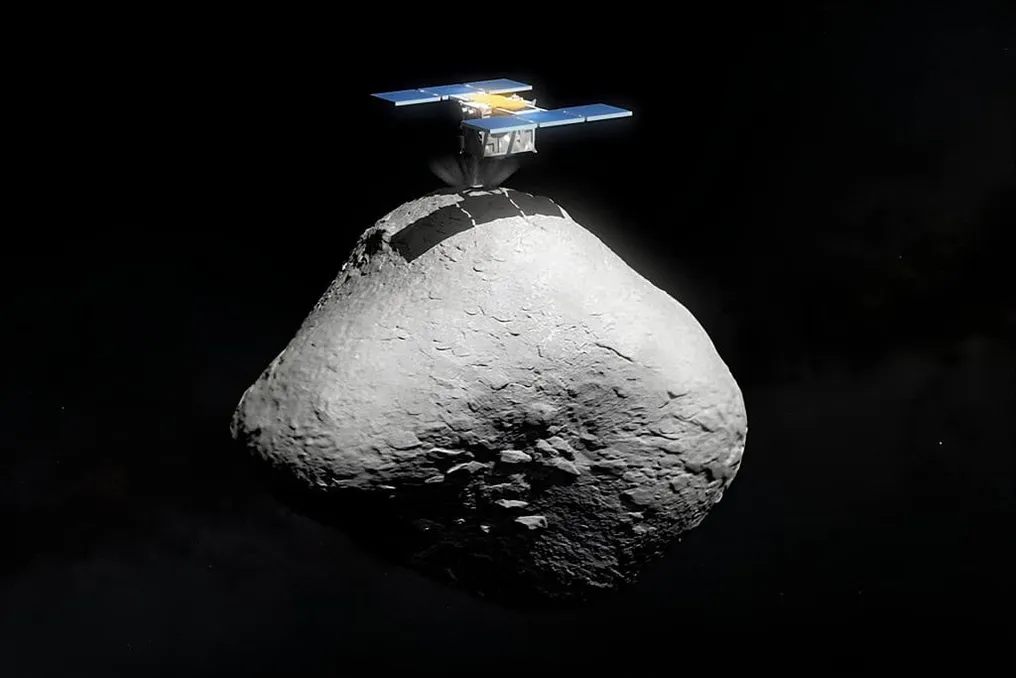
The Japanese probe Hayabusa2, which was scheduled to return samples from the asteroid Ryugu to Earth in 2019, was supposed to reach 1998 KY26 in 2031. The mission was canceled after a malfunction was detected in one of the four ion thrusters in August, jeopardizing the necessary maneuver to reach the target.

Due to the change in plans, the Japanese space agency JAXA will redirect the probe to the asteroid 2015 BM510, which is scheduled to be flown past in April 2028.

Nevertheless, the cancellation of the mission does not mean that 1998 KY26 poses a threat to Earth. Seligman stated that he is not concerned about this possibility. According to the researcher, agencies such as NASA's Planetary Defense Coordination Office track these bodies and perform monitoring work effectively.
Similar stories

Study indicates that exoplanet TOI-2535 b did not disappear, but had its orbit altered by gravitational interaction
Read more
olhardigital.com.br

Study indicates that exoplanet TOI-2535 b did not disappear, but had its orbit altered by gravitational interaction

An exoplanet monitored by astronomers over seven years appeared to have disappeared, but a new study published earlier this month in The Astrophysical Journal Letters offers a different explanation.

Researchers from UCLA (University of California, Los Angeles) discovered that the supposed 'disappearance' of TOI-2535 b likely occurred due to the gravitational influence of another planet in the system.

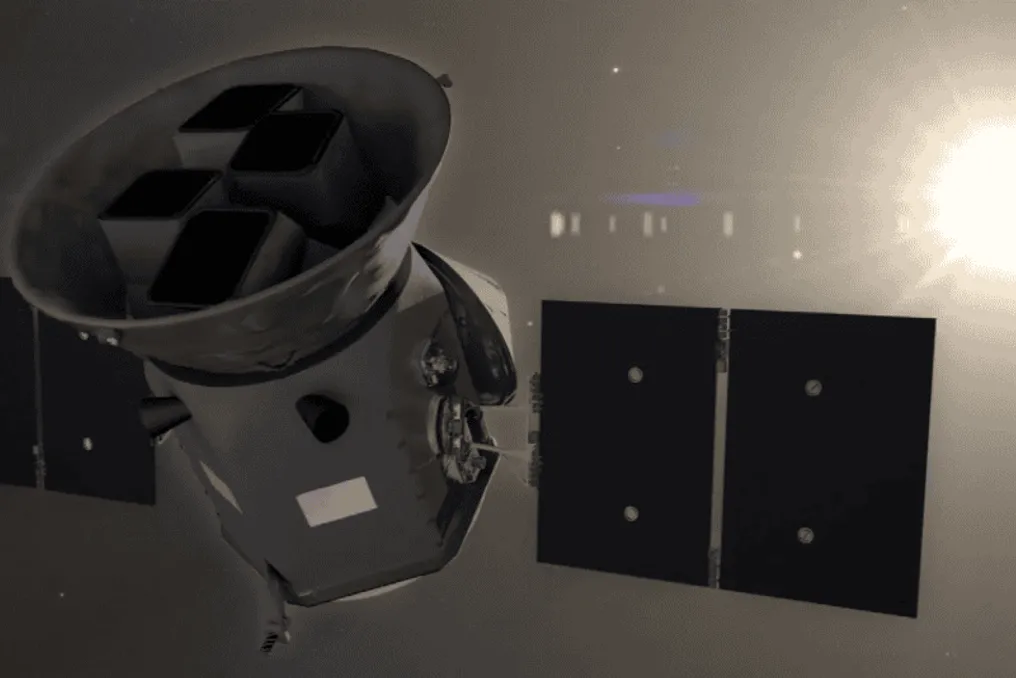
This gravitational force from another celestial body would have tilted the trajectory of TOI-2535 b, causing it to stop transiting in front of its star when viewed from Earth. Thus, the planet continues to orbit its host star but has moved out of the field of view of the NASA-operated TESS space telescope.

TOI-2535 b was detected in April 2019 through image sequences collected by TESS. This gas giant is classified as a 'hot Jupiter' because it orbits very close to its star. Its orbit is remarkably fast; while Mercury takes 88 days to orbit the Sun, TOI-2535 b completes its orbit in only eight days, ten times faster than the 'Fast Planet.'

Located approximately 1,000 light-years from Earth, the exoplanet is difficult to observe. The TESS satellite identifies planets by measuring tiny variations in stellar brightness caused by partial light blockage when a planet passes in front of the star. Although this technique allows for the discovery of distant planets, it is extremely sensitive to any alteration, which explains the apparent 'disappearance.'

The explanation lies in the gravitational interaction between TOI-2535 b and its neighbor. Astronomers inferred that this planetary companion is inclined relative to the orbit of TOI-2535 b and exerts a force on it. This interaction causes a slow oscillation in the orbit of TOI-2535 b, comparable to the movement of a top. Over time, its trajectory became progressively more inclined relative to our line of sight, preventing it from passing exactly between the star and Earth.

Consequently, TESS stopped registering the exoplanet after about seven years. Before completely losing the signal, researchers noticed signs of this change: the signals emitted by the exoplanet began or ended earlier or later than expected, in addition to becoming progressively shorter and less intense.

Therefore, TOI-2535 b never disappeared; only its orbital position relative to Earth was modified. The research suggests that already cataloged planets can fall out of observational range depending on how they move in their respective systems. Samuel Yee, one of the research leaders, commented: 'We think of the universe as something similar to a clockwork mechanism, where everything is regular, but that is not true. If there are multiple planets in a system, they can affect each other's orbits.'

The Mystery of Asteroid 1998 KY26: Could It Be a Comet, Probe, or Just a Rock?
Read more
super.abril.com.br

The Mystery of Asteroid 1998 KY26: Could It Be a Comet, Probe, or Just a Rock?

Object 1998 KY26 is a rocky piece with a diameter of 10 meters. Like millions of other small rocks orbiting the Sun, it is too insignificant on a cosmic scale to have a recognizable name; astronomers refer to it by code.

However, 1998 KY26 has gained unexpected notoriety and recently became the subject of an article in The New York Times. The reason lies in its unusual movement—it appears not to obey the laws of gravity that precisely regulate the motion of all other celestial bodies.

This does not mean that the small meteoroid is a disguised alien spacecraft. For several years, the main hypothesis was that it was a 'masked' comet, which partially explained the difficulties in calculating its trajectory. But more recent studies point to a much more prosaic explanation.

Dark Comet

Suspicion arose in 2023. A team led by astronomer Darrell Seligman analyzed decades of telescopic records and discovered a statistically significant non-gravitational acceleration in objects showing no visible activity, including 1998 KY26.

Space rocks are indeed subject to forces other than gravity. The most well-known is the Yarkovsky effect: the asteroid absorbs sunlight, and by rotating, it radiates this heat into space in a different direction, acting like an extremely weak rocket engine. However, according to calculations at the time, the deviations were greater than what the Yarkovsky effect typically produces.

The proposed solution was to call such objects 'dark comets.' To explain this further: when a normal comet approaches the Sun, its ice turns into gas, forming a long tail that acts like a jet changing the body's trajectory. A dark comet, conversely, would have the behavior of a comet but would not produce a tail or coma: gas would escape in sufficient quantity to push the object, but not enough to be visible during observations.

Smaller Than Thought

The image of KY26 changed in 2024 when it approached Earth and was observed by numerous large telescopes, including the ESO's VLT. Results published in Nature Communications in September 2025 showed that the object has a diameter of about 11 meters, almost three times smaller than the previously assumed 30 meters. It also rotates twice as fast as previously thought, completing a rotation every 5.35 minutes. 'A day on this asteroid lasts only five minutes!' summarized the research lead, Spanish astronomer Toni Santana-Ros.

This changes the calculations. The smaller the object, the larger the surface area exposed to light relative to its mass, and the easier it is to push. Taking new measurements into account, David Farncock's team from NASA's Jet Propulsion Laboratory recalculated the figures. Conclusion: the pressure of sunlight combined with the Yarkovsky effect explains the acceleration, and the need for hidden ice disappears.

Furthermore, a study published in the journal Icarus further undermined the ice theory. Corbin Hansen and Masatoshi Hirabayashi from the Georgia Institute of Technology (USA) modeled how solar heat is distributed from the surface to the core of the rock. The result showed that even the coldest points averaged around minus 61°C throughout the orbit. This seems cold. But in a vacuum, ice only persists for prolonged periods below approximately minus 128°C.

According to this pair's calculations, if the push came from water vapor, KY26 would lose about 0.03 grams of water per second and deplete its supply in about 62 years, which is negligible on a cosmic scale. The authors stated that the rate of water release would be too high to sustain buried ice. Their conclusion: KY26 is likely a dehydrated asteroid.

Soviet Ship?

Alien ship—no. But some speculated it could be a Soviet ship. In a paper published in May on arXiv, a Harvard astrophysicist Avi Loeb suggested that the object is Phobos 1—a probe launched by the Soviet Union to Mars in July 1988, which failed about two months after receiving an incorrectly entered command.

Loeb is known for his support of the idea that the interstellar visitor 'Oumuamua, the cigar-shaped object that passed through the Solar System, could be extraterrestrial technology. He presents three arguments: the orbits are similar, the approximate 10-meter span of the probe's solar panels matches the size of KY26, and the metallic surface of the craft could possess a high reflectivity that the object demonstrates. Sunlight reflected off the apparatus could serve as an energy source capable of causing a slight change in trajectory.

In another paper in September, a group claims that a simplified model of the probe reproduces the object's brightness variations across eight observation sets. However, this hypothesis faces obstacles. For the orbits to match, the supposedly dead probe would have had to execute two maneuvers using its engines, one of which occurred in May 1996, nearly eight years after losing contact with Earth.

Moreover, KY26's spectrum is typical of a known type of asteroid (X-type), and origin models suggest it likely came from the inner part of the asteroid belt. Finally, this is not the first time Loeb has linked a dark comet to a Soviet probe. In 2025, he suggested that object 2005 VL1 was also the Venera 2 probe. But subsequent analysis 'decisively' rejected this identification.

The story reached NASA. Last Thursday (12), agency administrator Jared Isaacman stated in an interview with Fox News that he saw no evidence that KY26 was anything more than an asteroid, and that NASA continues to monitor the object without cause for alarm.

Cancelled Visit

The uncertainty was supposed to be resolved in July 2031, when the Japanese probe Hayabusa2 was scheduled to arrive at KY26. This same probe delivered samples of the Ryugu asteroid to Earth in December 2020. But this will not happen. On Monday (16), the Japanese space agency JAXA informed a government committee that the probe's final target was no longer KY26.

The reason is that the spacecraft is old. Of Hayabusa2's four ion thrusters, three were heavily worn, and the single one still functioning normally failed in mid-August. Engineers improvised by combining parts from different thrusters, but the restored thrust is insufficient for the close approach maneuver near Earth that was supposed to bring the probe to KY26. Instead, it must perform a high-speed flyby of asteroid 2015 BM510 in 2028. Its diameter ranges from 17 to 74 meters.

Thus, the mystery of KY26 will likely remain without a definitive answer for a long time. Its next approach to Earth will only occur in May 2039, at a distance of about 16 million kilometers. But, according to the latest research, the answer will be far less exciting than aliens, secret comets, or Soviet probes: it is a dry, small, bright rock, slightly pushed by sunlight.

Popular