Amidst the new season of the Dubai Al Ali Horse Carnival, the CEO of the Dubai Racing Club shared his vision for the industry's development. The carnival, which began on November 6th, continues to attract elite horses, jockeys, and trainers for high-class competitions.
This five-month festival will conclude with the Dubai World Cup 2027 on March 27th—one of the world's most prestigious racing events. For Ali, who became interested in horses and racing during his school years, great pride comes from its participation in the Carnival's brilliant success, which combines sport, fashion, entertainment, and exquisite cuisine.
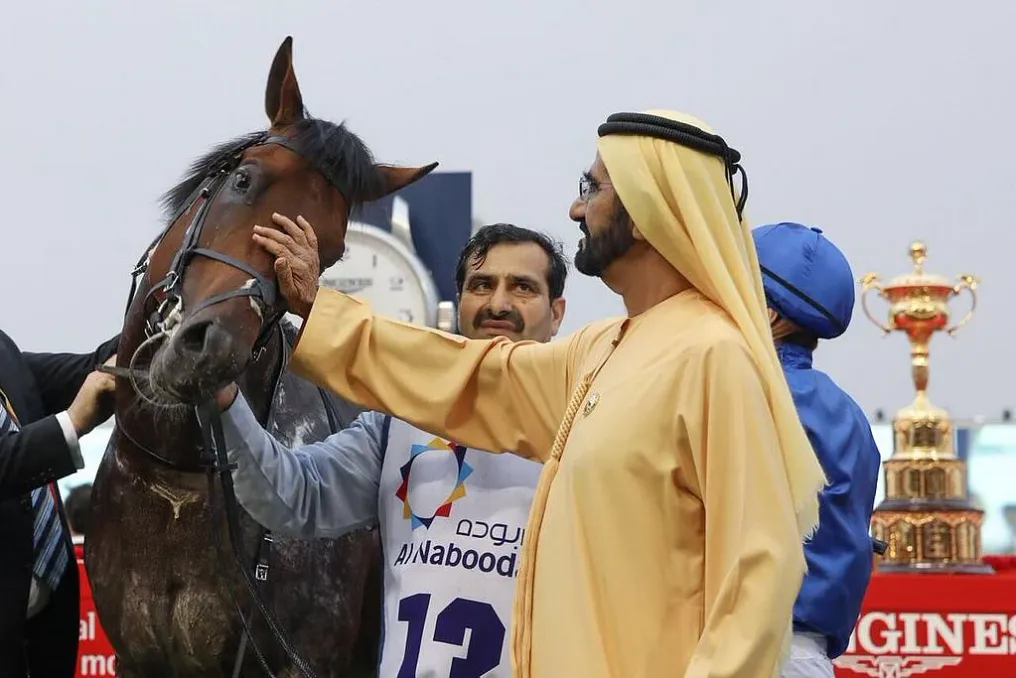
His main source of inspiration remains His Highness Sheikh Mohammed bin Rashid Al Maktoum, Vice President and Prime Minister of the UAE and Ruler of Dubai. Sheikh Mohammed's visionary leadership contributed to new heights for Meydan last March when the Dubai World Cup was held there, gathering representatives from the entire racing industry despite regional conflict.
In an interview with Khaleej Times, Ali noted that the great success of the 30th edition of the World Cup did not surprise those who have followed Dubai's magnificent transformation under Sheikh Mohammed's leadership.
When asked about the secret to maintaining exceptionally high standards at the Dubai Carnival in terms of racing, hospitality, and entertainment year after year, Ali replied that the key lies in a team that is never satisfied with what has been achieved. They are constantly looking for new ways to create a unique racing evening. He emphasized that Dubai itself is a city that never stops, and referencing the words of Sheikh Mohammed bin Rashid, he believes that 'if you stand still, you go backward.' This spirit is present in racing and among the people working on innovation and improving guest experiences.
Regarding the upcoming season, Ali reported that the Carnival is turning into a popular weekend destination, unlike previous years when it was primarily focused on horse lovers. Now, visitors get the opportunity to experience the races for the first time. The Carnival has become a celebration of entertainment, racing, and hospitality, and it is continuously being improved weekly. Since competition is right across the street in Dubai, organizers strive to offer guests an unparalleled experience, competing with evening events in DIFC, family strolls in Dubai Mall, or beach relaxation.
Commenting on the hosting of the Dubai World Cup in late March 2026, just a month after the region entered a state of uncertainty due to the conflict, Ali expressed immense pride not only in the team and achievements but also in Dubai and the UAE as a whole. He noted that the trust of people in Dubai was particularly valuable. Speaking with international guests from America, Asia, and Europe, he received a unanimous response: they felt safe and completely trusted Dubai and its leadership. He stressed that under the guidance of His Highness Sheikh Mohammed bin Rashid Al Maktoum and the support of Chairman Sheikh Rashid bin Dalmouk Al Maktoum, the team moved forward with confidence.
Ali specifically highlighted the collective efforts behind the 2026 World Cup: Dubai Police, DEWA, RTA, government partners, the private sector, and the entire Dubai Racing Club team. He concluded that this level of unity and determination was truly special, and the participation of the international racing community demonstrated their faith in the city of Dubai.
Answering the question of how the Dubai World Cup, marking its 30th anniversary, compares to events like Royal Ascot or Kentucky Derby, Ali stated that it is an incredible achievement. He believes that this success reflects something greater—the journey of Dubai and the UAE. Despite the country being relatively young, it has achieved outstanding successes such as the Burj Khalifa and Palm Jumeirah. These achievements were made possible by the vision of the leadership, particularly His Highness Sheikh Mohammed bin Rashid Al Maktoum, whose goal has always been the pursuit of perfection.
He added that the World Cup is a reflection of this vision, as leading owners, trainers, and jockeys from around the world strive to participate, and winning here is considered a defining moment in their careers.
Reflecting on the 350-year history of horse racing, Ali believes that few people have made such a significant and long-term contribution as His Highness Sheikh Mohammed bin Rashid Al Maktoum. He did not just support horse racing; he helped shape its modern history. His vision, passion, and investments transformed the sport, creating opportunities worldwide. Ali sincerely believes that even in the next 350 years, it will be extremely difficult to find anyone who can compare to the scale of his contribution.
The Meydan racecourse represents a continuation of His Highness Sheikh Mohammed's vision. Over the past 15-16 years, he has observed the development of this mega-structure and is impressed by the new areas available on the track. He noted that the club continues to develop and create new activities, which is an endless task given the scale and quality of the venue. Meydan's appeal extends beyond racing, as companies unrelated to horse racing choose it for their events.
Sheikh Mohammed's passion is not limited to horse racing; he is also a racer who has won prestigious international titles in endurance championships. Ali cited this as the first and biggest reason for the success of sports disciplines in Dubai and the UAE. Sheikh Mohammed's support is a crucial element of the industry's sustainability and growth.
Regarding the participation of expatriates from India and Pakistan in horse racing, Ali called it a wonderful example of how racing unites people. He also noted that racing is a major sport in India, and many large owners have horses in Dubai. Syndicates play an important role in global horse racing and are always supported and care for their horses at Meydan.
Ali believes that racing plays a colossal role in attracting tourists. Arriving people bring horses from all over the world, which has both a direct and indirect economic effect. The direct impact includes paying for horse maintenance, purchasing feed, and activating races. The indirect impact is related to these horses attracting ultra-wealthy individuals who view Dubai from a business perspective, opening businesses there, and acquiring real estate. Thus, he believes that Sheikh Mohammed created the World Cup not only for racing but also for shaping Dubai's global brand.