The international forum World Atomic Days 2026, organized by the Russian state atomic corporation Rosatom, has started in Antalya, Turkey. The event included a youth program that gathered 250 representatives of the nuclear industry and young people from 35 different countries.
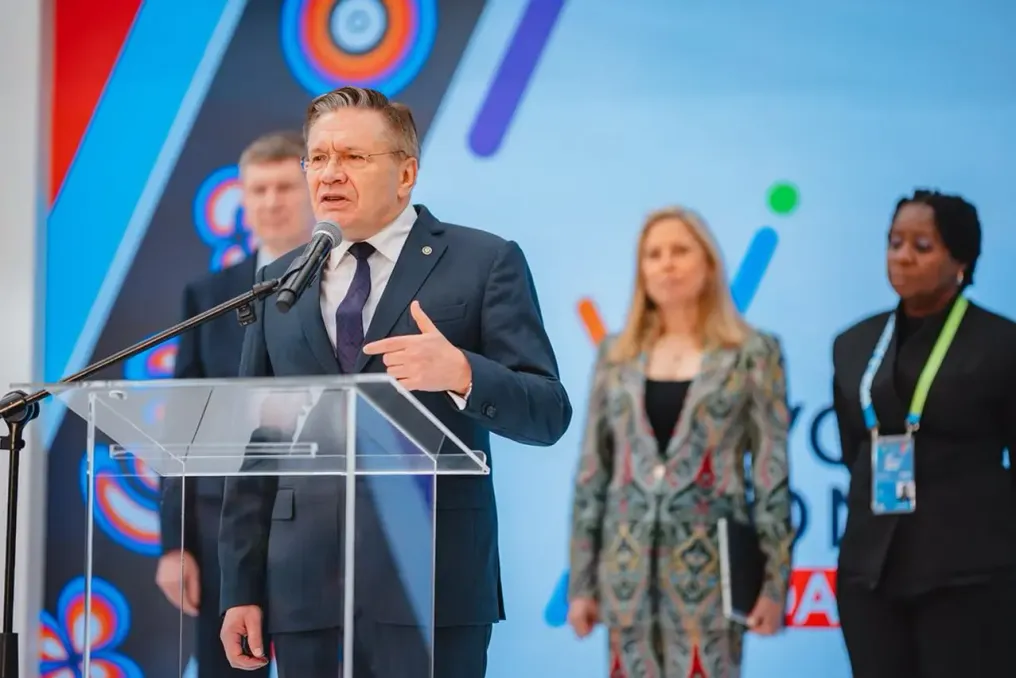
The first event was in the form of the program 'Nuclear Energy for Talents: Leadership, Development, Inspiration.' Alexey Likhachev, CEO of Rosatom, opened this program. In his speech, Likhachev noted that this event continues the international dialogue initiated at the World Atomic Week forum in Moscow in 2025.
World Atomic Days is taking place in Antalya parallel to the UN climate conference COP31. Likhachev emphasized that one of the key tasks of the forum is to discuss the contribution of nuclear energy and modern technologies to shaping a low-carbon future.
He stressed that the further development of the atomic industry directly depends on attracting young specialists capable of working with advanced technologies, proposing innovative solutions, and cooperating in various professional fields. The importance of creating opportunities for youth for career growth, studying nuclear industry companies, exchanging experiences with mentors, and participating in practical projects was also noted.
Welcome remarks were given by Russian Minister of Economic Development Maxim Reshetnikh, CEO of World Nuclear Association Sama Bilbao y Leon, and the main coordinator of the BRICS Nuclear Energy Platform Elzi Pule.
Human Capital as a Condition for Technological Progress
The central element of the youth program was a dialogue titled 'Human Resources for Technological Breakthrough in Response to Climate Change.' Participants discussed the training of qualified personnel, international cooperation in workforce development, and youth initiatives in high-tech sectors.
Reshetnikh, Bilbao y Leon, Tatiana Terentyeva, Deputy CEO of Rosatom for Personnel, Liu Jianping, member of the board and deputy secretary of the Communist Party group in China National Nuclear Corporation (CNNC), Pule, and Sitembile Mbuisa, Deputy CEO of NECSA South African Nuclear Energy Corporation, took part in the discussion. Nadira Sansabila, a representative from Indonesia from the International Youth Advisory Council Impact Team 2050, moderated the session.
One of the main topics was the growing demand for qualified specialists amid technological transformation and the global energy transition. Participants emphasized that the shift to low-carbon energy requires not only significant investment in production capacity and infrastructure but also systematic training of specialists possessing knowledge in modern technologies, digital solutions, and complex engineering systems.
Maxim Reshetnikh stated that the presence of a qualified workforce has become one of the most important factors for technological development and increasing economic competitiveness. He added that investments in new technologies must be accompanied by increased labor productivity, modernization of vocational education, and the development of professional retraining programs. Furthermore, he pointed to the need for interaction between the government, educational institutions, and employers to align staff training with long-term economic needs.
International Youth Cooperation in the Atomic Industry
Tatiana Terentyeva presented Rosatom's approaches to training and professional development in the atomic sphere, as well as the company's efforts to form an international youth community. Terentyeva noted: 'Sustainable development is possible only based on global cooperation driven by an international youth team. This community is a group of like-minded people united by responsibility for our common future. Young people from dozens of countries are already working with Rosatom on what the world can look like by 2050 and what role peaceful nuclear energy will play in its development. Nuclear technologies allow us to dream bigger and turn the boldest ideas into solutions that benefit people.'
Participants also focused on attracting young specialists to the atomic industry. Despite the opportunities for career growth and the sector's significant technological potential, nuclear energy is not always perceived by young people as a priority career choice. Therefore, they emphasized the importance of strengthening partnerships between government bodies, business, educational institutions, and youth professional organizations. Such alliances can help meet the industry's current demand for qualified workers while developing the expertise needed to solve long-term technological and climate challenges.
The World Atomic Days 2026 youth program provided a platform for international exchange of views and discussion of career prospects for the next generation of specialists. The agenda highlighted the increasing importance of human capital, education, and international cooperation for the further development of nuclear energy and the implementation of innovative technologies.