Uzbekistan plans to expand the security services market
Read more
UzDaily
uzdaily.uz

Uzbekistan plans to expand the security services market

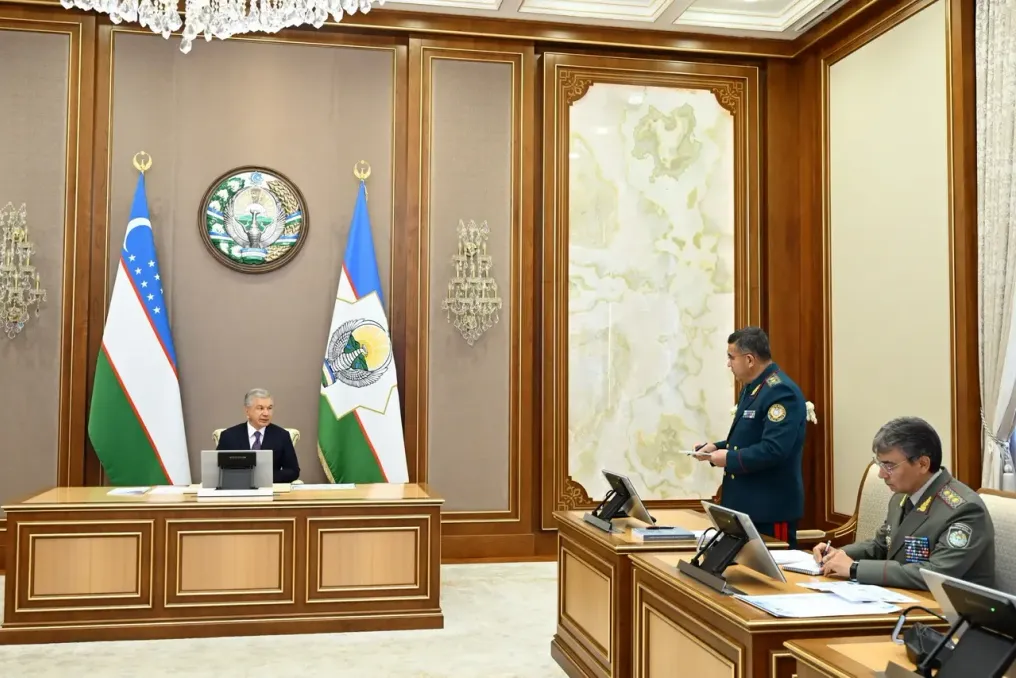
The President of Uzbekistan, Shavkat Mirziyoyev, reviewed proposals on November 26 aimed at improving the quality and increasing the accessibility of security services.

Over the past decade, the number of facilities in the country has significantly increased: social and commercial institutions grew from 150,000 to 500,000, and residential real estate rose from 1.5 million to 8 million. Furthermore, the number of streets equipped with 24-hour commercial and service facilities reached 255.

Programs such as 'Safe City,' 'Safe Capital,' 'Safe and Well-Maintained Mahalla,' and 'Safe Home' are being implemented to strengthen public safety and prevent offenses. Under these measures, the number of protected facilities has grown from 194,000 to 337,000, and mobile response groups have increased from 533 to 630. Patrolling is organized in 6,500 mahallas, and 58,000 security guards have undergone additional training.

However, the presented information showed that the current coverage and scope of security services do not fully meet the growing needs of the population and businesses, as such services are currently provided predominantly by state institutions. Therefore, proposals were put forward to stimulate competition and expand the use of modern technologies.

Digitalization and new types of services

One of the key steps is the creation of a unified digital security information system by integrating five existing information systems. This system will allow for electronic contract signing, online payment verification, and real-time tracking of mobile response groups. The application of artificial intelligence is also expected for the early detection of potential threats and improving the management of security units.

Eight new types of services have been proposed in addition to the six currently available. These include the installation and maintenance of modern video surveillance systems in residential buildings, a virtual SOS system for calling emergency assistance from mobile devices, and personal protection for investors, tourists, and entrepreneurs.

The newly proposed services also include maintaining public order during family and other events, surveillance using unmanned aerial vehicles, and protection of seasonal facilities.

Security issues in the residential sector and localization

Specific proposals concern ensuring security in apartment buildings. In particular, it is planned to expand the use of technical security measures, including the installation of intercoms and alarm buttons. Unified requirements for security equipment in buildings under construction and corresponding amendments to urban planning regulations are also proposed.

The presentation also addressed the topic of greater private sector participation. A unified procedure is proposed for private companies to install, configure, and maintain security equipment.

In parallel, the government intends to localize the production of modern security equipment, increase the development of domestic software, and boost production output. According to the estimates presented, increasing the level of localization from 30% to 60% and increasing production capacity from 10,000 to 30,000 units per month will reduce equipment production costs by 1.7 times.

Expansion of the National Guard's powers

The proposals also include expanding the powers of the National Guard in the field of security. It is expected that the number of facility categories subject to protection by the National Guard will increase from 13 to 24. Its ability to provide physical, technical, and personal protection, as well as maintain order during events, will be expanded.

At the same time, the government plans to legally define the categories of facilities requiring mandatory protection and improve interaction between departmental security services and law enforcement agencies.

By 2027, the number of protected facilities is projected to increase to 600,000, and the number of mobile response groups to 800. It is planned to hire another 8,000 security personnel to organize patrolling in an additional 1,500 mahallas.

Mirziyoyev emphasized that when improving the security system, the interests of citizens, public peace, and property protection must remain the priority. Responsible agencies have been instructed to ensure citizens' access to high-quality and affordable services, as well as to establish cooperation between relevant organizations.
Similar stories

Uzbekistan expands digitalization of the healthcare system
Read more
uzdaily.uz

Uzbekistan expands digitalization of the healthcare system

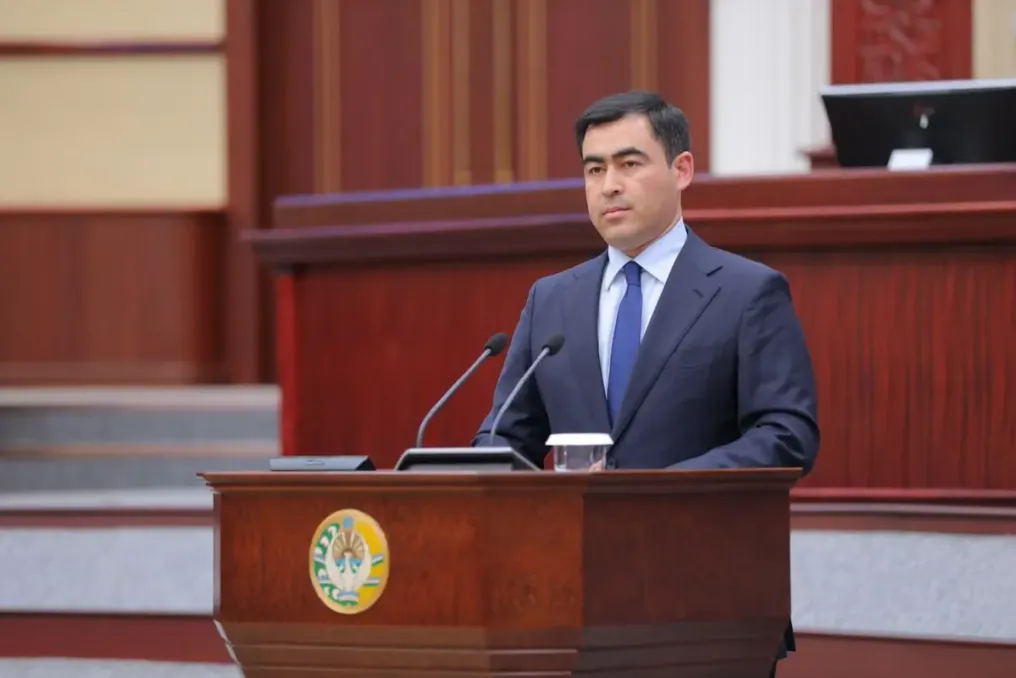
The Minister of Health of Uzbekistan, Eldor Adilov, presented a report to the Legislative Chamber of the Oliy Majlis on the implementation of digital technologies in healthcare and the problems affecting their use.

The unified information system DMED remains a key tool for digitizing medical institutions. This system integrates services such as electronic hospitals, inpatient treatment, laboratory tests, prescription issuance, warehouse management, rehabilitation, and referrals.

Between 2025 and 2026, 491 initiatives were implemented to improve DMED. The system has enabled the issuance of over 148,000 preferential electronic referrals and generated more than 65 million records of medical examinations and tests for doctors.

Furthermore, 126 electronic forms and registries, as well as 28 national reports, have been converted to digital format. According to the minister, over 20 functional modules and services have been developed, covering more than 4,000 state medical institutions, about 6,000 private clinics, over 11,000 pharmacies, and more than 38 million citizens.

To equip medical institutions, 96,301 computers and 43,520 tablets were purchased. More than 44 million laboratory test results have also been digitized.

Another area of work is the application of artificial intelligence in medical practice. The AI TOP3-CDSS system analyzed over 6,000 cases, and AI Med-STT converted more than 2,500 conversations between doctors and patients into text format. The AI MAMMO system processed over 54,000 mammography results, while AI Stroke handled more than 2,500 stroke-related cases.

By the end of 2026, six artificial intelligence systems are planned to be fully launched, and three more will be introduced in pilot mode. The Ministry believes that these solutions will help detect diseases at early stages, accelerate diagnosis, and reduce the burden on medical personnel.

Work is also underway on the DHP platform, designed to integrate healthcare information systems. It is being developed based on the international standard HL7 FHIR. According to the estimates presented, implementing this platform will reduce administrative burden by 30%, repeat examinations and medical errors by 20%, and reporting preparation time by 90%.

Nevertheless, legislators pointed out persistent problems in the implementation of digital solutions. Specifically, DMED is not yet fully operational in all state medical institutions, and the ministry's digital platforms are insufficiently integrated with private healthcare providers.

The meeting also discussed the use of funds from the State Medical Insurance Fund and the difficulties citizens face when obtaining preferential referrals to republican scientific and practical medical centers. Legislators proposed measures to eliminate the identified problems, ensure the full and consistent functioning of digital services in all medical institutions, and simplify public access to medical services. Following the discussion, the minister's report was noted, and the Legislative Chamber decided to continue parliamentary oversight on this issue.

Uzbekistan and Belarus Agree to Expand Cooperation in Food Security
Read more
uzdaily.uz

Uzbekistan and Belarus Agree to Expand Cooperation in Food Security

The Committee for Veterinary and Food Safety of Uzbekistan announced an agreement between Uzbekistan and Belarus to expand cooperation in the field of food security, as well as in matters of veterinary and phytosanitary control.

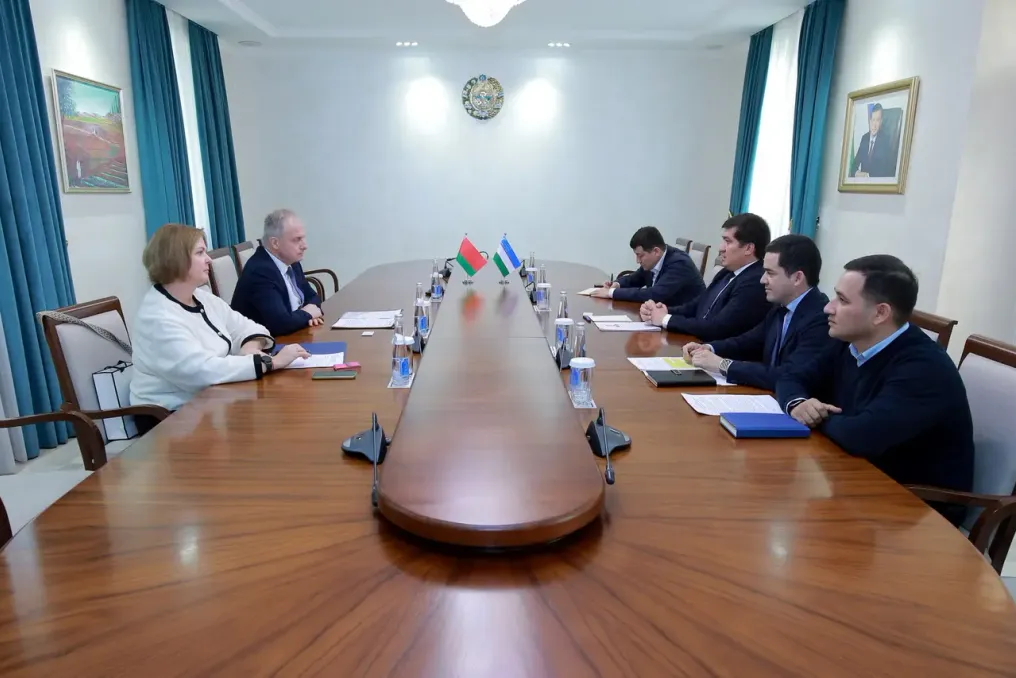
The Chairman of the committee, Azizbek Urunov, met with the Ambassador of Belarus to Uzbekistan, Alexander Ogorodnikov, to discuss economic ties and ways to increase mutual supplies of agricultural and food products.

According to the committee's data, bilateral trade turnover increased by 25% in 2025, reaching 965 million US dollars. Both countries set a goal to increase this figure to 2 billion dollars by 2030.

During the negotiations, the issue of including Belarusian enterprises in the Uzbek register was also discussed, as well as the analysis of submitted applications and the organization of audits and inspections of production facilities.

Participants discussed the possibility of conducting mutual expert missions covering food security, sanitary, veterinary, and phytosanitary control. Proposals were put forward for experience exchange and joint events.

Furthermore, the parties considered the issue of mutual recognition of electronic phytosanitary certificates with a gradual move away from paper documents, which, according to them, will simplify trade procedures. Following the meeting, it was decided to continue working on the discussed areas, prepare a joint action plan, and develop a document on the mutual recognition of electronic certificates.

Popular