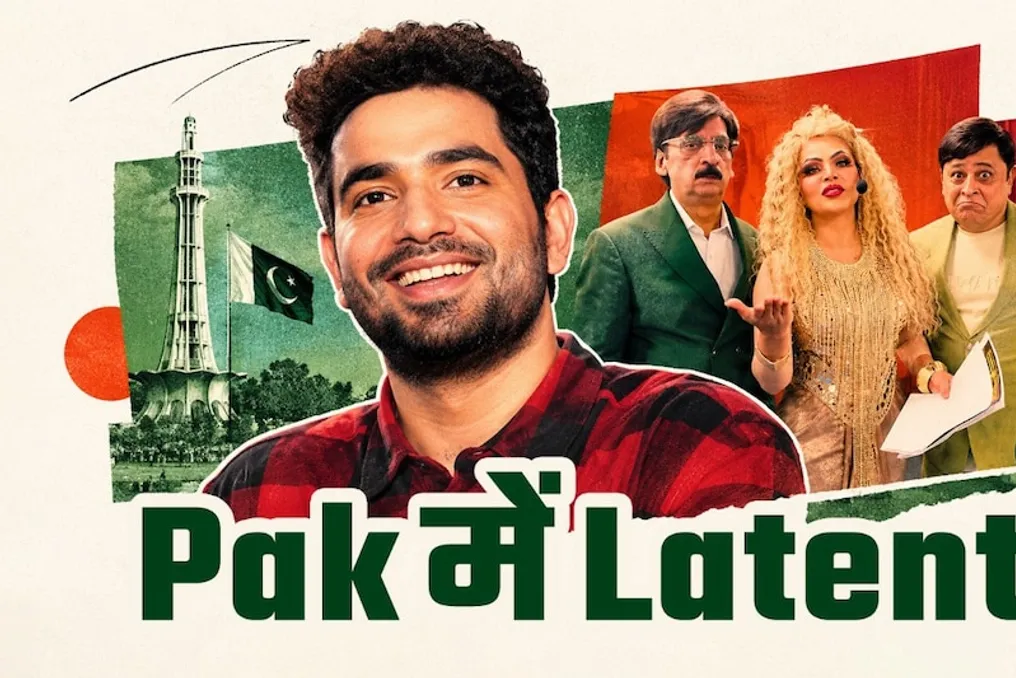
Despite Pakistani content being banned in India, the series 'Dar-e-Nizaat' continues to be popular among viewers who watch it on their phones. Questions arise about the legality of such viewing, especially considering that Netflix has issued demands to ban the showing of the Pakistani series 'Joe Bache Hain Samet Lo'.
Pakistani Minister Ahsan Iqbal opposes the introduction of such bans. There is active reaction regarding this issue on social media. Furthermore, other Pakistani series, despite the bans, enjoy significant popularity in India, including the aforementioned 'Dar-e-Nizaat'.
A natural question arises: is watching banned Pakistani series in India illegal? Can they be watched at home on TV or phone, or gathered for group viewing, according to the laws?
To understand this, it is necessary to know how the ban on Pakistani content was introduced. The Indian government previously instructed OTT and streaming platforms not to provide films, web series, songs, podcasts, and other content produced in Pakistan in India. The basis for this decision was arguments concerning national security and public order. This recommendation was issued by the government under the Information Technology Act.
It should be noted that the government has the right to block any websites, social media accounts, publications, or content in the interest of the country's sovereignty, unity, security, defense, or public order. In this regard, the government imposed a ban on the broadcast of Pakistani content in India. However, the question arises: if the content is present on any platform, can it be watched?
According to current rules, watching Pakistani series publicly available on YouTube is not considered a crime for an ordinary viewer. Government rules target platforms that upload, host, and stream this content. Therefore, this ban does not apply to the viewers themselves, and if the content is viewed in private space, it is not a violation.
Cybersecurity expert Mukesh Chaudhary stated that watching Pakistani content is not a crime. He emphasized that if a viewer has access to content on a legal platform, they have the freedom to choose what content they will watch, including any video on YouTube. In Chaudhary's opinion, if the government wants Pakistani content not to be viewed in the country, it is an issue between YouTube and the government, not an issue for the viewer. He also noted that if the content does not contain obscenity, incitement, or insult to religious sentiments, its display to others cannot be considered wrong.
A lawyer from the Delhi High Court, Prem Joshi, explained that if Pakistani content is easily accessible and displayed on a legal platform, its viewing is legal. However, if a person uses a VPN or accesses blocked platforms to view prohibited content, they may face action from the authorities. Overall, watching a Pakistani series that is open on YouTube in India is generally considered legal, as there is no general legal provision that qualifies 'watching a Pakistani series' as a crime.
Nevertheless, attempting to access video that has been blocked in India using other technical means may violate platform rules and government restrictions. In such cases, one should not immediately claim a crime on the part of the viewer, but it can be risky and violate rules.
The greatest risk arises when an individual re-uploads, downloads, distributes blocked content, uses unauthorized links, or earns income from it. In such situations, government decrees, IT rules, and copyright laws may be violated, leading to measures against the uploader or distributor. Thus, there is a significant difference between viewing and distribution.
The question arises: why is the showing of content restricted in theaters and restaurants if it can be watched independently? The reason is that although the content itself can be viewed, its public display or use for commercial purposes is considered unacceptable. This is why its showing in such places might have been limited.