Pakistanis outraged that Indian series 'O Sati Re' allegedly copies Pakistani show
Read more
Aaj Tak
www.aajtak.in

Pakistanis outraged that Indian series 'O Sati Re' allegedly copies Pakistani show

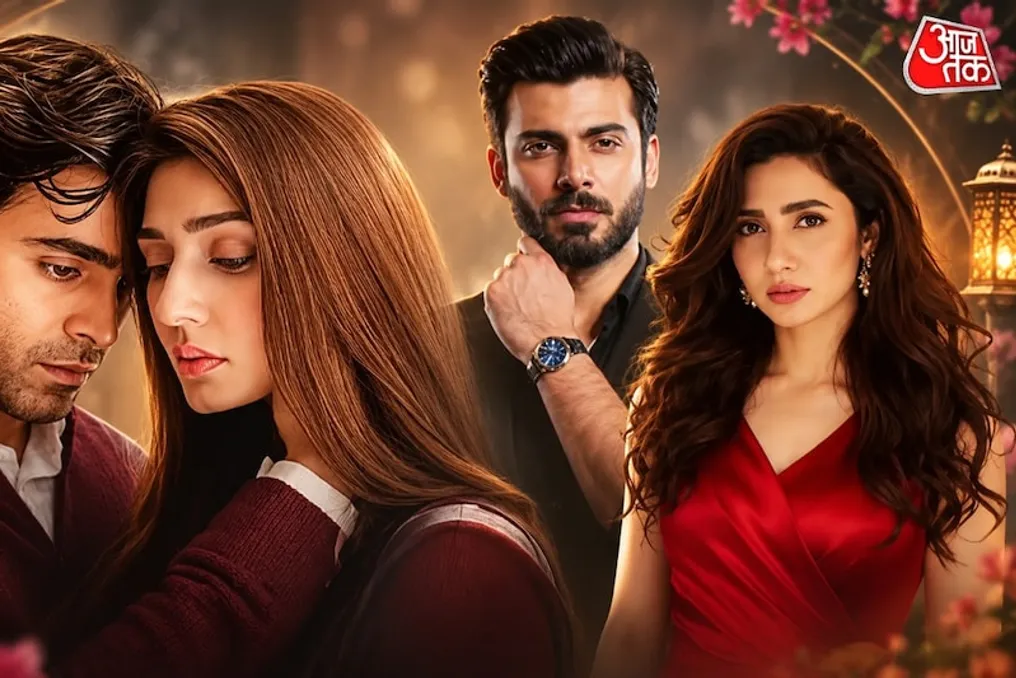
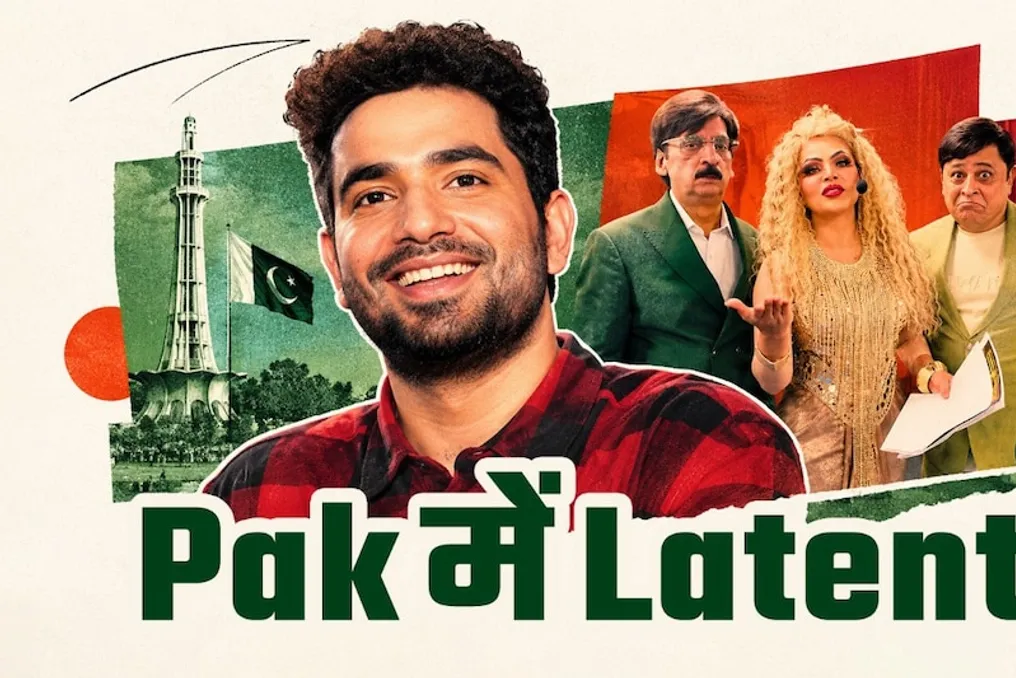
Controversy has arisen following the release of the trailer for the Indian series 'O Sati Re,' featuring Arjun Rampal, Aditi Rao Hydari, and Avinash Tiwari, which is available on Netflix. These disputes stem from plagiarism accusations, as users claim that this series is a remake of the Pakistani drama show 'Mere Pas Tum Ho.'

One social media user noted the irony of the situation, pointing out that after significant buzz surrounding the ban of the first original Pakistani series on Netflix, a cheap copy of the popular Pakistani drama 'Mere Pas Tum Ho' was released on the same platform.

Another Pakistani user expressed indignation, stating that copying their own shows and songs after they have become a national issue is a disgrace. A third commentator suggested that releasing a low-quality copy of a PTV show on the same day as the debut of the first Pakistani series on Netflix demonstrates extreme uncertainty.

The series 'O Sati Re' is scheduled to premiere on Netflix on December 4, 2026. On the same day, the first Pakistani series 'Jho Bache Hen Sang Samet Lo' is set to be released on the streaming platform. Currently, the creators have not provided an official response to the allegations of copying Pakistani content.

Regarding 'Jho Bache Hen Sang Samet Lo,' it is unclear whether it will be shown in India. Reports indicate that the Ministry of Information and Broadcasting reminded Netflix of its recommendations and the need to ensure the absence of any Pakistani content on Netflix in India.

The cast of 'Jho Bache Hen Sang Samet Lo' includes renowned figures from the Pakistani film and television industry, such as Ahad Raza Mir, Iqra Aziz, Fawad Khan, Mahira Khan, Sanam Saeed, Hania Amir, Hamza Ali Abbasi, Maya Ali, and Bilal Ashraf.

Similar stories

Release of first Pakistani series on Netflix sparks controversy in India; Fawad Khan calls it a victory for Pakistan
Read more
www.aajtak.in

Release of first Pakistani series on Netflix sparks controversy in India; Fawad Khan calls it a victory for Pakistan

The first Pakistani series on Netflix, titled 'Jo Bache Hain Sang Samet Lo,' generated significant interest in India after its trailer was released on Wednesday. This event is considered an important moment for Pakistani cinema. Following the trailer's premiere, actors from Pakistan expressed pride in their work.

An event to launch the trailer took place in Karachi, attended by the entire cast except Mahira Khan, who sent a video message to the team. Fawad Khan and Mahira Khan called this achievement a major success for Pakistan.

Fawad Khan stated that the series 'Jo Bache Hain Sang Samet Lo' is a big victory for Pakistan, noting that he feels happy to be part of this project. In his emotional speech, the actor emphasized: 'This is a victory for Pakistan.' He added that he is proud to participate in this show, acknowledging that the journey to this point was difficult, and the story itself was touching.

He mentioned that his fans have seen global Pakistani dramas, and that he became famous through Pakistani television and cinema. According to him, this is an opportunity for further development. Fawad Khan continued: 'Our stories are loved all over the world. People eagerly await them. Netflix has made our content easily accessible to people. This is our collective victory. People have watched Pakistani dramas for years, and now they can watch our stories in 191 countries. Emotions have no language.'

Mahira Khan also expressed joy over the support for Pakistani shows from Netflix. In her view, this is not just an emotional moment for actors and creators, but a historic achievement for all of Pakistan. The series will be available for viewing on December 4th.

However, the release of Pakistani dramas in India has sparked unrest. The All India Cinematographers Association (AICWA) sent a letter to Prime Minister Narendra Modi demanding a halt to the broadcast of this series in India. The association insists that Pakistani films, web series, songs, and actors should not be given a platform on Indian platforms.

According to sources, the Ministry of Information and Broadcasting took the statements against Pakistani shows in the Indian industry seriously. The Ministry demanded that Netflix not broadcast Pakistani shows in India, although official confirmation of this demand has not yet been received.

Demand to ban Pakistani content in India grows after Pakistan attack
Read more
www.aajtak.in

Demand to ban Pakistani content in India grows after Pakistan attack

Despite the tragic event—the terrorist attack in Pakistan on April 22, 2025, in Pahalgam, where 26 tourists and one local resident of the Baisaran valley were brutally killed, causing national shock and escalating tensions between India and Pakistan—public resonance regarding Pakistani content has flared up again in India.

Two works are at the center of the current dispute: the Pakistani Netflix series 'Jo Bache Hain Sang Samet Lo' and the screening of the Pakistani drama 'Dar E Nijaat' in Delhi.

The first subject of criticism is the original Pakistani Netflix series 'Jo Bache Hain Sang Samet Lo'. It features renowned Pakistani actors, including Fawad Khan, Mahira Khan, Ahada Raja Mira, Iqra Aziz, Sanam Saeed, Hania Amir, Hamza Ali Abbasi, and Mai Ali. According to the announcement, the series is set to be released globally on December 4, 2026.

However, opposition began after posters and actor images appeared on social media in India. The question arose as to how such projects can be accessible to the Indian audience, given existing restrictions and official recommendations concerning Pakistani entertainment content following the Pahalgam attack.

Although Netflix has not yet made an official statement about the release of this series in India, its trailer has recently been released, and posters have been posted on international Netflix accounts. In light of this, the All India Cinema Workers Association (AICWA) sent a letter to Prime Minister Narendra Modi demanding a complete halt to the streaming of this series in India.

One of the reasons for dissatisfaction was also the statements made by Fawad Khan and Mahira Khan regarding Operation Sindoor; reports indicate that Fawad called India's actions 'shameful,' and Mahira described them as a 'cowardly attack.' Thus, the anger of Indian users is linked not only to one web series but also to issues of national dignity and the entertainment industry.

The second dispute concerns the Pakistani drama 'Dar E Nijaat', starring Shahryar Munnuwar, Durafishan Salim, and Namir Nawaz Khan. This series enjoys significant popularity in India. It was broadcast on Ary Digital in Pakistan and is available on YouTube.

Recently, a video surfaced on social media from a cafe in Delhi showing a fan viewing party for this drama. It is reported that the event included an online Q&A session featuring director Sakib Khan.

The viral video divided social media into two camps. Some users questioned why there is such high popularity for Pakistani dramas in India after the Pahalgam attack. Others viewed it as contrary to the nation's sentiments and demanded a ban on such screenings. Meanwhile, some considered the meeting proof of the popularity of Pakistani dramas.

The author believes that this issue goes beyond simple viewing or abstaining from watching the drama. After events like the Pahalgam attack, it is crucial to understand people's anger and feelings. When relations between countries are under such strained conditions, it is natural to raise questions about another country's entertainment industry.

Nevertheless, it is acknowledged that viewers' tastes cannot be entirely controlled solely through social media anger. The question also arises: if content is banned in India, will people continue to watch it through other platforms or methods? And can the withdrawal of online support completely destroy the show's popularity?

Currently, there is no clear information regarding the Netflix series release in India, nor have there been official statements about the screening in the Delhi cafe. However, this dispute over Pakistani dramas has once again sparked an important discussion about the intersection of entertainment, politics, patriotism, and viewer choice.

Pakistani show 'Pakistan's Got Talent' copied the concept of 'India's Got Talent' by Samay Raina
Read more
www.aajtak.in

Pakistani show 'Pakistan's Got Talent' copied the concept of 'India's Got Talent' by Samay Raina

Despite the borders between India and Pakistan, the exchange of ideas in the entertainment sphere between these countries has existed for a long time. Although there have been many examples of content borrowing from Indian films and TV shows in Pakistan, the question arises about the reasons for the lack of original ideas. Now, this list includes the popular show of comedian Samay Raina—'India's Got Talent.'

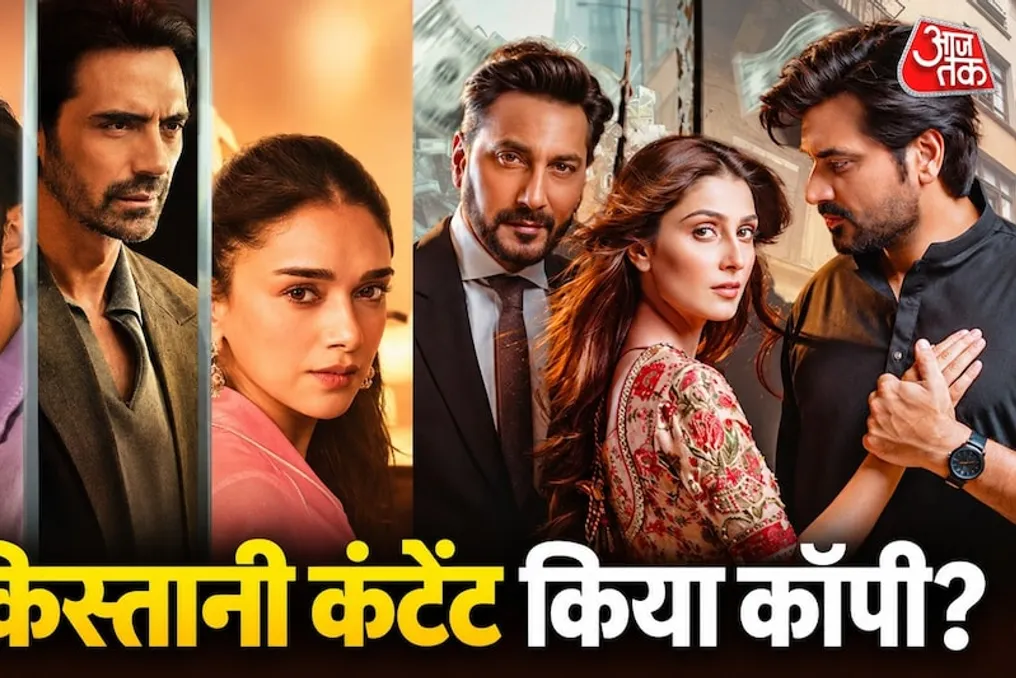
Samay Raina's show 'India's Got Talent' attracted significant attention due to its unique format, candid comedy, and unusual participant talents. In the program, harsh jokes and mockery were often used in addition to judging the contestants. Now, a similar Pakistani show called 'Pakistan's Got Talent' has appeared, indicating that neighbors noticed something special in Samay Raina's experiments.

This is not the first instance of such borrowing in Pakistan. Previously, accusations arose that stories from Indian films and TV shows were transplanted into Pakistan under new names. One of the most prominent examples is the show 'Channa Jor Garam', which was created based on the famous Indian sitcom 'Sarabhai vs Sarabhai.'

This Pakistani show also depicted the conflict between a wealthy mother-in-law and a middle-class housewife, and featured the character Roshesh, who recited poetry. The creators and actors of the Indian show expressed dissatisfaction with this unofficial copy.

Borrowings were not limited to comedy shows. The Pakistani drama series 'Mohabbat Tujhe Alvida' was said to resemble Shridevi's film 'Judaai'. In this film, a woman sells her husband for money to a wealthy woman, and a similar story was shown in the Pakistani series.

Furthermore, the Pakistani film 'Arth: The Destination' was influenced by Mahesh Bhatt's 1982 film 'Arth'. Director Shan Shahid officially presented this picture as a remake, acknowledging Mahesh Bhatt's contribution.

Also, the Pakistani series 'Koi Nahin Apna' bears resemblance to Amir Khan and Manisha Koirala's film 'Akele Hum Akele Tum', and the Pakistani drama series 'Cheekh Ki Kahani' was compared to Sani Deol and Manakshi Seshadri's film 'Damini'. In both cases, a woman fights against a crime committed by a loved one, resisting the opposition of influential families.

'Pakistan's Got Talent' announced a new season featuring comedians and artists such as Shahbil Siddiqui and Usman Mazhar. The jury will include Mujmil Mesia and Maitira, and artists like Shakil and Rauf Lala, who appeared in a promotional video with Rahi Sawant, will also be present.

Interestingly, Pakistani viewers also compare this show to Samay Raina's 'India's Got Talent'. Many users on social media raise questions about the originality of the program. One user advised the creators to come up with something of their own.

There have also been previous instances of copying Samay Raina's show. In 2024, the show 'Talent Got Pakistan' became known, whose format was also described as similar to 'India's Got Talent'. The video of this show went viral when one participant criticized the organizers. He asked about the cash prize, and upon learning that the winner would not receive an award, he told the judges: 'If you are copying Samay, then copy the cash prize too.' The judge responded: 'Look at India's economy.' This answer sparked even more discussion on social media.

Following the announcement of the new season, similar discussions resumed on social media. A natural question arises: why do Pakistani creators not offer their viewers new and original ideas when concepts similar to Indian shows and films constantly appear? Does any show cease to be new simply by changing the name and the composition of the jury?

Popular