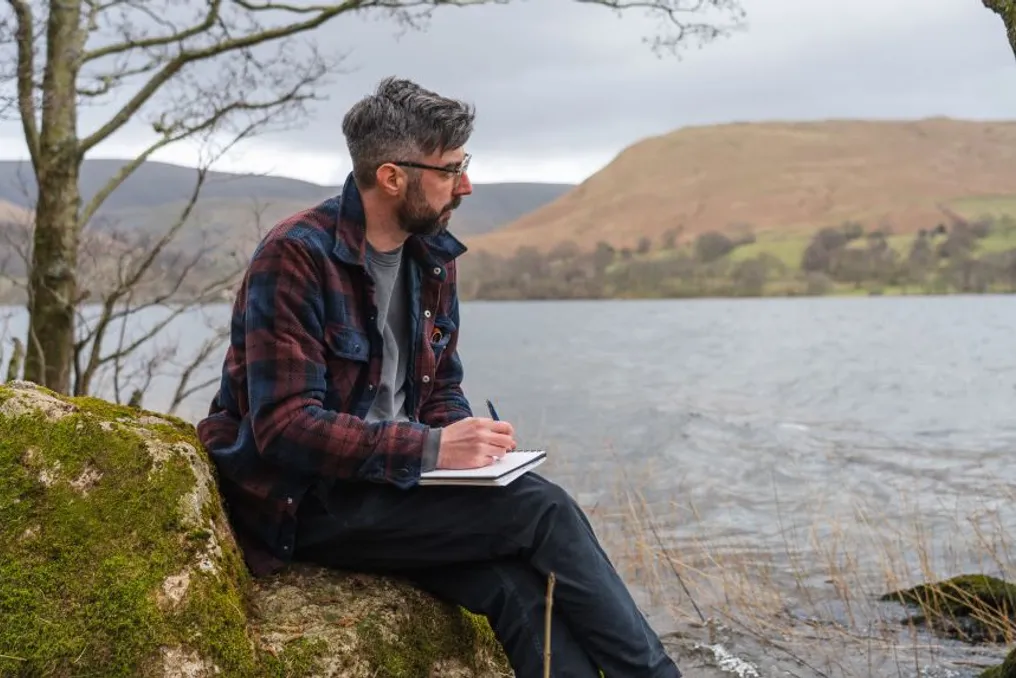
Artists are beginning to withdraw from using the platforms Instagram and Facebook due to growing concerns that artificial intelligence (AI) will appropriate their creative works. Matt Burnham, an watercolor artist in the UK, told CNN that in 2024 he discovered a Pinterest account mimicking his illustrations. This account was creating AI versions of his watercolors and posting them on fake profiles via Shopify, Facebook, and Instagram.
Although Burnham managed to trace the Pinterest account to Ho Chi Minh City, Vietnam, he does not know who was behind the activity. This is part of a broader trend of generating artwork with AI that is taking business away from the creators themselves, which is particularly noticeable on Meta platforms like Instagram and Facebook.
Burnham noted that the AI profiles monetize Facebook by attracting hundreds of thousands of followers who believe these fake profiles are authentic artists, directing users to various online shops and advertisements. This issue has forced some independent artists to distance themselves from Instagram, Facebook, and other Meta platforms, especially in light of proposed updates to the tech giant's terms of service. Some are considering completely leaving social media, pausing publications, or moving to other online communities for creators such as Patreon or Substack.
Tim O'Brien, a member of the Illustrators' Society board, stated that artists deserve fair compensation, meaningful consent, and accessible ways to challenge the unauthorized use of their work. He emphasized that for many artists, this is not just a legal dispute but a matter of livelihood, creative ownership, consent, and basic fairness.
The proposed changes from Meta would still allow automated software to scan external websites and extract large amounts of data without the permission of business account owners. This includes personal portfolios, online stores, and links to business accounts on Facebook, Instagram, WhatsApp, and Threads. Initially, these terms were set to take effect on October 30th, but the deadline was later postponed to November 20th. On November 5th, the company announced that the updates were indefinitely delayed.
A Meta representative told CNN in a statement that they are 'pausing the changes while continuing to engage with stakeholders and taking time to get it right. Our existing terms remain in effect for now.' Nevertheless, even after this postponement, the proposed changes have triggered a new wave of artists leaving Meta. Samantha Waldron, co-owner of Dutcher Photography in Madison, Wisconsin, told CNN that at the beginning of the month she deleted all her business and personal pages on Facebook, then converted her Instagram business accounts to personal, deleting most posts and removing all external links from the Meta account bios. She expressed relief, saying she no longer had to worry about maintaining social media activity.
Creators told CNN that under the updated terms, the images, style, and property of independent artists could be used to train generative AI models without their knowledge. These AI models can then reproduce or replace handmade works, potentially impacting the business of artists on these platforms. Megan Wimberly, founder of Cowgirl Artists of America in Toulouse, Oklahoma, is in the process of deleting all her Meta accounts. She views these new terms as a serious breach of trust and believes that everyone, not just artists, should be concerned about posting personal images, videos, and audio due to potential AI scanning. Wimberly stated that she sees Meta as a company striving to lead AI development, and its social networks have become more like a free license for AI training than just a social network.
Some even decided to 'go dark' from Meta platforms from October 30th to November 6th, when the updated Meta terms were originally scheduled to go into effect, abstaining from posting in protest. Wimberly noted that she started the 'Meta blackout' campaign on October 22nd.
Nicole McKay, Director of Artist Relations at The Guild of Artists and Artisans, told CNN that many artists in the United States have begun deleting their accounts from Meta platforms in response to the upcoming policy change regarding AI model training. Many artists have posted 'goodbye' messages on Instagram and Facebook, citing Meta's policy. McKay noted that for artists who rely on these platforms to showcase and sell their work, client relations and business building, leaving Meta presents a difficult choice between protecting their creativity and sustaining their livelihood.
Artists told CNN that generative art has serious implications for the creative economy, as online imitators force artists to change their audience engagement strategy. Andrew Scott, a contemporary artist from Rochester, New York, recounted that in September he contacted an AI art imitator regarding the copying of his work. The imitator admitted to using Scott's original work as a starting point to create his own AI-generated videos. This person then posted the AI clips on Instagram, giving the impression that he created genuine art. Scott noted that one of his AI art posts garnered 50 million views. He explained to the imitator how AI versions could harm his business; since then, the imitator unfollowed him on social media but continues to create AI-prompted fakes.
Nancy Chen, a ceramicist from Canada, publishes videos on social media demonstrating the process of creating sellable items. However, she understands that these clips can also become subject to AI model training. Chen admitted that she has recently become cautious about posting polished images of her work on Meta platforms but has not yet decided to leave. She wonders how independent artists can present their work to the world if their transparency can be weaponized. Chen added that AI can surpass any single artist, leading to pressure regarding pricing, although she feels her work is already undervalued.
One of the main problems for creators is the scale and speed at which AI can disseminate content, especially compared to painstaking human labor. This issue is compounded by questions about how generative AIs are trained on artwork, usually without artists' involvement, and how copyright applies to AI. Isaiah Steinfeld, a board member of the American Institute of Graphic Design who works with AI, stated that protecting artists and adopting technology are not necessarily opposing viewpoints. He noted that artists can still register works for copyright, file infringement lawsuits, and demand the removal of unauthorized copies. For example, Meta has stated that creators can report instances of AI imitation and submit takedown requests through its Intellectual Property Reporting Center.
Steinfeld concluded: 'Thus, the origin must work both ways: protecting creators from having their work appropriated and protecting people using new (AI) tools from having their real contributions erased.' Google released the public tool SynthID Detector this month. This free website allows anyone to upload a file to check whether an image, video, or audio file was created by Google and partners such as OpenAI, Nvidia, and Kakao. In a press release, Google indicated that the watermarked platform has tagged over 180 million images and videos and receives over a million daily verification requests.
However, according to independent artists, these changes are insufficient. Many are still debating whether they should share content on social media at all, even though brand recognition is crucial in their field. Burnham expressed skepticism, stating: 'Personally, I don't believe enough will be done to protect artists. The UK government seems more concerned with not restricting profitable tech startups than with protecting artists. I hope the public continues to reject generative AI in this current model.' When CNN asked for comment, a spokesperson for the UK Department for Digital, Culture, Media & Sport said: 'The government has actively engaged with creative workers, industry organizations, and AI firms, and we are taking time to find the right approach to this issue.' They added: 'We have clearly stated that we will not take any action that is unsuitable for our creative industries and our AI sector.'