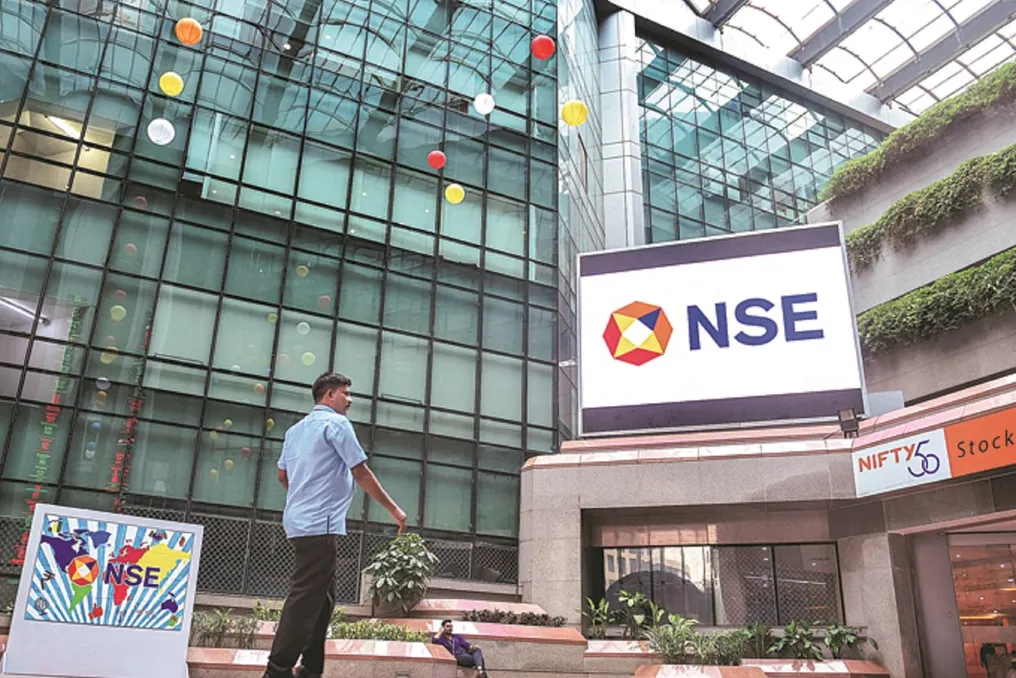
NSE receives approval from Reserve Bank of India to launch corporate bond index futures
Read more
Business Standard
business-standard.com

NSE receives approval from Reserve Bank of India to launch corporate bond index futures

The National Stock Exchange (NSE) announced on Thursday that it has received permission from the Reserve Bank of India (RBI) to introduce futures contracts on corporate bond indices. This decision is a progressive step for the fixed-income derivatives market in India.

The approval from the RBI followed the receipt of a no-objection certificate from the Securities and Exchange Board of India (Sebi) to launch these contracts.

The exchange specified that these contracts will provide market participants with a transparent, standardized, exchange-traded instrument that allows them to manage risks associated with fluctuations in the value of corporate bonds, including changes caused by interest rates and credit spreads.

According to NSE data, these contracts are expected to facilitate portfolio-level hedging and help relevant participants form directional views on the corporate bond market. Furthermore, they are intended to promote efficient portfolio management. The exchange added that this product will complement the growing ecosystem of fixed-income exchange-traded funds (ETFs) and other passive debt investment products.

Sriram Krishnanan, NSE's Director of Business Development, stated: 'Our goal is to build a comprehensive fixed-income ecosystem accessible to both institutional and retail participants. The introduction of corporate bond index futures will be another important step in this direction, helping to bridge the gap between the growing underlying bond market and the availability of efficient exchange-traded investment and risk management tools.'

The exchange reported that the contract specifications and the trading commencement date will be announced later.

Similar stories

NSE stock price rose by 9% in two days; market capitalization approaches 6 trillion rupees
Read more
business-standard.com

NSE stock price rose by 9% in two days; market capitalization approaches 6 trillion rupees

The market capitalization of the National Stock Exchange of India (NSE) reached 5.94 trillion rupees during intraday trading on Thursday, ranking ninth among companies listed on BSE by total market capitalization.

The upward trend in NSE stock prices continued, reaching a new high of 2400 rupees, which marked a 4 percent increase on BSE during intraday trading on Thursday. Over the last two trading days, the value of the platform and exchange company's shares increased by 9 percent, as the Indian capital market is experiencing a multi-decade growth period, and analysts believe that NSE may become one of the main beneficiaries of this process.

The value of NSE shares recovered 46 percent from the low of 1640.05 rupees recorded on October 23, 2026. Currently, NSE is trading 34 percent above its issue price of 1785 rupees. The company first went public on September 24, 2026.

At 10:14 AM on Thursday, NSE was trading 2.2 percent higher at 2368.30 rupees on BSE, while the BSE Sensex index showed an increase of only 0.09 percent. Approximately 4.85 million shares were traded that day.

Reasons for the Growth in NSE Stock Value

NSE is the largest stock exchange in India by turnover in the cash, derivatives, and currency segments. According to the World Federation of Exchanges (WFE), among leading global exchanges, NSE ranks first as a highly active exchange venue in terms of cash stock trades and derivative contracts traded in the financial year 26. In financial year 26, its share of the global market was 11.4 percent, and 51.2 percent in cash stock and derivative stock trades (according to the Prospectus).

NSE possesses strong market positions, a platform business model, and the favorable influence of the Indian market, which ensures a high operating profit before interest, taxes, depreciation, and amortization (EBITDA) and return on equity (RoE).

India is currently the fastest-growing economy in the G20, and according to the company's prospectus, it will become the third largest in the world by 2032. Against this backdrop of growth, India has significant opportunities to expand its capital markets.

Analysts' Views on NSE Potential

Analysts at ICICI Securities believe that the rapid economic growth of India, rising per capita income, and accelerated savings financial activity converge, creating a generational opportunity for capital market infrastructure. NSE is well-positioned to benefit from India's structural growth, which stimulates strong network effects for the exchange.

This brokerage firm assigned NSE a 'Buy' rating with a target price of 2650 rupees. Analysts explained that they value NSE at a higher multiple compared to other players in the Indian capital market due to a unique combination of market leadership, scale-based efficiency, innovation, and new growth opportunities. Analysts noted that the advantage of leadership (liquidity generates liquidity), scale (operating leverage, technological capability), infrastructure (technology and employee talent), and new emerging areas (commodities and Gift City operations) make NSE a comprehensive offering for the entire capital market.

Meanwhile, JM Financial stated in a note dated November 19 that NSE remains a very likely candidate for inclusion in the standard MSCI India index, which is scheduled to be announced in February 2027, with changes taking effect in March 2027.

Furthermore, the annual growth rate of NSE's operating income was 6 percent from FY24 to FY26, as the equity futures and options business suffered from regulatory changes and tax increases. Analysts at Jefferies believe that these factors are now largely accounted for in the base forecasts. Therefore, growth is expected to improve to 15 percent from FY27 to FY29e, supported by the stabilization of the equity options market share at 65 percent, a 16 percent increase in cash stock turnover due to initial public offerings (IPOs) and shareholder/private investor sales, as well as a 23 percent annual growth rate increase in technology infrastructure revenue, Jefferies stated, assigning NSE a 'Buy' rating and a target price of 2300 rupees per share in the growth scenario.

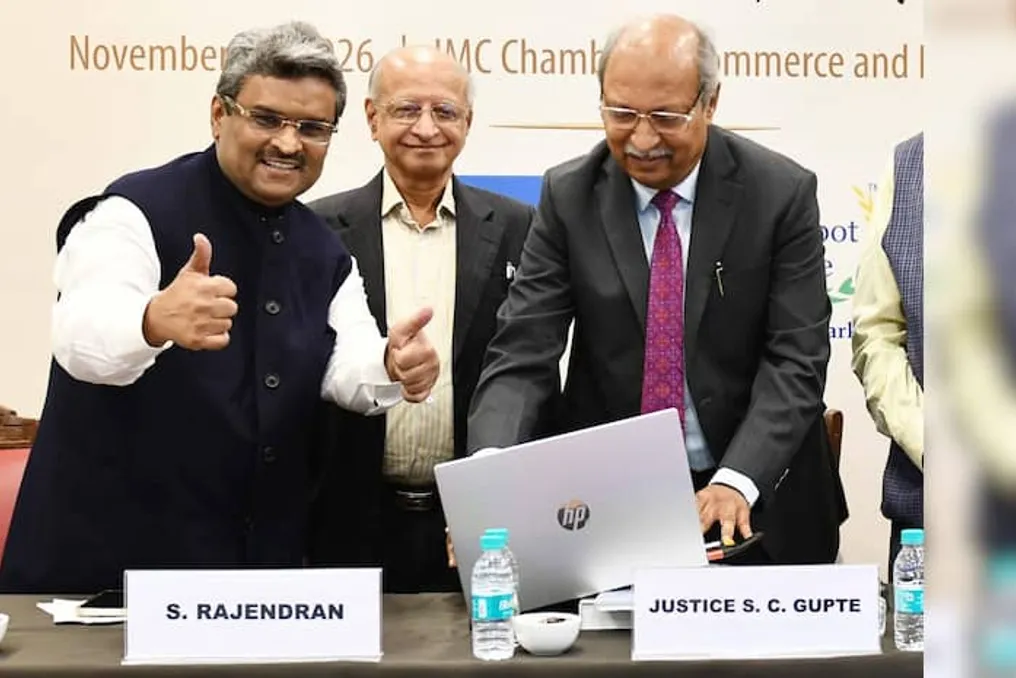
NSEL paid a one-time settlement of 1950 crore rupees, concluding a 14-year payment default
Read more
business-standard.com

NSEL paid a one-time settlement of 1950 crore rupees, concluding a 14-year payment default

National Spot Exchange Ltd (NSEL) announced that it has made a One-Time Settlement (OTS) payment of 1950 crore rupees to the concerned claimants. This measure allowed for the closure of a payment default crisis amounting to 5600 crore rupees, which lasted nearly 14 years during legal proceedings.

The settlement scheme was approved by the Mumbai Bench of the National Company Law Tribunal (NCLT). The total amount was deposited into a special account, and payments to the respective creditors are scheduled for November 23, 2026. These funds were transferred to 63 Moons Technologies, which acted as the administrator for the said creditors.

Previously, on October 8, a special court in Mumbai authorized the monetization of assets worth approximately 3464 crore rupees seized by the Enforcement Directorate to help finance this settlement.

Initially, the scheme was proposed by the NSEL Investors Forum, an association representing a large number of traders. NSEL, with the support of 63 Moons Technologies, accepted this proposal and presented it to the tribunal as a final settlement.

The tribunal approved the plan following a vote, where 92.81 percent of claimants by number and 91.35 percent by value supported it. NSEL stated in its submission that the settlement was voluntarily offered from the own funds of 63 Moons, despite no money trail being found by any investigative agency regarding NSEL, 63 Moons, and its promoters. It was established that the money trail led to 17 defaulting groups from whom repayments will be made.

Jinesh Shah, mentor and trainer at 63 Moons Technologies, called the OTS 'unprecedented in the history of Corporate India' and noted that it sets a standard for fair and constructive resolution of financial crises. He expressed gratitude to the governments of Central and Maharashtra, investigative agencies, including EOW, ED, and CBI, as well as the judicial system.

Chairman of NIF, Sharad Saraf, stated that the payment is fair to the claimants and will provide a roadmap for future resolutions in financial crises. He thanked the teams of NSEL and 63 Moons, as well as NIF member Sushil Jivardkar and eight members of his steering committee.

Rajendran, CEO and Managing Director of 63 Moons Technologies, emphasized the historical nature of the payment by noting that no investigative agency or court had established a money trail to 63 Moons or its promoters, yet the company adopted a solution-oriented approach. Niraj Sharma, CEO and Managing Director of NSEL, noted that this stage would not have been reached without the support of the authorities, courts, and NIF.

In August 2013, NSEL, with the support of 63 Moons, paid approximately 179 crore rupees to 7053 small claimants with outstanding debts below 10 lakh rupees; all claimants in this category received one hundred percent of their dues. The 5600 crore rupee default crisis arose in July 2013, depriving thousands of investors of the ability to recover funds invested through brokers in paired spot contracts. Trading on the exchange was suspended on July 31, 2013, by government directive.

Popular