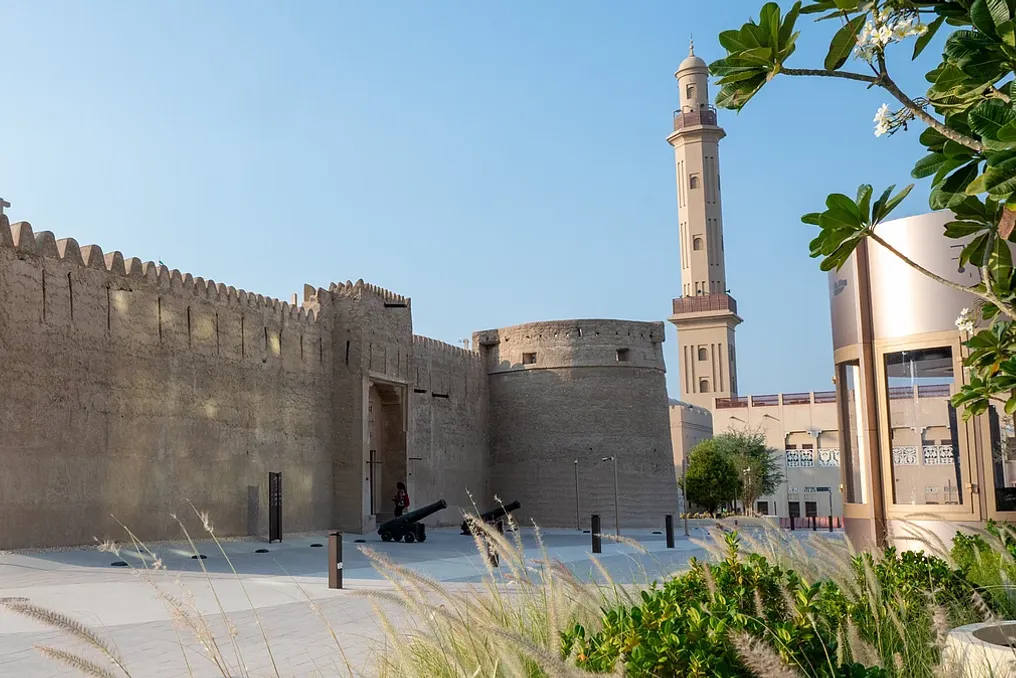
Al Fahidi Fort, the oldest in Dubai, has reopened its doors to visitors after a six-year period of renovation. It now offers a fresh perspective on Dubai's history through rare artifacts, unpublished stories, and immersive museum experiences.
Built in 1787, this fortress witnessed Dubai's transformation from a small coastal settlement into a global metropolis. Throughout its history, it served as a defensive outpost, a residence for the ruling family, a center of government administration, and in 1971, was converted into Dubai's first museum.
Following a massive overhaul, the historical site has entered a new chapter, merging its original architecture with modern exhibition spaces to narrate the emirate and the people who shaped it.
The new museum houses over 700 historical and cultural items, distributed across six main galleries. Exhibits include archaeological finds, rare weaponry, Islamic armor, archival materials, oral traditions, as well as digital displays and interactive zones.
Mariam Muzaffar Ahli, Director of Collections and Art Appraisal at Al Fahidi Fort, told Khaleej Times that the museum was conceived as a way to tell Dubai's story through the various roles the fort played over the centuries. She emphasized that the exhibitions focus on Dubai's defensive history, covering both Islamic and social heritage, as well as extensive oral heritage.
Ahli recalled that before becoming the emirate's first museum in 1971, the fort served as a residence for the ruling family, a city administration center, and a defensive fortification. The museum's opening coincides with its 55th anniversary.
A special feature of the new exhibition is the weapons collection, which provides insight into the region's history and its connections with the outside world. This collection includes pre-Islamic specimens, the oldest of which date back over 8000 years, as well as previously unseen Islamic weaponry and items from the 19th and 20th centuries.
The exhibits also explore the weaponry used to defend the fort and the entire region, demonstrating Dubai's history's connection to events beyond its borders.
The redevelopment work presented a significant challenge: modernizing the visitor experience without compromising the historical structure. Ahli reported that during construction around the fort and in the adjacent historic area, special monitoring devices were installed to detect vibrations and identify potential structural damage. This technology helped complete the project without harming the original building.
Furthermore, new underground exhibition spaces were developed, allowing the museum to expand while keeping the fort's historical architecture as the central focus. Ahli added that international archaeological consultants participated in the restoration plans, and the monitoring system received an international award for innovation.
In addition to the exhibits, the fort is preparing an event program aimed at attracting tourists, residents, families, and the younger generation. Aisha Hansaheb, Director of Al Fahidi Fort and Specialized Museums at Dubai Culture, stated that visitors can take tours in Arabic and English led by trained guides, and participate in seminars and educational programs.
She predicts that tourists will form a significant part of the visitors, noting that before closing for renovation six years ago, the museum attracted thousands of tourists daily. The museum also plans to strengthen cooperation with schools and universities, offering educational visits and opportunities for students to study the collections.
Architecture students, in particular, are expected to show great interest, as they can study the fort's construction methods and historical features. Interactive sessions, seasonal programs, and winter camps will also be part of the museum's offerings, where technology will play a vital role in engaging youth with history.
Hansaheb also stressed that the collections demonstrate Dubai's long-standing ties with neighboring regions and diverse cultures. She noted that the museum's goal is to highlight values such as tolerance and cultural exchange, showing that Dubai has never been isolated from the outside world.
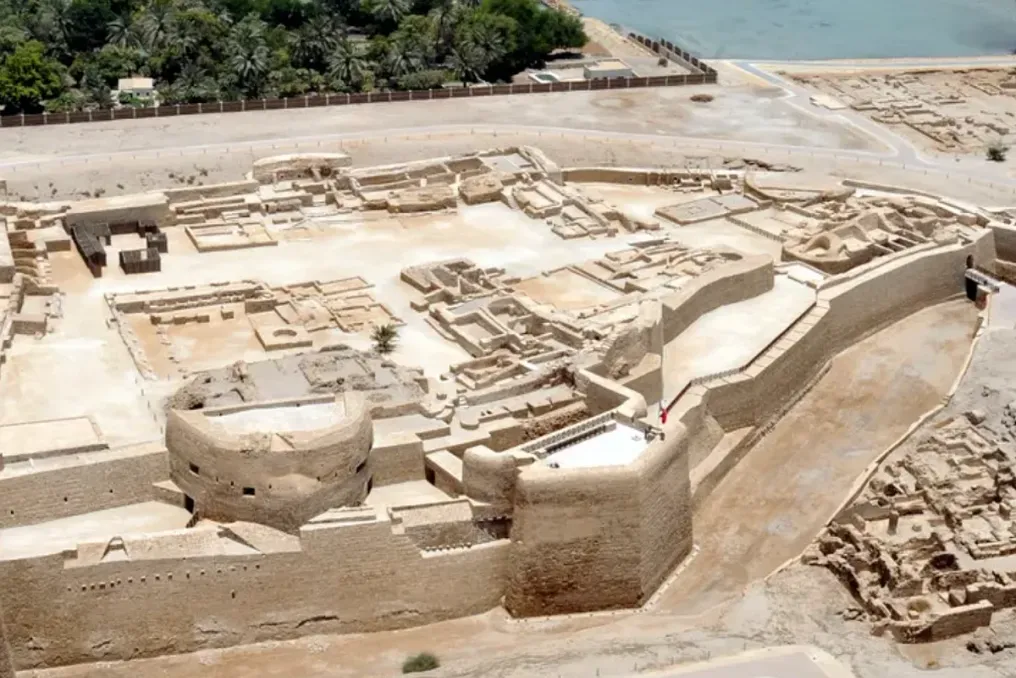
Despite the significant changes, the original architectural elements remain central to the experience. Thick walls, defensive towers, inner courtyards, and traditional passages reflect the building techniques used by local communities centuries ago. One of the most notable elements is the Murabba tower, whose walls, about two meters thick, are built from coral stone and gypsum, testifying to the traditional craftsmanship and practical knowledge of that era.
The renovation also added new exhibition areas and amenities for visitors, and the underground spaces provided additional space without overshadowing the historic building. The surrounding area was also incorporated into the overall visitor experience, reconnecting the fort with neighboring historic streets, markets, and landmarks of Old Dubai. Today, by opening its doors, Al Fahidi Fort offers guests more than just a journey into the city's past; it serves as a reminder of how Dubai has evolved while preserving the histories and legacies that continue to shape its identity.