
Mayo Clinic agrees to compensate five minutes of computer startup time for employees
Read more
Tecnoblog
tecnoblog.net

Mayo Clinic agrees to compensate five minutes of computer startup time for employees

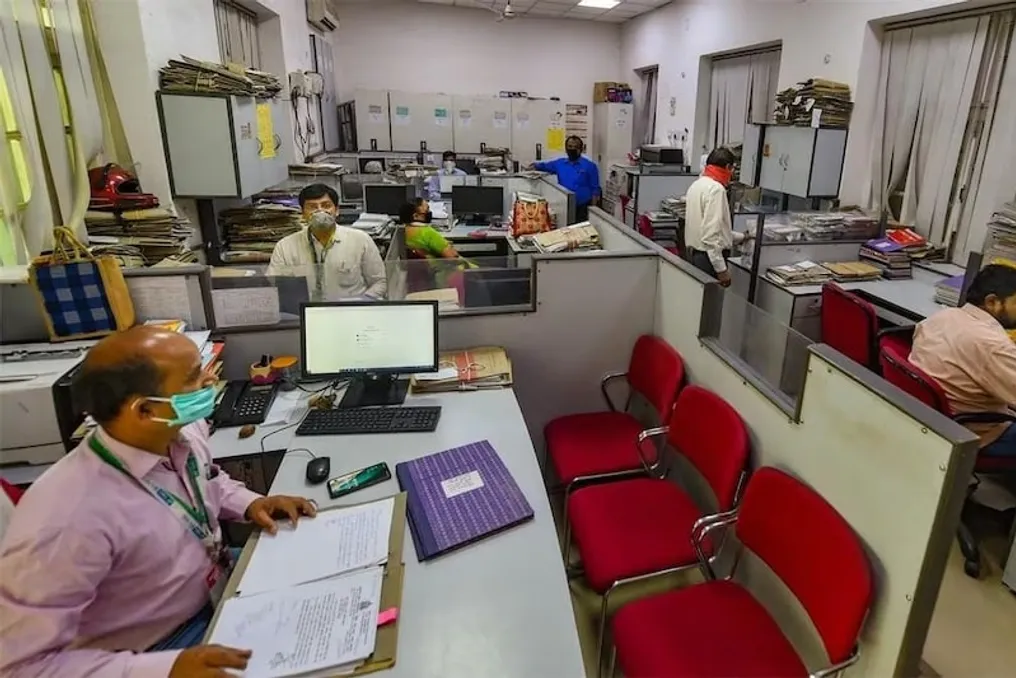
A judicial agreement established with the Mayo Clinic hospital network, located in the United States, determined that five minutes spent starting the computer at the beginning of a shift must be considered paid time. This change affects professionals who handle scheduling and answer patient calls.

Furthermore, the healthcare institution committed to paying a total amount of US$ 906 thousand, which is equivalent to approximately R$ 5.3 million in direct conversion, to 1,021 employees in the state of Minnesota. This arrangement was disclosed on Monday (23), following an investigation into work performed outside of time clock records.

The five compensated minutes will be credited at the start of each daily shift, intended for preparing the computer equipment. This procedure covers everything from booting up the operating system and accessing the user account to opening the essential software for receiving calls. These steps are considered preparatory to service but are part of the functional requirements.

Workers had reported that they were not being paid for the time dedicated to getting systems ready at the start of shifts or upon returning from meal breaks. The announcement also mentioned employees who finished calls after working hours without receiving compensation for that period.

The investigation began after complaints were received in 2025. In response, the Mayo Clinic implemented voluntary changes to its systems and policies on May 20, 2026. The agreement signed in November ensures payment for preparation necessary for service and mandates the continuation of these modifications.

The audit also raised issues regarding rounding time records to the nearest fifteen-minute interval. In addition to compensating for computer preparation, the Mayo Clinic must cease this rounding practice. Retroactive payments cover both current employees and those who have left the scheduling teams.

The complete agreement covers the periods worked between July 2024 and May 2026. Individual amounts will be calculated based on salary and the number of shifts worked during this period. Mayo Clinic denied failing to pay salaries stipulated by legislation and accepted the agreement to resolve the investigation. There is still a possibility of a fine of US$ 100 thousand, about R$ 588 thousand, which the court may impose in case of non-compliance.

In the Brazilian context, time spent accessing work systems has already resulted in overtime payments. In a case reported in January 2021, the Regional Labor Court of the 15th Region upheld the payment of ten extra minutes related to the period between an employee's arrival and logging in, specifically discussing the time needed to turn on the computer and access work programs.
Similar stories

Severance Pay Calculation: How Much Will an Employee Receive After 5 Years of Service with a Salary of 50,000 Rupees?
Read more
www.aajtak.in

Severance Pay Calculation: How Much Will an Employee Receive After 5 Years of Service with a Salary of 50,000 Rupees?

Companies and institutions provide employees with severance pay (grechuiti) after five years of service. This amount is paid if the employee leaves the institution after completing five years of service. The article examines what the size of the benefit will be with a salary of 50 thousand rupees.

The grechuiti system is designed to provide employees with compensation in addition to their salary. It is paid after the employee has worked for a certain period. Typically, this benefit is provided to employees who work continuously at one company, and it is paid after five years of service.

The amount of this payment depends on the employee's last salary and the total number of years worked. There is a special formula for calculation. Grechuiti represents the benefit that the employer (company) provides to the employee in exchange for their labor service.

According to the Social Security Code of 2020, grechuiti is paid in case of an employee's retirement or dismissal. Payment is also made in the event of the employee's death or disability. To qualify for the benefit, one must work continuously for five years at one institution. However, the five-year service requirement is not mandatory in cases of death or disability.

For employees working under fixed-term contracts or agreements, there are special provisions. They may receive a calculated benefit based on a projection, even without completing the standard five-year term. This rule came into effect in 2025.

To calculate grechuiti, the employee's last salary and the number of years worked are used. This is the basis upon which the benefit amount is determined. When calculating grechuiti, the basic rate and the housing allowance (DA) are also taken into account.

The formula is as follows: Grechuiti = (Last Salary × 15 × Years Worked) ÷ 26. Here, Last Salary is the sum of Basic Salary and DA. The number 15 signifies payment for 15 days of service per year, and 26 is the number of working days in a month.

If the basic salary is 50 thousand rupees and the employee has worked for five years, their average salary for 15 days will be 28,846 rupees. Applying this amount to the formula yields a total grechuiti amount of 144,231 rupees. Thus, if a person leaves the institution after five years of service, they will receive a total benefit of 144,231 rupees. It is important to note that for the calculation of grechuiti in this example, it was assumed that the basic salary and DA amounted to 50 thousand rupees.

Indian Overseas Bank increases interest rate on special deposits with a term of 444 days
Read more
www.aajtak.in

Indian Overseas Bank increases interest rate on special deposits with a term of 444 days

The state-owned bank Indian Overseas Bank (IOB) has increased the interest rates for its special fixed deposit (FD) program with a tenure of 444 days. This increase applies to retail deposits of less than 3 crore rupees and became effective on November 10th.

The interest rate for the special 444-day FD has risen from 6.60% to 6.75%. This change will affect the returns for investors who begin investing in this bank after the new rate is introduced.

The bank also raised the interest rate for the non-renewable 444-day FD by 10 basis points, bringing it to 6.85%, up from the previous 6.75%. Furthermore, the rate for the 444-day NRE term deposit was increased from 6.60% to 6.75%.

IOB offers enhanced rates for senior customers. Compared to the standard rate, pensioners receive an additional 0.50% per annum. Super-seniors, aged 80 or older, are credited with an additional 0.75%.

Thus, for regular customers, the rate for the 444-day FD will be 6.75%, for pensioners—7.25%, and for super-seniors—7.50% per annum.

The bank clarified that the changes in interest rates apply only to special FDs; all other types of deposits maintain their previous terms.

When investing 10 million rupees in this program, regular customers will receive an annual interest of 6.75%, equivalent to an income of 92,671 rupees. After 444 days, the total amount payable will be 10,92,671 rupees. Pensioners investing the same amount will receive an income of 99,532 rupees, with a total amount receivable after 444 days of 10,99,532 rupees.

Five Key Union Demands Presented to the 8th Departmental Wage Committee
Read more
www.aajtak.in

Five Key Union Demands Presented to the 8th Departmental Wage Committee

Central employees and pensioners are expecting significant changes from the 8th Pay Commission. In this regard, the leading employee organization has put forward a number of major proposals concerning wages and retirement.

These proposals include increasing the minimum basic salary from 18,000 to 69,000 rupees, raising the pension rate from 50% to 67%, and doubling the annual increase to 6%. Furthermore, it was proposed to increase the House Rent Allowance (HRA) and the amount paid for vacation upon retirement.

The main organization of central employees, the National Council (staff side) Consultative Mechanism (NC-JCM), presented its recommendations to the 8th Departmental Committee. The implementation of these proposals may affect central employees, pensioners, and recipients of family pensions. However, at this moment, these are only union demands, and the final decision will be made after the recommendations of the 8th Departmental Committee and approval by the central government.

NC-JCM proposed raising the minimum basic salary of central employees from the current 18,000 rupees to 69,000 rupees. To achieve this goal, a Fitment Factor of 3.833 was requested. The adjustment factor is a multiplier used to transition from the old basic salary to the new pay scale. It was also proposed to merge some levels of the salary matrix; for example, it is suggested to create a new level by combining levels 2 and 3, with a minimum salary of 83,200 rupees.

The union also called for substantial changes in pension legislation. According to this proposal, instead of 50% of the last salary upon retirement, the pension should be paid at 67%. Additionally, a request was made to increase the family pension from the current 30% to 50%. An example is provided: if a pensioner has an insurable salary of 100,000 rupees and the calculation uses a 2.0 adjustment factor, the estimated monthly pension would be around 134,000 rupees, and the family pension would be 100,000 rupees. It should be noted that this is only an example to illustrate the proposal and not an approved pension.

Currently, central employees receive an annual basic salary increase of 3%. NC-JCM believes that due to the rising cost of living and inflation, this percentage should be increased to 6%. To illustrate this proposal, an example of a level 4 employee is given: using an adjustment factor of 2.1, the adjusted basic salary is 53,550 rupees. If the employee receives an annual increase of 6%, their basic salary could grow to 90,472 rupees in 10 years. If the current increase of 3% is maintained, this amount would be 69,871 rupees. According to these calculations, the difference in total estimated salary over 10 years between the two scenarios could be 1,103,290 rupees, demonstrating the significant long-term impact of increasing the increase rate on employee income.

Regarding the House Rent Allowance (HRA), the union also demanded an increase. Currently, central employees receive HRA of 30%, 20%, and 10% depending on the city category. NC-JCM proposes increasing these rates to 40%, 35%, and 30% respectively. A table shows the changes: for category X, the transition is proposed from 30% to 40%; for category Y, from 20% to 35%; and for category Z, from 10% to 30%. This means that if the proposal is adopted, employees living in large cities could receive an HRA increase of 10 percentage points in category X, 15 percentage points in category Y, and 20 percentage points in category Z.

Upon retirement, central employees can receive monetary compensation for accumulated leave of up to 300 days. NC-JCM demands that this limit be increased to 600 days. The calculation of leave compensation is based on the employee's actual salary, which includes the basic salary and Dearness Allowance (DA). If this proposal is accepted, employees will be able to receive a larger sum of money for accumulated leave upon retirement compared to the current system.

In addition to these five key proposals, NC-JCM also raised demands for the restoration of the Old Pension Scheme (OPS), increased opportunities for employee promotion, an increase in the Children Education Allowance, and improved medical care. However, it is important to understand that all these proposals originate from NC-JCM and are not yet final. The exact amounts of the minimum wage increase, adjustment factor, pension, raises, and allowances will only be known after the recommendations of the 8th Departmental Committee are adopted and approved by the central government.

Popular