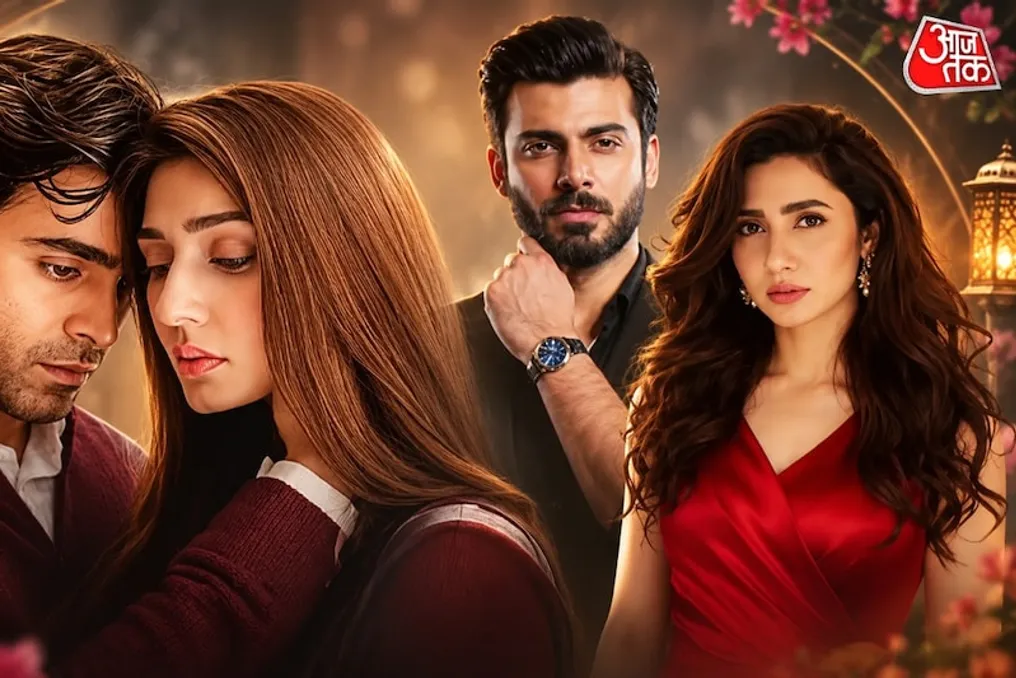
Scandal Surrounding Screening of Pakistani Series 'Dar-e-Nizaat' in Bangalore Leads to Cancellation of Showings
Read more
Aaj Tak
www.aajtak.in

Scandal Surrounding Screening of Pakistani Series 'Dar-e-Nizaat' in Bangalore Leads to Cancellation of Showings

The Pakistani television series 'Dar-e-Nizaat' became the subject of heated debates on Indian social media after disagreements arose regarding its private screenings. Both scheduled showings were canceled following protests on social media.

The situation drew public attention when promotional posters for these events appeared on social media, where one screening specified Pakistani attire as the dress code for guests. This sparked a wave of questions from users on X, who demanded action from the police.

Two special screenings of 'Dar-e-Nizaat' were planned in Bangalore. The first was set for November 28 at the Sheesh Kabab restaurant in Fraser Town and was promoted as the 'first screening in Bangalore.' The event was scheduled to feature episodes 34 and 35 of the series, followed by a Persian-Arabian dinner. Reports indicated that the entrance ticket cost 1999 rupees.

The second screening was scheduled for December 5 at a private cinema in Jayanagar Extension. 'Dar-e-Nizaat' is a popular Pakistani drama series starring Shahriar Munwar and Dur-e-Fishan Salim. The series also has a large viewership in India; according to India Today, it garnered over 1.7 billion views on social media platforms after 23 episodes were broadcast by October.

This dispute intensified against the backdrop of deteriorating relations between India and Pakistan. The question arose whether Pakistani dramas produced by a country perceived by some as not ceasing its provocations—such as after the Pahalgam attack when Pakistani YouTube channels were blocked—should continue to be watched.

What are users saying on X?

The discussion heated up after a post by Anvikshi, who questioned the holding of such fan gatherings and screenings of Pakistani dramas in India. Her post expressed criticism regarding the promotion of Pakistani characters and Pakistani clothing.

Following this, Yasir Mushtaq (@Path2Shah) shared information on X about the cancellation of both screenings, clarifying that the organizers had called off the events planned for November 28 and December 5 in Bangalore. His message also mentioned a statement from the Bangalore police commissioner.

However, there are differing opinions among social media users. Some argue that enjoying a television show or having an affinity for the stories and actors of any country does not necessarily imply support for that country's government or politics. Thus, the debate on X concerns not only the screenings themselves but also the need to separate entertainment from geopolitics.

Mohan Gowda voiced his reaction on X, stating: 'How can an event celebrating Pakistani entertainment and culture be openly held in Bangalore, which is called India's Silicon Valley, while Pakistan constantly encourages terrorism against India?'

Despite the political and military tensions between India and Pakistan, the popularity of Pakistani entertainment content in India remains a sensitive issue. Following the cancellation of the screenings in Bangalore, the discussion on whether entertainment should be viewed separately from the politics of the two countries, or if current relations influence cultural content, has intensified once again.
Similar stories

Pakistani content banned in India, but viewers continue to watch series like Dar-e-Nizaat
Read more
www.aajtak.in

Pakistani content banned in India, but viewers continue to watch series like Dar-e-Nizaat

Despite Pakistani content being banned in India, the series 'Dar-e-Nizaat' continues to be popular among viewers who watch it on their phones. Questions arise about the legality of such viewing, especially considering that Netflix has issued demands to ban the showing of the Pakistani series 'Joe Bache Hain Samet Lo'.

Pakistani Minister Ahsan Iqbal opposes the introduction of such bans. There is active reaction regarding this issue on social media. Furthermore, other Pakistani series, despite the bans, enjoy significant popularity in India, including the aforementioned 'Dar-e-Nizaat'.

A natural question arises: is watching banned Pakistani series in India illegal? Can they be watched at home on TV or phone, or gathered for group viewing, according to the laws?

To understand this, it is necessary to know how the ban on Pakistani content was introduced. The Indian government previously instructed OTT and streaming platforms not to provide films, web series, songs, podcasts, and other content produced in Pakistan in India. The basis for this decision was arguments concerning national security and public order. This recommendation was issued by the government under the Information Technology Act.

It should be noted that the government has the right to block any websites, social media accounts, publications, or content in the interest of the country's sovereignty, unity, security, defense, or public order. In this regard, the government imposed a ban on the broadcast of Pakistani content in India. However, the question arises: if the content is present on any platform, can it be watched?

According to current rules, watching Pakistani series publicly available on YouTube is not considered a crime for an ordinary viewer. Government rules target platforms that upload, host, and stream this content. Therefore, this ban does not apply to the viewers themselves, and if the content is viewed in private space, it is not a violation.

Cybersecurity expert Mukesh Chaudhary stated that watching Pakistani content is not a crime. He emphasized that if a viewer has access to content on a legal platform, they have the freedom to choose what content they will watch, including any video on YouTube. In Chaudhary's opinion, if the government wants Pakistani content not to be viewed in the country, it is an issue between YouTube and the government, not an issue for the viewer. He also noted that if the content does not contain obscenity, incitement, or insult to religious sentiments, its display to others cannot be considered wrong.

A lawyer from the Delhi High Court, Prem Joshi, explained that if Pakistani content is easily accessible and displayed on a legal platform, its viewing is legal. However, if a person uses a VPN or accesses blocked platforms to view prohibited content, they may face action from the authorities. Overall, watching a Pakistani series that is open on YouTube in India is generally considered legal, as there is no general legal provision that qualifies 'watching a Pakistani series' as a crime.

Nevertheless, attempting to access video that has been blocked in India using other technical means may violate platform rules and government restrictions. In such cases, one should not immediately claim a crime on the part of the viewer, but it can be risky and violate rules.

The greatest risk arises when an individual re-uploads, downloads, distributes blocked content, uses unauthorized links, or earns income from it. In such situations, government decrees, IT rules, and copyright laws may be violated, leading to measures against the uploader or distributor. Thus, there is a significant difference between viewing and distribution.

The question arises: why is the showing of content restricted in theaters and restaurants if it can be watched independently? The reason is that although the content itself can be viewed, its public display or use for commercial purposes is considered unacceptable. This is why its showing in such places might have been limited.

Scandal in India over Pakistani series: Actors oppose ban demands
Read more
www.aajtak.in

Scandal in India over Pakistani series: Actors oppose ban demands

A dispute has erupted in India surrounding the new Pakistani Netflix series titled 'Jo Bache Hain Sang Samet Lo'. The All India Cinematographers' Welfare Association (AICWA) demanded that this series be banned in India and sent a letter to Prime Minister Narendra Modi regarding the matter.

Amidst this discussion, various celebrities from Pakistan reacted, including actor and director Yasir Hussain. Yasir Hussain expressed anger towards AICWA, writing on his Instagram story that they seemed to be 'becoming shameless' and were merely afraid of drama, hinting that they might 'wet their pants upon seeing a soldier.'

Yasir Hussain's reaction is particularly noteworthy because his wife, Iqra Aziz, is one of the main characters in the series 'Jo Bache Hain Sang Samet Lo'. This project is Netflix's first original series set in Pakistan.

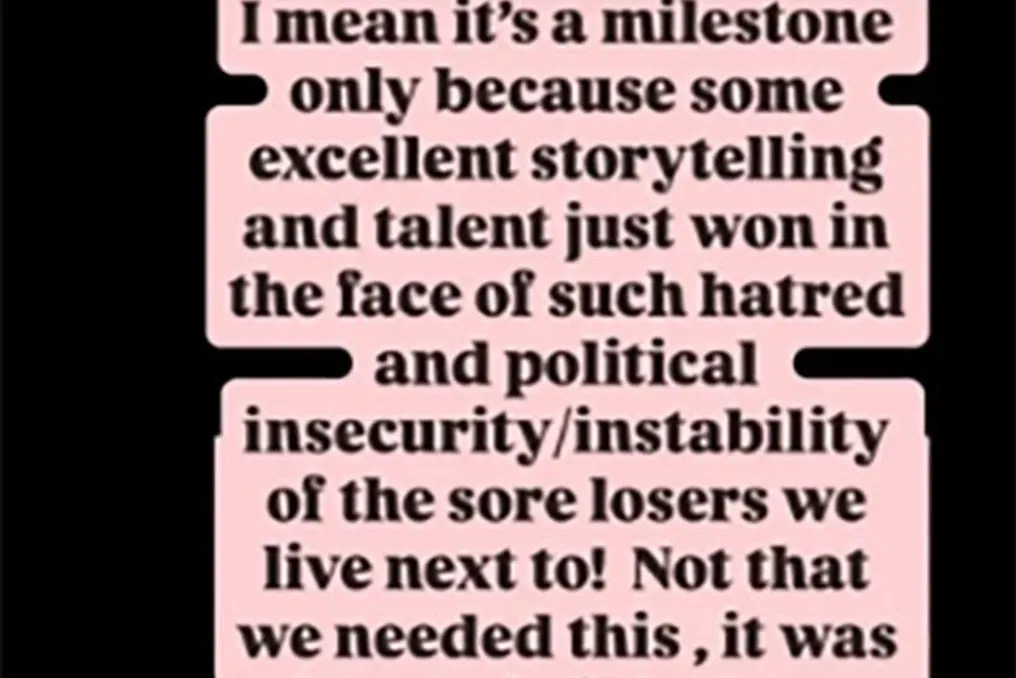
Actress Urwa Hocane also responded to the demand to ban the Pakistani show. In a long Instagram post, she linked the banning demands to political uncertainty and hatred, calling the critics 'losers.' She emphasized her pride in being part of the Pakistani film and television industry.

Actress Misha Khan condemned the association's viewpoint, calling it 'shameful.' She stated that content from her country should be banned and called for writing to the Prime Minister about banning shows containing same-sex scenes and coarse language.

The lead character of the Pakistani drama 'Jo Bache Hain Sang Samet Lo', Sanam Saeed, responded to those trolling the series. She asked the critics to show a little more tact, saying, 'Let go a little easier.' She noted that creating this show required significant financial investment, patience, time, and effort, and that they had to overcome many difficulties.

Fawad Khan and Mahira Khan star in the series, along with Ahad Raza Mir, Hamza Ali Abbasi, Hania Amir, Sanam Saeed, and Iqra Aziz. The series is based on a 2013 Urdu novel by the renowned writer Farhat Istiak. The show's director and producer is Momina Duraid, who previously created popular Pakistani dramas 'Humsafar,' 'Zindagi Gulzar,' and 'Dastaan.' Momina's Netflix project features six love stories across three generations. The series is scheduled to release on December 4, 2026.

AICWA's Arguments

Protests against Pakistani content and artists in India have been ongoing for many years. AICWA sent a letter to Prime Minister Modi on November 24th demanding the halt of the series 'Jo Bache Hain Sang Samet Lo' in India. The association called for strict enforcement of government directives concerning the restriction of Pakistani content and demanded the enactment of a permanent law banning the screening of Pakistani films, series, and other digital content on Indian OTT platforms.

The association also referenced a recommendation issued by the Ministry of Information and Broadcasting following the attack in Pahalgam, Pakistan. This recommendation stipulated the cessation of streaming Pakistani content on OTT platforms and in digital media in India. AICWA clearly stated that business interests cannot take precedence over national security issues and the feelings of the families of the deceased.

Demand to ban Pakistani content in India grows after Pakistan attack
Read more
www.aajtak.in

Demand to ban Pakistani content in India grows after Pakistan attack

Despite the tragic event—the terrorist attack in Pakistan on April 22, 2025, in Pahalgam, where 26 tourists and one local resident of the Baisaran valley were brutally killed, causing national shock and escalating tensions between India and Pakistan—public resonance regarding Pakistani content has flared up again in India.

Two works are at the center of the current dispute: the Pakistani Netflix series 'Jo Bache Hain Sang Samet Lo' and the screening of the Pakistani drama 'Dar E Nijaat' in Delhi.

The first subject of criticism is the original Pakistani Netflix series 'Jo Bache Hain Sang Samet Lo'. It features renowned Pakistani actors, including Fawad Khan, Mahira Khan, Ahada Raja Mira, Iqra Aziz, Sanam Saeed, Hania Amir, Hamza Ali Abbasi, and Mai Ali. According to the announcement, the series is set to be released globally on December 4, 2026.

However, opposition began after posters and actor images appeared on social media in India. The question arose as to how such projects can be accessible to the Indian audience, given existing restrictions and official recommendations concerning Pakistani entertainment content following the Pahalgam attack.

Although Netflix has not yet made an official statement about the release of this series in India, its trailer has recently been released, and posters have been posted on international Netflix accounts. In light of this, the All India Cinema Workers Association (AICWA) sent a letter to Prime Minister Narendra Modi demanding a complete halt to the streaming of this series in India.

One of the reasons for dissatisfaction was also the statements made by Fawad Khan and Mahira Khan regarding Operation Sindoor; reports indicate that Fawad called India's actions 'shameful,' and Mahira described them as a 'cowardly attack.' Thus, the anger of Indian users is linked not only to one web series but also to issues of national dignity and the entertainment industry.

The second dispute concerns the Pakistani drama 'Dar E Nijaat', starring Shahryar Munnuwar, Durafishan Salim, and Namir Nawaz Khan. This series enjoys significant popularity in India. It was broadcast on Ary Digital in Pakistan and is available on YouTube.

Recently, a video surfaced on social media from a cafe in Delhi showing a fan viewing party for this drama. It is reported that the event included an online Q&A session featuring director Sakib Khan.

The viral video divided social media into two camps. Some users questioned why there is such high popularity for Pakistani dramas in India after the Pahalgam attack. Others viewed it as contrary to the nation's sentiments and demanded a ban on such screenings. Meanwhile, some considered the meeting proof of the popularity of Pakistani dramas.

The author believes that this issue goes beyond simple viewing or abstaining from watching the drama. After events like the Pahalgam attack, it is crucial to understand people's anger and feelings. When relations between countries are under such strained conditions, it is natural to raise questions about another country's entertainment industry.

Nevertheless, it is acknowledged that viewers' tastes cannot be entirely controlled solely through social media anger. The question also arises: if content is banned in India, will people continue to watch it through other platforms or methods? And can the withdrawal of online support completely destroy the show's popularity?

Currently, there is no clear information regarding the Netflix series release in India, nor have there been official statements about the screening in the Delhi cafe. However, this dispute over Pakistani dramas has once again sparked an important discussion about the intersection of entertainment, politics, patriotism, and viewer choice.

Popular