
EBRD assesses warehouse infrastructure deficit in Uzbekistan, stating the need to increase volumes tenfold
Read more
Podrobno.uz [uz]
podrobno.uz

EBRD assesses warehouse infrastructure deficit in Uzbekistan, stating the need to increase volumes tenfold

According to the Eurasian Development Bank (EDB), the volume of warehouse infrastructure in Uzbekistan requires a significant increase—approximately tenfold—to reach the target of 7.5 million square meters. Currently, according to the bank's data, the country has less than one million square meters of warehouse space.

Discussion of Infrastructure Deficit

EDB Board Chairman Nikolay Podguzov and Deputy Board Chairman Alexey Skatin shared this data during a press briefing, answering questions from Podrobno.uz correspondents. Podguzov emphasized that Uzbekistan's rapid economic growth, reaching almost 8%, creates increased demand for logistics infrastructure, with the shortage of Class A warehouses being the most acute.

In response to an inquiry about the dynamics of deficit reduction and current data on warehouse types, bank representatives outlined their plans. EDB plans to continue investing in logistics projects. Specifically, Podguzov mentioned the possible creation of a joint logistics hub for storing and distributing auto parts with the company ADM. Furthermore, the bank is negotiating with a major Uzbek retail chain interested in expanding its warehouse capacity.

Sources of Demand and Development Prospects

Alexey Skatin added information, specifying that to meet the needs of Uzbekistan's developing economy, approximately 7.5 million square meters of warehouse space are required. He highlighted three key factors stimulating demand for new warehouses. The first is the rapidly growing retail sector, which attracts new market participants and trade networks. The second factor is the development of e-commerce, which, according to the bank's forecast, may account for about half of the total required warehouse space.

The third factor, according to Skatin, is related to Uzbekistan's geopolitical position at the crossroads of West-East and North-South transit routes. Modern warehouse complexes and dry ports are necessary for the effective servicing of transit cargo flows in the country. It was previously noted that Uzbekistan is among the countries in the Eurasian region expected to demonstrate some of the highest rates of warehouse infrastructure growth by 2040. An EDB study shows that by that time, the volume of warehouse space in the country will increase by approximately 7.5 times—from 0.64 to 4.87 million square meters.

Similar stories

Despite capacity growth, Uzbekistan continues to face electricity supply reliability issues
Read more
podrobno.uz

Despite capacity growth, Uzbekistan continues to face electricity supply reliability issues

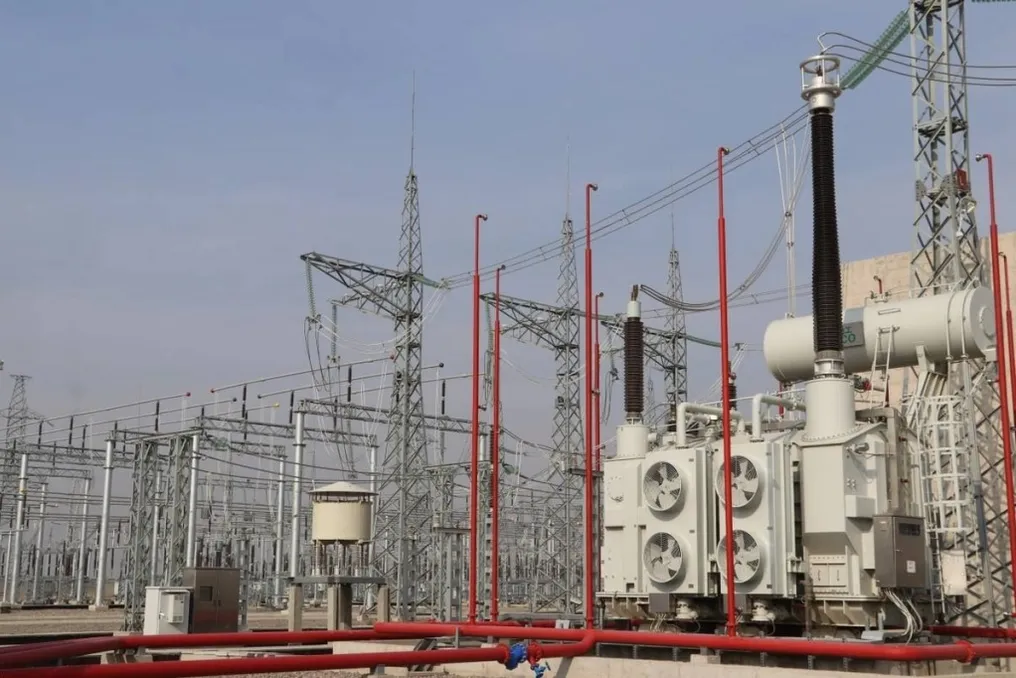
Despite the installed capacity of power plants in Uzbekistan increasing by 50% over the last five years, the country continues to experience interruptions in electricity supply. The Central Bank has identified the main causes of this situation as the aging of existing networks, energy losses, and limited infrastructure capacity.

Between 2021 and 2025, the power plant capacity grew from 16.49 to 24.74 gigawatts. However, the increase in electricity supply volume was significantly more modest—it grew by only 16.3%, reaching 87.18 billion kilowatt-hours compared to 74.95 billion kilowatt-hours.

This demonstrates that simply building new generating facilities does not automatically ensure uninterrupted supply to consumers. The scale of problems with the network infrastructure became evident from data for June and July 2026: approximately 4 thousand accidents were registered during these two months, and power losses reached 17.2%. In some regions, residents and businesses had to remain without electricity for 8–10 hours.

For the first half of the year, total losses amounted to 4.8 billion kilowatt-hours. According to the Central Bank, for the full development of the energy sector, it is necessary to simultaneously update transmission lines, substations, and distribution networks. Otherwise, new production capacities will not be able to meet growing demand, which will lead to increased enterprise costs and affect the final price of goods.

It was previously announced that the World Bank would provide Uzbekistan with $100 million for the modernization and digitalization of 60 substations across the country.

Uzbekistan presented infrastructure projects worth $15 billion to European investors
Read more
podrobno.uz

Uzbekistan presented infrastructure projects worth $15 billion to European investors

Uzbekistan demonstrated seven infrastructure projects to European investors, with a total value exceeding $15 billion. The main areas for potential cooperation include the creation of toll roads, airport modernization, and expansion of the railway system.

The presentation took place in Paris as part of the international event Paris InfraWeek 2026, which focused on public-private partnerships (PPP) and investment. The event gathered delegations from five Central Asian countries, representatives of European infrastructure firms, as well as investment funds and financial institutions.

Representatives of Uzbekistan provided detailed information on current transport initiatives and the potential for attracting private capital. Significant attention was paid to the development of infrastructure in New Tashkent and other regions of the country, as well as methods for financing large-scale projects in partnership with investors.

During the forum, the Uzbek side held business meetings with organizations such as Proparco, Rothschild & Co., the French Development Agency, Bpifrance, Meridiam, and the World Bank. Prospects for financing infrastructure tasks and further interaction between the parties were discussed. Currently, no information has been released regarding the signing of any specific investment agreements.

It was also mentioned that a joint Turkish-Qatari consortium won the international tender for the construction and operation of the new Bukhara airport; this project is also being implemented under the PPP model.

Popular