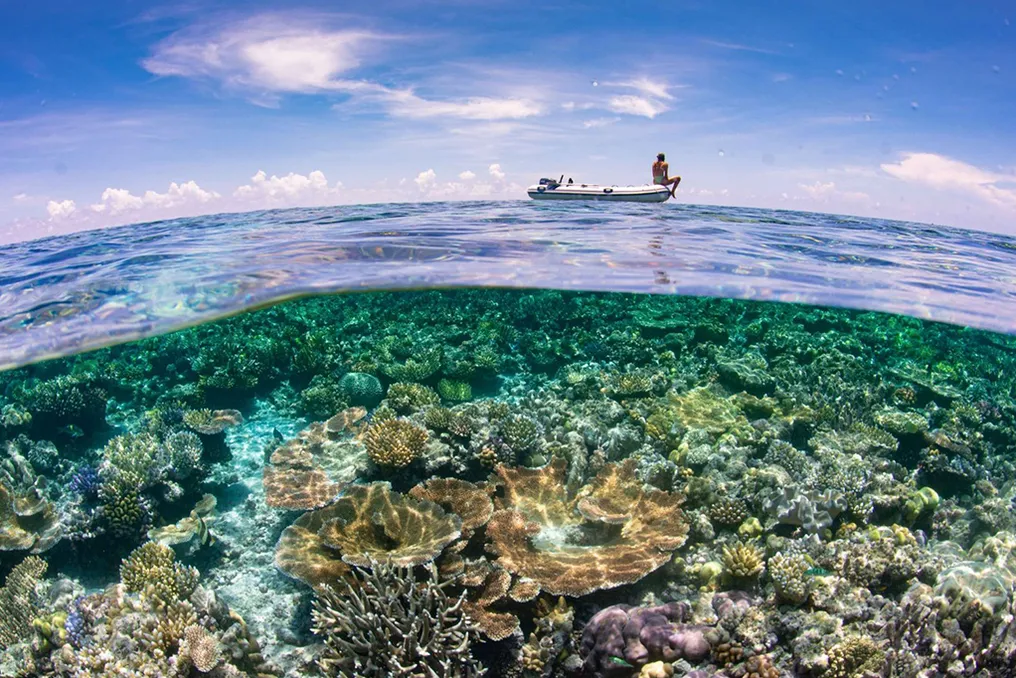
The Great Barrier Reef, located off the northeast coast of Australia, represents the planet's largest living structure, a vast ecosystem composed of thousands of reefs that house diverse forms of marine life such as fish, dolphins, and sharks. This system stretches for approximately 2,300 kilometers, a distance comparable to the straight-line distance between Porto Alegre and Salvador.
Although this location has been the subject of scientific study for over a century, correctly identifying species has always been a challenge due to the great similarity among corals. This difficulty was accentuated in the 19th century, when naturalists relied solely on the appearance of collected fragments, which were preserved after removing living tissue and exposing them to the sun.
Between the 1970s and 1990s, new investigations reviewed these materials, altering classifications. These reclassifications were made without genetic analysis, based solely on the morphology of the skeletons, leading to the synonymization of corals previously considered separate species.
However, recent technological advances have allowed for a much more precise exploration of this diversity. Scientists are reexamining museum collections with specimens from the Great Barrier Reef in search of new data.
A study published in November in the scientific journal Invertebrate Systematics details this research. An international team, led by Augustine Crosbie from James Cook University and the Queensland Museum in Australia, analyzed collections from various world museums and found that coral diversity is greater than previously imagined.
The researchers discovered that 12 species of the genus Acropora, which had been considered extinct in the 20th century and grouped into other species, are actually distinct entities, confirming the correctness of original classifications. Additionally, four previously described species whose validity was uncertain were recognized as legitimate.
To validate these discoveries, the team needed to obtain new specimens, searching for live corals at the original locations of the museum collections. Although most specimens came from the eastern Australian coast, others were collected in different parts of the Indo-Pacific, covering more than 30 countries, including Fiji and the Philippines, whenever possible at the exact points of the initial samples.
The samples were subjected to DNA analyses to clarify taxonomy. Unlike old methods, researchers separated pieces of tissue and preserved them in ethanol before any cleaning, ensuring the preservation of genetic material. In total, the DNA of 369 specimens was sequenced, evaluating 53 species of the genus Acropora.
Of these 53 species, 40 originated from the east coast of Australia, and 13 came from other regions of the Indo-Pacific—precisely those that had been incorporated into the Australian species. Of the 53 analyzed, 47 were confirmed as distinct species.
The study's authors state that the actual number of Acropora species is underestimated due to the synonymization of valid nominal species, indicating that endemism in the genus is more frequent than previously thought. For example, Acropora grandis appears to be found exclusively on the eastern Australian coast.
Scientists also point out that classification difficulties were not limited to past lack of technology. It is possible that different species develop similar forms independently, and the same species can exhibit great morphological variation. Many taxonomists interpreted these variations as mere internal differences, resulting in the merging of corals that were, in fact, distinct.
There is an important warning that some of the revalidated species may be less numerous in the reefs and, consequently, more fragile than assumed. Species inhabiting reduced areas are more susceptible to local disturbances, and their condition may have been minimized by being confused with more widespread species.
This warning gains additional weight because corals of the genus Acropora are severely affected by bleaching. Rising water temperatures, pollution, and other factors cause corals to expel the microalgae essential for their color and survival, leaving them white.
The authors conclude that imprecise species classification can generate chain effects in both research and conservation management, emphasizing the urgency of establishing a solid taxonomic framework and precise identification methods in the face of global challenges, such as climate change and habitat destruction.