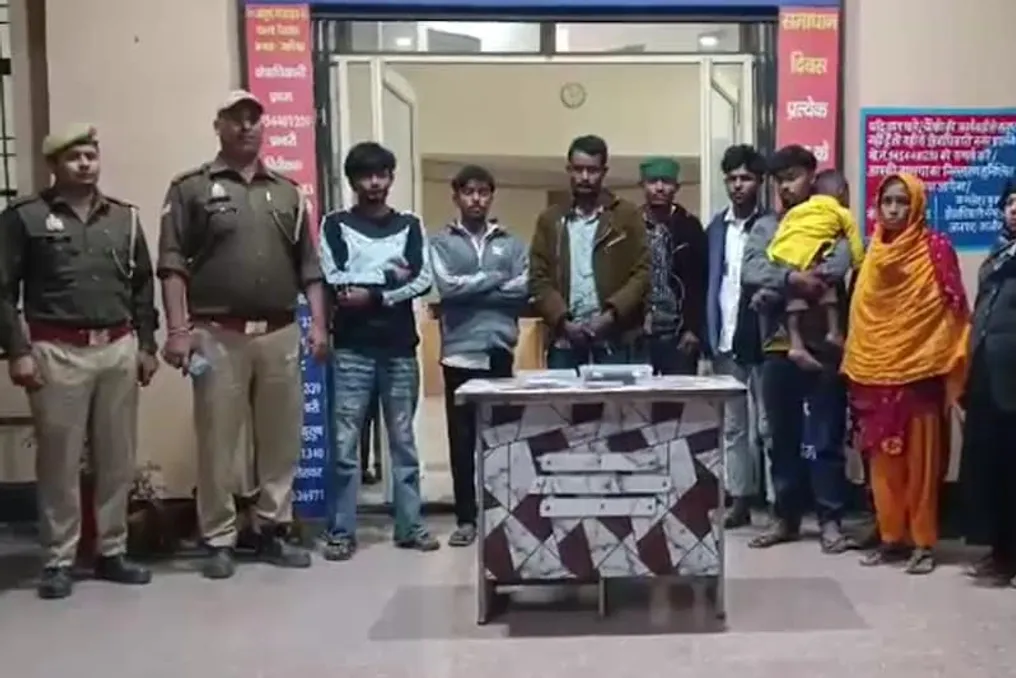
11 Bangladeshi suspects detained in Aligarh for residing in India with fake documents
Read more
Aaj Tak
www.aajtak.in

11 Bangladeshi suspects detained in Aligarh for residing in India with fake documents

A case has been uncovered in Aligarh regarding Bangladeshi citizens who have long resided in India, working in the meat processing industry and related factories. The police, acting on information from LIU, detained 11 individuals. Notably, the detainees possessed documents such as Aadhaar Card, PAN Card, and Voter ID Card.

During interrogation, the detained Amina Begum stated that she entered India with her family in 1992 without a passport or visa. Two Aadhaar Cards were found in her name for her daughter Sitara, both of which listed different dates of birth.

After receiving data from LIU, the police station of Rohawar conducted a raid near the railway bridge on Gonda Road. Amina Begum, her family, and relatives were detained there. A total of 11 people were arrested, including eight adults and three minors.

The investigation revealed that these individuals allegedly used various names and addresses to obtain numerous government documents, including Aadhaar Card, PAN Card, and Voter ID. Interrogations also revealed that one of the individuals had repeatedly entered and exited India since 1999.

The police also received information about a family dispute: approximately eight months ago, an incident was recorded where a person left home after a fight with his wife. The police are investigating all these aspects.

Five mobile phones, 10 Aadhaar Cards, and two PAN Cards were seized from the suspects, among other documents. A total of 13 people are involved in the case, of whom 11 were arrested. Eight adult accused have been sent to jail. The police are now investigating how their government documents were fabricated and who assisted at the local level. The search for absconders continues.

Similar stories

Indian student at Oxford spoke about instances of discrimination and unpleasant comments
Read more
www.aajtak.in

Indian student at Oxford spoke about instances of discrimination and unpleasant comments

An Indian student studying at Oxford University shared an incident that caused her significant discomfort and concern. According to the student, while shopping in a store, a woman repeatedly stood near her. Soon, this woman approached closer and said, 'I didn't mean to do this, but I have to say... you smell very, very bad.'

The student posted a video of this experience on Instagram on November 21st. She expressed bewilderment as to why the woman kept getting close to her. At that moment, she decided not to respond. Then, the woman suddenly moved closer and commented on her body odor. After that, she left without giving the student a chance to reply.

The consequences of this situation were felt not just that day. The student felt uncomfortable all day, as if trying to make herself invisible so no one would notice her. She noted that she had applied perfume that her father liked that day, which made the woman's comment even more shocking and unsettling.

The student linked this case to experiences of microaggressions she has observed in Britain, emphasizing that even small incidents can have a deep emotional impact on a person. However, she concluded her post with a positive message, recalling the words of a friend from India: 'We fight every day and lose, but we make this world a little more ours.' After the post was published, it received widespread support on social media; users assured her that she should not feel awkward because of an inappropriate remark from a stranger.

In the comments, many people shared their own experiences of similar incidents. One user recounted how an elderly white woman in a bus sat next to her and held her bag tightly, as if any contact could lead to phone theft. Another noted that when many people passed through the library doorway, the alarm would trigger, but checks were only conducted regarding one person. Another commenter responded to remarks about the 'smell' of Indian food and oil, stating that traditional oils and knowledge of Indian culture are extremely useful to him.

Popular