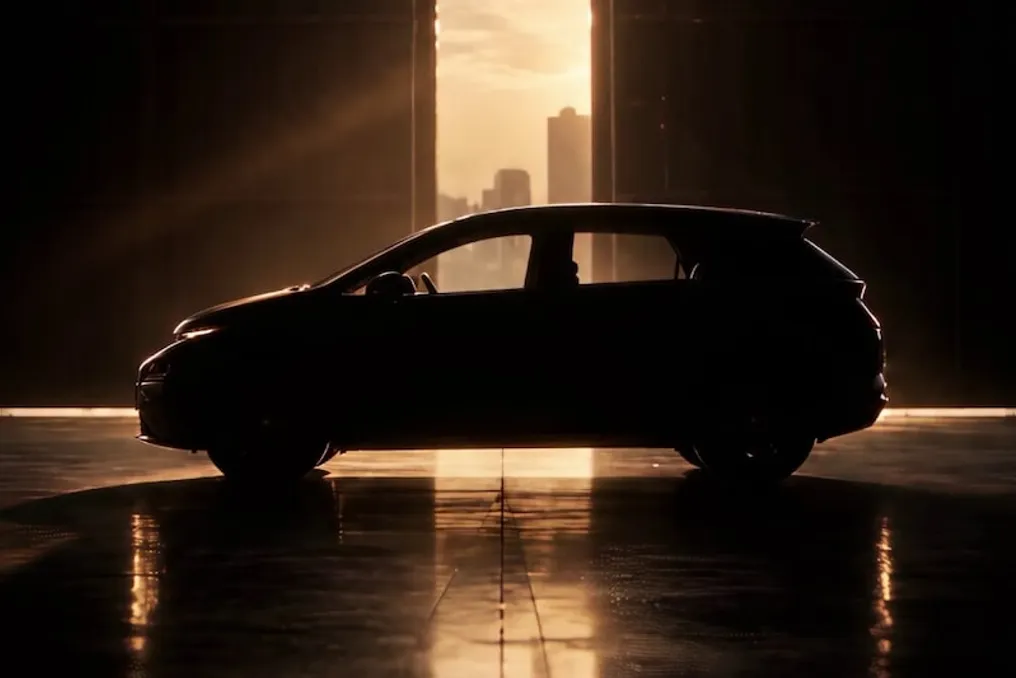
Hyundai prepares to introduce affordable electric SUV Ioniq P with planned launch in 2027
Read more
Aaj Tak
www.aajtak.in

Hyundai prepares to introduce affordable electric SUV Ioniq P with planned launch in 2027

Hyundai plans to enter the electric vehicle market by offering a competitive product where the competition will be not only for range but also for design, technology, and consumer preferences. The company is preparing to release a new compact electric SUV, which is presumably named Ioniq P. The launch is scheduled for January 16, 2027, and pricing information may appear at the Auto Expo next year.

This new electric SUV has been discussed for a long time; recently, Hyundai filed a trademark application for Ioniq P in India. However, this trademark is currently under review, and there is no official confirmation of the name from the company or government registries yet. Previously, this car was known by the code name HE1i. It will be Hyundai's first compact electric model introduced in India under the Ioniq brand for a wide range of buyers.

After Hyundai officially presented its Creta Electric for sale at the last Auto Expo and announced its prices, it is now expected that this new SUV will be unveiled on January 16, 2027. Price announcements may take place during the India Mobility Global Expo, which will run from February 4 to 9, 2027.

Hyundai management mentioned the model named Ioniq P during a call with analysts in the third quarter of the 2026 fiscal year, although this name is not yet definitively confirmed, and the company may choose another designation. Nevertheless, many industry publications continue to refer to this SUV specifically as Ioniq P.

The main feature is that it will be the most affordable electric SUV that Hyundai will introduce to the Indian market. The new Hyundai Ioniq P is expected to be developed based on Hyundai's E-GMP (K) electric platform, which is also used in the global Inster model. This platform is specifically designed for electric vehicles, allowing the battery to be placed under the passenger cabin.

The global Hyundai Inster model offers battery options of 42 kWh and 49 kWh. There is a possibility that different battery configurations will also be offered in the Indian version, although details about the battery pack and range of the Indian model are currently unknown. Nevertheless, it is assumed that the company will use batteries with improved range.

Prototypes of this electric SUV have been spotted in camouflage during tests in India, allowing some features of its design to be seen. The SUV is likely to have a angular silhouette, a high and straight profile, and an almost flat roofline. Thin LED daytime running lights will be installed at the front, with the main headlights positioned below them.

The side profile will feature prominent wheel arches, roof rails, two-tone wheels, and a slight overhang. The higher passenger compartment will distinguish it from the Creta Electric. In terms of body proportions and design, it might resemble the global Hyundai Inster model.

Hyundai previously confirmed at the CEO Investor Day event that its future compact electric SUV will be equipped with Level 2 driver assistance system (ADAS) technology and an intuitive next-generation interface. ADAS functions may include adaptive cruise control, automatic emergency braking, and lane keeping assist.

Furthermore, the new infotainment system is expected to include connected car features and an updated user interface. However, full information on the features of the model intended for India will become available closer to the launch date.

Production of this Hyundai electric model will take place at the company's plant in Sriperumbudur, Tamil Nadu. The company is currently working on preparing the necessary production infrastructure and capacity for this special project in India. Initially, Svolt battery cells are expected to be used, as the company may temporarily use external supplies due to delays in the domestic battery cell program with Excide Industries.
Similar stories

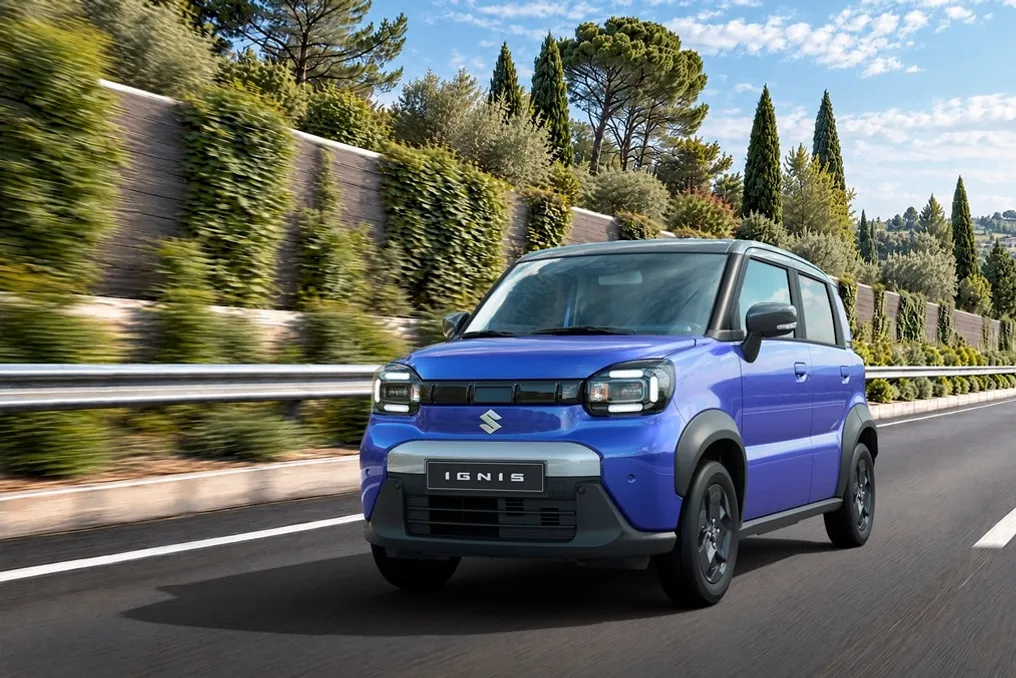
Suzuki Ignis returns in a new compact electric version that could become the company's most affordable model
Read more
www.aajtak.in

Suzuki Ignis returns in a new compact electric version that could become the company's most affordable model

Suzuki is bringing back the Suzuki Ignis badge, but in a new form. Previously, this model was available as a gasoline hatchback, but now it is presented in a compact electric variant. This new version has the potential to become the brand's most budget-friendly electric model.

The company has currently introduced this vehicle to the global market. In Europe, it will be available for purchase next summer. This model is a production version of the Vision E-Sky, which was shown at the Geneva Motor Show in Japan in 2025. The Ignis EV is based on the Heartect-e platform.

The car is designed to carry four people. It is equipped with a 26 kWh battery and an electric motor located on the front axle. The company has not provided information regarding plans to launch this model in India; even if it is introduced to the Indian market, it may receive a different name, as the Ignis brand has not gained widespread popularity in the country.

The Ignis EV features ventilated disc brakes at the front and drum brakes at the rear. The battery is made of 26 kWh lithium iron phosphate cells, providing a claimed range of 310 kilometers. The motor, located on the front axle, develops a power of 91 hp and a torque of 133 Nm.

Although information about the car's charging capabilities has not been disclosed, its design features a sharp look reminiscent of, for example, the S-Presso available in India. The car is equipped with scorpion-shaped LED daytime running lights and LED projector headlights. The front bumper includes parking sensors, and the central part is finished in silver, while the lower part of the bumper is black and features functional air intakes.

The Ignis EV is fitted with 15-inch wheels and thick protective cladding over the wheel arches. The side mirrors have a silver trim and are equipped with turn signals. The roof is also finished in silver. The rear lights of the Suzuki Ignis EV are designed as LED lights resembling the daytime running lights at the front. Parking sensors are also installed on the rear bumper.

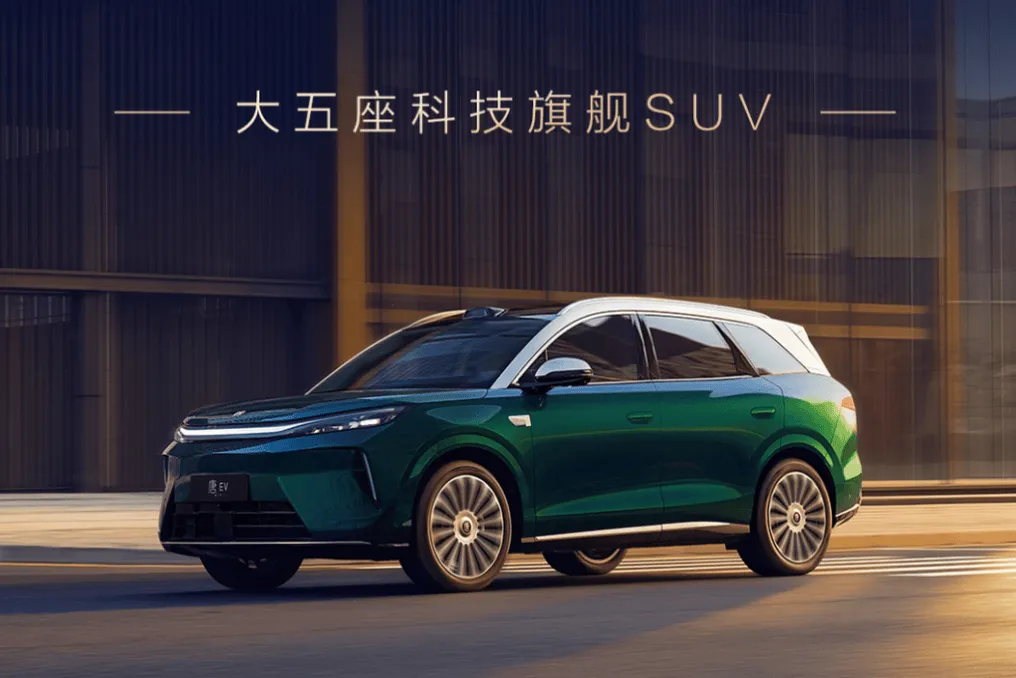
BYD releases third-generation electric SUV Tang with 850 km range and steer-by-wire technology
Read more
technode.com

BYD releases third-generation electric SUV Tang with 850 km range and steer-by-wire technology

BYD has introduced the third-generation electric SUV Tang on Tuesday. The model is available in three variants with prices ranging from 187,900 yuan ($28,194 USD) to 219,900 yuan ($32,995 USD). This vehicle is positioned as a large five-seater fully electric SUV, while the optional package with all-wheel drive and steer-by-wire technology costs 20,000 yuan ($3,000 USD).

With the launch of this model, BYD's Dynasty series now includes two flagship electric SUVs: the seven-seater Datang and the five-seater Tang EV. The most noticeable change compared to previous versions of the Tang EV is the discontinuation of the seven-seater option, shifting the model's focus towards buyers who prefer a more spacious five-seater configuration.

This move also reflects BYD's more targeted approach to the electric SUV market segment priced around 200,000 yuan ($30,009 USD). The third-generation Tang EV measures 5,045 mm in length, 1,980 mm in width, and 1,760 mm in height, with a wheelbase of 2,950 mm. According to BYD, the legroom in the rear seats reaches 1,003 mm, and the rear seatbacks can recline up to 130 degrees.

The five-seater layout provides more cabin space for the second row and trunk compared to the seven-seater version, although practical utility will depend on seat comfort, storage capacity, and the driver's daily needs.

The new model is equipped with standard double wishbone front suspension and independent five-link rear suspension. Differences between modifications mainly concern the suspension system: mid- and high-spec trims feature dual-chamber air suspension, whereas the base version uses BYD's adjustable DiSus-C suspension. This means that air suspension is not available across the entire lineup.

Another significant feature is the new digital chassis system, steer-by-wire. This system supports both steer-by-wire and brake-by-wire technologies, eliminating the traditional mechanical connection between the steering wheel and the wheels. BYD claims that this system increases response speed by over 25%, but full steer-by-wire functionality requires the installation of the optional all-wheel-drive package for 20,000 yuan ($3,000 USD). The standard rear-wheel-drive version does not possess the full set of features.

Regarding range and charging, the rear-wheel-drive version offers a maximum CLTC rating of 850 km, while the all-wheel-drive version has a rating of 770 km. The car is equipped with BYD's second-generation Blade battery and fast-charging technology. The company states that charging from 10% to 97% state of charge takes only nine minutes.

However, two aspects must be considered: the car's maximum charging capacity and the availability of compatible charging infrastructure. The stated charging time is based on the use of specialized BYD fast-charging stations. The network is still expanding, and station density varies depending on cities and major highways. Therefore, the claimed CLTC range of 850 km and nine-minute charging are figures under specific conditions; real-world results will depend on driving style, temperature, road conditions, and access to compatible charging stations.

The third-generation Tang EV is also equipped with BYD's DiPilot 300 driver assistance system with LiDAR, which supports urban navigation assistance and intelligent parking. The cabin features a dual-screen system: an integrated 35.4-inch panoramic display and a 30-inch panoramic screen. It also includes the BYD voice assistant, Didi Xia, which supports dialect recognition and voice recognition throughout the cabin.

However, publicly available information regarding specific processor specifications remains limited. Screen size and the number of displays alone do not allow for an assessment of the actual user experience. Real-world testing will be necessary to evaluate factors such as system responsiveness when multiple screens are active, voice recognition accuracy, and the performance of driver assistance systems in complex urban environments.

The key difference in the third-generation Tang EV is not just the addition of new features, but a clearer focus on a specific use case. By abandoning the seven-seater configuration, BYD has concentrated on the space of the five-seater cabin, long range, and chassis technology.

Priced from 187,900 yuan ($28,194 USD) to 219,900 yuan ($32,995 USD), the new model will compete with electric SUVs such as the Tesla Model Y and XPeng G6. These models differ in dimensions, seating layout, driver assistance systems, and charging infrastructure.

Despite the relatively clear positioning of the third-generation Tang EV, there remain aspects that require evaluation. These include what percentage of the claimed 850 km CLTC range will be achieved in daily driving, whether BYD can expand its fast-charging network beyond major cities, whether the steer-by-wire system will lead to a noticeable improvement in the driving experience, and how reliably driver assistance functions will operate in real road conditions.

The five-seater configuration may appeal to families of two to four people who value rear seat space and comfort on long trips. However, buyers who regularly need to accommodate six or seven passengers might find a seven-seater SUV more practical.

New version of MG Windsor's popular SUV coming, expected to offer more range
Read more
www.aajtak.in

New version of MG Windsor's popular SUV coming, expected to offer more range

The facelift version of the MG Windsor, one of the company's best-selling cars, is being prepared for launch. According to reports, this facelift model will include several improvements, including external and internal design changes as well as a larger battery.

This facelift version of the Windsor EV is set to hit the market in 2027. MG first introduced this car in 2024, and it is currently the brand's top-selling model. Initially, the company launched this EV with only a 38kWh battery, but in 2025, it was offered with an option featuring a 52.9kWh battery.

In 2025, the Windsor became the best-selling electric car, and by 2026, it surpassed sales of 80,000 units, which is a significant achievement for an electric vehicle. This car has been available in the Indian market for the past three years, and now its facelift version is awaited.

To meet this demand, the company may incorporate a larger battery pack with the facelift. A report from Autocar India suggests that the Windsor could be equipped with a 61kWh battery, providing greater range compared to previous variants.

Currently, the car comes in 38kWh and 52.9kWh battery options, offering estimated ranges of 332 kilometers and 449 kilometers, respectively. The facelifted model will also feature a front axle mounted e-motor, although no details are available regarding the power of this new motor. Furthermore, both the exterior and interior of the Windsor will be upgraded.

Currently, no test mule of the car has been publicly displayed, making it difficult to predict how the exterior updates will look. It is possible that the Windsor EV facelift might be available at a higher price than the current model. Currently, this car is sold at an ex-showroom price ranging from ₹14.85 lakh to ₹19.15 lakh.

Popular