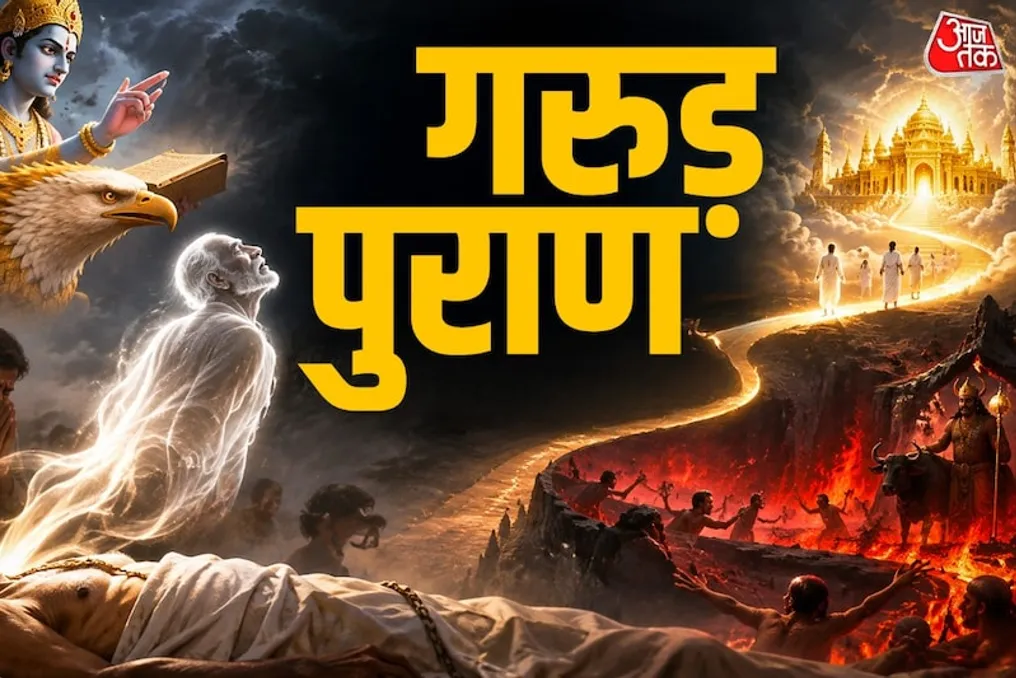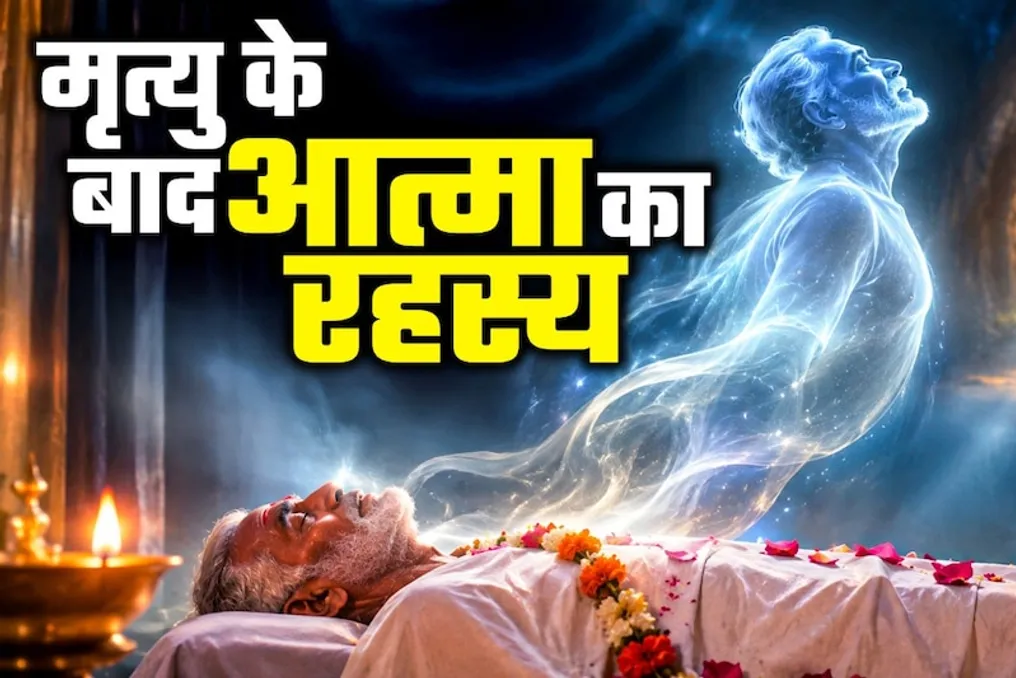
According to the Garuda Purana: How many days does the soul wander after death?
Read more
Aaj Tak
www.aajtak.in

According to the Garuda Purana: How many days does the soul wander after death?

Death is the greatest truth in every person's life, yet what happens after it still raises many questions for people. The question arises: does the soul reach the realm of Yama immediately after leaving the body, or does it remain near its home and family for several days? What is the duration of this soul's journey? The Garuda Purana contains much information about the state of the soul after death and its journey to the afterlife that may surprise readers.

What does the Garuda Purana say?

In the Preta Kalpa, the Garuda Purana describes what happens to the soul after death. It is generally believed that after death, the soul remains near its home and family for 13 days. However, the Garuda Purana also mentions the soul's further journey, including its 49-day path and various stages it passes through on the way. It further details what happens to the soul during these days.

Why are the first days after death important?

According to the Garuda Purana, when a person dies, the soul leaves the body, and its journey continues. This is why various rites and rituals are performed in Hinduism for several days after death. These include pindadana, tarpan, and sharaddha. There is a religious belief that these actions bring peace to the deceased's soul and ease its further journey. Family members perform these rituals for the peace of their loved one's soul.

What happens during the 13 days after death?

In Hinduism, the period of 13 days after death is considered special. According to beliefs, during this period, the soul remains connected to its home and family. Therefore, family members perform various religious rites during these days. Special worship and rituals are conducted on the tenth, eleventh, twelfth, and thirteenth day. It is believed that these rites help the deceased soul find peace. The thirteenth day is considered the most important day for all these rituals.

What happens during the 49-day journey?

The Garuda Purana describes the soul's journey not only during 13 days. Its Preta section states that after death, the soul proceeds to Yamaloka. Along this path, it must pass through many intermediate points, among which is the river Vaitarani. According to religious beliefs, during this journey, the soul must bear the fruits of its good and bad deeds. After this, it reaches Yamaloka.

Thus, the Garuda Purana details the soul's path after death. Nevertheless, all these assertions are based on religious beliefs and stories presented in the Purana.

Similar stories

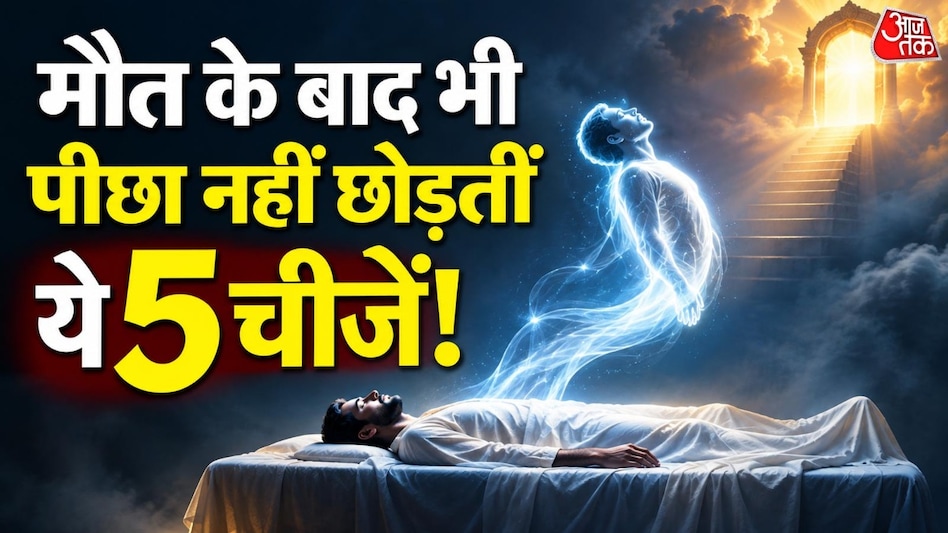
According to the Garuda Purana: After death, the body burns, but the soul takes five things with it
Read more
www.aajtak.in

According to the Garuda Purana: After death, the body burns, but the soul takes five things with it

After leaving life, the human body decomposes into dust, and a person cannot take anything from the material world with them. However, Hinduism has a special concept of the soul. According to the Garuda Purana, even after the body ceases to exist, certain actions and habits of a person remain with them. It is believed that when the soul leaves one body and moves towards a new birth, certain things are retained with it.

The following five aspects are examined, which, according to the teachings, do not leave a person after death:

Desires and Attachments

The Garuda Purana asserts that desires and attachments remaining in a person's mind continue to haunt them. Often, some aspirations remain incomplete, and strong attachment to family, money, or relationships exacerbates this problem. In Hinduism, it is believed that unfulfilled desires can be the cause of the next birth. Therefore, it is recommended to avoid worldly hustle and attachments during life.

Burden of Debts

In his life, a person often takes on debt obligations. According to religious beliefs, the influence of debts does not disappear even after death. The Garuda Purana considers this in the context of the next birth. Therefore, it is advised to repay loans taken and fulfill one's duties on time.

Fruits of Virtuous Deeds

Any good deeds performed by a person in life will certainly bear fruit. The Garuda Purana indicates that acts such as charity, helping others, and serving the needy are virtuous. There is a belief that the fruits of good deeds remain with a person even after death. Consequently, everyone should help those in need and show mercy. It is also considered auspicious to make donations on special days such as Kartik Purnima, Makar Sankranti, Akshaya Tritiya, Magha Purnima, and Ganga Dashashti.

Good and Bad Deeds

Karma holds immense significance in Hinduism. It is believed that a person will inevitably receive retribution for their good and bad actions. An example of this can be found in the epic Mahabharata. According to the story, Bhishma Pitamaaha, lying on the bed of arrows, asked God Krishna why he was experiencing such pain. Krishna reminded him of an event from a past life. He recounted that Bhishma Pitamaaha threw a snake onto thorns. This event was considered a consequence of his past karma.

Knowledge and Conduct

Although a person cannot take money or other possessions with them after death, the knowledge gained in life and the established conduct are very important. In Hinduism, knowledge is considered the greatest wealth. Therefore, every person should constantly study something new. Furthermore, it is important to maintain good behavior and treat others with respect. Religious doctrine states that good conduct and knowledge are also connected to the soul.

According to the Garuda Purana: Why is it forbidden to leave the body of the deceased alone before burial?
Read more
www.aajtak.in

According to the Garuda Purana: Why is it forbidden to leave the body of the deceased alone before burial?

In Hinduism, birth and death are considered immutable truths of life. There is a belief that everyone born on this earth will eventually die. Many traditions related to human burial are observed in Hinduism. One such tradition is not to leave the body of the deceased alone. You have probably noticed that when someone dies at home, relatives sit near the body. Even at night, someone stays by it. But have you ever wondered why this is done? The Garuda Purana mentions certain religious beliefs related to this.

Why should the body not be left alone? According to religious beliefs, after death, the soul leaves the body, but its attachment to family and home does not disappear instantly. In common interpretations of the Garuda Purana, it is said that after death, the soul remains near its relatives and familiar places for some time. This is why it is considered necessary to respect and care for the body of the deceased before the funeral. It is believed that leaving the body alone can lead to its desecration or neglect. Therefore, a family member sits near it and cares for the body until the funeral. This is also seen as part of respecting and saying goodbye to the deceased.

Why do relatives stay near the body even at night? In Hindu traditions, if a person dies at night, the funeral is often held the next day. During this time, the body remains at home, and relatives stay near it. According to religious beliefs, leaving the body alone at night is undesirable. Therefore, a lamp is lit near it, and a family member sits there all night. This is done to maintain the safety and dignity of the deceased's body.

Why is a lamp lit near the body? There is also a tradition of lighting a lamp near the body before the funeral. In religious beliefs, the lamp is considered a symbol of light, purity, and positivity. It is believed that lighting the lamp maintains a calm and sacred environment. At the same time, relatives pray for the peace of the deceased's soul.

Why is it important to care for the body? Before the funeral, the body of the deceased must be kept clean and safe. If the body is left exposed or unprotected, insects or other creatures may harm it. Therefore, relatives sit nearby, taking care of it. This tradition also demonstrates the family's respect and responsibility towards the deceased person.

What does the Garuda Purana say?

The Garuda Purana is one of the main puranas of Hinduism. It tells about a conversation between Lord Vishnu and the bird Garuda, touching upon themes of death, the soul, karma, and the afterlife. Special importance is given to rituals performed after death. According to religious beliefs, it is extremely important to conduct the funeral according to established rites to achieve peace and a state of grace for a person's soul after death. This is why the tradition of not leaving the body alone is observed. However, traditions related to this may vary in different places and families.

According to the Garuda Purana: Where does the soul go after death and when does it reach Yamaloka?
Read more
www.aajtak.in

According to the Garuda Purana: Where does the soul go after death and when does it reach Yamaloka?

When the human body ceases to exist, the question arises about the fate of the soul: does it immediately go to Yamaloka after leaving the body, or does it remain near home and family for some time? Can it see its loved ones and experience hunger or thirst? These questions always arouse strong curiosity in people.

The Garuda Purana, one of the most important texts of Hinduism, provides answers to these questions through a dialogue between Lord Vishnu and Garuda. It examines themes of death, the soul, sins, and merits, as well as the afterlife. According to religious beliefs, after death, the soul begins a new journey where the good and bad deeds of the person are decisive.

The Garuda Purana illuminates various aspects of life and death. According to the teaching, the influence of a person's actions persists not only during life but also after its end. It is believed that a person reaps the fruits of their past actions, whether good or negative.

This scripture details the process of the soul separating from the body during death and the nature of its subsequent path. It also explains the significance of religious rites such as Sharaddha, Tarpan, and Pindadana, as well as the concept of Yamaloka.

What happens to the soul at the moment of death?

According to the Garuda Purana, when a person dies, their soul leaves the body. During this period, Yamadakshas are mentioned, described in a terrifying manner; they hold a noose and a staff. According to religious beliefs, the consequences of life's actions affect even after death. People who have committed sins may experience fear and suffering at the moment of death. After this, the soul proceeds on a further journey according to its deeds.

The Garuda Purana also contains a description of the subtle body. It is believed that the soul's journey does not cease even after the physical body is destroyed, as it continues to move under the influence of accumulated karma.

Does the soul return home after death?

The question of whether the deceased's soul remains in the house for some time is often asked. According to beliefs associated with the Garuda Purana, after death, the soul may retain an attachment to its home and family. It is said that the soul is capable of seeing its family members but cannot communicate with them due to the absence of a body. There is also a belief that it feels sorrow from being separated from relatives and loved ones.

This is why various rituals are performed in Hinduism after death. However, there are different religious opinions regarding how long the soul stays in the house, and this should be considered purely as a religious belief.

What does the soul receive from Pindadana?

In Hinduism, there is a tradition of performing Pindadana and Tarpan after a person's death, and the Garuda Purana emphasizes their importance. According to religious beliefs, during Pindadana, food is offered on behalf of the deceased. It is believed that this helps the soul on its further journey and brings it peace. Therefore, family members perform Pindadana, Tarpan, and other religious rites on specified days after death.

Why are special rituals held on the tenth, eleventh, and twelfth day?

In Hinduism, special worships and rituals are conducted after death on the tenth, eleventh, and twelfth days. The Garuda Purana also mentions Pindadana and other rites performed on these days. According to religious beliefs, the Pindadana performed on these days completes the process of forming the deceased's subtle body. It is believed that this facilitates the soul's further journey, after which representations of its path to Yamaloka follow.

What does the journey to Yamaloka look like?

The Garuda Purana describes the journey to Yamaloka as very difficult. Especially the journey of people who have committed evil deeds is depicted as full of suffering. Various difficulties and complex circumstances are mentioned during this journey. This journey also mentions the river Vaitarani, which is depicted as a terrible stage in religious texts. According to beliefs, the soul goes through various trials depending on its actions. Ultimately, it reaches the kingdom of Dharmaraja, where it is destined to reap the fruits of its deeds.

Can the soul see family after death?

According to the Garuda Purana, the soul's attachment to family and past life does not disappear instantly after death. It can feel attached to its home, loved ones, and things associated with its entire life. It is said that after the soul leaves the body, it can see its relatives but cannot establish contact with them. Because of this, it experiences anxiety and sadness.

Due to these beliefs, rituals such as Sharaddha, Tarpan, and Pindadana are performed in Hinduism after burial. It is believed that this brings peace to the soul of the deceased and eases its further journey.

Does the soul experience hunger and thirst after death?

The Garuda Purana also mentions that the soul experiences hunger and thirst after death.

Popular