Trump's tariffs could undermine the attractiveness of shifting production from China
Read more
Business Standard
business-standard.com

Trump's tariffs could undermine the attractiveness of shifting production from China

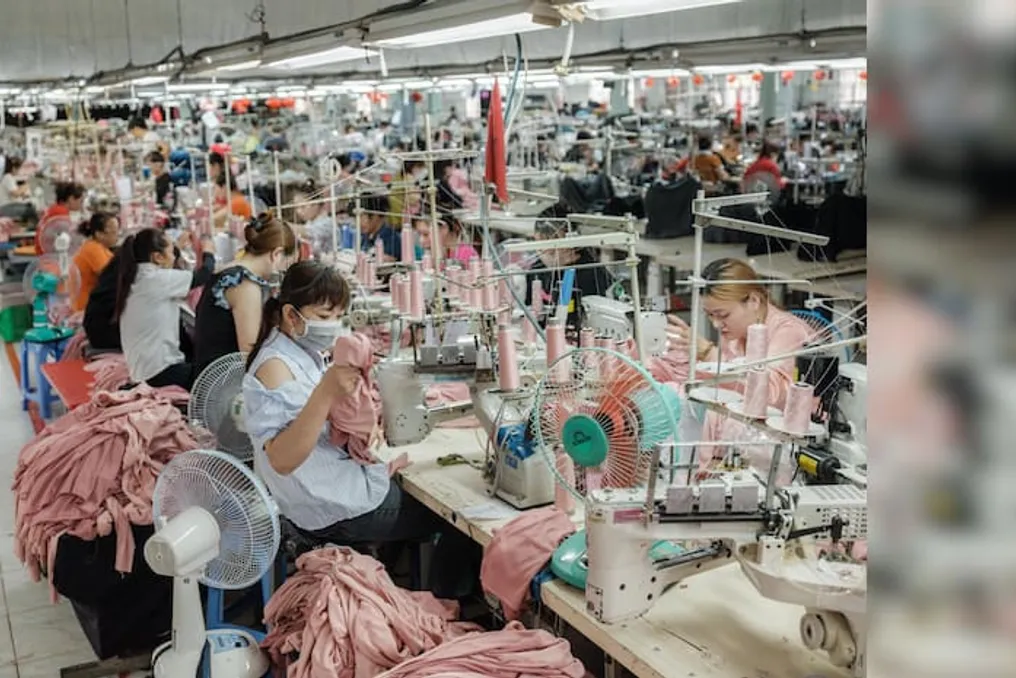
President Donald Trump's latest initiative to impose tariffs threatens to weaken one of the key shifts in global industry that began after the start of the trade war between the US and China—the relocation of production chains outside of China.

These duties, which apply to 14 economies in Asia and Europe, may affect some of the biggest beneficiaries of the so-called 'China plus one' investment boom. For example, countries like Vietnam might face rates approaching or even exceeding those on Chinese goods, although numerous exemptions exist that lower the actual cost compared to the stated rates.

Furthermore, these measures, announced on Wednesday, are likely to cause concern in many corporate headquarters, besides upsetting governments that have condemned the latest US trade aggression. They signal that simply moving production away from America's main competitor may not be enough to protect companies.

Deborah Elms, head of trade policy at the Heinrich Center in Singapore, noted that many firms might decide: 'Well, hell, we'll just go back to China,' as they do not need to face the threat of huge amounts of documentation, compliance costs, and tariff changes.

Dan Wang, director of the China team at Eurasia Group, added that the current year is a time when many companies are forced to review cost synergies, leading to an increase in layoffs, the implementation of automation, the application of artificial intelligence, and the consolidation of various markets, making the relocation of production to another region undesirable.

The Trump administration aims to reinstate tariffs that were overturned by the Supreme Court due to a lack of proper legal basis. New duties will be introduced based on American assessments of overcapacity in the manufacturing sector, defined as production that consistently exceeds the level that market conditions would sustain due to government policy or intervention.

A US trade representative accused China of encouraging the expansion of production capacity abroad. This is particularly relevant for Southeast Asia, where many countries observed a surge in production and export volume at factories when Chinese companies opened branches there. The US criticized the region's countries for being unable to properly handle investment and goods transit issues from 'non-market' economies, which usually means China.

The proposed US tariffs could reach 35% for Vietnam, 25% for India, and 20% for Singapore; however, countries may achieve lower rates by reaching agreements with Washington. China will be charged an additional 20% surcharge on top of existing duties, and it could face harsher charges if the trade truce is broken.
Similar stories

Trump imposes tariffs of up to 20% on 14 countries, including China and the EU
Read more
noticiasaominuto.com

Trump imposes tariffs of up to 20% on 14 countries, including China and the EU

Jameson Green, a representative of the US Chamber of Commerce, announced the introduction of new tariffs of up to 20% on 14 economies, including China, Japan, and the European Union. These measures were adopted due to practices deemed unfair and disruptive to the balance of bilateral trade.

The new tariff proposal, announced under Section 301 following a review period, provides for an increase in the import duty on certain Chinese goods up to 20%, with the total increase for China potentially reaching 40%.

The main goal of this step is to counteract overproduction in the Chinese industry, which puts pressure on competitors' prices.

Representative Jameson Green stated that tariffs on China could reach 40% if agreements related to the trade truce established last summer between US President Donald Trump and his Chinese counterpart Xi Jinping are not reached.

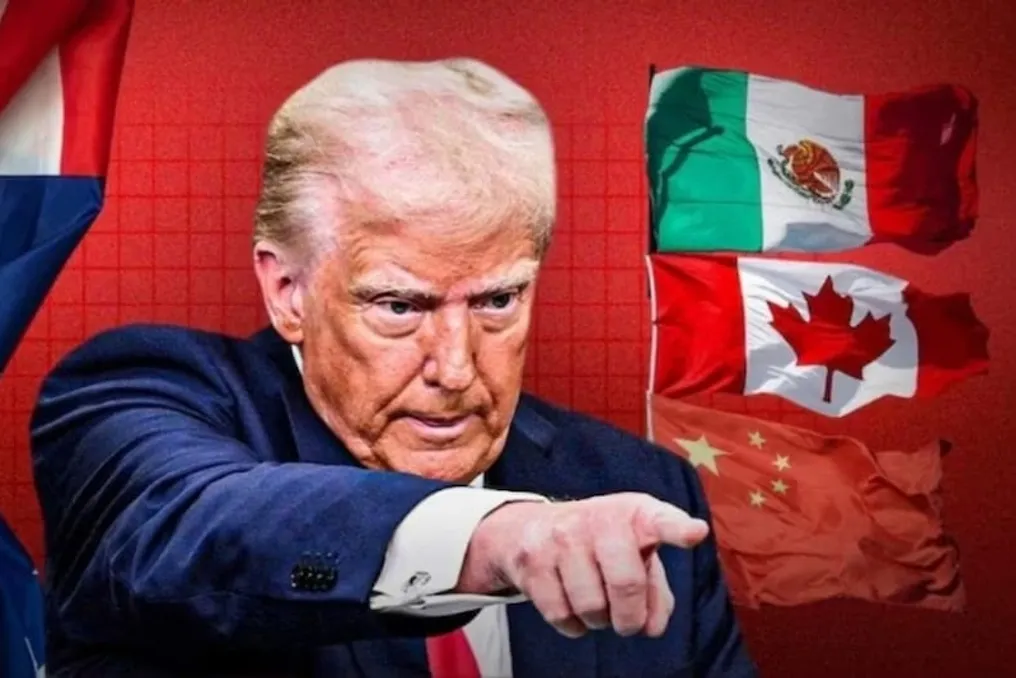
The increase in customs duties will also affect allied economies such as the European Union, India, Japan, Singapore, and South Korea. However, the United States has decided to exclude Mexico and Norway from this tariff increase for now.

Trump's Dollar: 16 Countries Under Threat of Tariff Hikes, Including India
Read more
www.aajtak.in

Trump's Dollar: 16 Countries Under Threat of Tariff Hikes, Including India

Donald Trump is preparing to introduce a new wave of tariffs, dubbed the 'Trump bomb,' and this new list includes 16 countries. According to one report, the inclusion of India in this list is a cause for serious concern. It is reported that the US plans to increase existing tariffs on these countries, and India faces the threat of new American tariffs.

According to a report by The Wall Street Journal, India may face another round of tariffs. This is because President Donald Trump's administration intends to increase tariffs on countries that, according to the administration, receive government support in the form of subsidies and other aid for their domestic industries. Major economies such as China, India, Japan, South Korea, and the European Union are expected to fall under the scope of Trump's tariffs.

These tariff actions are the result of months of US investigation into industrial subsidization. America claims that such support gives foreign producers an unfair advantage over American companies because they produce goods at lower prices and bring them to the international market in large volumes. Simply put, in the view of the US, financial assistance and other political support allow foreign producers to create products more cheaply, enabling them to sell them on the global market at favorable prices, hindering competition for American manufacturers. The Trump administration states that this weakens domestic production in the US.

According to data cited in the WSJ report, representatives associated with Trump's tariff plan stated that US Trade Representative Jamison Greer may announce the results of the US investigation this week, although he warned that timelines could change. For India, this Trump tariff plan is particularly complex, as New Delhi and Washington are still negotiating a trade agreement. Due to a Supreme Court ruling regarding Trump, this agreement has not yet been concluded, despite changes in US trade policy.

The Wall Street Journal indicates that the proposed tariffs by the Trump administration will cover most goods exported by the target economies. However, some industrial goods, such as steel, aluminum, and automobiles, may be excluded because separate tariffs based on national security are already in effect on them. Although the final rates of Trump's tariffs for India or any other country on the list have not yet been determined, American officials have repeatedly hinted at the Trump administration's desire to impose duties equivalent to those imposed in 2025. It is noted, however, that the impact will not be the same for all countries. According to sources, Japan, the EU, and South Korea, which have discussed trade agreements with the US, may face a tariff of 15% or less.

Popular