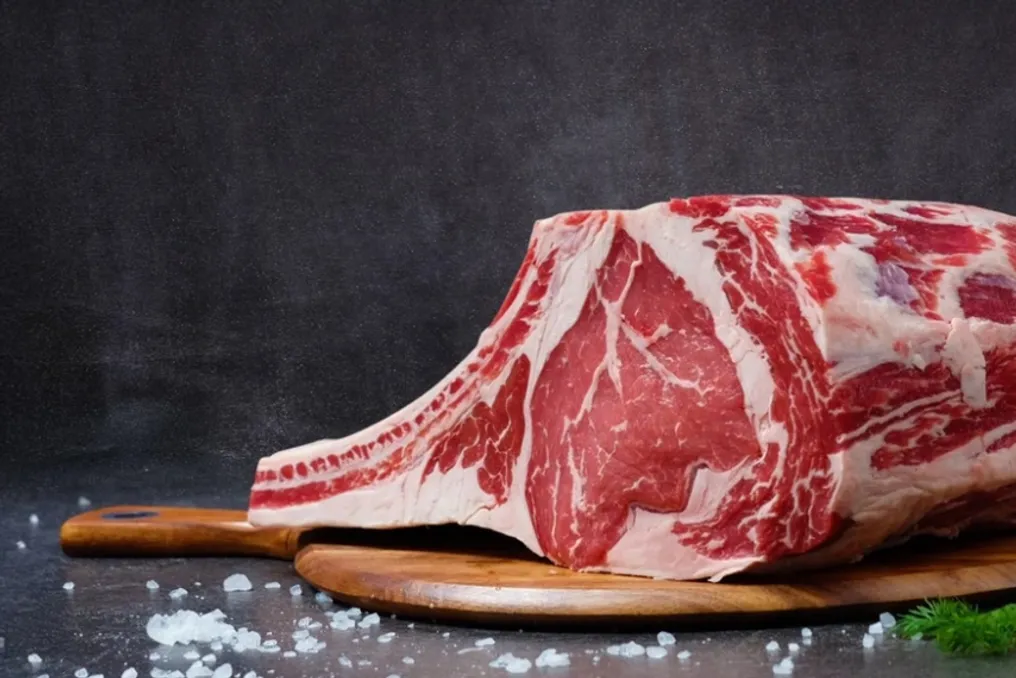
Traceability of South African meat is necessary for accessing global markets
Read more
Food For Mzansi
foodformzansi.co.za

Traceability of South African meat is necessary for accessing global markets

Beef from South Africa has significant potential to increase its share in the global red meat market. Thanks to progress in traceability, biosecurity, and animal health, producers of all scales can open new export opportunities and gain access to higher value-added markets.

Global demand for red meat is high, and South African beef is capable of competing due to its taste, price, and origin. However, the industry has realized that quality alone is not enough to open a market; the key to maintaining access is documentary proof: a guarantee of animal health, meat safety, and the ability to trace every carcass back to the farm where it originated.

As Foot-and-Mouth Disease (FMD) continues to restrict trade, and new markets such as Egypt are emerging on the horizon, compliance and traceability have become central elements of South Africa's export ambitions, moving from being mere paperwork in the background office.

South African beef exports reached a record high of nearly 39,000 tonnes in 2024 as producers expanded into Middle Eastern and Asian markets. However, the worsening FMD situation led to an approximate 26% drop in exports, totaling around 28,700 tonnes in 2025.

China, which ranked third among external markets in 2024 after the United Arab Emirates and Jordan, suspended imports of ruminant products in May 2025. According to Red Meat Industry Services (RMIS), shipments to China fell by 69%, amounting to only 1,687 tonnes.

The Bureau for Food and Agricultural Policy (BFAP) estimates that during FMD outbreaks between 2019 and 2025, over 800 million rand in beef export revenue was lost, with cumulative losses potentially reaching 2.6 billion rand by the end of the current year.

When China imposed the ban, Agbiz economist Vandile Sichlobo warned Food For Mzansi: 'This will undo the progress we have seen in the recovery of South African beef exports.'

Nevertheless, demand persists. In 2025, the largest destinations by volume were: UAE (494 million rand), Jordan (445 million rand), Kuwait (382 million rand), Qatar (208 million rand), and Mozambique (144 million rand).

In September, Agriculture Minister Willie Aucamp confirmed that South Africa and Egypt had concluded negotiations on a veterinary certificate for red meat, paving the way for supplies to a major new consumer market after the final documents were signed.

No importer buys South African beef solely because it tastes good or has a competitive price. Each market sets its own conditions in the veterinary certificate, which is agreed upon by governments. These certificates cover the country's status regarding diseases, residue limits, slaughter and processing standards, and confirmation of animal origin.

These rules allow trade to continue under agreed terms, even when a country is battling diseases. As David Wolpert, former CEO of the Association of Meat Importers & Exporters of South Africa, stated in Business Day: 'We are not obliged to wait 10 years before significantly expanding beef exports.'

The gap between meeting these requirements and exceeding them is reflected in price. A Red Meat Industry Report from RMIS and BFAP revealed that in 2024, South Africa received $5,873 per tonne of beef in Saudi Arabia, while Australia received $17,692. In the UAE, the price was $6,684 compared to $14,183 for Australia. Qatar, which paid South Africa $6,471 per tonne, later closed its borders due to traceability deficiencies. The report notes that Australia's premium price is attributed to its recognized absence of FMD and BSE, as well as its advanced classification system.

Behind the scenes, RMIS uses established fees to fund monitoring of diseases, residues, and microbiological indicators. Exporters also conduct private traceability under the supervision of third parties from the South African Meat Industry Company.

However, as Executive Chairman of Beefmaster Group Louw van Reenen noted, many buyers would prefer to see a nationally managed system.

This is why traceability has become a unifying force for the industry. Australia and New Zealand legally enshrined this principle many years ago and used it to capture the world's highest-paying markets. South Africa is now building its system from scratch.

The industry-created RMIS Traceability platform has now registered over 15,000 production units and connected 17 digital livestock management systems, allowing carcasses to be tracked increasingly from slaughterhouses back to their farm of origin.

Starting in April 2026, its free mobile application also allows farmers to confirm FMD vaccine deliveries by scanning a QR code, register vaccinations for each animal, and manage livestock movement. RMIS believes the red meat industry could grow more than 20% above the normal rate of development, adding over 12 billion rand annually to the agricultural GDP by 2030.

The implementation includes small herds. Since an estimated 40% of the country's livestock belongs to smallholder farmers, RMIS has ordered 130,000 industrial traceability tags and is finalizing private funding to scale up to five million.

Animal health technicians in provinces most affected by FMD register producers on the platform, then tag and vaccinate their animals. A new four-year cycle of established fees, effective November 5 and running until 2030, will support the platform's development.

Technology is the easy part. RMIS CEO Devald Olivier stated that tagging animals and registering every movement will require a cultural shift in the livestock sector, where cattle are often transferred informally long before reaching the abattoir.

He believes these efforts will pay off. Olivier noted that traceability could become the most significant initiative the livestock industry has seen since South Africa became a net exporter of red meat.

Industry leaders warn of the formation of a two-tier market: compliant producers who can sell through export channels, and everyone else.

To prevent this divide from becoming entrenched, small and communal farmers must be included in the system, not left outside of it. A pilot project in Bethul, Free State, is already helping small livestock farmers comply with new digital traceability standards.

For farmers of any size, the steps are practical: tag and register animals, and record every movement on and off the farm; keep vaccination and treatment records up-to-date and adhere to withdrawal periods; purchase animals only with a known health history and collaborate closely with government and private veterinarians; report suspected disease promptly. One outbreak can close the market for everyone.

South African beef has already proven it can take its place on world tables. The return of markets like China and entry into new ones like Egypt will depend less on what is inside the box and more on the accompanying documentation. Market access is earned at the farm gate and maintained through biosecurity.
Similar stories

Calls to establish links between the red meat industry and scientific researchers
Read more
foodformzansi.co.za

Calls to establish links between the red meat industry and scientific researchers

At the recent Agri X Fusion red meat value chain cooperation summit held at Silver Lakes Golf Club in Pretoria, the idea was put forward that partnerships between agribusiness, universities, and research centers can help solve problems across the entire red meat value chain in South Africa. Such collaboration will provide companies with access to expert knowledge in research and financial incentives.

Professor Eugene Kloete, CEO of the Cape Higher Education Consortium, emphasized the significant yet untapped potential of research conducted in public institutions. He noted that valuable solutions to industry problems may already exist within university research. Kloete stated that 'somewhere on a university shelf right now is a dissertation that could save or bring millions to a company,' highlighting the need to connect academic findings with real industry needs.

A panel discussion moderated by Hans Malan from the University of the Western Cape gathered representatives from the National Intellectual Property Office (NIPMO), the Agricultural Research Council (ARC), intellectual property lawyers, and the private sector. Dr. Otto Kokemoer insisted that collaboration must extend beyond R&D to include commercialization. He cited the development of veterinary vaccines as an example, explaining that moving from discovery to market can take eight to twelve years because the concept is only partially proven, and production, product stability, registration, and field trials require significant time and financial investment.

Kokemoer called on scientists and the business community to engage early, achieve mutual understanding of needs, and pre-agree on intellectual property ownership and legal terms. Jetayne Charles from NIPMO explained that businesses can access publicly funded research through licensing, purchasing intellectual property, or commissioning contract research under the Intellectual Property Act governing state-funded R&D. She advised companies to approach the technology transfer offices of universities and research institutes, which facilitate the link between business and researchers and ease commercial agreements.

Collaboration also opens up financial opportunities. Charles noted the possibility of a 150% tax deduction on expenses related to qualified research and development, including research conducted with South African universities and science councils. Technology transfer offices can help businesses determine project compliance and apply for approval through the Department of Science, Technology and Innovation. Meanwhile, Dr. Keoagile Modisakeng from ARC highlighted the prospects of strengthening partnerships with the private sector to develop commercially viable research solutions. Available resources include data collected through the ARC network of weather stations, which can support farmers, as well as the ARC National Feed Genetic Bank, which preserves and disseminates genetic resources for improving pastures and livestock feeding systems. ARC is exploring more effective ways to promote commercial partnerships and attract private investment.

For farmers and agribusinesses, such partnerships can lead to practical progress in animal breeding, feed production, genetic testing, precision agriculture, and traceability. Kloete urged businesses to interact with researchers to identify common challenges, stating: 'Research gives us understanding. Industry gives us impact. Collaboration turns one into the other.'

How holiday demand and El Niño affect the livestock market in South Africa
Read more
foodformzansi.co.za

How holiday demand and El Niño affect the livestock market in South Africa

The start of the holiday season is prompting livestock producers in South Africa to navigate ambiguous market signals: beef and lamb prices are declining, while poultry and pork prices are rising.

According to agricultural economist Konsa Moraba, the uncertainty experienced by farmers is amplified by the likelihood of drought caused by the El Niño phenomenon.

In the GroundRules livestock market update, prepared by Agricultural Market Trends (AMT) with support from King Price, Moraba details the mechanisms behind recent price changes across segments including cattle, sheep, goats, wool, poultry, and feed.

In the cattle market, average prices for young stock weighing between 200 and 250 kg dropped by 2% last week to R46.12/kg. Quality continues to command a premium price: the top 40% are valued at an average of R48.27/kg, and the top 10% trade around R51.19/kg.

By region, Free State led with a price of R46.85/kg, followed by North West (R46.74/kg) and Eastern Cape (R46.61/kg).

Moraba noted that while young stock prices softened slightly, carcass prices experienced a sharper decline. National A2/3 beef (Super-grade) fell to R63.50/kg, and C-grade dropped to R56.90/kg. Since Super-grade prices decreased faster than young stock prices, the young stock-to-carcass price ratio rose to 73%.

Moraba added that historically, under normal or below-average rainfall levels, young stock prices stabilize around this time of year. However, if expected dry conditions materialize, producers may reduce herd sizes, leading to increased supply. This could be good news for consumers but will put pressure on farmers.

A similar situation is observed in the sheep industry: average retail lamb prices fell by 1% to R56.96/kg (with prices in Mpumalanga at R59.78/kg, Eastern Cape at R58.88/kg, and Free State at R56.49/kg). Heavy ram carcasses weighing over 32 kg sold for R54.68/kg.

On the slaughter side, A2/3 lamb sharply dropped to R108.22/kg, while C2/3 held steady at R77.43/kg. Under drier El Niño conditions, retail lamb prices usually remain stable until mid-January, after which they begin to fall, with a potential recovery by March before Easter.

Most goat categories also showed price decreases, particularly female goats which fell by 12% to R43.30/kg. Large goats decreased to R31.45/kg, and medium goats to R52.18/kg, although small goats went against the trend, rising to R66.05/kg. Seasonal trends indicate reaching a price minimum around March, followed by a recovery into winter.

Unlike red meat, white meat prices continued to rise due to holiday purchasing. Frozen chicken meat from the abattoir increased to R33.09/kg, fresh chicken meat to R36.41/kg, and IQF to R32.86/kg. Pork followed suit: bacon slices rose by 1% to R31.79/kg, pigs for sausages reached R25.16/kg, and pork remained at R32.65/kg.

However, Moraba warned that both markets could be approaching their seasonal peaks. Typically, early December marks a turning point for poultry farming after the completion of holiday shopping, while a sharp drop in international pork prices limits further growth locally.

Regarding raw materials, domestic first-class lucerne remained unchanged at R3,400/ton, second class rose to R2,850/ton, and Prima traded at R4,100/ton. Hay prices increased to R3,750/ton due to high demand, although buyers are resisting further increases.

In conclusion, Moraba urged farmers to closely monitor weather conditions, seasonal demand, and cost-to-revenue ratios. She emphasized: 'Because in agriculture, it's not just about knowing what the prices are today. It's about understanding what might change them tomorrow.'

Popular