Currently, there are no known asteroids that pose a significant risk of collision with the planet in the next hundred years. However, only about half of the Near-Earth Asteroids with a diameter of 140 meters or more are known, and these are large enough to cause considerable damage.
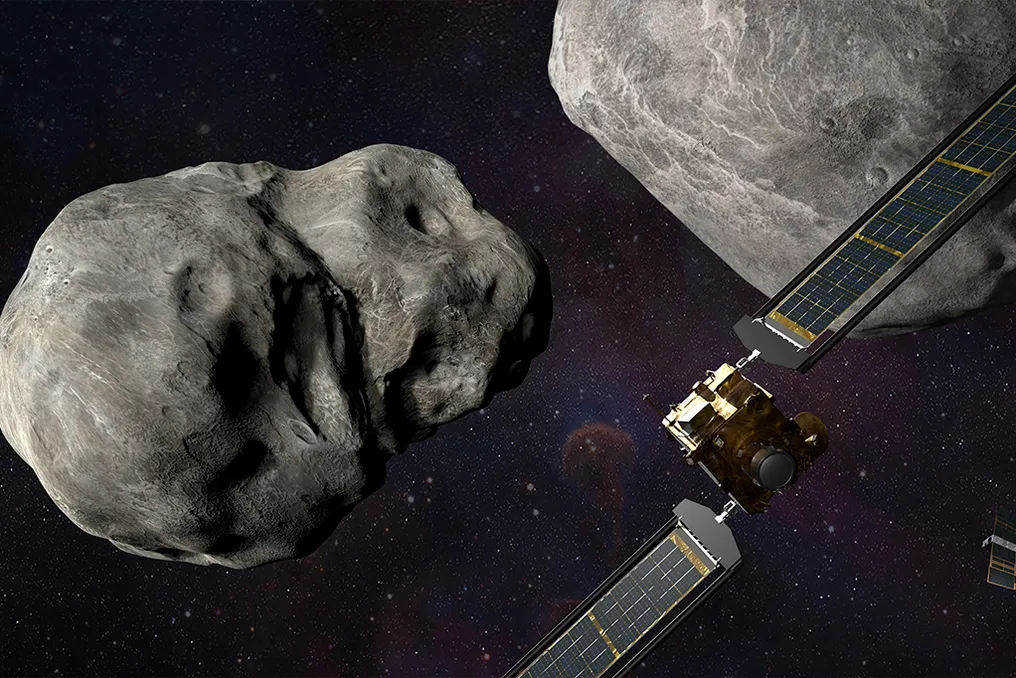
This concern motivated NASA to conduct a pioneering experiment: on November 24, 2021, the agency launched DART (Double Asteroid Redirection Test). The probe, carried by a Falcon 9 rocket, aimed to test an unprecedented planetary defense technique: deflecting an asteroid through impact.
The target of this mission was Dimorphos, an asteroid measuring approximately 150 meters in diameter, which orbits another larger body, Didymos. The strategy involved hitting Dimorphos at a speed close to 23,000 km/h to decrease its orbital period. A reduction of just over one minute would already be considered a success for the mission.
Although neither asteroid represented a direct threat to Earth, Dimorphos possessed dimensions comparable to bodies capable of threatening the planet. Additionally, the fact that it orbits another asteroid simplified the measurement of the impact's effects, making it an ideal target for the test. To make the mission viable, NASA invested about 330 million dollars.
On September 26, 2022, at 8:14 PM (Brasília time), the spacecraft hit Dimorphos as planned. During the approach, the probe transmitted images of the asteroid's surface moments before the collision. A small Italian satellite, released by DART days earlier, captured a close-up of the debris cloud generated by the impact. The Hubble and James Webb space telescopes also monitored the event.
Observations made by ground telescopes indicated that the impact resulted in a decrease of 33 minutes in the time it took Dimorphos to orbit Didymos, changing from 11 hours and 55 minutes to 11 hours and 22 minutes, significantly exceeding the minimum established by NASA.
In March 2026, a study published in the journal Science Advances demonstrated that the collision also modified the orbit of the asteroid pair relative to the Sun. The time required for both to complete one orbit around the star, which was approximately 770 days, was reduced by about 150 milliseconds. Although this is a minimal change, it is crucial for planetary defense, as it is the trajectory around the Sun that would need adjustment if an asteroid were on a collision course with Earth.
The DART mission constituted the first successful test of a planetary defense methodology for asteroid deflection. However, unanswered questions remained: what was the amount of material removed from Dimorphos? How did its shape change? And what was the exact reaction of the asteroid to the impact?
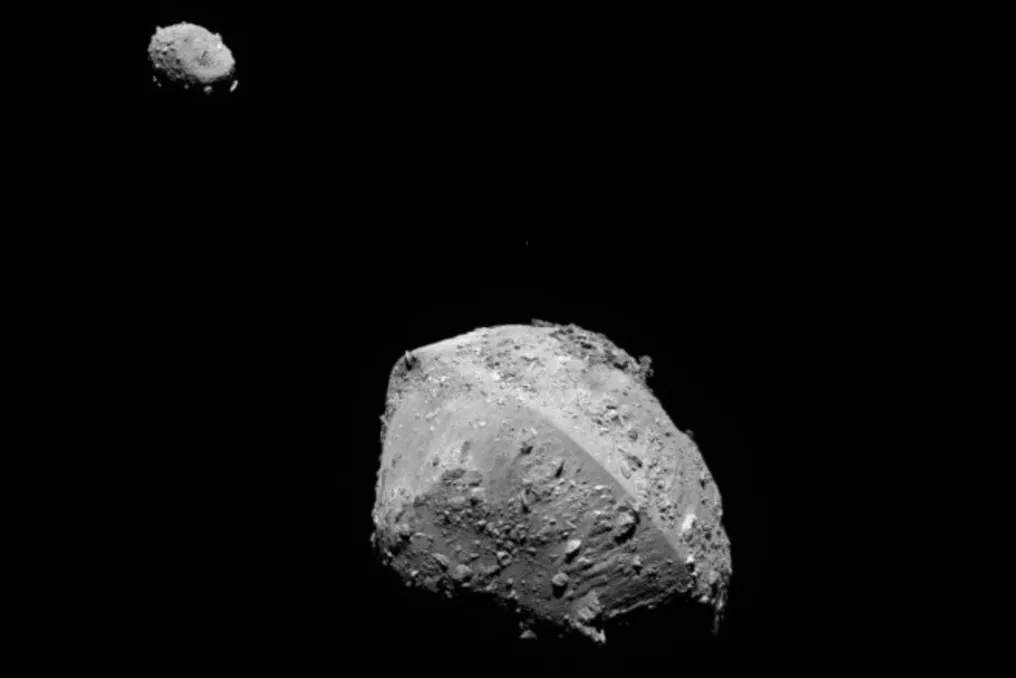
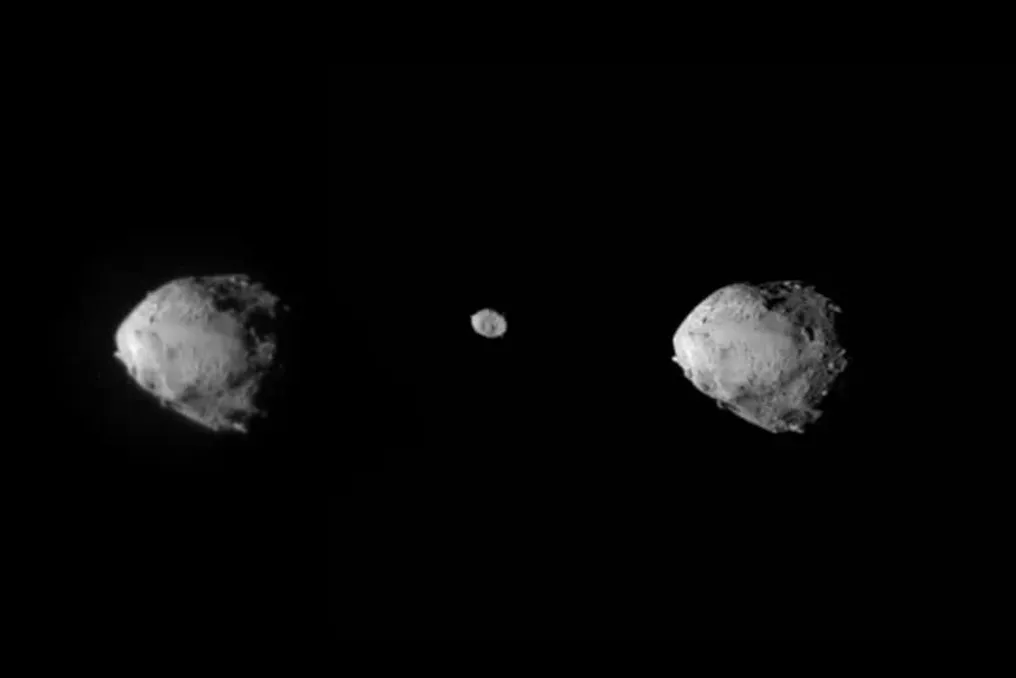
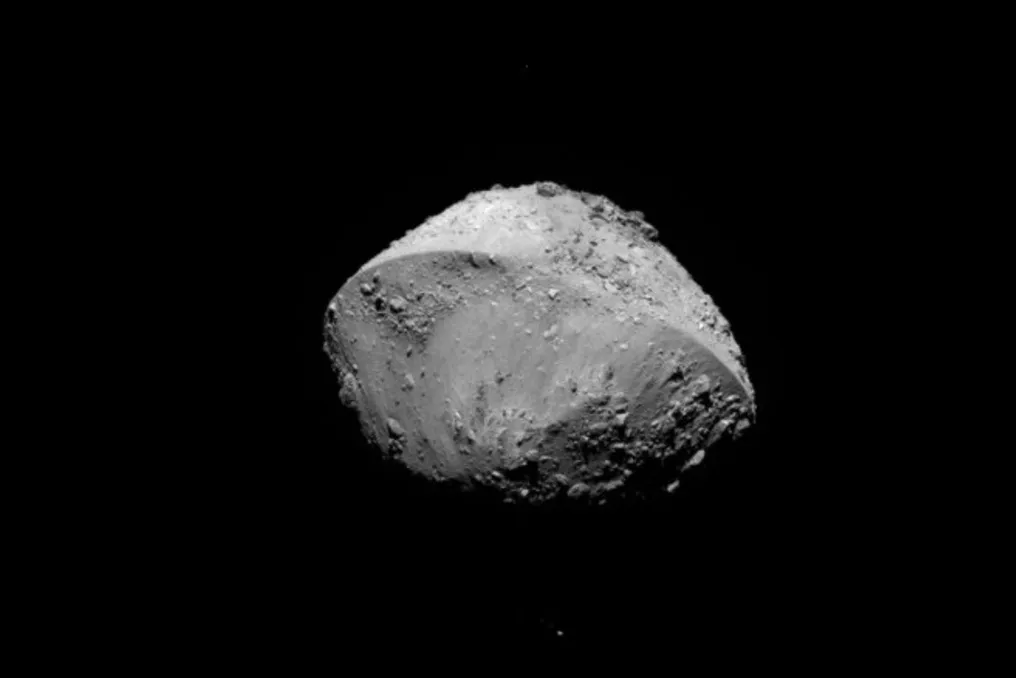
Four years later, images provided by the Hera probe, released on Wednesday (25th), clarified the condition of Dimorphos after the impact: the 151-meter asteroid acquired a vast crater at the point of impact and began to spin chaotically, as if it had not recovered from the blow.
Patrick Michel, lead researcher of the Hera mission, informed the European Space Agency (ESA) that scientists were debating whether Dimorphos would develop a crater, change shape, or remain unaltered. He added: 'To our great surprise, the answer is: all three things at once.'
The side hit by the DART probe became flattened, presenting a crater the size of a sports stadium, extending across the entire width of the asteroid. The rest of Dimorphos shows no notable changes; the rock-covered areas look little different from those seen in the 2022 images.
Before the impact, Dimorphos always kept the same face pointed towards Didymos, similar to the Moon's behavior relative to Earth. Currently, the asteroid rotates irregularly during its orbit.
One of the biggest findings of the Hera mission was the discovery of hundreds of rocks orbiting the asteroid pair. More than one hundred of them have sizes ranging from a soccer ball to a washing machine. The origin of these rocks is uncertain: they may have been expelled by the impact or were already present before it.
The impact may also have exposed material that was preserved under the asteroid's weathered surface, giving scientists a chance to study its composition.
Hera, launched by the European Space Agency in October 2024, reached proximity to the asteroids in early November. In the following months, the probe will gradually approach and release two small satellites the size of shoeboxes. One of these satellites will use a radar to inspect the interior of Dimorphos.
Another primary goal of the mission is to determine Dimorphos' mass. With this information, scientists will be able to calculate with greater precision the effect that a similar impact would have on other asteroids. The purpose of these investigations is to establish asteroid deflection as a reliable method of planetary defense.