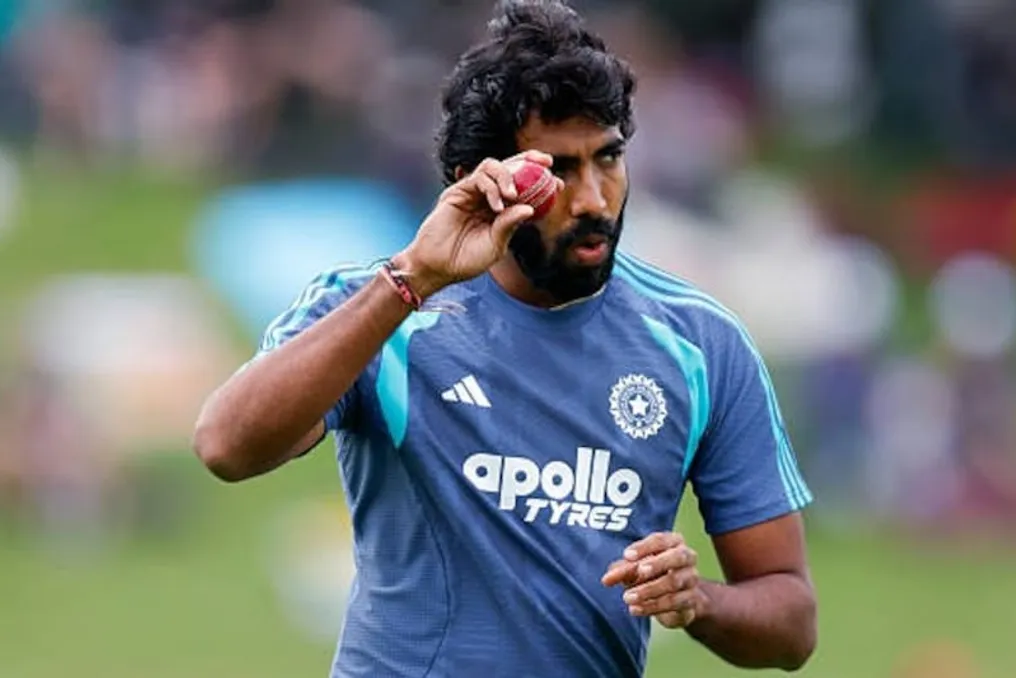
Morkel urged Indian bowlers not to fear the Kookaburra ball and to show aggression
Read more
Aaj Tak
www.aajtak.in

Morkel urged Indian bowlers not to fear the Kookaburra ball and to show aggression

Despite a significant lead of 352 runs in the first match against New Zealand, the Indian team, which failed to secure a victory, is preparing for the second Test match with a new strategy. In Wellington, the bowlers had to exert great effort on the final day, but the New Zealand batsmen demonstrated strong determination and managed a draw.

Ahead of the second Test, which will take place in Christchurch, Indian bowling coach Morne Morkel gave clear instructions to his fast bowlers: they should not be afraid of the Kookaburra ball, but instead need to show courage and take risks to take wickets.

Morkel believes that playing with the Kookaburra ball in New Zealand conditions presents a unique challenge for Indian bowlers. Therefore, they must not only change their line and length of delivery but also adopt a more aggressive stance. He emphasized that bowlers must aim for specific areas, even if it entails the risk of conceding extra runs, because the opportunity to dismiss a wicket with a new ball does not appear constantly.

Morkel noted that in the first match, the speed of the ball rapidly decreased, which became a serious problem for the Indian bowlers. According to him, the pitch in Wellington lost its pace early in the game, forcing the bowlers to change tactics. Despite this, India created opportunities but failed to capitalize on them.

He stated: 'The statistics clearly show that the pitch in Wellington lost its pace quite quickly at the beginning of the Test match. After that, we had to change our plans. Nevertheless, we created some chances. If the chance to get Akash Deep out or catch him on the short leg side had been realized, the situation in the match could have been different.'

Morkel added that when conditions become difficult and the pitch slows down, the team must be ready to take 50/50 chances in its favor.

Referring to his 16 years of experience with the Kookaburra ball, Morkel stressed that teams playing with this ball must utilize all the advantages of the new ball. Its assistance diminishes once the ball becomes old and soft. Consequently, attempts to take wickets in the opening overs become even more critical.

He said: 'My 16 years of experience with the Kookaburra ball has taught me to value the new ball. It is important to bowl to the right spot. Sometimes you have to be a bit bolder in terms of length and line, even if it requires conceding some runs.'

In Morkel's opinion, after the ball softens, bowlers can control the tempo of the game by using ring fielding. However, missed opportunities with the new ball lead to major difficulties later. He noted that Indian bowlers are accustomed to playing with the SG ball in India, where the role of spinners is important. But the bowling style with the Kookaburra ball in countries like New Zealand is different, and understanding and adapting to this difference is necessary.

Following the draw of the first match, Indian captain Shubman Gill demanded the removal of the ban on using saliva on the ball. This ban was introduced in 2020 during the coronavirus pandemic as a precaution, and the ICC made it permanent in 2022. Gill believed that allowing the use of saliva could help in polishing the ball.

However, New Zealand captain Tom Latham holds a different view. He argues that how quickly the ball deteriorates largely depends on the nature of the pitch. Regardless of whether the pitch is flat or very rough, the condition of the ball can change rapidly. This applies to both Duke and Kookaburra balls.

Latham stated: 'Our goal is always adaptation to the conditions. We try to apply the method that best suits keeping the ball in good condition.'

The second match is scheduled for Friday at Hagley Oval in Christchurch. The grass on the field is expected to be green, which may give an advantage to fast bowlers. Under such conditions, Indian bowlers will have the opportunity to follow Morkel's advice.

In the first match, India gained an advantage of 352 runs in the first innings. Then, on the fifth day, New Zealand's score reached 176/5, and hopes of victory increased. However, Glenn Phillips and Daryl Mitchell played a partnership of 259 balls without leaving the field, preventing India from winning. Now, the task for India's fast bowlers is to utilize the advantages of the new ball and take wickets at critical moments.

Similar stories

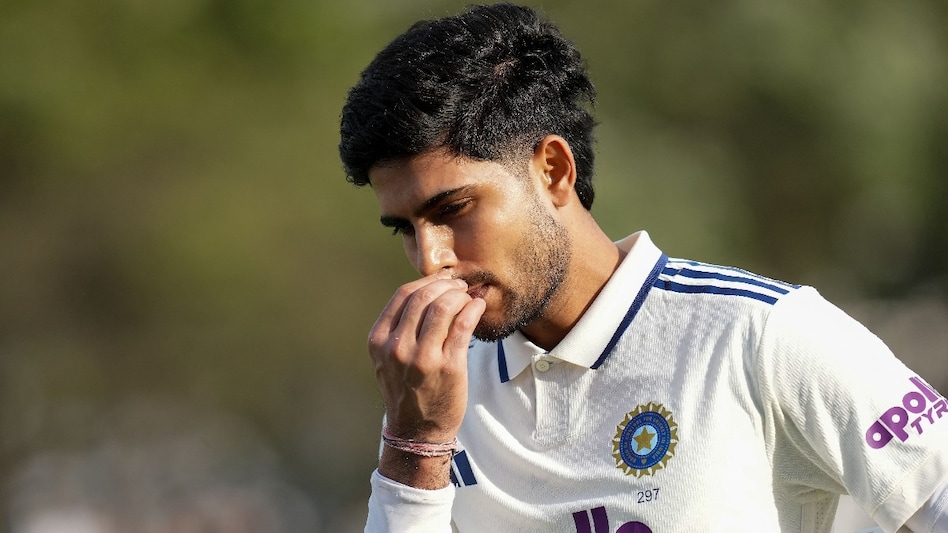
Captain Shubman Gill raised the issue of assistance for bowlers on the pitch in Wellington and set requirements for the next match
Read more
www.aajtak.in

Captain Shubman Gill raised the issue of assistance for bowlers on the pitch in Wellington and set requirements for the next match

Despite the impressive performance of the Indian batsmen in the Test match in Wellington against New Zealand, the game ended in a draw. Now, ahead of the second Test, captain Shubman Gill focused attention on the pitch conditions. He expressed hope that the bowlers would receive some support on the field in Christchurch so that the Indian team could turn their advantage into a victory.

The second and final match of the series between India and New Zealand is scheduled for November 27 in Christchurch. After the first Test, when asked by Shubman Gill about areas where the team would like to improve before the next encounter, he declined any specific changes. However, he expressed optimism that the pitch in Christchurch would be more favorable for the bowlers.

Shubman Gill stated: 'Honestly, there is nothing special. I hope that the bowlers will get a little more help on the pitch in Christchurch. If we play there the same way. And if we correctly implement our plans regarding game management and bowling, we will be in a good position.'

In the Wellington match, the Indian team declared the first innings, scoring 720 runs while losing nine wickets. Kel Rahul scored 136 runs, and Rishabh Pant scored 128 runs. Shubman Gill narrowly missed a century, falling short by only two runs. Yashasvi Jaiswal (85 runs), Devdutt Padikkal (80 runs), and Dhruv Jurel (78 runs) also made important contributions. Prior to this, the Indian bowlers reduced New Zealand to 368 runs in the first innings.

Shubman Gill highly praised the team's performance away from home. He noted that India challenged the host team in terms of bowling, and the batsmen were able to score a large total.

In the first innings, New Zealand once lost five wickets at 70 runs, but the Indian bowlers could not maintain that pressure. The second innings was also met with strong resistance from the hosts' batsmen. In the second innings, New Zealand scored 239 runs, losing five wickets, and both teams agreed to a draw.

In the first match of the India versus New Zealand series: New Zealand team will field with three fast bowlers
Read more
www.aajtak.in

In the first match of the India versus New Zealand series: New Zealand team will field with three fast bowlers

The New Zealand team is preparing for the first Test match against India, where they plan to take the field with three fast bowlers and one all-rounder. This was confirmed by team captain Tom Latham.

Latham revealed the team's tactical strategy during a press conference the day before the first Test. He emphasized that the team will rely on fast bowlers to challenge the Indian batsmen.

It is anticipated that experienced fast bowlers Matt Henry and Kyle Jamieson will be part of New Zealand's pace attack. A decision regarding the third fast bowler has not yet been made, but the all-rounder will provide the team with an additional option.

Matt Henry's return is good news for New Zealand, as he has recovered from a concussion and is ready to return to Test cricket. Henry sustained the injury during the ODI series preceding this match, in which New Zealand lost 1-3.

Latham expressed happiness about Henry's return, stating: 'Matt Henry is fit, and I hope he will be happy to show himself in the game of cricket.' Furthermore, Kyle Jamieson has been actively working on his game in recent weeks, and the captain is impressed by his efforts. Latham noted: 'Jamieson played well in the white-ball matches. He worked hard and put in great effort in recent weeks.'

Despite the New Zealand team being in first place in the WTC table, Latham does not want his team to focus on the mathematics of the table. He believes that New Zealand should trust its strategy and playing style. Latham stated: 'The WTC table is not my focus. We will concentrate on what we can control. We will play cricket in our own style and give ourselves the best chance to win.'

New Zealand's strategy is clear: they will apply pressure with fast bowlers against the Indian team while relying on their natural style of play. Now it remains to see how effective this plan with three fast bowlers will be against the Indian batsmen.

Suryakumar Yadav delivers impressive attack, scoring 82 runs off 29 balls in match against Gujarat
Read more
www.aajtak.in

Suryakumar Yadav delivers impressive attack, scoring 82 runs off 29 balls in match against Gujarat

After being dropped from the Indian squad and losing his captaincy, Suryakumar Yadav has returned to good form, demonstrating powerful play in the Syed Mushtaq Ali Trophy tournament. In the match against the Gujarat team, he played a destructive innings that troubled the opposition bowlers.

He scored 82 runs off just 29 balls, utilizing 9 fours and 7 sixes, with an average strike rate of 283. Since Suryakumar Yadav was removed from the Indian national team and stripped of his captaincy, his style of play has become noticeably more aggressive.

In the first match of this tournament against Hyderabad, he also showed strong performance, scoring 60 runs without getting out with 6 fours and 5 sixes off 21 balls, at a strike rate of 285.71. However, against Gujarat, playing at number four, he demonstrated an even more dangerous game, scoring 82 runs off 29 balls, which served as a clear signal to selection committees that his skill has not diminished.

In this match, the bowlers of the Mumbai team performed outstandingly, completely dismantling the Gujarat team at a score of 197 runs for 19.2 overs. Among the Mumbai bowlers, Shardul Thakur and Athar Amkolkar took 3 crucial wickets each.

Following this, Mumbai started chasing the large target of 198 runs very aggressively. Besides the storm from Suryakumar Yadav, Sarfaraz Khan also played very quickly, scoring 40 runs off 17 balls with the help of 5 fours and 2 sixes. The Mumbai team easily reached this target in the fourth ball of the sixteenth over, losing only 5 players, thus securing their second consecutive victory in the tournament.

In fact, Suryakumar Yadav's last international match was on March 8, 2026, when he played as captain of the Indian team in the T20 World Cup final, where India won the title for the second consecutive time. Nevertheless, after this, he was stripped of his captaincy during the IPL and excluded from the team. But his impressive domestic cricket performance clearly showed that he is fully ready to return to the Indian national team.

Popular