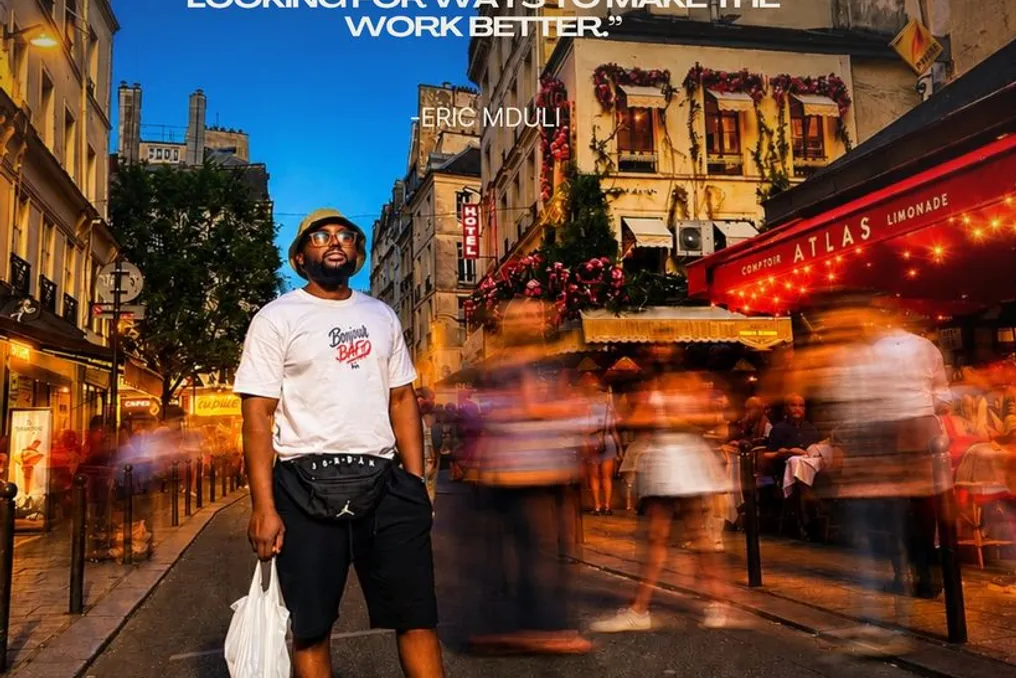
Eric Mdluli shares his vision for transforming ideas into visual stories
Read more
10and5
10and5.com

Eric Mdluli shares his vision for transforming ideas into visual stories

Eric Mdluli, an art director who began his journey in the creative industry unexpectedly, is now shaping visual narratives at Lobengula Advertising. He is guided by curiosity, intentionality, and the belief that every creative decision must have a specific purpose.

The CREATIVES SPOTLIGHT series from Between 10and5 focuses on individuals shaping the creative landscape of South Africa. Through five thoughtful questions, the authors explore the ideas, experiences, influences, and creative practices behind these personalities' work, helping readers gain a deeper understanding of the people driving culture forward.

The fifth installment focuses on Eric Mdluli (Siphumelele Eric Mdluli), an art director at Lobengula Advertising—an award-winning, Black-owned agency based in Johannesburg. His entry into the creative field was unplanned; it started in a restaurant frequented by creatives. There, he reconnected with an old friend who invited him to join the creative path. Eric seized the opportunity without knowing where it would lead. Looking back, however, he realizes that the curiosity driving his work today has always been with him.

He notes: 'I have always been interested in how things work, how they are made, and why some things look and feel right.' This curiosity eventually evolved into a passion for visual storytelling and the ability of imagery to convey what words sometimes cannot. The capacity to evoke laughter, prompt thought, or make someone see something differently through visual experience became the foundation of his creative practice. What began as an unforeseen opportunity turned into a mastery he continues to refine.

Finding the Idea Before Creating the Image

As an art director, much of Eric's work centers on translating ideas into visual experiences. But before considering color palettes, composition, or the image itself, he believes the most crucial part of the process is understanding the idea itself. Eric Mdluli emphasizes: 'For me, it always starts with the idea. Before I think about how something should look, I need to understand what we are actually trying to say.'

His experience at Lobengula has reinforced the importance of having a strong central thought behind every creative piece. From this point, research becomes an integral part of the process. Understanding the audience, culture, category, and context in which the idea must exist helps define a direction that feels relevant and well-thought-out. He describes this stage as an opportunity to challenge conventional views. While inspiration can come from existing material, he believes there is always another way to approach an idea, allowing it to take on a fresh perspective. Once this thinking is established, the visual exploration begins. Imagery, composition, color, and minute details become tools to embody the central idea. For Eric, the goal is not just to create something visually appealing, but to ensure that every element contributes to the same story. This approach extends to his overall creative philosophy: everything must earn its place.

Thoughts Behind the Visuals

For Eric, good art direction is rooted in intentionality. Whether it's an image, a font, a color, or the space between two elements, every decision must have a reason. He posits that creative professionals can sometimes focus too much on showcasing their skills, whereas true mastery lies in knowing what to omit. Simplicity, strong composition, and emotionally engaging visuals are important to his approach, but so is understanding the audience and what the piece ultimately needs to convey. He views this stage as a chance to challenge ingrained viewpoints. While inspiration may stem from the existing, he believes one can always find a different way to approach an idea and give it a new perspective.

One project that stands out in Eric's career at Lobengula is a thematic campaign for the Metropolitan product, focusing on life insurance and pension annuities for Metropolitan, which is part of the Momentum Metropolitan Group. The brief was interesting: how to make financial products, often associated with serious and sometimes uncomfortable conversations, more accessible and understandable? Instead of approaching the topic through traditional financial service advertising, the team turned to everyday human experiences. The opportunity lay in making these conversations feel less like financial advice and more like real life. The creative direction relied on recognizable characters, familiar situations, and humor, using exaggeration and moments of farce to create a sense of connection with the audience. The goal was first to entertain, establish a connection, and then deliver the product message in a way that felt natural. For Eric, this project was particularly valuable because it challenged some established norms in financial services advertising. By injecting warmth, individuality, and humor into a traditionally serious category, the work found a more human way to deliver its message.

A New Creative Horizon

Outside the demands of agency life, Eric draws inspiration from numerous sources. Music, film, photography, video games, travel, and daily conversations feed his creative thinking. Even observing people in their daily lives can offer a fresh perspective. He considers curiosity a necessary condition for maintaining creative relevance, believing that the moment a person thinks they have seen or known everything, they stop evolving. Eric Mdluli asserts: 'There is so much new to experiment with, so many new ways to explore ideas and push our work forward. But I also believe it is a good reminder of why craftsmanship matters.'

In the future, Eric intends to continue working on projects that present creative challenges, placing greater emphasis on storytelling, experimentation, and ideas borrowed from culture and the surrounding world. Ultimately, he aims to create work that feels fresh, relevant, and undeniably human. Work that doesn't just grab attention, but gives one a reason to remember it. And, perhaps as he puts it, work that makes another creative person think: 'Damn, I wish I could do that.'
Similar stories

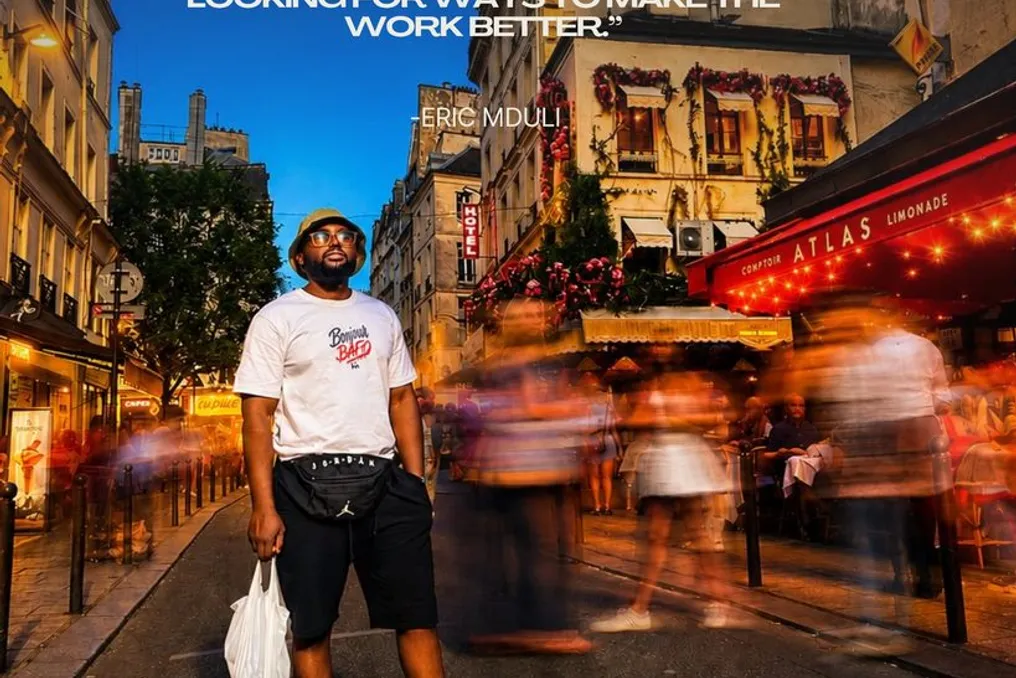
Eric Mdluli shares his vision for transforming ideas into visual stories
Read more
10and5.com

Eric Mdluli shares his vision for transforming ideas into visual stories

Eric Mdluli, an art director who entered the creative industry through an unexpected path, is currently shaping visual narratives at Lobengula Advertising agency. He is guided by curiosity, intentionality, and the belief that every creative decision must have a specific purpose.

The CREATIVES SPOTLIGHT series focuses on individuals who are shaping the creative landscape of South Africa. Through five thoughtful questions, the authors explore the ideas, experiences, influences, and creative practices behind these personalities' work, helping readers gain a deeper understanding of the people driving culture forward.

The fifth issue highlights Eric Mdluli (Siphumelele Eric Mdluli), an art director at Lobengula Advertising—an award-winning, Black-owned agency based in Johannesburg. His journey into the creative field was not initially planned; it began in a restaurant frequented by creatives. There, he reconnected with an old friend who invited him to join his creative path. Eric seized the opportunity without knowing where it would lead. However, looking back, he realizes that the curiosity driving his work today has always been with him.

He notes: 'I have always been interested in how things work, how they are created, and why some things look and feel right.' This curiosity eventually evolved into a passion for visual storytelling and the ability of imagery to convey what words sometimes cannot. The capacity to evoke laughter, prompt thought, or make someone see something differently through a visual experience became the foundation of his creative practice. What started as an unforeseen opportunity has turned into a mastery he continues to refine.

Finding the idea before creating the image

As an art director, much of Eric's work centers on translating ideas into visual experiences. But before considering color palettes, composition, or the image itself, he believes the most crucial part of the process is understanding the idea itself. Eric Mdluli emphasizes: 'For me, it all starts with the idea. Before I think about how something should look, I need to understand what we are actually trying to say.'

His experience at Lobengula has reinforced the importance of having a strong central thought behind every creative piece. From this point, research becomes an integral part of the process. Understanding the audience, culture, category, and context in which the idea must exist helps define a relevant and well-thought-out direction. He describes this stage as a chance to challenge conventional views. While inspiration can come from existing things, he believes there is always another approach to an idea that allows it to take on a fresh perspective. Once this thinking is established, the visual exploration begins. Imagery, composition, color, and minute details become tools to embody the central idea. For Eric, the goal is not just to create something visually appealing, but to ensure that every element contributes to the same story. This approach extends to his overall creative philosophy: everything must earn its place.

Thoughts behind the visuals

For Eric, good art direction is rooted in intentionality. Whether it is an image, a font, a color, or the space between two elements, every decision must have a reason. He believes that creative professionals can sometimes focus too much on showcasing their skills, whereas true mastery lies in knowing what to omit. Simplicity, strong composition, and emotionally engaging imagery are important to his approach, but so is understanding the audience and what the piece ultimately needs to convey. He views this stage as an opportunity to challenge preconceived notions. While inspiration may stem from what exists, he feels one can always find a different way to approach an idea and give it a new perspective.

One project that stands out in Eric's career at Lobengula is a thematic campaign for the Metropolitan product, covering funeral insurance and pension annuities for Metropolitan, which is part of the Momentum Metropolitan Group. The task was interesting: how to make financial products, often associated with serious and sometimes uncomfortable conversations, more accessible and understandable? Instead of approaching the topic through traditional financial service advertising, the team turned to everyday human experiences. The opportunity lay in making these conversations feel less like financial advice and more like real life. The creative direction relied on recognizable characters, familiar situations, and humor, using exaggeration and moments of farce to create a sense of connection with the audience. The goal was first to entertain, establish a connection, and then deliver the product message in a way that felt natural. For Eric, this project was particularly valuable because it challenged some established norms in financial services advertising. By injecting warmth, individuality, and humor into a traditionally serious category, the work found a more human way to deliver its message.

A new frontier of creativity

Outside the demands of agency life, Eric draws inspiration from numerous sources. Music, film, photography, video games, travel, and everyday conversations feed his creative thinking. Even observing people in their daily lives can offer a fresh perspective. He considers curiosity a necessary condition for maintaining creative relevance, believing that the moment a person thinks they have seen or known everything, they stop developing. Eric Mdluli asserts: 'There is so much new to experiment with, so many new ways to explore ideas and push our work forward. But I also believe it is a good reminder of why mastery is important.'

In the future, Eric intends to continue working on projects that present creative challenges, placing a greater emphasis on storytelling, experimentation, and ideas borrowed from culture and the surrounding world. Ultimately, he aims to create work that feels fresh, relevant, and unequivocally human. Work that doesn't just grab attention, but gives people a reason to remember it. And, perhaps as he puts it, work that makes another creative person think: 'Damn, I wish I could do that.'

Art ecosystem offers numerous opportunities beyond creating works
Read more
yourstory.com

Art ecosystem offers numerous opportunities beyond creating works

PhotoSparks, a weekly section from YourStory launched in 2014, features photographs that celebrate the spirit of creativity and innovation. In its previous 1030 publications, various events have been showcased, including art festivals, comic book galleries, world music festivals, telecommunication exhibitions, grain fairs, climate change exhibitions, wildlife conferences, startup festivals, Diwali rangolis, and jazz festivals.

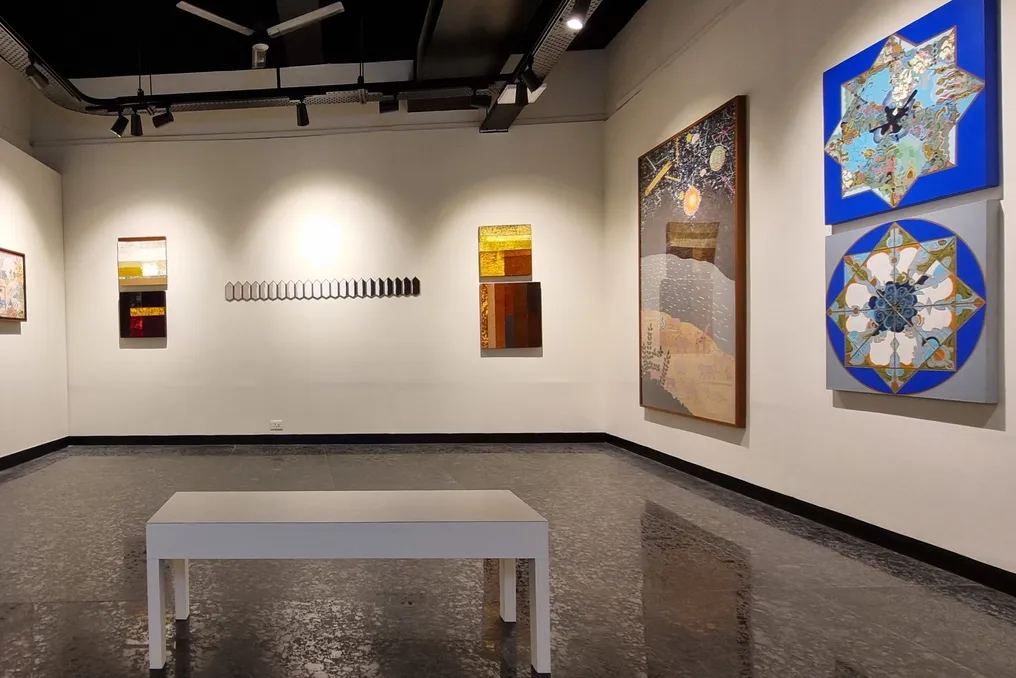
The third edition of the 'Contemporary Now' art festival recently concluded, taking place across 10 locations in Chennai. Participants included Garima Gupta, Vishwa Shroff, Parag Tandel, Ayesha Sultana, Julien Segard, Chanakya School, Pushkakantan Pakkiyaraja, Sakshi Gupta, Mumita Das, and many others.

Festival directors Ashwin Rajagopalan and Priyanjoli Basu shared various insights on trends, opportunities, and advice for emerging artists and entrepreneurs with YourStory. Rajagopalan noted that the art ecosystem is opening up many prospects, believing that the market is becoming more professional as people create quite complex works of art.

He added that this requires sales teams, social media marketing specialists, and public relations experts. He also emphasized that such models exist outside India, including corporate social responsibility (CSR) funds and projects, which is a relatively new phenomenon in India where institutional support for arts is less developed.

Basu explained that new roles are emerging in the art sector due to private galleries and art collectors creating their own spaces to display works. Beyond sales, exhibition designers, curators, production teams, and art handling specialists are now in demand.

She strongly urged for an increase in such positions in art management and educational institutions. These discussions are crucial for maintaining a sustainable art ecosystem. Although much on-the-job training occurs, Basu advises that significant academic and vocational support is necessary to sustain careers and income in the arts.

A wide range of practical, creative, administrative, and financial roles is required for a vibrant art ecosystem. They help artists develop their work, exhibit their creations, interact with audiences, and build a successful career in the art industry.

For instance, an art technical specialist supports artists and galleries by preparing, installing, and maintaining artworks. This includes framing, lighting, mounting, and organizing exhibitions, ensuring safe and professional display of the works. A gallery assistant helps with daily operations, meeting visitors, answering questions, organizing shows, processing inquiries, and maintaining the gallery's presentable appearance.

An art administrator handles event organization, scheduling, documentation, communication with artists, and project planning support. Exhibition designers conceptualize how a piece will be presented in a gallery or exhibition space, specializing in arranging works to create an engaging experience for visitors. An art conservator focuses on preserving and restoring works, preventing damage and deterioration using specialized knowledge to restore paintings and sculptures.

Audience engagement specialists help make art accessible to diverse groups, including schools and local communities. They conduct workshops, educational sessions, and creative programs that encourage people to become interested in art and develop their own skills. An art handler is responsible for the careful packing, moving, transportation, and installation of works, ensuring the safety of fragile items when moved between studios and galleries.

Fundraising specialists assist art organizations and individual projects in securing financial support by applying for grants, organizing fundraising events, and establishing connections with potential sponsors.

Mature art ecosystems adapt to market changes and shape trends. Among the new trends, Rajagopalan points to the rise of artificial intelligence, as well as the growing demand for handmade goods. He notes that AI is a useful tool for generating ideas.

Regarding advice for emerging artists, Rajagopalan recommends that authors find a gallery that resonates with them. Basu advises spending more time within artist communities. She cautions that while social media may seem appealing, it can also be a distraction.

Belonging to a supportive art community allows artists to connect with like-minded individuals, fostering a sense of belonging and boosting confidence in their work. Through group classes, workshops, and activities, artists can experiment with different materials and techniques. In open communities, more experienced masters share knowledge with newcomers, helping them improve.

Furthermore, art communities provide emotional support. This is particularly important for artists who may face self-doubt or creative blocks. Communicating with supportive people allows for discussing difficulties and receiving constructive criticism, which helps overcome setbacks and maintain motivation.

Popular