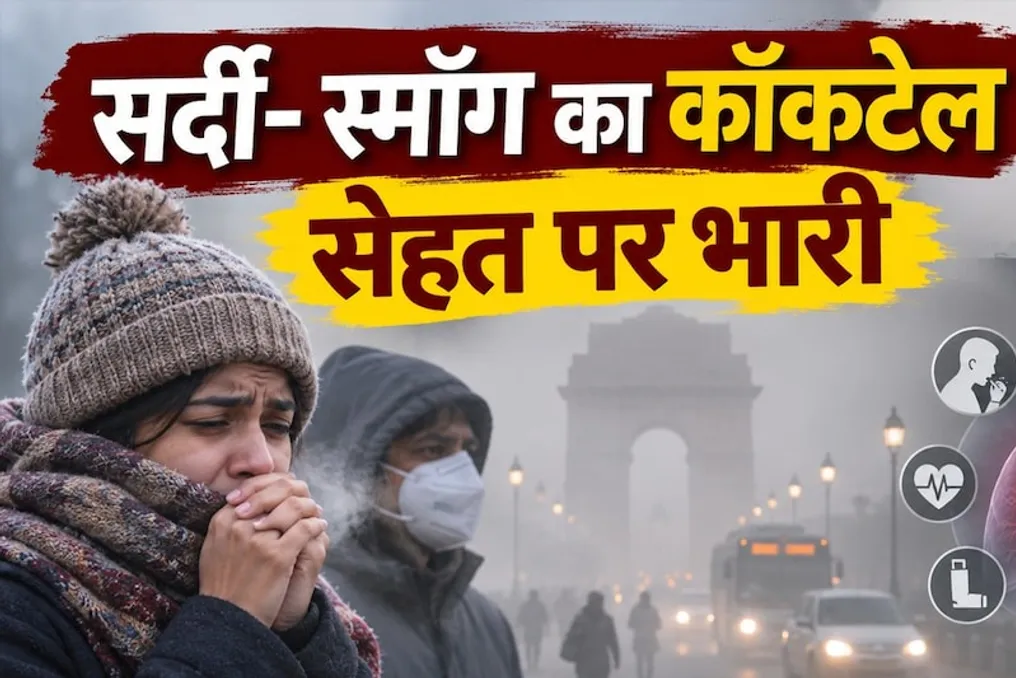
Experts warn of the danger of dual exposure to cold and smog on lung health
Read more
Aaj Tak
www.aajtak.in

Experts warn of the danger of dual exposure to cold and smog on lung health

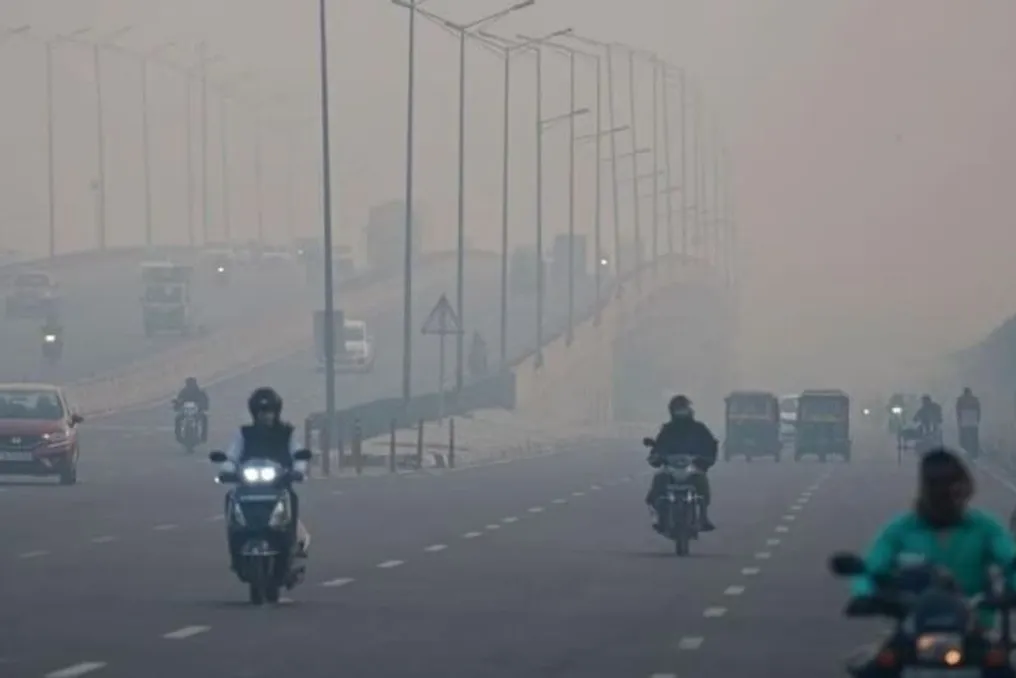
In several districts of North India, including Delhi and NCR, the cold season has begun, accompanied by rising temperatures in the morning and at night. Simultaneously, the problem of smog is expected to intensify in the coming days, which may cause concern among the population. Smog is a toxic mixture of smoke and fog formed due to a significant increase in air pollution. Medical workers are sounding the alarm, pointing out that the combination of smog and cold can seriously worsen health conditions.

According to doctors, when these weather conditions coincide, they can negatively affect well-being. Cold air combined with pollution is capable of triggering various lung diseases, causing inflammation in the respiratory tract. Fine toxic particles present in the air can reach the lungs, exacerbating cough, difficulty breathing, and asthma flare-ups. During the winter period, smog formation is observed in many states of North India in the mornings, especially in places like Delhi, Haryana, Punjab, Chandigarh, and some areas of Uttar Pradesh.

When a person inhales cold and smoggy air, it can lead to irritation and inflammation of the respiratory tract, causing breathing difficulties. Furthermore, fine polluting particles in the smog, entering the lungs through respiration, are capable of harming other organs of the body and even penetrating the bloodstream. This significantly aggravates problems for people who already suffer from asthma, COPD, or other serious respiratory diseases. Such exposure is also noted in patients with heart problems.

Impact on children and the elderly

Dr. Vivek Jain, head of the pediatrics department and director of BLK-Max Hospital in Delhi, notes that children's lungs are not fully developed and they breathe faster than adults. Because of this, harmful particles contained in the polluted air can enter their bodies in greater quantities. According to Dr. Jain, the simultaneous exposure to cold and pollution can cause inflammation and narrowing of the airways in children, leading to cough, throat irritation, and breathing problems. The impact of smog and cold is more pronounced in the elderly due to weakened immunity and the presence of chronic severe diseases.

To protect health, it is recommended to avoid being outdoors when pollution levels are high. It is necessary to protect oneself from dust, cigarette smoke, and incense smoke indoors. Asthmatic patients should continue taking medication and using inhalers according to doctor's recommendations. It is important to ensure that clean air circulates in the house, but during high outdoor pollution levels, windows should be kept closed for extended periods.

Dr. Vivek Jain also warns: one should not mistakenly consider a persistent cough as a common cold. If a person experiences a non-stop cough, wheezing, or difficulty breathing, they must consult a doctor instead of ignoring these symptoms.

Similar stories

Persistent cough: Is it due to weather or a sign of illness, advises doctor
Read more
www.aajtak.in

Persistent cough: Is it due to weather or a sign of illness, advises doctor

With the onset of cold weather and changes in the weather, some people face the problem of a persistent cough, raising the question of whether this is related to seasonal changes or is a symptom of an underlying illness. Dr. Tejindra Kataria, a specialist from the Department of Radiological Oncology, commented on this situation.

According to Dr. Kataria, there can be many factors causing a non-stop cough. If the cough subsides within one to three days, it may be caused by allergies or weather influence. However, if the cough persists, it cannot be attributed solely to weather conditions.

If the cough worsens, especially in the morning or at night, it may indicate allergies, asthma, or sinus problems. Furthermore, recurrent coughing can be a consequence of an infection. Exposure to cigarette smoke, polluted air, dust, or chemicals in the workplace can also negatively affect the lungs and trigger a cough.

In some cases, if the cough does not go away, it may be a sign of chronic bronchitis, tuberculosis, or other lung diseases, making it crucial to undergo examination.

There are several symptoms to watch out for: a cough lasting more than three weeks; constant fever along with a cough; wheezing in the chest; severe fatigue; chest pain or shortness of breath; blood in sputum; unexplained weight loss.

In most cases, the cough resolves on its own within two to four days. Therefore, one should not start taking medications or syrups immediately after the cough appears. If the cough lasts more than three to four days and is accompanied by other symptoms, it is necessary to consult a doctor.

An examination should be conducted if the cough continues for more than three weeks, if the nature of a previous cough has changed, or if it has started occurring more frequently, as well as if signs such as hoarseness, blood in the cough, chest pain, or sudden weight loss are observed.

Do not ignore cough in cold weather: it may be pneumonia, children are at risk
Read more
www.aajtak.in

Do not ignore cough in cold weather: it may be pneumonia, children are at risk

One should not neglect a cough that worsens in cold weather, as it may be a sign of pneumonia. If a child has a persistent cough accompanied by wheezing or difficulty breathing, this should not be considered a minor symptom.

According to a WHO report, approximately 4 million cases of pneumonia are recorded annually in India, accounting for about a quarter of all pneumonia cases occurring in the community. Furthermore, about one-fifth of patients require hospitalization. Doctors note that the risk of developing pneumonia increases during the winter period, so special precautions are necessary.

The combination of cold weather and air pollution creates multiple risks simultaneously. PM2.5 particles in polluted air weaken the lungs' ability to function. Polluted air also reduces the activity of immune cells responsible for eliminating bacteria. When temperatures drop, people spend more time indoors with inadequate ventilation, which facilitates the rapid spread of viruses. Under such conditions, even a minor viral infection can develop into pneumonia, and this pattern is observed every year in North India.

Dr. Amit explains that pneumonia rarely starts suddenly; it is usually accompanied by a prolonged cough, slight fatigue, and a slight increase in temperature. However, people often mistakenly attribute these signs to the weather. Some try to alleviate their condition by drinking ginger tea, using steam, or taking leftover antibiotics from previous illnesses, but this does not bring relief and gradually worsens health. Every delay in treatment exacerbates the lung infection, leading to decreased oxygen levels and the need for hospitalization.

A signs that require attention include: a cough lasting more than a week or worsening; shortness of breath with fever; chest pain when breathing or coughing; and rapid breathing even at rest.

Air Quality Index (AQI) Discussion: Why Does Concern Over Clean Air Only Arise in Winter?
Read more
www.aajtak.in

Air Quality Index (AQI) Discussion: Why Does Concern Over Clean Air Only Arise in Winter?

With the onset of winter in our country, more attention is paid not to the cold weather, but to the Air Quality Index (AQI). People monitor daily what the current AQI is and whether it has increased compared to the previous day. News about AQI appears in newspapers and on television, and governments begin announcing protective measures, which is often accompanied by mutual accusations between political parties. This has become an obligatory annual procedure, especially in the Delhi-NCR region. However, paradoxically, we show concern for air quality—without which we cannot live even a minute—only during a few months of the year, even though pollution does not only occur in winter and does not disappear with the arrival of summer. Winter merely reveals the true picture.

The question arises: why do we ask about the rise in AQI and why it is not decreasing? This question has existed for years, but there is still no answer. Nevertheless, since AQI generates so much discussion, it is important to understand it from beginning to end.

In India, scientific research on air quality first began in 1967 at the 'National Institute of Environmental Engineering'. To provide residents with real-time information about weather and pollution, the SAFAR system was launched in Delhi in 2010. The National Air Quality Index (AQI) was officially declared in 2014, and in April 2015, it was fully implemented in the country's major cities. After this, the AQI parameter began to be used to measure the level of air pollution. Just as a thermometer shows body temperature during a fever, AQI helps us understand how clean or dirty the air around us is. It is important to understand that pollution consists of dangerous particles, smoke, and gases in the air, whereas AQI is a method of understanding the level of this pollution; that is, pollution is the problem, and AQI reports it numerically.

In India, AQI is divided into six categories. A value from 0 to 50 is considered good. From 51 to 100—normal, from 101 to 200—moderate, from 201 to 300—poor, from 301 to 400—very poor, and from 401 to 500—hazardous. As the AQI increases, the level of air pollution also rises, and the higher the number, the more dangerous it is.

Eight types of pollutants are taken into account when calculating the AQI. These include levels of PM2.5, PM10, ozone, nitrogen dioxide, sulfur dioxide, carbon monoxide, ammonia, and lead. PM2.5 and PM10 attract the most attention. These are very fine dust and smoke particles in the air. PM10 size is 10 micrometers or less, while PM2.5 is even smaller. PM2.5 is so small that it penetrates deep into the lungs along with breathing. This is why doctors consider fine particles a more alarming sign for health. These particles can harm the lungs, cause heart disease, and even damage the blood. Furthermore, gases such as ozone, nitrogen dioxide, and sulfur dioxide pollute the air, enter the body through respiration, and directly affect the lungs.

Returning to the main question: why does AQI increase so sharply with the arrival of winter? One of the main reasons for the rise in AQI in winter is the change in weather conditions. In winter, wind speed slows down, and smoke from cars, factories, and other sources does not disperse with the wind but accumulates near the city. At this time, the air near the ground remains cold, and sometimes a layer of warm air forms above it. This warm layer prevents the cold air from below from rising. As a result, dust and smoke particles remain trapped near the Earth's surface.

Additionally, humidity and fog during the winter period can intensify the feeling of air pollution. Although fog and pollution are not the same thing: fog consists of tiny water droplets, while pollution includes dust, smoke, and harmful gases. On the other hand, the burning of stubble and vehicle exhaust fumes, as well as factory smoke, also contribute to increased pollution. In winter, due to weather conditions, this influence becomes more noticeable, leading to an increase in pollution and a rise in AQI.

Sometimes a situation occurs where AQI readings differ between two areas of the same city. For example, in Delhi, the AQI in Anand Vihar might be very high, while in Lodhi Road it is significantly lower, even though both areas are in Delhi. The reason is that the pollution sources in each area are not the same. Where there is a lot of traffic and bus stations, there may be more exhaust fumes and road dust. If construction work is underway in any area, the amount of dust may increase. In areas with many factories, the impact of smoke emanating from them can be felt. All these factors combined increase pollution, which is why the AQI can be higher in one area than in another.

It is also important to understand that even if the AQI decreases, it does not mean the air is absolutely safe.

Popular