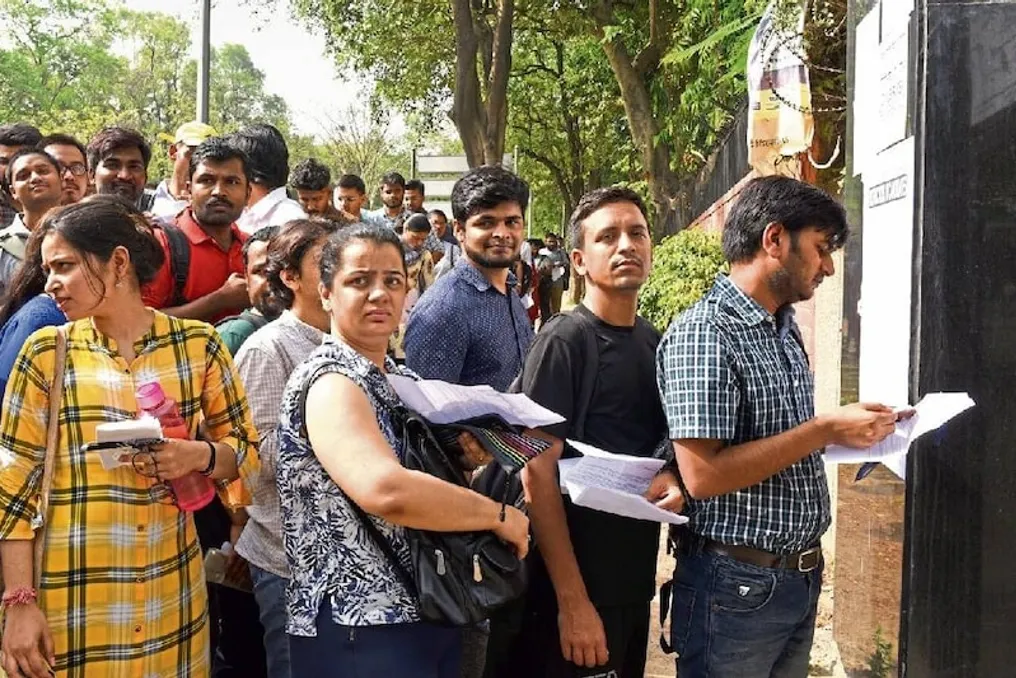
The time for the Common Admission Test (CAT) 2026 is approaching, which is the entrance exam for prestigious management institutes in India, such as the IIMs and leading business schools. The exam is scheduled for Sunday, November 29, 2026. In the final stage of preparation, the focus shifts from learning new material to skills in correct question selection, time management, revision, and maintaining composure during the test.
Mala Re, a former student of IIM Ahmedabad and a CAT mentor, shared a special strategy for the last two days of preparation. Under his guidance, many students have been able to gain admission to top institutions such as IIM Ahmedabad, Bengaluru, Calcutta, and Lucknow.
How much score is needed for 100th percentile and admission to IIM Ahmedabad?
According to Mala Re, CAT is ultimately a 'game of numbers,' and the number of correctly answered questions determines the possibility of qualification. An approach of 'calculated risk,' similar to that of a manager, must be applied in the exam.
To achieve the 100th percentile, an estimated score in the range of 140 to 160 is required. Regarding the target score for IIM Ahmedabad, candidates should aim for a net score of 100 or higher.
For candidates in the General Engineer Male (GEM) category applying to IIM Ahmedabad, approximately 99.85% or higher may be required, while for other IIMs, this figure might be slightly lower, depending on their profile and rank. It should be noted that these figures are only assumptions stated by Mala Re and do not guarantee a passing score or admission to CAT 2026.
Why is balance across all three sections important?
Students often concentrate exclusively on one strong section (VARC, DILR, or QA) according to their background, but Mala Re considers this approach risky.
For leading institutions like IIM Ahmedabad, Bengaluru, and Calcutta, it is critically important to achieve a qualifying score of around 85–90% in each section. The strategy should involve ensuring a minimum level in the three sections—Verbal Ability and Reading Comprehension (VARC), Data Interpretation and Logical Reasoning (DILR), and Quantitative Ability (QA)—and then increasing the overall score through strengths.
According to Re, victory or defeat in CAT is determined not by the scores themselves, but by time. Saving just one or two minutes can allow solving an additional question, which can be a decisive factor in selection. It is also recommended to try to reach the last question in each section, as simple problems can be hidden at the end.
What mistakes should not be made in the last two days?
Firstly, one should refrain from taking full mock tests two days before the exam, as this consumes energy and can negatively affect results on the day of the test. It is better to save all your best energy for the main exam.
Secondly, one should not attach emotional significance to any question. In the examination hall, one should not spend too much time on one question or set of problems, even if the answer seems close. As soon as the allotted time expires, one must choose an option based on understanding and move on.
Tips on sleep, formula revision, and DILR
It is extremely important to sleep at least 8 hours daily, preferably going to bed before 10:00 PM, and this should be done at least three days before the exam so that the brain is fully rested.
In the final days, one should focus only on revising formulas and 'rule of thumb' notes compiled during preparation.
Tips for DILR
In the Data Interpretation and Logical Reasoning section, approximation, observation, and mental calculation methods should be used instead of conducting complex and lengthy calculations.
If the exam turns out to be more difficult than expected, Mala Re advises students to be psychologically prepared for any unexpected changes or new patterns in the test paper. Such changes are made to reduce dependence on courses and provide equal opportunities to students from different social strata. He also emphasizes that if the test is difficult, there is no need to panic, as many competitors automatically drop out of the race who might have performed well on an easy test. It is important to read the instructions carefully, maintain a positive attitude, and give maximum effort within the allotted time.
In conclusion, referencing the thoughts of Swami Vivekananda, Mala Re asserts that if a person has honestly worked on themselves and sincerely desires to achieve their goal, no force can prevent them from succeeding.