Study shows most Indian websites are poorly readable for artificial intelligence systems
Read more
Business Standard
business-standard.com

Study shows most Indian websites are poorly readable for artificial intelligence systems

As more consumers begin to use AI tools such as ChatGPT, Gemini, and Perplexity to search for information about products and services, most Indian brands risk being overlooked because their websites are not optimized for reading by AI systems, according to a new report.

The study, conducted by the AI Visibility company Publive in collaboration with the Internet and Mobile Association of India (IAMAI), covered 951 medium and large businesses. The results showed that 94 percent of these companies failed to meet basic visibility criteria for AI. Only one company achieved a high level of readiness for AI content consumption.

Can AI Read India Inc.? India AI Visibility Benchmark 2026

The study, titled 'Can AI Read India Inc.? India AI Visibility Benchmark 2026,' analyzed websites in the automotive, B2B SaaS software, consumer durables, financial services, and hospitality sectors in July 2026. The goal of the audit was to determine what information AI search bots receive when visiting these resources.

Approximately 80 percent of brands did not meet the standard of healthy readability, and 82 percent had insufficient content consumption readiness. Furthermore, nearly 69 percent failed the check on both parameters. For the median brand, only 16 percent of the material loaded by the AI bot was actual content; the remaining 84 percent consisted of code and markup.

One reason for this issue is the widespread use of JavaScript to load page content. Although a page may look complete to a human, AI bots that do not execute JavaScript may receive only part of the content or nothing at all.

The study also found that 48 brands did not provide readable text to AI bots, and another 149 brands transmitted less than half the words on their websites.

Missing Structured Data Across Nearly Half of Brands

The report particularly emphasizes that the lack of structured data, also known as schema markup, is a serious deficiency. Schema markup consists of machine-readable tags that help AI systems understand the content of a webpage, who published it, and the context of the information. Up to 450 out of 939 brands with full readability lacked this markup.

Additionally, 29 brands had structured data that was inaccessible to AI bots, and 23 brands had only partially visible markup.

Website response speed also raised concerns: the median site responded to the AI bot in 1.3 seconds, while the study's target was half a second. Over 78 percent of brands were slower than this threshold, and 9 percent took more than five seconds.

The content consumption assessment, which checks whether content is delivered in a machine-readable format, showed similar weak results. Out of 951 brands, 242, or 25 percent, fell into the critical category where AI might be blocked or unable to read the content. Another 540 brands, or 57 percent, had partial readiness with significant gaps.

Only 168 brands entered the good category, and one achieved a high score of 90 or above.

The most common problem identified in the study was token efficiency. This metric measures the proportion of material loaded by the AI bot that is actual content, rather than code, scripts, or other technical elements. Up to 833 brands, or 88 percent, did not meet the study's healthy standard. The report recommends that at least 80 percent of the loaded material should be content, but the median Indian website had only 16 percent content.

Automotive and B2B SaaS Among Weakest Performers

The report noted that the B2B SaaS sector demonstrated the highest share of brands not meeting the standard of healthy readability, at 87 percent, followed by the automotive industry with a rate of 86 percent. Consumer durables showed 79 percent, hospitality showed 78 percent, and financial services showed 74 percent.

The automotive industry was the least successful in several parameters. Its median readability score was 43 compared to the target of 80. Approximately 59 percent of automotive brands lacked schema markup, while only 3 percent passed both basic tests.

Financial services showed relatively better results, with 12 percent of brands passing both tests. This sector also had the lowest percentage of brands without schema markup—38 percent.

Meanwhile, consumer durables had the worst token efficiency, with a median score of 11 against a target value of 80.

Fixing Websites May Not Require a Complete Rebuild

The report asserts that companies do not necessarily need to completely redesign their websites to fix these deficiencies. Four priority areas for intervention were identified:

  • ensuring website text readability for AI bots;
  • reducing code and markup redundancy;
  • adding structured data;
  • guaranteeing content accessibility without using JavaScript while maintaining access for AI bots.

Modeling showed that only adding structured data could move 86 percent of critically rated brands out of the critical category. The report calls this the most significant improvement from a single intervention within the simulation.

The study also suggests that companies need to differentiate between website performance for regular users and its readiness for AI. A website that works well for humans will not necessarily provide its content in a format that AI systems can extract and process. The study insists that companies should first focus on website readability and content delivery before investing heavily in monitoring AI-generated responses or creating content programs for these platforms.

Similar stories

Study shows 92% of Indian companies faced AI agent incidents, but only a third could localize them within 24 hours
Read more
timesofindia.indiatimes.com

Study shows 92% of Indian companies faced AI agent incidents, but only a third could localize them within 24 hours

According to the report published on Wednesday, 92 percent of surveyed Indian organizations experienced a security incident related to AI agents over the past 12 months. However, only 36 percent were able to resolve such an incident within 24 hours, as reported by PTI.

A survey conducted by ServiceNow among 500 security executives revealed that despite half of the respondents from India rating their agent security capabilities as established, many companies still lack basic monitoring and management mechanisms.

The report, titled 'Deployed but Ungoverned: The State of Agentic Security in India,' noted that only 19 percent of organizations have a designated responsible employee for managing AI agent security. Furthermore, only 18 percent of companies possess unified visibility of their AI agents through a single interface.

The study also pointed out deficiencies in pre-deployment security checks. An automated deployment gateway that prevents the launch of AI agents until security checks are passed is available in only 30 percent of organizations, while 47 percent can provide a full package of evidence upon request.

Kulmit Bawa, Vice President and Managing Director of ServiceNow for India and SAARC, stated that 'India's ambitions in AI must match the ability to understand, control, and govern the agents that enterprises deploy. Knowing where an agent can go is not the same as observing what it does. Automated controls and continuous monitoring will be crucial for maintaining trust and cyber resilience of AI innovations.'

Bawa emphasized that AI agents have become part of the functioning of Indian enterprises, but security is not keeping pace with this momentum. He stressed that every agent must be registered, have an owner, and be visible in one place, with automated controls and rapid responses to assist security teams in detecting and localizing issues.

The report further found that 51 percent of organizations have real-time automatic detection of unusual AI agent behavior, yet 67 percent are unable to automatically react when an agent behaves abnormally. Additionally, 37 percent of organizations discovered that AI agents were operating in production environments over the last 12 months without ever being registered or known to their security teams.

Reddit Audience Drops 13% Due to Artificial Intelligence Impact, Despite Increase in Unique Visits
Read more
tecnoblog.net

Reddit Audience Drops 13% Due to Artificial Intelligence Impact, Despite Increase in Unique Visits

In the context of the rise of Artificial Intelligence (AI), the Reddit forum registered a 13% drop in its audience over the last year, being cited as one of the victims of reduced clicks caused by AI-generated summaries.

However, in a communication addressed to shareholders, the company itself reported observing a 16% growth in the number of unique visits during the same period.

The site functions as one of the primary online sources used by generative AI models to formulate their answers, sharing this position with other social networks and Wikipedia. It is worth noting that Wikipedia has also experienced a loss of access recently, according to a survey conducted in September.

Additionally, Reddit implemented mandatory login after twenty years of free access. This change was partly motivated by the ease with which tools like Gemini can extract data and produce summaries.

The drop reported by Similarweb considers a period prior to the implementation of this new login rule. It is important to mention that the decrease in clicks on Reddit pages is not an isolated phenomenon; other portals, especially those focused on written content, are also feeling the effects of Google's developed AI.

The American company, Google, has already faced lawsuits in the United States for using information freely without offering compensation to content producers. To date, none of these actions have resulted in a specific judicial defeat on this matter, although a judge in Washington recognized the commercial damage resulting from this practice.

Following this recognition, Google announced changes in how it displays its summaries, aiming to give greater prominence to the links consulted by the AI. Nevertheless, content generated by Gemini continues to be prioritized in search results.

Reddit is recognized as a fundamental source for training current generative AIs. In 2024, the site signed an agreement with Google to license the use of the platform, which boosted traffic by 39% compared to 2023. However, after the company began prioritizing its AI summaries on the results page, indicators started to decline, reflecting the current 13% low compared to 2025.

The current expectation points to an even sharper reduction, driven by the login requirement, a strategy adopted by Reddit in the last month, aimed at reducing the volume of unique visits. A site spokesperson, quoted by Business Insider, confirmed that logged-in users are considered priority.

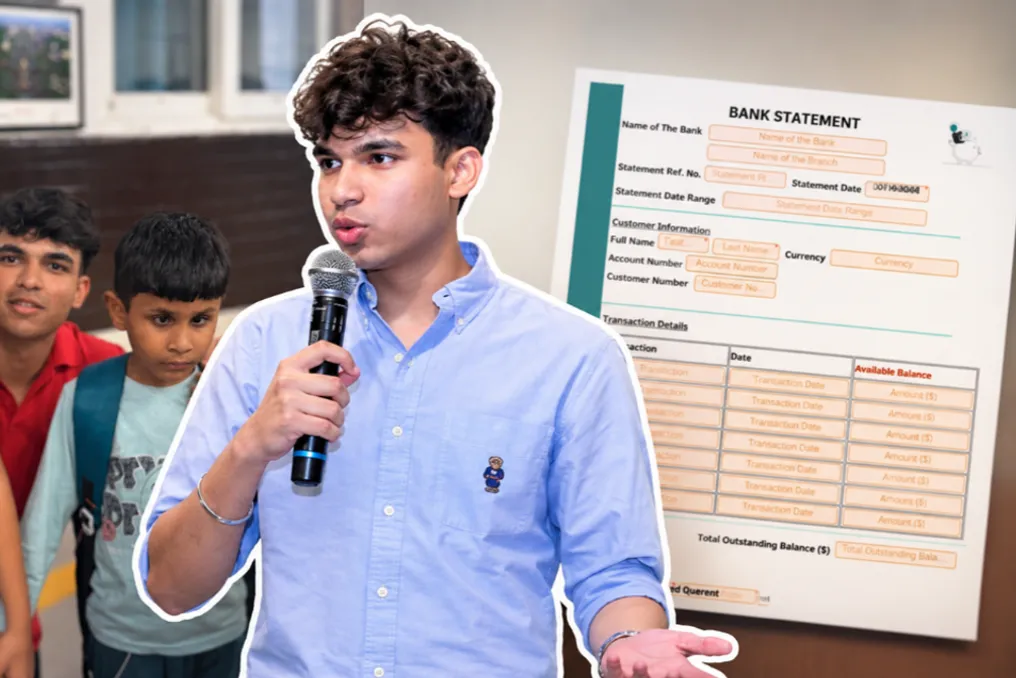
17-year-old developer creates AI tool to improve accessibility of bank statements and textbooks for visually impaired people
Read more
thebetterindia.com

17-year-old developer creates AI tool to improve accessibility of bank statements and textbooks for visually impaired people

For people with visual impairments, obtaining a monthly bank statement in PDF format can become a daily challenge because screen readers cannot always correctly interpret tables and numbers. This difficulty also extends to school textbooks, government forms, and corporate reports, forcing individuals to rely on the help of others to access personal information.

When 17-year-old Yash Bhatnagar learned about this gap, he wondered if technology could solve the problem. As a self-taught programmer who has already developed several digital tools, he decided to tackle a task that many overlooked. Today, he is creating an artificial intelligence-based solution that converts inaccessible PDF files into documents that people with visual impairments can easily use with screen readers. Furthermore, his goal goes beyond simply reading documents; he aims to prompt organizations to reconsider their approach to creating and distributing information.

From Classroom Tools to Accessible PDFs

Yash's interest in creation arose early. His parents introduced him to programming, and he began studying the basics on Khan Academy, continuing his self-education, especially during the COVID-19 pandemic. His parents recall that he mastered programming very quickly, noting that 'he showed an aptitude for creating new technologies at a very young age.'

Instead of viewing coding as an experimental hobby, Yash aimed to create products that solved real user problems. His first major project was the LitGrades platform, which generates AI-powered flashcards and was launched in early 2023. After testing in his school, the platform reached about 720 students, including those from Ukraine.

He then developed Silenttype—a real-time transcription tool that turned lectures into notes saved in students' digital libraries. In October 2025, while presenting his idea at IIM Ahmedabad, he began exploring the possibility of using the tool to assist deaf users by transcribing conversations and lectures. However, a conversation with the team there introduced him to a different challenge.

As Yash recalls, 'they told me that although they considered it a good tool, there were more blind people who needed technology for optical character recognition (OCR) and converting PDFs into an accessible format.' This suggestion stayed with him. He examined several document samples and began experimenting with ways to adapt them. In studying the problem, he realized that the task went beyond simple text-to-speech conversion. Most PDFs are created without the internal structure necessary for screen readers to interpret the content. A document might look perfectly readable to a sighted person, containing headings, paragraphs, tables, and images, but without proper accessibility tags, a screen reader may not understand the reading order, distinguish sections, or describe visual elements. For a user relying on assistive technology, the result can be a document that is difficult, if not impossible, to use.

Yash started working on the solution, initially gaining support from specialists in the accessibility community. Among them was Rashi, who works with V-Shesh, an organization supporting people with disabilities and promoting accessibility. Rashi notes: 'I saw firsthand how people with visual impairments have to struggle in educational institutions due to inaccessible documents.' She remembers students having to ask for help to have documents read aloud. This experience made the problem particularly significant to her. As conversations continued between Yash and accessibility experts, the initial prototype gradually transformed into Visionably.

What Makes a PDF Readable for a Screen Reader?

Visionably primarily works with enterprises and organizations, not individual users who must fix documents themselves. Yash's approach is simple: make the information accessible at the source. He explains: 'It would be logical to make a news article accessible to every reader, but the newspaper itself should be made accessible.'

Organizations submit their PDF files to Visionably, where they are processed using an AI-powered correction engine. Simply put, the tool helps add the information necessary for screen readers to understand the document's structure. The technology identifies and adds details such as accessibility tags, reading order, and image descriptions. These changes help documents comply with internationally recognized accessibility standards, including WCAG 2.2 and PDF/UA, which define requirements for accessible PDF documents. After processing, the accessible files are returned to the organization. Yash reports that the turnaround time can be around 48 hours, depending on the volume of work.

However, creating this technology proved more complex than developing a tool for extracting text from PDFs. Documents exist in countless formats with various layouts, tables, images, and formatting styles. A system that works for a simple text document may encounter difficulties when handling a complex financial report or textbook containing numerous visual elements. Yash emphasizes: 'Since the number of PDFs on the internet is so vast, and the formats are so diverse, it is very difficult to account for every possible use case.'

He conducted over 1000 test cases and iterations, regularly sharing documents with accessibility specialists and people with visual impairments for feedback. He also received technical guidance from SaralX AI, a company operating in this field. According to Yash, the engine now successfully handles approximately 95% of tested PDF files. It is important to note that the development process includes the participation of people who actually use screen readers. Yash stated that he collaborates with a permanent visually impaired tester who checks documents and helps identify gaps he might miss.

Rashi recalls an instance where a visually impaired person tested an early prototype and pointed out several areas needing improvement. She says: 'Yash said he wanted to meet again in a week. He spent the night, and by morning, everything was fixed.' For her, this willingness to respond to feedback distinguishes his work.

Easing Website Navigation

Document correction is only one of Visionably's tasks. The company also conducts automated accessibility audits of websites. These audits help organizations identify issues such as images without alternative text, missing accessibility features, and elements that do not comply with WCAG requirements. The system uses open-source technology combined with AI-driven corrections to analyze websites and generate reports highlighting problematic areas.

For example, simply checking for the presence of alternative text for an image is insufficient. The description itself must convey the image's content. An image labeled only as 'image' may technically have attached text, but this does little to help a screen reader user understand its purpose. Visionably's AI level helps assess whether such descriptions are meaningful.

Yash also released Outloud—a free, open-source tool that allows people to check if their PDF files meet accessibility requirements. Unlike some existing tools limited to specific operating systems or workflows, Outloud works on Windows, Mac, and Linux. Users can run accessibility checks, review results, and even integrate the tool into their development processes. The goal is to make accessibility testing more widely available, including developers and organizations that may lack resources for expensive assessments.

From Children's Books to Banking Websites

One of Visionably's first paying clients is V-Shesh, which works with organizations on inclusion and accessibility for people with disabilities. As part of this collaboration, Visionably began correcting documents at the page level. Additionally, the company is partnering with Pratham Books to make 10 children's books on the StoryWeaver platform accessible free of charge. At the time of the interview, six books were completed, and the remaining four were in the final stages.

For Yash, ensuring the accessibility of these books is particularly important because their stories must be available to children with visual impairments. Instead of creating separate versions that readers must search for, the plan is to make the accessible versions directly on StoryWeaver. Parallel to this work, Yash is examining the accessibility of some major Indian banking websites. His banking accessibility audit is another attempt to draw attention to often unnoticed gaps.

The Digital Banking Accessibility Index 2026 assessed 30 major Indian bank websites, identifying 2221 accessibility barriers. Yash selected banks based on factors such as their popularity, size, and publicly available website traffic data. The automated audit checked numerous accessibility criteria, including the presence of appropriate alternative text for images and compliance of website elements with established standards. The results were delivered to the respective banks along with reports detailing the issues requiring attention. Yash reported that Kotak Mahindra Bank and Punjab National Bank responded, stating that the concerns had been passed on to the relevant teams. He plans to re-evaluate the websites in December 2026 and publish a comparative report to track improvements.

For Rashi, this accountability is crucial because accessibility cannot remain a secondary issue. She says: 'I have spoken with many children who volunteer in organizations working with people with disabilities, but Yash is someone who does it sincerely because he truly believes in it, not because it looks good in an application.'

His next goal: making accessibility part of the design. Running a tech startup while still in 12th grade requires significant effort. Yash spends about two hours on weekdays managing email, communicating with organizations, product development, and planning new projects. Weekends are often dedicated to longer work sessions and meetings. His parents, who are directors of the company since he is a minor, support him in business discussions and contacts. Nevertheless, they say that he makes the startup decisions himself, seeking advice when necessary.

Meanwhile, Yash sees great potential for expansion. Over the next two years, he hopes to correct at least 5000 files and conduct 200 to 300 website accessibility audits. He is also exploring the possibility of assessing annual reports from the top 100 public companies in India. However, his broader ambition goes beyond fixing documents after they are created. One conversation with a professional with a visual impairment who previously worked at Microsoft Accessibility left a deep impression on him. This person noted that accessibility is often treated as a secondary aspect rather than part of the development process. This distinction is what Yash wants Visionably to eliminate. He states: 'Our ultimate goal is to become an accessibility design firm where we do not view accessibility as something that happens after files are created, but as part of the process from the very beginning.'


Popular