
Supreme Court rules that students will continue studying the chosen number of languages according to CBSE policy
Read more
Aaj Tak
www.aajtak.in

Supreme Court rules that students will continue studying the chosen number of languages according to CBSE policy

In a dispute regarding the trilingual policy of the Central Board of Secondary Education (CBSE), the Supreme Court provided significant support to the students. The High Court clarified that students who had previously chosen two or three languages would continue their studies based on their initial selection. The judges, including Chief Justice Suryakant, Justice Joymalya Bagchi, and Justice V. Mohan, emphasized during hearings held in November 2026 that the policy should not lead to the imposition of any languages on students.

The Supreme Court issued several important directives easing the students' situation. The previous choice remains valid: students who chose two languages will study two, and those who chose three languages will study three. Students will not be pressured to change languages during the current academic semester.

Furthermore, the assessment of the third language will be conducted exclusively internally at the school level, and the marks for it will not affect the final results of the board examinations. The exemption from the mandatory examination in the third language for students in grades 6 through 9 is also maintained.

Essentially, the CBSE policy, which mandated the study of three languages (including two Indian languages) for students in grades 6 and 9, was challenged in the Supreme Court. Previously, in September 2026, the court granted relief to 6th-grade students, after which CBSE filed a petition to reinstate this concession. Upon reviewing this petition, the Supreme Court ordered the preservation of the current status quo for the students.
Similar stories

Alisher Kadyrov proposes changing the rules for choosing the language of instruction in preschool institutions in Uzbekistan
Read more
uzdaily.uz

Alisher Kadyrov proposes changing the rules for choosing the language of instruction in preschool institutions in Uzbekistan

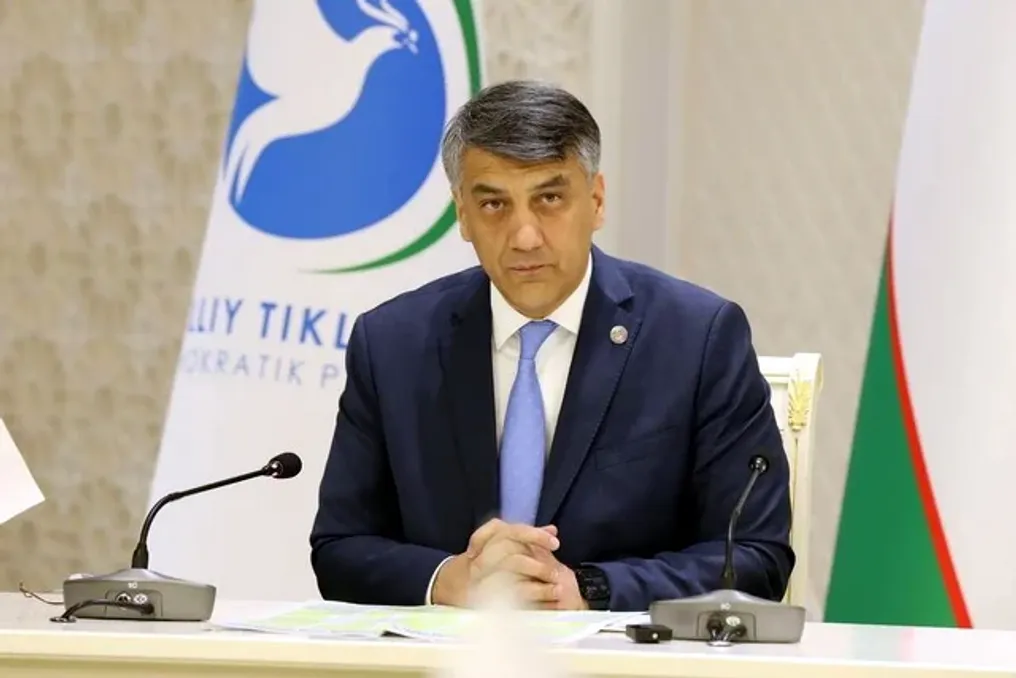
Alisher Kadyrov, head of the Milliy Tiklanish party, has put forward a proposal to revise the rules governing the choice of language of instruction in preschool institutions in Uzbekistan. He insists that early upbringing and education should take place in the state language.

Kadyrov stated that educating children in other languages could pose a threat to national security and hinder the formation of patriotism. Expressing his view on preschool education, he referred to Article 38 of the Law on Preschool Education, which grants parents the right to independently choose the language of instruction.

He proposed amending this provision to exclude the option of language choice for children from Uzbek families. Kadyrov noted: 'In higher education, they can study in any language, but the right to choose should not be granted in primary education.'

At the same time, the politician emphasized that children of other nationalities must retain the opportunity to receive an education in their native languages. In his opinion, parents of Uzbek descent should not have the right to choose a different language of instruction for their children.

Kadyrov linked the language of preschool and primary education to state policy in the field of upbringing and preservation of national values. He also added that simply increasing the number of children in preschool institutions does not guarantee the achievement of educational goals.

According to him, the loss of one's native language can lead to the loss of cultural identity. Kadyrov believes that once a language disappears, it becomes harder to maintain a child's connection to national culture. He warned: 'As soon as the language is lost, our culture will also be lost. Keep that in mind.'

The politician also noted that patriotic education should begin in the family and then be reinforced through the education system. Furthermore, he pointed out that the linguistic environment in which a child grows influences the formation of their attitude towards the country.

Popular