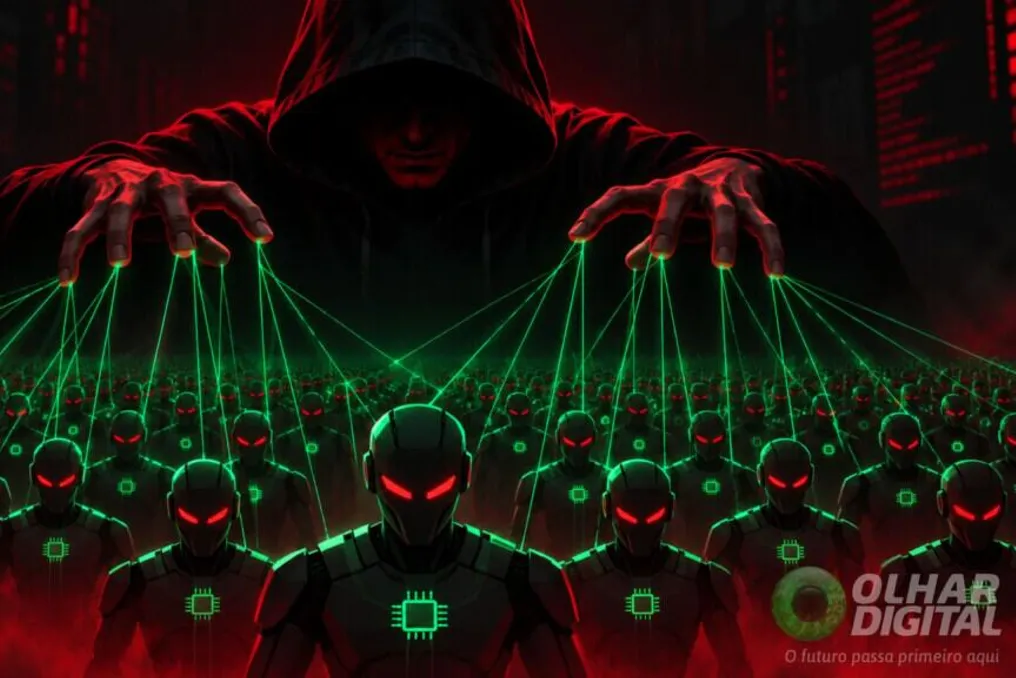
Outdated equipment that continues to operate poses a threat of cyberattacks due to lack of updates
Read more
Olhar Digital
olhardigital.com.br

Outdated equipment that continues to operate poses a threat of cyberattacks due to lack of updates

Although some old devices may continue to function perfectly and perform necessary tasks, manufacturers often stop releasing updates for them. Even if a device continues to work several weeks after support has ended, the importance of these updates cannot be underestimated, as it remains vulnerable.

Vesnei Bolzan Silva, CEO and co-founder of the Brazilian cybersecurity company TBRsafe, stated in an interview with Olhar Digital that 'any software has flaws, and these flaws are constantly being discovered.' He explained that as long as the manufacturer provides support, they eliminate these vulnerabilities. However, after support ends, the vulnerability remains open, becomes public knowledge, and although the device itself continues to work, it becomes unprotected.

In the manager's opinion, this is critically important because exploiting known vulnerabilities is one of the main ways for hacker attacks. He refers to two reports: Verizon DBIR 2025 and M-Trends 2025 from Mandiant. The first report showed that vulnerability exploitation accounted for 20% of analyzed breaches, while the second indicated that exploits were the most frequent initial vector—they corresponded to 33% of investigated cases.

When support ceases, the vulnerability stops being fixed, and a hacker only needs to find it. Luis Colonesi, AI Supervisor at Paschoalotto, noted the acceleration of digital obsolescence. Digital obsolescence occurs when an electronic device, such as a smartphone, smart TV, or internet-connected appliance, stops performing its functions or becomes unusable not due to physical failure, but because the manufacturer has stopped updating its system.

In practice, the physical components of a device may remain operational, but due to outdated software or the disconnection of company servers, applications cease to run, the device loses internet connection, and it becomes susceptible to hacker attacks. Colonesi emphasized that today almost all connected products depend on software, servers, and applications owned by the manufacturer. He added that although the physical device may be perfect, if the company stops supporting it, it loses functionality or becomes useless.

According to him, artificial intelligence should intensify this trend, as products are constantly evolving through updates, and maintaining old versions operational becomes more expensive for companies. The software lifecycle is becoming shorter, while the hardware lifecycle remains long, and it is in this gap that obsolescence occurs.

Vesnei Silva advised consumers on how to avoid risks associated with digital obsolescence.
Similar stories

Device may become useless due to cessation of software support, even if it is not broken
Read more
olhardigital.com.br

Device may become useless due to cessation of software support, even if it is not broken

The use of technology heavily depends on individual user habits, but many do not consider that their routine directly depends on the goodwill of companies. Usually, this realization comes when a manufacturer announces the discontinuation of support for a product that was actively used by the user.

The situation with Nest from Google serves as an example. According to publicly available data, the application was downloaded by more than ten million users solely within the Android environment. Among these millions are Nest users (of applications and devices) who recently received negative news.

Google announced the shutdown of the Nest application on January 25, 2027. The company also stated that it will replace Google Assistant with Gemini in its smart home devices. This change is part of the company's review of home automation services.

After the discontinuation of Nest support, thermostats, cameras, and alarms of this brand will be managed exclusively through the Google Home application. The company notified that devices and video streams will be automatically migrated to the new platform provided the user has set up the application.

According to Google, the new assistant will provide a more natural interaction and the ability to ask complex questions, allowing users to forgo the need to give specific commands to control home gadgets.

Essentially, this announcement is a warning for those who continue to use the Nest app icon to activate their speaker or use Google Assistant in the Gemini era. This phenomenon is called digital obsolescence.

Digital obsolescence occurs when an electronic device, such as a smartphone, smart TV, or internet-connected appliance, stops functioning or becomes unusable not due to physical damage, but because the manufacturer has stopped updating its system.

In practice, the hardware components of the device may continue to work. However, because the software becomes outdated or the company's servers are shut down, applications stop opening, the device loses internet connection, and it becomes vulnerable to hacker attacks.

A study published in September at the request of the European Parliament recorded 83 instances of the discontinuation of digital products and services. In this review, about half of the cases occurred due to the company shutting down the servers supporting the device's operation. This led to a sudden, complete, and irreversible loss of functions.

Typically, this forces the consumer to throw away and replace a product that theoretically still functions perfectly, at least from the perspective of its hardware.

Increased use of AI by hackers and billion-dollar acquisition aims to contain cyber threats
Read more
olhardigital.com.br

Increased use of AI by hackers and billion-dollar acquisition aims to contain cyber threats

The growing use of artificial intelligence (AI) in sophisticated cyberattacks has made these incidents increasingly frequent. This trend has led companies to reduce the number of cybersecurity vendors in an attempt to limit opportunities to exploit vulnerabilities.

In light of this scenario, CrowdStrike recently announced the acquisition of Zscaler. CrowdStrike is recognized for its specialization in device protection, such as computers and servers. On the other hand, Zscaler focuses on safeguarding network connections through the architecture known as "Zero Trust".

This architecture operates under the principle of "never trust, always verify," meaning there are no automatically secure areas; for example, even within an office network, the system requires identity verification to access each desired folder, file, or application.

The union of these two companies will result in a platform capable of monitoring both end equipment and the data flow traveled by users and AI agents.

Cyberattacks have become more potent and recurrent, depending progressively on fewer hackers—in some cases, just one individual is sufficient. This phenomenon is partly due to the advancement of AI, according to the Acronis Cyber Pulse 2026 report, released in early November.

The document highlights the case named BOSSAI, in which a single person used more than ten interconnected AI models with various tools to orchestrate attacks targeting government systems in Taiwan, universities in Thailand, and financial institutions in Mexico.

Leonardo La Rosa, a cybersecurity and digital transformation specialist, commented to Olhar Digital that the BOSSAI case demonstrates how AI grants a single person the operational power that was previously exclusive to government-funded hacker groups.

For Carlo Till, a technology and innovation specialist, the most significant aspect of this case lies in the ability of a single agent to coordinate actions across different countries and sectors. He explains that AI is changing the dynamic between capability, scale, and resources in the digital environment.

According to Till, smaller structures can now achieve results that previously required much more resources, and this capability is also available to malicious actors. He emphasizes that AI does not generate criminal intent but considerably expands the execution capacity of those who already possess such intent. Consequently, he states that this causes a shift in scale, making digital security a much broader issue than just protecting large corporations.

Gerald Caron, Chief Information Security Officer (CISO) at Acronis, adds the element of speed to the picture. He warns that the main risks of this new situation include the speed and scope of attacks, more persuasive phishing campaigns and identity fraud (including deepfakes), in addition to the reduced access barriers for aggressors.

Caron details that, from the criminals' perspective, AI provides malicious agents with a tool to identify flaws more rapidly, draft phishing emails without the typographical errors that previously exposed them, automate tasks on a scale that would require much more time from a human, and empower individuals with limited technical knowledge (such as in writing code).

Regarding defense, Caron points out that much of these functionalities can be applied positively: AI can expedite threat identification, alert filtering, analysis of vast volumes of logs, and automation of routine incident response procedures.

Nathalia Carmo, an expert in identity and access management, observes that while AI increases criminals' ability to create convincing scams, find flaws, and accelerate attacks, it also puts pressure on Brazilian organizations. For her, Brazil presents unequal protection in the field of cybersecurity.

As a partner and COO of the IAM Brasil consultancy, Carmo mentions that Brazil ranks in the highest group of the International Telecommunication Union (ITU) cybersecurity commitment index for 2024, but stresses that this does not guarantee the security of every individual entity. She also points out that in the TIC Empresas 2025 survey, 49% of companies with 10 to 49 employees reported having a digital security policy, compared to 88% of large companies.

Regarding public institutions, Carmo analyzes that despite advancements, fundamental deficiencies still exist. In October 2026, the TCU notified that none of the 239 federal organizations evaluated had implemented all the basic requirements analyzed, and the court also pointed out problems with staff absence and turnover. For the specialist, this illustrates the difference between establishing policies and ensuring that protection is effectively operating.

Popular