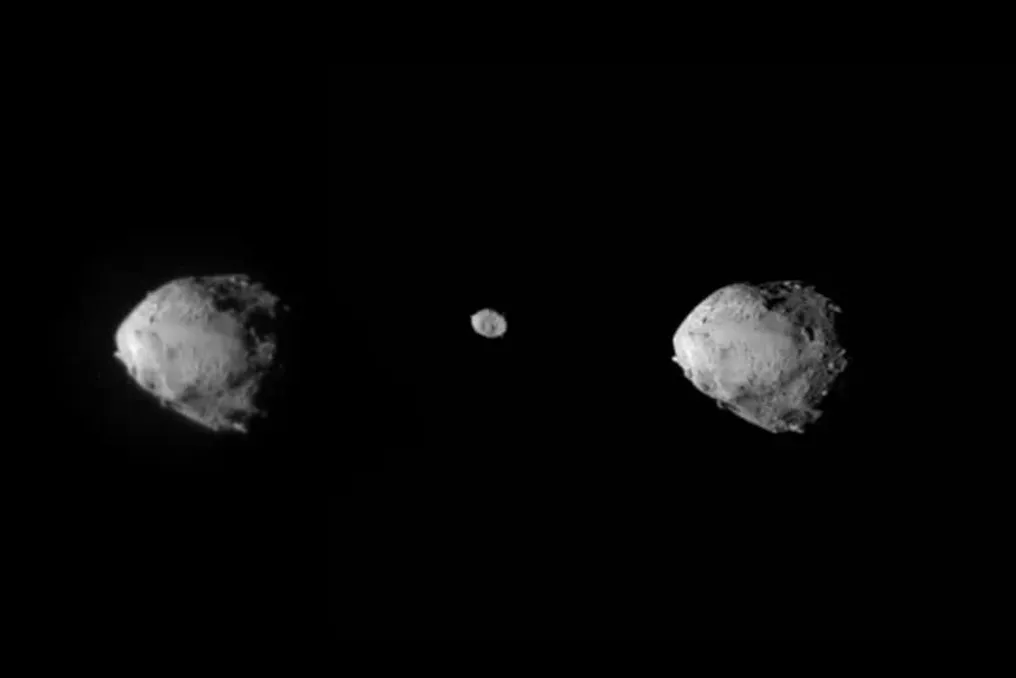
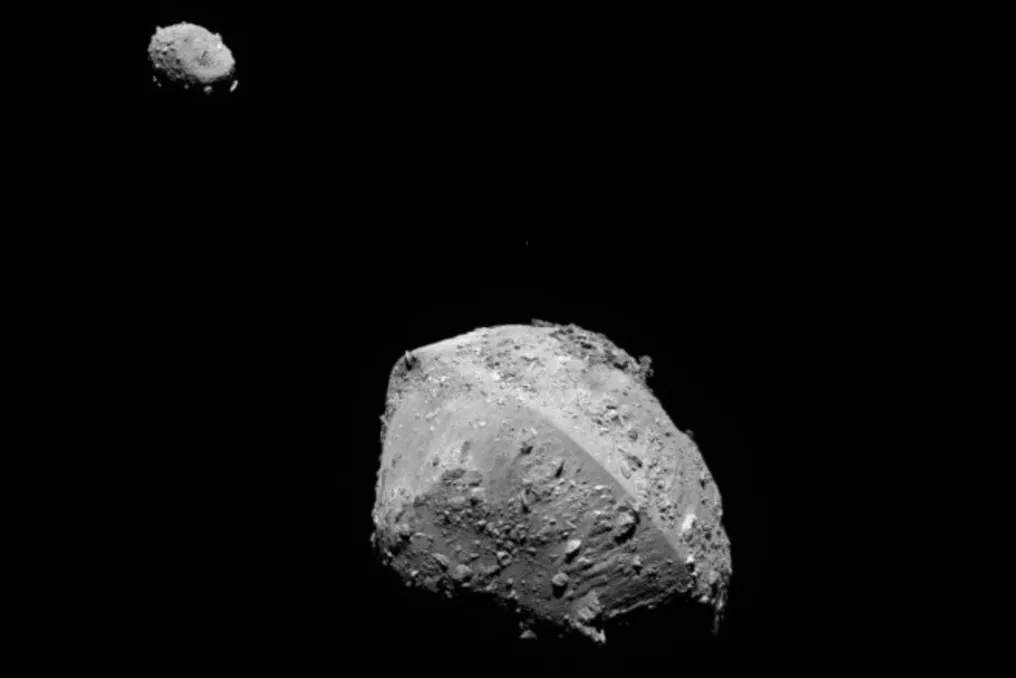
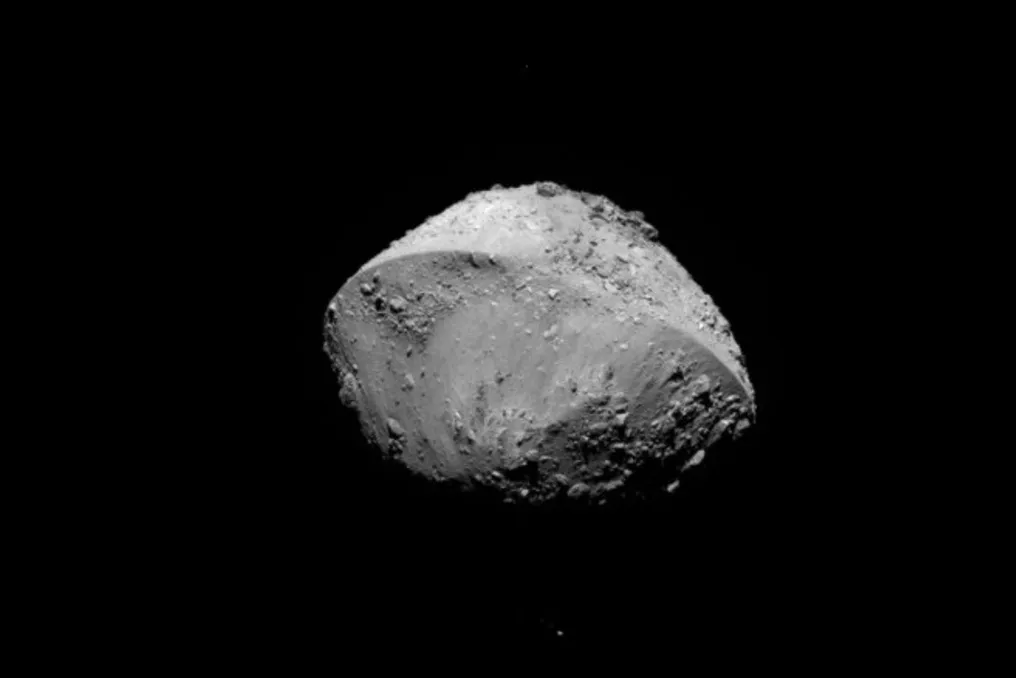
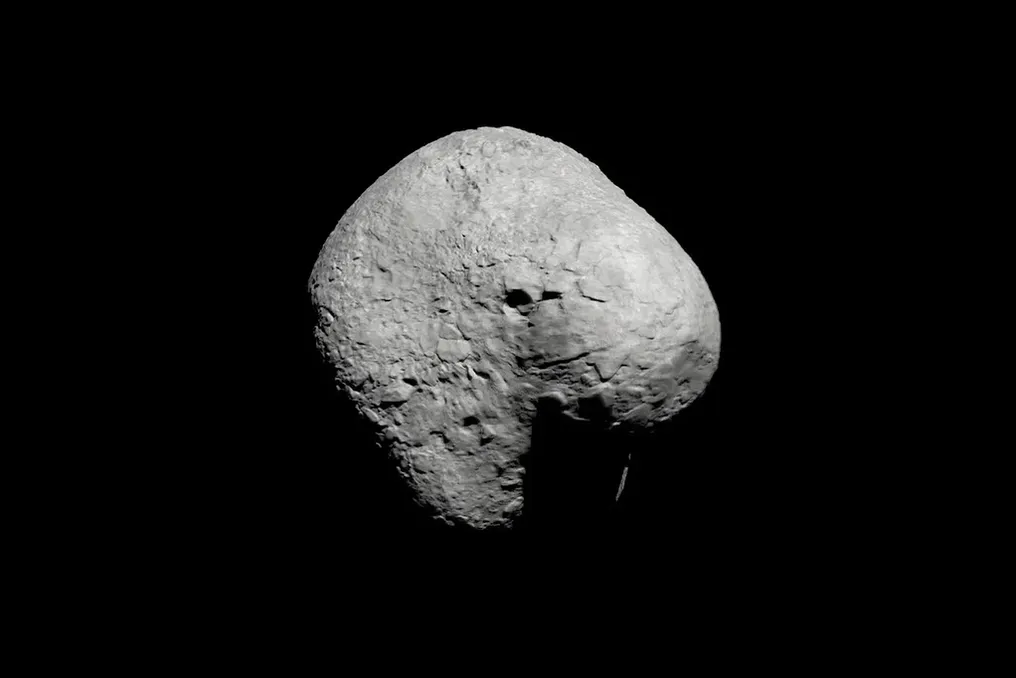
Object 1998 KY26 is a rocky piece with a diameter of 10 meters. Like millions of other small rocks orbiting the Sun, it is too insignificant on a cosmic scale to have a recognizable name; astronomers refer to it by code.
However, 1998 KY26 has gained unexpected notoriety and recently became the subject of an article in The New York Times. The reason lies in its unusual movement—it appears not to obey the laws of gravity that precisely regulate the motion of all other celestial bodies.
This does not mean that the small meteoroid is a disguised alien spacecraft. For several years, the main hypothesis was that it was a 'masked' comet, which partially explained the difficulties in calculating its trajectory. But more recent studies point to a much more prosaic explanation.
Dark Comet
Suspicion arose in 2023. A team led by astronomer Darrell Seligman analyzed decades of telescopic records and discovered a statistically significant non-gravitational acceleration in objects showing no visible activity, including 1998 KY26.
Space rocks are indeed subject to forces other than gravity. The most well-known is the Yarkovsky effect: the asteroid absorbs sunlight, and by rotating, it radiates this heat into space in a different direction, acting like an extremely weak rocket engine. However, according to calculations at the time, the deviations were greater than what the Yarkovsky effect typically produces.
The proposed solution was to call such objects 'dark comets.' To explain this further: when a normal comet approaches the Sun, its ice turns into gas, forming a long tail that acts like a jet changing the body's trajectory. A dark comet, conversely, would have the behavior of a comet but would not produce a tail or coma: gas would escape in sufficient quantity to push the object, but not enough to be visible during observations.
Smaller Than Thought
The image of KY26 changed in 2024 when it approached Earth and was observed by numerous large telescopes, including the ESO's VLT. Results published in Nature Communications in September 2025 showed that the object has a diameter of about 11 meters, almost three times smaller than the previously assumed 30 meters. It also rotates twice as fast as previously thought, completing a rotation every 5.35 minutes. 'A day on this asteroid lasts only five minutes!' summarized the research lead, Spanish astronomer Toni Santana-Ros.
This changes the calculations. The smaller the object, the larger the surface area exposed to light relative to its mass, and the easier it is to push. Taking new measurements into account, David Farncock's team from NASA's Jet Propulsion Laboratory recalculated the figures. Conclusion: the pressure of sunlight combined with the Yarkovsky effect explains the acceleration, and the need for hidden ice disappears.
Furthermore, a study published in the journal Icarus further undermined the ice theory. Corbin Hansen and Masatoshi Hirabayashi from the Georgia Institute of Technology (USA) modeled how solar heat is distributed from the surface to the core of the rock. The result showed that even the coldest points averaged around minus 61°C throughout the orbit. This seems cold. But in a vacuum, ice only persists for prolonged periods below approximately minus 128°C.
According to this pair's calculations, if the push came from water vapor, KY26 would lose about 0.03 grams of water per second and deplete its supply in about 62 years, which is negligible on a cosmic scale. The authors stated that the rate of water release would be too high to sustain buried ice. Their conclusion: KY26 is likely a dehydrated asteroid.
Soviet Ship?
Alien ship—no. But some speculated it could be a Soviet ship. In a paper published in May on arXiv, a Harvard astrophysicist Avi Loeb suggested that the object is Phobos 1—a probe launched by the Soviet Union to Mars in July 1988, which failed about two months after receiving an incorrectly entered command.
Loeb is known for his support of the idea that the interstellar visitor 'Oumuamua, the cigar-shaped object that passed through the Solar System, could be extraterrestrial technology. He presents three arguments: the orbits are similar, the approximate 10-meter span of the probe's solar panels matches the size of KY26, and the metallic surface of the craft could possess a high reflectivity that the object demonstrates. Sunlight reflected off the apparatus could serve as an energy source capable of causing a slight change in trajectory.
In another paper in September, a group claims that a simplified model of the probe reproduces the object's brightness variations across eight observation sets. However, this hypothesis faces obstacles. For the orbits to match, the supposedly dead probe would have had to execute two maneuvers using its engines, one of which occurred in May 1996, nearly eight years after losing contact with Earth.
Moreover, KY26's spectrum is typical of a known type of asteroid (X-type), and origin models suggest it likely came from the inner part of the asteroid belt. Finally, this is not the first time Loeb has linked a dark comet to a Soviet probe. In 2025, he suggested that object 2005 VL1 was also the Venera 2 probe. But subsequent analysis 'decisively' rejected this identification.
The story reached NASA. Last Thursday (12), agency administrator Jared Isaacman stated in an interview with Fox News that he saw no evidence that KY26 was anything more than an asteroid, and that NASA continues to monitor the object without cause for alarm.
Cancelled Visit
The uncertainty was supposed to be resolved in July 2031, when the Japanese probe Hayabusa2 was scheduled to arrive at KY26. This same probe delivered samples of the Ryugu asteroid to Earth in December 2020. But this will not happen. On Monday (16), the Japanese space agency JAXA informed a government committee that the probe's final target was no longer KY26.
The reason is that the spacecraft is old. Of Hayabusa2's four ion thrusters, three were heavily worn, and the single one still functioning normally failed in mid-August. Engineers improvised by combining parts from different thrusters, but the restored thrust is insufficient for the close approach maneuver near Earth that was supposed to bring the probe to KY26. Instead, it must perform a high-speed flyby of asteroid 2015 BM510 in 2028. Its diameter ranges from 17 to 74 meters.
Thus, the mystery of KY26 will likely remain without a definitive answer for a long time. Its next approach to Earth will only occur in May 2039, at a distance of about 16 million kilometers. But, according to the latest research, the answer will be far less exciting than aliens, secret comets, or Soviet probes: it is a dry, small, bright rock, slightly pushed by sunlight.