Automakers use customized sounds in electric vehicles to give them individuality by imitating internal combustion engine sounds
Read more
Business Standard
business-standard.com

Automakers use customized sounds in electric vehicles to give them individuality by imitating internal combustion engine sounds

Automotive companies are implementing specially designed sounds in electric vehicles (EVs) to give them a unique character, ranging from aggressive, engine-roaring imitations to quieter cabins.

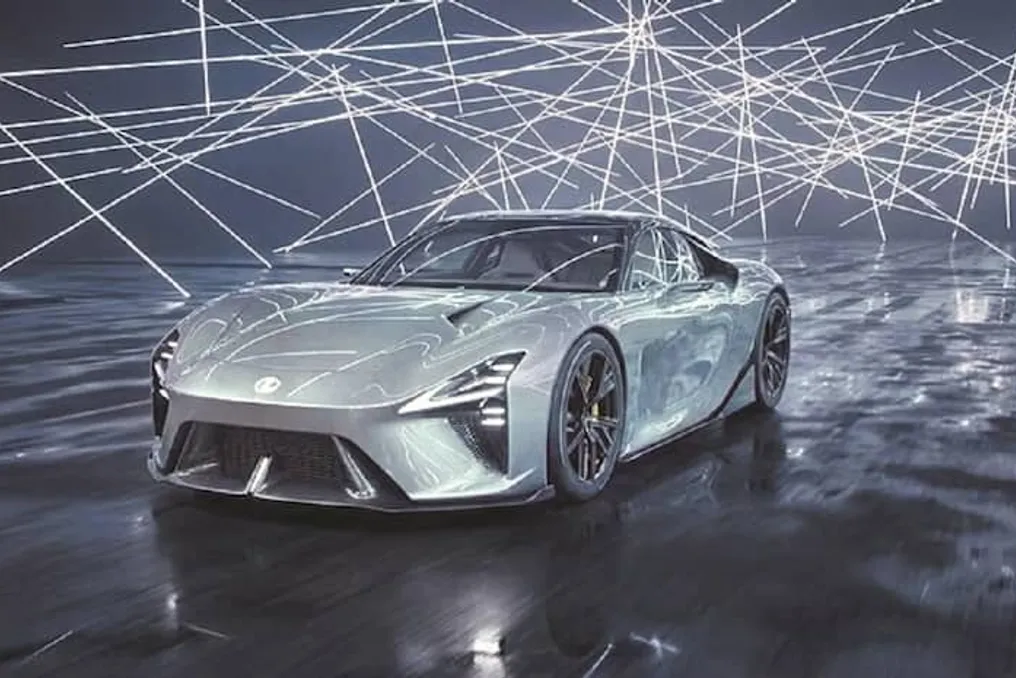
When Lexus unveiled a new version of its LFA supercar in Japan last year, the company stated that the car was the result of a simple directive from Toyota Chairman Akio Toyoda: 'No more boring cars.' Toyoda issued another requirement that did not concern power, style, or price; he wanted the new LFA to 'completely rethink the sound of an electric sports car,' as noted by the company's Head of Design, Simon Humphries. He added that the finished car would meet Akio's final wish.

The emphasis on sound proved quite telling, as the new LFA, which is likely not to appear in showrooms until 2029, will probably be judged first by lap time and second by track noise. Nevertheless, the attention to the car's sound was simultaneously a tribute to the roar of the original V10-engined LFA and an acknowledgment of a future where electric cars possess immense power thanks to the instantaneous and much quieter torque of electric motors.

Electric vehicle manufacturers, striving to differentiate their models, must do so at the expense of other aspects such as comfort, advanced autonomous driving capabilities, greater range, and faster charging. Sound is also one such element that can be tuned both inside the cabin, where acoustic characteristics can be changed almost infinitely, and outside, where regulatory standards play a major role, but it is here that the car demonstrates its individuality to the world. More massive and aggressive, engine-like sounds can be created for high-performance EVs, while finer tones are used for economical and city cars so they blend harmoniously into the environment.

Ferrari's first fully electric car, named Luce and presented in May, uses an accelerometer to register vibrations from the rear axle's rotating components. This sound is then smoothed and amplified, creating a distinctive growl that, according to early reviewers, cannot be confused with a V12. For mass-market EVs, road and wind noise is often the main concern of buyers, so manufacturers have focused on creating quiet cars; for example, the Rivian R1S emits a soft electric motor hum, while the Chevy Equinox EV aims to be barely audible.

Jasper de Kruif, sound engineer and co-founder of Impulse Audio Lab, which has collaborated with automakers like Rolls-Royce, Hyundai, and Tesla, stated: 'I think brands are looking for ways to stand out and become more recognizable. I believe one of the strongest ways to achieve this is through experience, and once again, one of the most powerful tools for creating impressions is sound.'

For years, automakers have been designing the sounds of their internal combustion engine cars, especially in the cabin, where luxury cars are designed to create a calming, even spa-like atmosphere by tuning the interior to reduce stress during driving. For instance, Mercedes-Benz uses active noise cancellation in some of its models, in addition to passive noise reduction, including soundproof glass and quieter air conditioning, in vehicles such as the new C-Class.

In electric vehicles, interior spaces can be even more adapted to owners' needs, and external noises can be specifically tuned to enhance the car's presence. Automakers create personalized soundscapes for each model in their all-electric lineup, spending hundreds of millions of dollars, and in some estimates, billions collectively, hoping to stand out. Although automakers are reluctant to disclose exact costs and refuse to comment on future products, preferring to discuss recent releases, this is because key characteristics, including sound, may still change before production begins.

However, it is clear that sound design is becoming increasingly complex, and the stakes are rising with the growth of EVs. Mr. de Kruif emphasized: 'Sound is such a strong link to emotions and memories.'

Modern cars are also increasingly controlled by software integrated with numerous autonomous driving and safety sensors and equipped with ever-larger screens, making previous generation cars seem primitive by comparison. Regarding modern acoustics, older cars seem almost prehistoric. For example, in the new BMW iX3, which serves as a benchmark for the brand's future EVs, the sound that greets drivers upon opening the door consists of the voices of the car designers talking about the happiest moment in their lives, which BMW then reprocessed into a welcome song.

Similar stories

Audi develops retractable physical button system that emerges from the multimedia screen
Read more
autopapo.com.br

Audi develops retractable physical button system that emerges from the multimedia screen

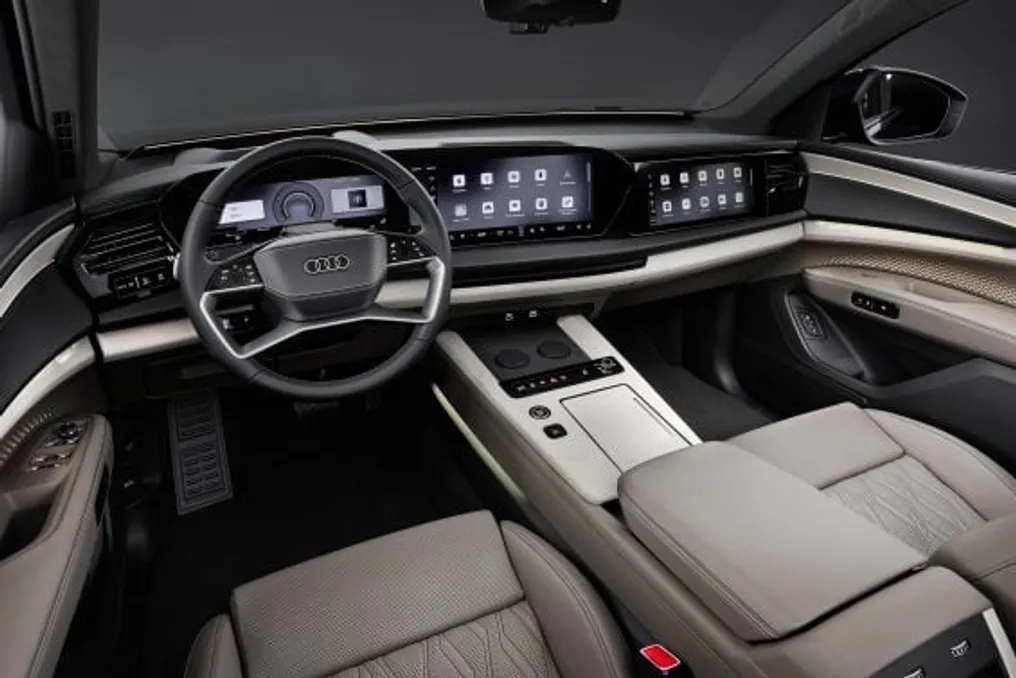
Audi is looking to reintroduce physical buttons for drivers, but only upon request. The German automaker has filed a patent application in Germany for a motorized button bar that remains hidden behind the bottom edge of the multimedia system and only becomes visible when requested.

This innovation comes in response to a common complaint about contemporary vehicles: the strong dependence on touchscreens, which forces the driver to navigate through various menus just to make simple adjustments, such as changing the air conditioning output.

In the presented concept, the screen itself remains static. The component that moves is the button module, which projects out from the back of the display and returns to its level position when not in use.

According to the patent application documents, there are three ways to activate this bar: automatically when starting the vehicle, via voice command, or through a manual gesture.

Even with the bar retracted, all functionalities remain accessible. The screen displays a 'digital twin' containing the same commands organized in the same sequence as the physical buttons. This way, users who prefer to interact by touch do not lose any functionality, while those who appreciate buttons gain in ergonomics.

The patent also highlights a practical advantage: when the controls are projected outwards, such as during video playback, there is an increase in the free space available on the screen.

This solution reflects a shift in Audi's thinking. Massimo Frascella, the brand's creative director, had previously stated that very large screens do not represent the best experience, criticizing the trend of prioritizing technology for technology's sake.

This change in direction began with the electric A2 E-Tron model, which brought back elements such as the rotary volume knob, four dedicated window buttons, and a physical control for the windshield wiper.

However, the company's more recent SUVs, specifically the Q7, SQ7, and Q9 models, maintain the focus on the screen interface for adjustments, including directing the air conditioning airflow.

Currently, this retractable bar is only a patent application, and there is no confirmation of a production car. If implemented, it will introduce moving parts where there are currently only fixed buttons, which could result in higher costs for eventual maintenance.

Mercedes-AMG GT unveils electric model at Yas Marina that mimics V8 sensations
Read more
www.khaleejtimes.com

Mercedes-AMG GT unveils electric model at Yas Marina that mimics V8 sensations

The new all-electric Mercedes-AMG GT 4-Door Coupé was unveiled at Yas Marina. Mercedes-Benz is betting that this latest AMG model can convince even fans of traditional internal combustion engine sports cars by offering experiences comparable to a V8.

The car is equipped with three electric motors, utilizes battery technology inspired by Formula 1, and features a gear shift simulation that passengers can feel through the seats. The vehicle is planned to arrive in UAE showrooms in January 2027, making the country one of the first markets in the Middle East where it will be available.

During an acceleration demonstration at the regional launch, it was noted that the sudden thrust felt strikingly similar to a sharp drop on a roller coaster, despite there being no such drop or explicit warning. The acceleration was instantaneous, causing an unexpected tingling sensation that led to uncontrollable laughter. Despite the warning to fasten the headrest belt, the intensity was quite surprising. The demonstration was brief but gave an idea of the type of adrenaline experience Mercedes aims to provide with its electric sports car.

Regional President and CEO Michael Stroband reported experiencing a similar reaction upon first contact with the car, describing it as a combination of electric power and the emotional character traditionally associated with V8 engines. He told Khaleej Times: 'I have never experienced such a mix, the best of both worlds. I have never experienced such speed combined with emotion, which I have only experienced in V8 cars until now.'

The car attempts to recreate some of these sensations through AMG driving modes. In addition to imitating engine sounds, it creates a sense of gear shifting, providing physical feedback through the seats despite the absence of a traditional gearbox. Stroband emphasized: 'It's an immersive experience. So it's not just about the sound. You feel like you are shifting gears, and you feel like you are sitting in an internal combustion engine race car where you manually shift gears. Then you will also feel it in the seat when shifting to the next gear.'

Underneath this experience lies a significant engineering change for Mercedes-AMG. The new model is the first series electric vehicle to use axial flux electric motors—a technology developed to ensure high power density in a more compact body. The GT 63 version uses three electric motors to produce up to 1169 horsepower, allowing it to accelerate from 0 to 100 km/h in a stated 2.1 seconds.

Mercedes has also focused on maintaining performance over long periods, especially on a racetrack, rather than providing a short burst of acceleration followed by a drop in power. The car uses battery cells with a cooling system inspired by Formula 1 technologies, designed to maintain performance under demanding driving conditions.

Michael Stroband noted, pointing to the axial flux motors and battery technology, that the company is very proud of German engineering. Another important advantage is the charging speed. The vehicle uses 800-volt technology and, according to the manufacturer, can add up to 460 km of range according to the WLTP cycle in 10 minutes under suitable charging conditions; charging from 10 to 80 percent takes about 11 minutes.

Regarding charging access for buyers in the UAE, Stroband stated that the company is collaborating with local partners, including charging station suppliers, and mentioned the planned expansion of charging infrastructure in Dubai and Abu Dhabi. He added that villa homeowners can install charging stations and charge the car overnight, and the claimed range of around 700–800 km, depending on the version, will reduce the need for frequent public charging.

He commented on the relationship between vehicle technology and infrastructure development, stating: 'From my point of view, it's a mix. We are developing and are very optimistic that we will also see more and more electric vehicles on the roads.'

The new model will be available in three variants: GT 53, GT 55, and GT 63. Stroband named the estimated starting prices at approximately $110,000, $133,000, and $166,000 respectively, excluding options and depending on GCC country specifications. The regional head noted that the electric sports car remains a niche segment, but early customer feedback has been encouraging, with some cars already sold at presentations in other regions. He added: 'People like its appearance, but they are skeptical, saying: okay, another supercar, electric car, I am usually a petrol lover. But it always comes down to the test drive and the experience after you've driven it.'

Mercedes hopes that this experience will convince more traditional sports car buyers to consider electric energy without giving up the sounds and sensations they associate with the AMG badge.

Old driving tips for rain, contrasting with modern automotive technology
Read more
flatout.com.br

Old driving tips for rain, contrasting with modern automotive technology

The contemporary vehicle has distanced the driver from the mechanics of the automobile. In the early days of motoring, driving required knowledge that is now almost forgotten: it was necessary to know how to decompress the cylinders to start the engine, calibrate the ignition timing, and sometimes even manually lubricate the valve system before starting the trip.

Currently, we not only dispense with these skills, but owner's manuals have also stopped including many technical specifications that were previously provided, such as the diameter and stroke of the pistons, the compression ratio, or the number of engine valves. On the other hand, these manuals now serve to warn the car owner about the danger of ingesting coolant.

The effect of this is a generation of drivers who often possess only basic knowledge of engaging gear in D, accelerating, braking, and turning the steering wheel. Any more complex procedure is outside their domain. Even changing a tire, which was once a fundamental skill for any driver, has become something that causes concern.

Popular