WhatsApp has started the global release of the message scheduling feature for both private conversations and groups. This functionality is now accessible to users of Android and iPhone (iOS) devices, allowing sends to be scheduled in advance ranging from 10 minutes up to 14 days.
Although this feature was already available to some users in Brazil, access was previously limited to certain accounts and platforms. Currently, Meta is expanding the distribution of this tool to a wider reach.
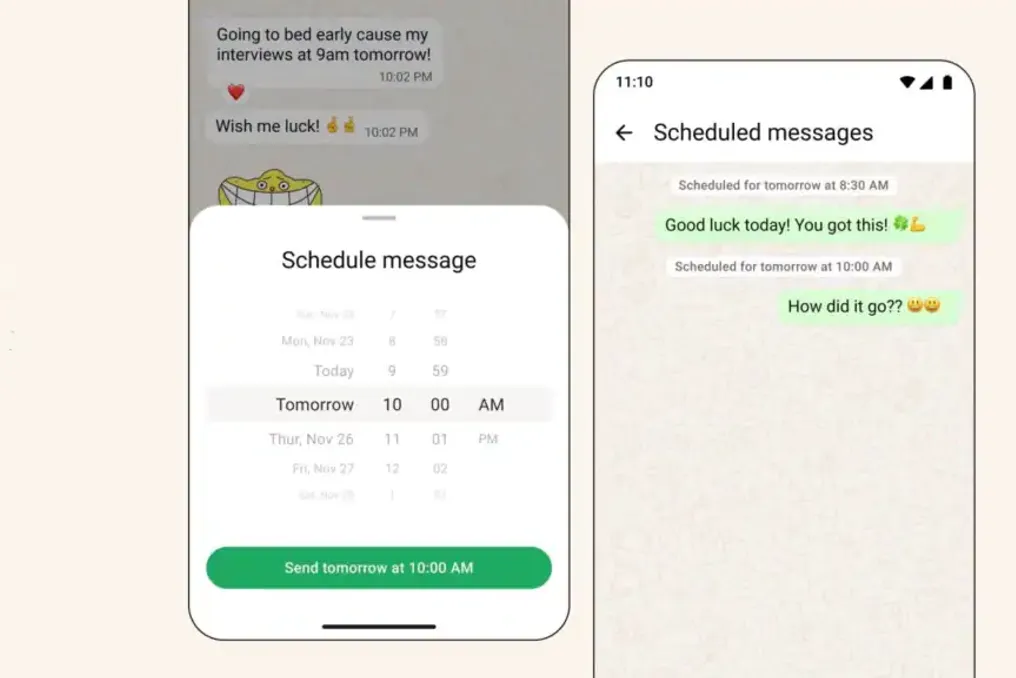
To set up a scheduled send, the user must write the message and then press and hold the send icon. The application offers the option to select the exact date and time for delivery. This feature supports different types of content, including texts, photos, and videos.
A relevant aspect is that messages will be delivered even if the device is turned off or without network connection at the scheduled time. Furthermore, recipients will not receive any notification indicating that the content was scheduled; the message will appear as a standard send.
Users have the option to view scheduled messages in the information section of each conversation and remove them before the send occurs. However, it is unclear whether it will be possible to change the date or time of an already established schedule.
According to WhatsApp, all sends maintain end-to-end encryption, ensuring that third parties, including the company itself, cannot read the message content.
In group environments, there is a specific rule: only members who were part of the conversation when the scheduling was done will receive the message. People who join the group later will not have access to this pre-scheduled send, according to WABetaInfo.
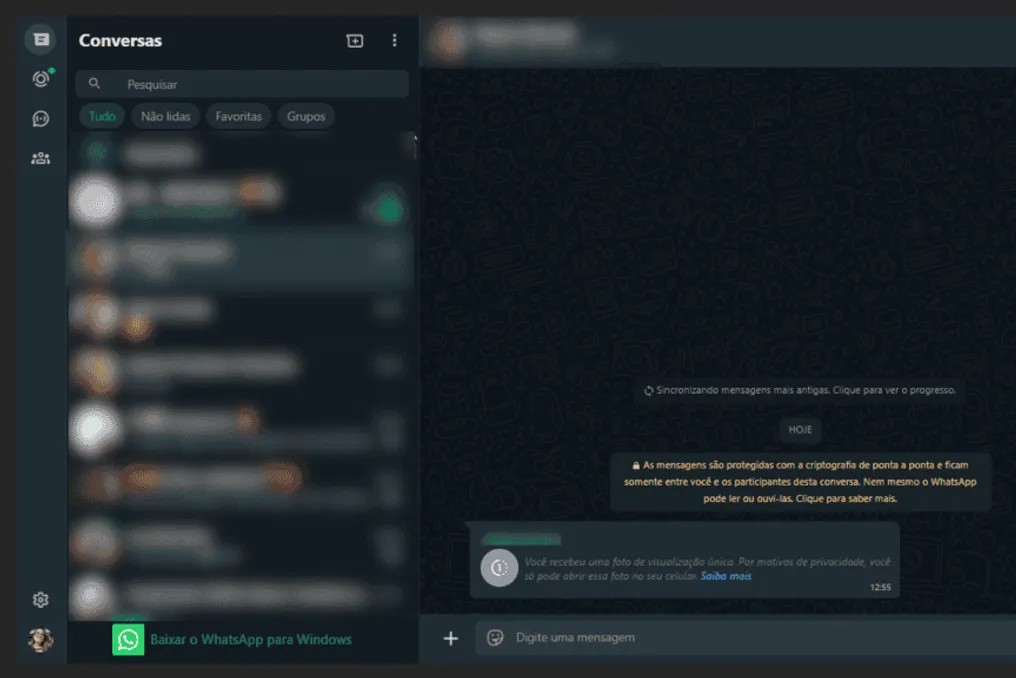
Previously, Olhar Digital reported that WhatsApp was beginning to offer the function of scheduling messages for specific days and times to some users in Brazil. At that time, tests allowed scheduling multiple messages via WhatsApp Web and, for some accounts, through the iPhone app. That publication also pointed out restrictions related to the minimum lead time, available dates, and accepted formats. Meta had not yet confirmed whether such limitations would be maintained in the final version. With the global distribution, the feature also began to include Android users.
It is important to note that Telegram and Signal have had message scheduling available for a longer period, with WhatsApp being one of the last to incorporate this functionality among its competitors.