Angola guarantees availability of antiretrovirals for HIV treatment despite reduction in external funding
Read more
Noticias ao Minuto
noticiasaominuto.com

Angola guarantees availability of antiretrovirals for HIV treatment despite reduction in external funding

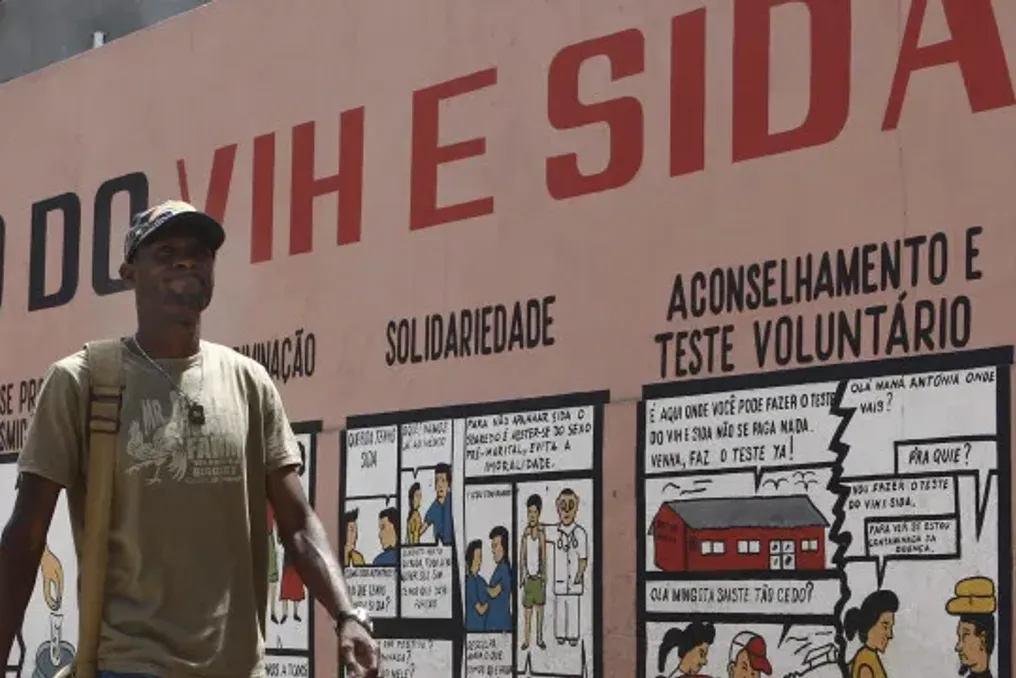
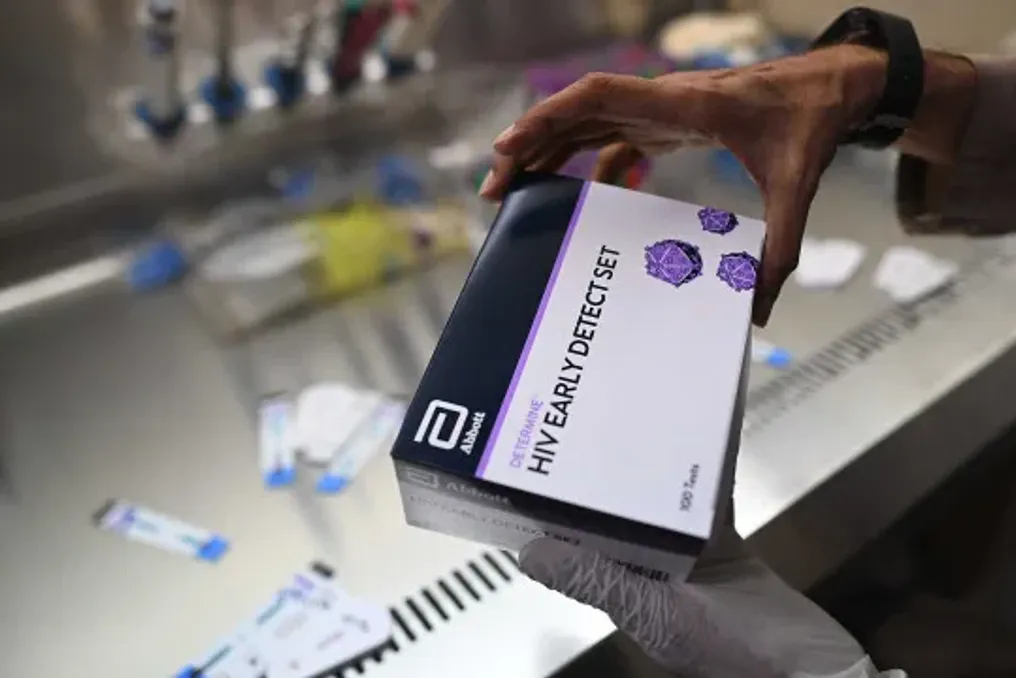
The director of the National Institute for the Fight against AIDS confirmed that Angola has the necessary antiretrovirals for HIV treatment, even with the decrease in financial contributions from abroad, which mainly impacted community actions conducted by non-governmental organizations.

During the 'Workshop' focused on Financing and Sustainability of the HIV Response in Angola, held in the context of World AIDS Day (Acquired Immunodeficiency Syndrome) on December 1st, Maria Furtado assured that stricter controls are being implemented to ensure that no individual is left without access to antiretrovirals.

According to Maria Furtado, the institution received additional credit at the beginning of the year and conducted a public procurement process, resulting in the delivery of antiretrovirals by companies at this time.

Maria Furtado presented data for 2025, indicating that the country had approximately 377,000 people living with HIV/AIDS. Furthermore, 21,000 new infections and 14,000 deaths related to opportunistic diseases were recorded, highlighting hepatitis B and treatment abandonment by patients.

In 2025, the number of people receiving antiretroviral therapy was 188,062. The official also mentioned a drop in the mother-to-child HIV transmission rate, which fell from 26% in 2019 to the current 13%.

In the overall picture of people living with HIV/AIDS in Angola, 240,000 are women, and within this group, there are between 24,000 and 28,000 pregnant seropositive women.

The source pointed out that Lunda Sul province showed the highest prevalence rate, reaching 4.9%, meaning five in every hundred people are infected. This was followed by Lunda Norte (4.4%), Cunene (3.3%), Cuando (2.7%), and Moxico (2.5%).

The director emphasized that despite mortality and incidence rates, the observed trend is one of reduction. She continued to affirm that, even with the decrease in certain external support, Angola maintains national funding for over 86% of tests, antiretrovirals, and other supplies. It was highlighted that the Global Fund is one of the main international funders, concentrating its investments in three provinces.
Similar stories

African leaders defend health sovereignty and domestic financing of health systems on the continent
Read more
noticiasaominuto.com

African leaders defend health sovereignty and domestic financing of health systems on the continent

Leaders from various African countries and organizations, gathered in Ethiopia, expressed Africa's commitment to managing its own health systems. The main objective is to find creative methods to increase funding and consequently ensure the continent's health sovereignty.

Jean Kaseya, Director-General of the Africa Centres for Disease Control and Prevention (Africa CDC), opened the 5th International Public Health Conference in Africa (CPHIA 2026) in Addis Ababa, stating that in Africa, sovereignty is intrinsically linked to responsibility, which in turn depends on good governance, trust, and accountability.

This meeting, also organized by the African Union's public health agency (AU) and the Ethiopian Government, will bring together African leaders, specialists, and sector representatives until November 27. The conference takes place amid significant cuts in international aid, notably from the United States and other nations since last year.

Under the theme 'Health Security and Sovereignty in Africa: Transforming Health Dependence and Vulnerability into Autonomy and Resilience,' Kaseya reported that over 46,000 delegates from more than 100 countries were registered. He emphasized the need for Africa to produce its own goods, finance the sector, lead outbreak responses, and implement digital transformation to ensure the continent is respected, concluding that they will never again accept partners who try to dictate their actions.

During the event, the head of the Africa CDC addressed the second deadliest Ebola epidemic in global history, affecting the Democratic Republic of Congo (DRCongo). He highlighted the rapid action of the pan-African organization and cooperation with the governments of Uganda, Kenya, and Nigeria, which recorded cases related to the outbreak. Kaseya criticized the use of African suffering for commercial purposes, mentioning that despite international donors allocating about $962 million (€879.94 million) for the Ebola response in DRCongo, there was no clarification on how more than $700 million (€640.57 million) was spent.

Mahmoud Ali Youssouf, President of the AU Commission, reinforced that epidemics do not respect borders and that isolated responses are insufficient, requiring 'permanent cooperation' between states. Although he thanked international support, Youssouf requested that partners adjust their plans to African priorities, as the health of Africans cannot depend, in the long term, on external budgetary priorities. He stressed that assuming greater self-responsibility is crucial, given that health is a pillar for the continent's economic development, stability, and security.

For his part, Évariste Ndayishimiye, Head of State of Burundi and interim President of the AU, encouraged Health and Finance ministers to explore innovative mechanisms, such as public-private partnerships, new forms of health taxation, and mobilization of African savings. Ndayishimiye underlined that priority research must be defined in Africa and that the generated data must primarily serve local populations.

Angola lowers climate targets, betting on realism in new plan
Read more
noticiasaominuto.com

Angola lowers climate targets, betting on realism in new plan

Angola has lowered its emissions reduction targets in the latest climate plan presented to the United Nations. The country justified this revision by citing the concept of 'realism,' noting that only a 'very limited' number of projects were previously implemented.

The new Nationally Determined Contribution (NDC), submitted in September 2025, commits the country to reducing emissions by 5% by 2035 using its own resources, equivalent to approximately 37.5 million tonnes of carbon dioxide equivalent (CO2e). With international support, this figure increases by another 6 percentage points, reaching 11% compared to the 'business as usual' scenario (without new measures), using 2020 as the baseline, which amounts to up to 49.3 million tonnes.

The previous NDC document from 2021 stipulated a 24% reduction by 2025, of which 14% was supposed to be covered by domestic resources, relative to 2015. However, the most recent document acknowledges that the proposed reduction in NDC 3.0 is 'less ambitious,' explaining that the targets were set 'to reflect the most realistic and feasible conditions for Angola,' considering the country's capabilities.

NDCs are climate plans that every country that has signed the Paris Agreement must provide to the United Nations every five years, including emission reduction goals and climate change adaptation measures. These goals are not legally binding, and the current round of NDC 3.0 sets objectives until 2035.

Angola recognizes that each plan is expected to demonstrate 'progress' compared to the previous one and reflect the 'most maximally ambitious approach,' but adds that ambitions 'must also take into account national circumstances,' pointing to the low degree of implementation of the previous plan. This is because, despite having 'strong political will and political structures,' only a 'very limited' number of proposed projects were fully implemented.

The document links this result to insufficient technical competence, coordination mechanism failures, and the lack of financial and technological support. Therefore, the new NDC 'prioritizes realism and feasibility,' proposing a smaller portfolio of projects selected based on their viability and alignment with institutional capacities so that commitments are 'not only plausible but also achievable.'

The revision also changes the baseline year from 2015 to 2020, as this is the most recent year with officially reported emissions. The first biennial update report, completed in November 2024, showed that in this year, Angola emitted 211.5 million tonnes of CO2e. Of this, 84% is due to deforestation and land use, and 10% to energy.

The NDC acknowledges that projected emissions for 2020 significantly exceed the 2015 figures, especially in the area of deforestation and land use, but asserts that the increase is 'not solely related to increased pressure on natural resources,' but is 'closely linked' to methodological changes, such as new emission factors and more accurate satellite imagery.

Based on this revision, the Government states that the percentages 'may seem less ambitious,' but they correspond to a 'greater absolute reduction' in emissions. In total tonnes, the projected reduction increases from 26.5 million in 2025 (under NDC 2021) to 49.3 million in 2035.

For the Angolan executive branch, ambition lies not only in quantitative targets but also in the focus on feasibility and institutional strengthening, which is viewed as a 'more solid foundation' for increasing ambitions in future cycles. The NDC also mentions the economic context, noting that the Paris Agreement introduced a 'new level of ambition' that the country 'cannot meet with current financial resources.' The document mentions economic slowdown, reduced productivity in the oil sector, and budgetary constraints.

Furthermore, shortcomings in Angola's exit from the Least Developed Countries category are highlighted, which limits access to climate finance and development aid intended for such countries. Angola estimates a need of $412 billion for mitigation between 2025 and 2035: $48 billion from its own resources and $365 billion dependent on external support. The country plans to allocate $235 million for adaptation.

HIV/AIDS continues to rise in Angola: 21 thousand cases recorded annually
Read more
noticiasaominuto.com

HIV/AIDS continues to rise in Angola: 21 thousand cases recorded annually

HIV infections in Angola continue to increase, reaching a level of about 21 thousand cases annually, as announced today in Luanda by the president of ANASO—the Network of Angolan organizations and services for HIV/AIDS, tuberculosis, and malaria.

Speaking at the national HIV/AIDS forum in Angola, António Coelho emphasized that the situation remains worrying, as it could become alarming if appropriate measures are not taken.

A source quoted by the Angolan news agency ANGOP noted that less than half of people living with HIV/AIDS receive antiretroviral treatment. He added that the government faces serious difficulties in providing necessary medications.

The leader criticized the political leadership, pointing out that the national commission 'is functioning sluggishly.' The President of ANASO also stated that high levels of stigma and discrimination persist, which prompts many people to refuse treatment.

Currently, 370 thousand people living with HIV (Human Immunodeficiency Virus) are registered in Angola, of whom 60% are aged between 15 and 24, and half of them undergo antiretroviral therapy.

Popular