Family farmers in Brazil may soon gain access to necessary affordable tractors thanks to a partnership between Chinese manufacturers and one of Brazil's most prominent social movements.
The Landless Workers' Movement (MST) in Brazil gained prominence in the 1980s by organizing land seizures and advocating for agrarian reform. Although the movement's campaigns helped thousands become smallholder farmers, the tractor market in Brazil continues to favor large agricultural producers.
The Movimento dos Trabalhadores Rurais Sem Terra (MST), or Landless Workers' Movement, is the largest and longest-running peasant movement in Brazilian history, as well as one of the largest in Latin America. Originating from renewed demands for agrarian reform in the late 1970s during Brazil's military dictatorship, MST addresses long-standing issues of land concentration in the country and strives to improve the living conditions of rural workers.
MST initially focused on occupying large estates (latifundia) in the central-southern part of Brazil and evolved into a national movement in 1984. According to the organization, over 2,500 such land occupations have taken place since then, providing land access to about 450,000 families through MST.
The movement has grown to coordinate approximately 200 cooperatives and 1,000 associations of rural producers, who collectively own 120 small and medium-sized processing plants. Production is mainly based on family plots, guided by the principles of food sovereignty, healthy eating, and cooperation. MST follows an agroecological model, contrasting with the prevailing monocultures and chemical fertilizers in Brazilian agribusiness.
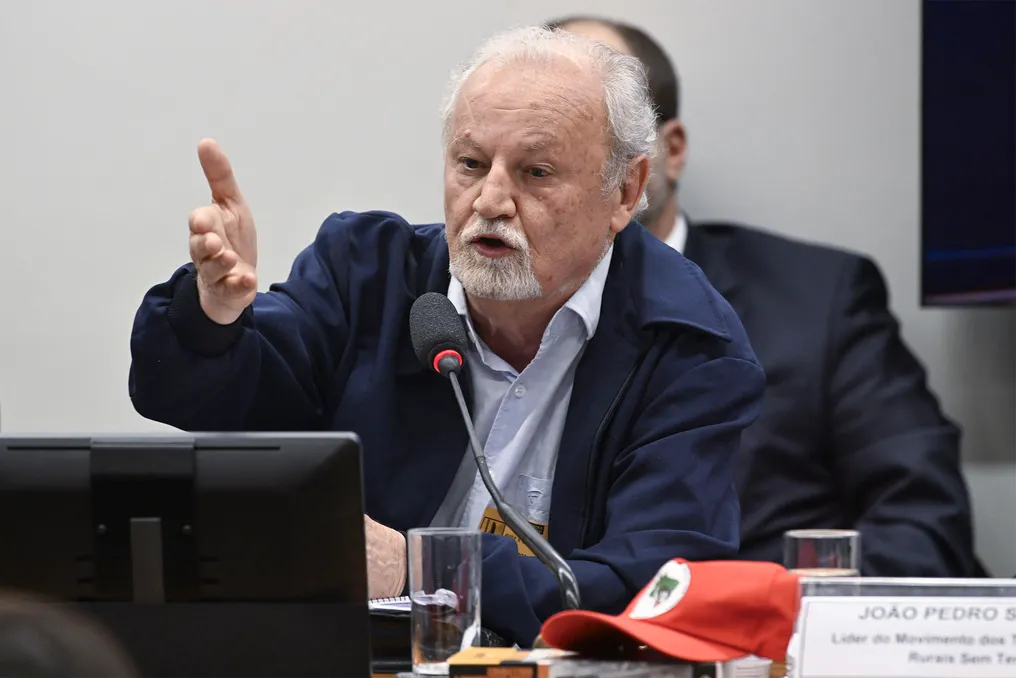
A representative from Dialogue Earth spoke with João Pedro Stedile, an economist and activist who co-founded MST during Brazil's democratization. He stated that the organization aims to bridge this technology access gap through what he calls an 'unprecedented' partnership with Chinese companies and universities. Together, they are testing and adapting smaller, more accessible machinery for smallholders. Stedile noted: 'We understand that we need to shape the industry to meet the needs of family farming.'
China is particularly important to these efforts because its agricultural machinery industry developed to serve relatively small plots, Stedile explains: 'Its agriculture is the result of land reform. There, the farmer owns no more than one hectare. The Chinese state had to develop the mechanical industry for this group.'
Chinese manufacturers have been collaborating and exchanging technological knowledge with regional governments and enterprises in Brazil since signing a Memorandum of Understanding (MoU) in 2022.
However, this growing collaboration raises questions: can Chinese technology help Brazil develop its own machinery for small farms and production capacities? Or will it simply create a new dependence on Chinese companies and supply chains?
Since the 2022 MoU, Brazil's smallholder sector has steadily utilized Chinese resources and knowledge. In 2024, a demonstration and training center dedicated to Chinese agricultural machinery was opened in the municipality of Apodi, Rio Grande do Norte state. Concurrently, MST and the University of Brasília (UnB) established a research center in 2023 focused on technological development and mechanization of family farming. In February 2025, 40 Chinese-made tractors were leased to Brazilian farmers, with usage monitored by the center.
Agricultural cooperation between Brazil and China was boosted at the national level by the signing of 36 MoUs between Brazilian President Lula and his Chinese counterpart Xi Jinping in May 2025. This package included a memorandum on modern family farming and agricultural mechanization.
Plans to open five factories will allow MST and its partners to reach industrial production levels. The first, in the municipality of Marika, Rio de Janeiro state, is part of a partnership between the Chinese state-owned company Sinomach and the Brazilian scientific and technical firm OZ.Earth. Wagner Soares, municipal secretary for agriculture and livestock, told Dialogue Earth that the vast majority of the approximately 1,200 smallholders in Marika still rely on traditional manual tools and depend on the council for equipment provision.
It is reported that the factory construction will cost 200 million Brazilian reais ($36 million USD) and could produce up to 5,000 tractors annually. MST and the municipal government of Marika will play a key role in this plant, which will be built on land provided by the city. According to Soares, construction is expected to begin in early 2027.
For family farmers, the problem is not just the lack of machinery, but that market machinery is either prohibitively expensive or unsuitable for their needs. According to the latest Brazilian agricultural census (2017), family farming accounted for 77% of approximately five million agricultural holdings in Brazil. However, according to an analysis by the Institute of Applied Economic Research (IPEA) of the Brazilian government, only 11.5% of these farms owned tractors, compared to 24.5% of non-family farms.
Money is also a barrier. According to IPEA's analysis, even the simplest 15 horsepower tractor cost more than the entire annual income of a family farmer in 2017. Furthermore, according to the Brazilian Institute of Geography and Statistics (IBGE) for 2017, 88% of mechanized family farms used tractors with less than 100 horsepower. However, a study by the Federal Institute of Goiás (IFG) showed that in 2020, only six out of 169 models sold by leading manufacturers in Brazil fell within this power range.
The Marika factory is intended to serve farmers nationwide, and the municipal government expects it to create about 2,000 jobs. Initially, it will assemble tractors in Brazil from components imported from China. Production will then gradually shift towards localization, aiming for at least 60% domestic content in finished machines.
The Brazilian Association of Mechanical and Experimental Industry (Abimaq) previously expressed concern over the increasing use of Chinese tractors in Brazil. For example, loss of market share for domestic producers and potential maintenance difficulties for the machines. Stedile refutes Abimaq's claim that the association resists efforts to change the Brazilian machinery market, arguing that it already offers suitable and affordable equipment for small farmers. He disagrees with this.
Dialogue Earth spoke with Charles Andrew Tang, president of the Brazil-China Chamber of Commerce (CCIBC). He reported that his organization is also working on creating a factory for affordable micro-tractors for small farmers but has encountered similar resistance. Tang asserts: 'Abimaq is against Chinese industry in Brazil.' He is trying to convince the association to consider how Chinese technology and capital can be used 'to improve domestic industry' 'in partnership with domestic industries.'
Abimaq did not respond to Dialogue Earth's request for comment. Another issue noted by experts is that China's technological transfer may not be accompanied by the necessary knowledge transfer, as well as components and supply chains. In other words, the absence of elements that would allow partner countries to develop their own potential and technical expertise.
In Brazil, this debate is currently unfolding against the backdrop of the proliferation of Chinese electric vehicle and wind turbine factories. Stedile believes that the model discussed with Chinese companies envisions MST itself taking over the management of the factories in the future: 'Once the factory is running here, we will adapt it, incorporate domestic components, and perhaps even develop other machines according to our own conditions.'
To prevent Brazil from becoming merely an assembly site for predominantly imported parts, experts stressed to Dialogue Earth the necessity of including Brazilian suppliers in production chains, as well as policies encouraging joint development and the training of workers and researchers.
Sergio Sauer, director of the MST-UnB research center for family farming, describes the possibility of Brazil developing a new dependence on Chinese technology as a 'critical' issue, especially in technology transfer debates. But he also argues that China's entry into this sector could stimulate competition and reduce the dependence of Brazilian farmers on a small number of producers, mainly from the US. China has over 2,000 producers in this sector, which, in Sauer's view, expands the scope of potential partnerships. 'We are not looking at any [specific] brand,' he adds.
A 2025 journal article on family farming and rural development in Brazil, co-authored by Brazilian scientists, claims that current initiatives by Brazil and China remain focused on pilot projects and technology adaptation. It states that there is limited potential for structural changes in Brazil's agricultural model. The article also acknowledges that these partnerships can expand the mechanization and autonomy of family farming in Brazil. On the other hand, they might reproduce new inequalities and concentrate control over technologies and supply chains outside Brazil's borders: 'Chinese investment provides opportunities for family farming, but only Brazil and its own political and social dynamics can change the unjust reality of the Brazilian hinterland.'