Paper, being a light object capable of floating in the wind, possesses sufficient strength to convey the spirit of a great civilization across millennia. It is this quiet strength that makes the series 'The Fate of the Paper Leaf' so impressive.
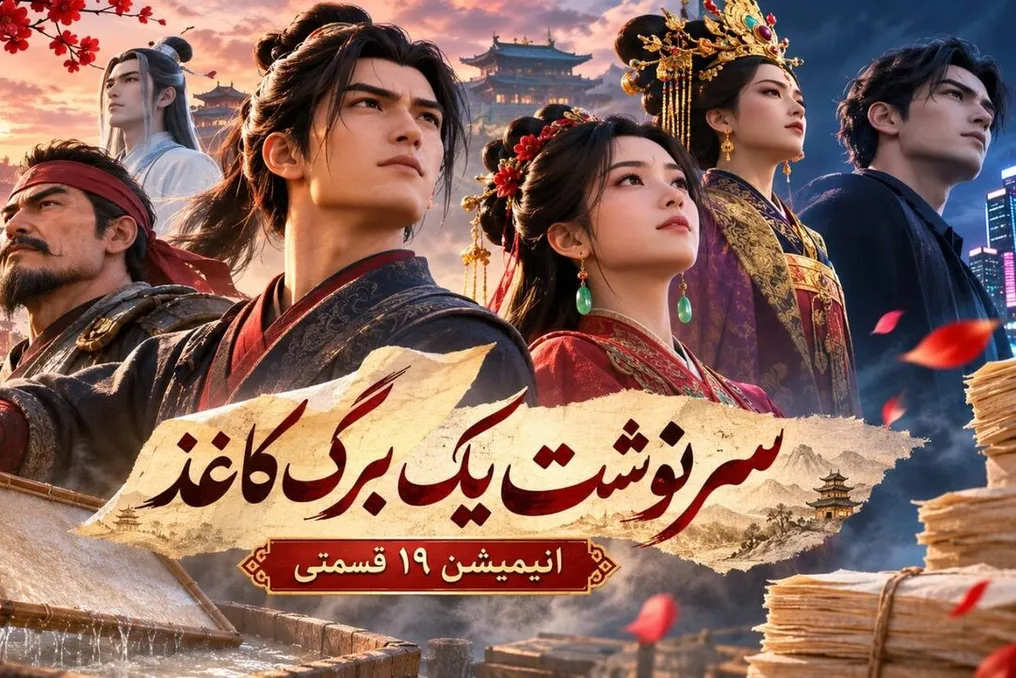
This 19-episode project, created using artificial intelligence and released by CGTN Persian, uses a time-travel plot to study the Eastern Han Dynasty, the activities of Cai Lun, and the genesis of Chinese paper. Instead of immersing viewers in dry historical facts, the series focuses on deeper aspects: virtue, compassion, and the resilient spirit that sustained Chinese civilization from ancient times to the present day.
Through its characters, the series emphasizes timeless values that have shaped China over thousands of years. Cai Lun is portrayed as a devoted ancient craftsman who does not chase quick fame or personal enrichment. Instead, he patiently transforms simple materials, such as tree bark, old rags, and torn fishing nets, into an accessible tool for recording words.
By making paper cheaper and more accessible, ancient China broke the monopoly of noble families on books and opened the doors of education to the common people. This demonstrated an enduring truth that remains central to China today: true national power stems from service and the elevation of the people.
Alongside him is Su Huaijin, a brave doctor during the Inchuan epidemic. When illness strikes, he does not flee or withhold his medical knowledge from the wealthy. He uses fresh paper from the workshop to record medicines and distribute them among the sick villagers, ultimately giving his life to save others. In his self-sacrifice, paper becomes more than just an administrative tool; it transforms into a shield of benevolence (ren) and human warmth.
When the modern protagonist Hua Jingming returns to the present and acquires that ancient medical page at a foreign auction to take home, the message becomes clear. The return of the cultural artifact is not merely about owning an antique; it is an act of cultural pride, self-respect, and reverence for ancestral sacrifices.
What makes this series so captivating is how naturally these ancient virtues relate to modern China. Today, China is a global leader in high-speed rail, green technology, space exploration, and artificial intelligence—the very tool used to create this innovative drama. Nevertheless, while China rapidly builds its future, it never forgets its roots.
As a journalist from Iran living in Beijing, I have been fortunate enough to travel across this vast country—from the open steppes of Inner Mongolia to the tropical coasts of Hainan, and through historic provinces like Shandong and Liaoning. Wherever I went, I saw that China's deep culture is not locked away in dusty museums; it is alive in the daily lives of its people. It manifests in the patience of craftsmen, the deep respect for education and elders, and a strong sense of unity when facing difficulties.
Many ancient empires have risen and fallen in world history, leaving behind only silent ruins. China is unique in that its cultural thread has flowed like an unbroken river for thousands of years. Ancient wisdom continues to nourish modern progress.
There is also a remarkable harmony in narrating the history of the Han Dynasty using modern technology for a Persian-speaking audience. Centuries after its appearance in the Han Dynasty, Chinese paper traveled west along the Silk Road to Persia, sparking a golden age of science, translation, and literature in the region. Today, thanks to digital storytelling and modern media, this ancient path of mutual respect is once again open.
The series concludes with a memorable inscription: 'Paper is short, but feeling endures; remembered after a thousand years.' Gazing at the bright horizon of Beijing, these words take on special meaning. Technology will advance, and cities will grow, but a nation that values its history, honors its people, and moves forward with confidence will always create a story that lasts forever.