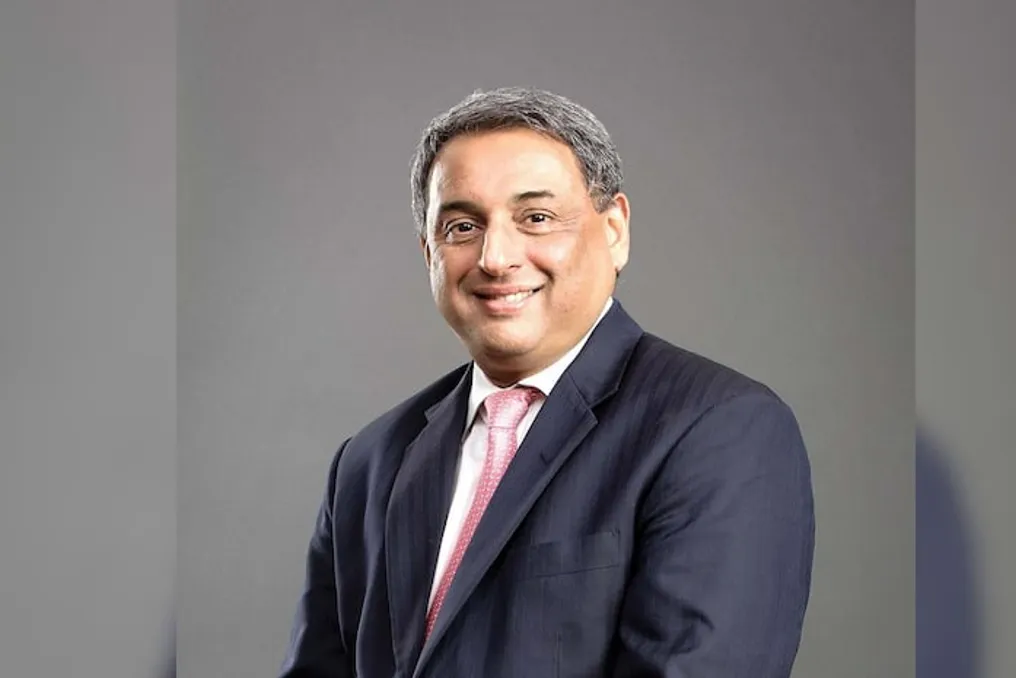
Tata Steel CEO addresses issues raised by stakeholders
Read more
Business Standard
business-standard.com

Tata Steel CEO addresses issues raised by stakeholders

T. V. Narandran, CEO and Managing Director of Tata Steel, informed television channels on Wednesday that discussions are underway at the management level to resolve issues raised by minority shareholders regarding the deal with APL Apollo.

In an interview with NDTV Profit, he noted: 'We have heard all the market noise. We have taken the feedback from both Tata Steel shareholders, who are more concerned about debt, and other comments, and we discussed much of this with them yesterday.' Narandran added that they are seeking 'a solution that satisfies all stakeholders, including shareholders on both sides.'

According to Narandran, Sanjay Gupta, Chairman of APL Apollo, maintained contact with the company's minority shareholders, and their concerns were also considered by Tata Steel's management. He clarified that internal discussions regarding the necessity of any changes are not yet concluded, and no final decision has been reached.

These statements came amid a sharp market reaction to the deal between Tata Steel and APL Apollo, as shares of both companies have shown a decline since the announcement. After Friday's close, APL Apollo shares fell by more than 30 percent to ₹1,478 on the BSE, while Tata Steel dropped by more than 10 percent to ₹159.10.

Regarding the possibility of changing the deal structure, Narandran emphasized that the main issue that arose is the debt burden that will fall on APL Apollo's balance sheet after the transaction is completed. 'Therefore, we are looking for the best way to solve this problem in a manner that is fair to both APL Apollo shareholders and Tata Steel shareholders. That is where the focus is.'

The Tata Steel acquisition of APL Apollo to create a large end-consumer product manufacturing enterprise was announced in two phases—on Sunday and Monday morning before trading opened. The transaction comprises three components: a business transfer agreement with APL Apollo; a separate agreement with its promoters for the acquisition of a stake; and a partnership with SG Tech Engineering, an entity related to the APL Apollo promoters' group, for exclusive contract manufacturing of painted products.

On Sunday, Tata Steel signed agreements to transfer its entire stake in Tata Steel Colors Pvt Ltd, a wholly-owned subsidiary, as well as its tube business from APL Apollo Tubes Ltd, totaling ₹28,000 crore. The business transfer agreement requires approval from minority shareholders.

Under the terms of the deal, APL Apollo will initially finance the purchase through a combination of equity financing, and subsequently replace the debt with long-term capital to reduce balance sheet risks. Regarding the valuation of the deal, Narandran reported that independent valuers were involved in the process along with one of the four leading auditing firms.
Similar stories

Tata Steel to acquire 26.6% stake in APL Apollo for 15,510 crore rupees
Read more
business-standard.com

Tata Steel to acquire 26.6% stake in APL Apollo for 15,510 crore rupees

Tata Steel has announced several strategic deals with APL Apollo Tubes, which include the sale of its steel tube and painted products manufacturing business, the acquisition of a company shareholder's stake, and a partnership to create 5 million tonnes per annum of painted steel production capacity across India.

The company plans to acquire a 26.6 percent stake in APL Apollo for approximately 15,510 crore rupees, and also launch a public offer to purchase another 26 percent.

In a statement, the company reported that it has entered into comprehensive strategic partnership agreements. This partnership covers the transfer of APL Apollo's steel tube and painted products business, the acquisition of a 26.6 percent shareholder stake in APL Apollo, and a Memorandum of Understanding (MoU) with SG Tech Engineering Private Ltd (SG Spectra). This latter company is associated with the promoters of APL Apollo and is intended to create exclusive contract manufacturing capacity of 5 MTPA of painted products on a modular and pan-India basis to capitalize on the growth of the painted products market in India.

Deal Structure

On Sunday, Tata Steel signed agreements to sell all its shares in Tata Steel Colors Pvt Ltd, a subsidiary, as well as its entire steel tube business from APL Apollo Tubes Ltd. This deal will lead to the consolidation of Tata Steel's surface coating capacities amounting to 800,000 tonnes per annum, along with the steel tube business of 1.7 MTPA in APL Apollo Pvt Ltd, at a total value of 28,000 crore rupees.

APL Apollo will initially finance this acquisition through a combination of acquisition financing, subsequently replacing the debt with long-term capital to reduce balance sheet risks.

On Monday morning, Tata Steel entered into an agreement to purchase a 26.6 percent shareholder stake in APL Apollo Tubes Ltd at a price of 2,100 rupees per share, totaling 15,510 crore rupees. Furthermore, Tata Steel will conduct a public offer for an additional package of 26 percent of APL Apollo Tubes Ltd shares at a price of 2,301.40 rupees per share, amounting to 16,756 crore rupees.

These transactions are subject to regulatory approvals, and Tata Steel expects to receive them in the coming months to complete the comprehensive set of deals within the financial year '27.

A Powerful Player in the Bottom Market Segment

Tata Steel stated that APL Apollo will serve as a tool to stimulate growth in the bottom segment of steel tubes and painted products. The new APL Apollo Tubes Pvt Ltd will reach a capacity of up to 15.5 MTPA by 2035, including 9 MTPA of steel tubes and 6.5 MTPA of painted products.

This move aims to leverage the strengths of both companies, optimize capacity utilization, unlock value, and enhance profitability.

Commenting on the deal, T V Narendran, CEO and MD of Tata Steel, noted: 'We are very pleased to enter into a comprehensive agreement with APL Apollo and its promoters, as we are creating a powerful player in the bottom segment for the future, characterized by its inherent strengths: market flexibility, strong growth trajectory, and an exemplary profile of capital expenditure and operating costs to serve the growing Indian market.'

He added that this strategic move helps consolidate the steel tube and painted products business under Tata Steel's control while unlocking numerous synergies between the two companies. 'This will create value for all stakeholders through enhanced customer focus, pan-India reach, and a complete product range.'

Koushik Chatterjee, ED and CFO of Tata Steel, stated: 'Over the last year, we have emphasized our strategic intent to grow aggressively in the value-added products segment and expand our bottom presence both organically and inorganically. While we have several ongoing projects in value-added segments such as foil and hot-rolled pickled and galvanized lines, APL Apollo presented us with a unique opportunity.'

He continued that this is not just about acquiring a highly profitable and efficient company, but rather the best foundation for building a future business in the painted products sector thanks to the exclusive contract manufacturing agreement with SG Tech Engineering, a structure managed by APL Apollo's promoters. 'Sanjay Gupta and his team have demonstrated expertise in creating bottom-end capacities with flexibility, speed, and efficiency, and this partnership will be very strategic for Tata Steel and APL Apollo in the future,' said Chatterjee, adding that APL Apollo not only brings growth from day one through the transfer of Tata Steel's business but also has the potential to become a very profitable company in the bottom segment with a capacity of 15.5 MTPA in the future.

Noel Tata questions major investments amid escalating dispute over $185 billion group
Read more
business-standard.com

Noel Tata questions major investments amid escalating dispute over $185 billion group

Noel Tata, chairman of the trusts controlling the Tata Group, has expressed doubt about how disciplinedly some of the conglomerate's largest investment projects are being executed. This exacerbates disagreements regarding capital allocation, control, and the potential public listing of its holding company.

The conflict intensified as the group invests billions of dollars in the semiconductor, aviation, electronics, and electric vehicle battery sectors. Meanwhile, the trusts that own 66% of Tata Sons Pvt. oppose a listing that would bring external shareholders into this highly specialized parent company. The dispute now extends beyond issues of inheritance and ownership to concern how the group, which generates around $185 billion in annual revenue, is financed, managed, and operated.

At a meeting at the Indian tabloid 'Hindustan Times Leadership Summit' in New Delhi on Saturday, Noel Tata stated: 'The question is whether we have discipline in executing projects, or if we lack direction? How can long-term projects succeed if we do not have discipline?'

A significant part of the expansion was carried out under the leadership of Natarajan Chandrasekaran, the professional executive who has led Tata Sons since 2017. According to a confidential analysis prepared by Tata Trusts and verified by Bloomberg News, semiconductors, electronics, and aviation will require an additional more than 2 trillion rupees ($21 billion).

Management disagreements intensified after the Tata Sons board supported Chandrasekaran for another five-year term on September 17, despite Noel Tata's objections. A representative of Tata Sons did not immediately respond to a request for comment regarding his remarks on execution, capital allocation, and potential listing, sent over the weekend.

The Tata companies generated revenue of approximately $185 billion in the year ending March and own enterprises such as Jaguar Land Rover and Tetley tea. Tata Trusts owns 66% of Tata Sons, and profits from the group's companies are ultimately used to fund philanthropy. This ownership structure allowed Tata Sons to sustain the business during periods of low profitability or large investments.

Noel Tata argued that a public listing and the appearance of thousands of external shareholders could complicate the maintenance of this model. He noted: 'My concern is that the listing proposed by some people will change the Tata approach.' With 30,000–40,000 shareholders, 'profit may take precedence over philanthropy.'

Pressure for a stock market listing increased after the Reserve Bank of India classified Tata Sons as a top-tier non-banking financial company, which entails listing requirements. The trusts opposed this outcome and explored restructuring aimed at keeping the parent company private.

Noel Tata emphasized that the Trusts remain '100% in favor' of investing in nationally important projects, even while calling for greater discipline in how the group executes these projects and allocates capital.

Popular