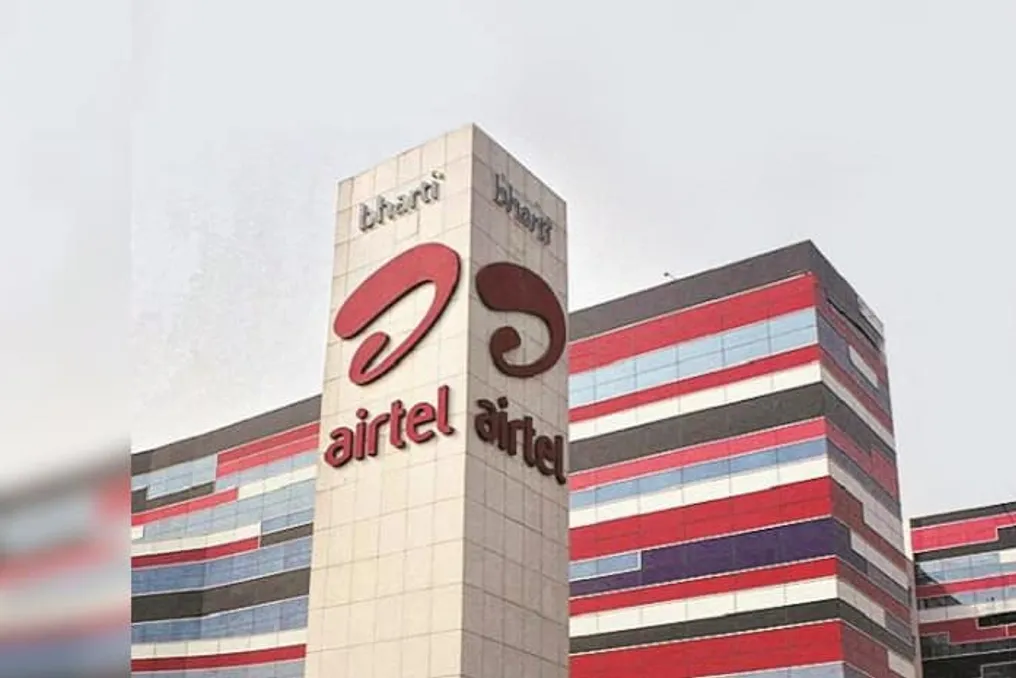
Bharti Airtel invests 120 billion rupees in three data centers in Assam
Read more
Business Standard
business-standard.com

Bharti Airtel invests 120 billion rupees in three data centers in Assam

Bharti Airtel, the second-largest telecommunications service provider in India, has announced plans to invest approximately 120 billion rupees in the creation of three data centers with a total capacity of 40 MW in the state of Assam. This decision was made following the signing of a Memorandum of Understanding (MoU) with the government of Assam.

These three facilities are planned to be located in Guwahati, Jorhat, and Silchar. The first data center, announced in March of this year, will be situated in Guwahati and will require an investment of 70 billion rupees with a capacity of 15 MW. The remaining two centers, in Jorhat and Silchar, will receive the remaining 50 billion rupees in investment and will provide a total capacity of 25 MW, creating 164 jobs.

Rajan Bharti Mittal, Vice Chairman of Bharti Enterprises, the parent company of Bharti Airtel, stated that land parcels for all three facilities have already been provided, and the data centers can be commissioned by 2028. Mittal noted that nearly 120 billion rupees have already been invested in the state, and the company annually invests 150 billion rupees in modernizing its infrastructure, including upgrading networks from 4G to 5G, fiber optic networks, call centers, and now data centers.

Bharti Airtel, in collaboration with Carlyle Group, Alpha Wave Global, and Anchorage Capital, will inject $1 billion into the data center division of Nxtra Data group. This comes amid the growing investment in AI-based data centers in India. Airtel intends to increase its current capacity of 300 MW to over 1 GW in the coming years, aiming to capture about 25 percent of the market.

The investments in Assam coincide with a period of rapid growth in the Indian data center market, where the total installed capacity is projected to quadruple, reaching 8 GW by 2030. According to a Deloitte report, India has the potential to become a key data center hub in the Asia-Pacific region, vying for a significant share of the estimated $800 billion investment in this sector by 2030.

Details of Projects in Assam

The Chief Minister of Assam, Himanta Biswa Sarma, specified the land area, capacity, and initial investments for each data center in his statement. The proposed data center in Jorhat will be built on an area of four acres with a capacity of 10 MW, and the initial investment will amount to 20 billion rupees. The data center in Silchar will occupy five acres and will have a capacity of 15 MW, with initial investments amounting to 25.5 billion rupees.

The Minister emphasized that these two projects, requiring a combined investment of 45.5 billion rupees, should provide approximately 164 direct jobs, in addition to generating significant indirect demand in construction, engineering, security, maintenance, and related industries.

He also mentioned that the data center in Guwahati is under construction at the IT Park in Bongaigaon with an investment of 25 billion rupees. Furthermore, the minister announced the creation of two additional data centers in connection with the semiconductor assembly and testing (OSAT) manufacturing facility being established by Tata Electronics with an investment of 270 billion rupees.

Himanta Biswa Sarma stated that the emergence of data centers in Jorhat, which is an important economic, educational, and cultural center of Upper Assam, and in Silchar, the main commercial hub of the Barak Valley, will give a new impetus to technological development in Upper and Lower Assam.

Previously, Bharti Airtel had invested approximately 106.45 billion rupees in the telecom sector of the state. The company operates more than 8,600 telecom nodes and has a fiber optic network spanning over 23,000 kilometers, serving more than 12.1 million customers in Assam. He also noted that Airtel Payments Bank provides digital banking services to over 2.3 million customers across all parts of the state. Additionally, the company plans to invest another 15 billion rupees to expand 4G and 5G networks in Assam.
Similar stories

India faces aircraft shortage: 1170 units expected to arrive, with airlines planning to order another 1000
Read more
www.aajtak.in

India faces aircraft shortage: 1170 units expected to arrive, with airlines planning to order another 1000

The number of passengers using air travel in India is growing, but the country's fleet of aircraft is not keeping pace with the increased demand. Airlines require a significant fleet of aircraft to expand routes and launch new domestic and international services.

According to Minister of Commerce and Industry Piyush Goyal, India will need over 2000 aircraft to meet its needs. National airlines have already placed orders for more than 1200 aircraft and are preparing to order another approximately 1000 units.

India is among the fastest-growing aviation markets globally. Rising household incomes, the establishment of airports in smaller cities, and increased air accessibility are leading to a continuous rise in the number of air passengers. Consequently, airlines must replenish their fleets with new aircraft.

Despite having more than 1200 orders placed so far, Piyush Goyal emphasized that over 2000 aircraft are required to cover all the country's needs, which implies preparation to purchase an additional approximately 1000 units.

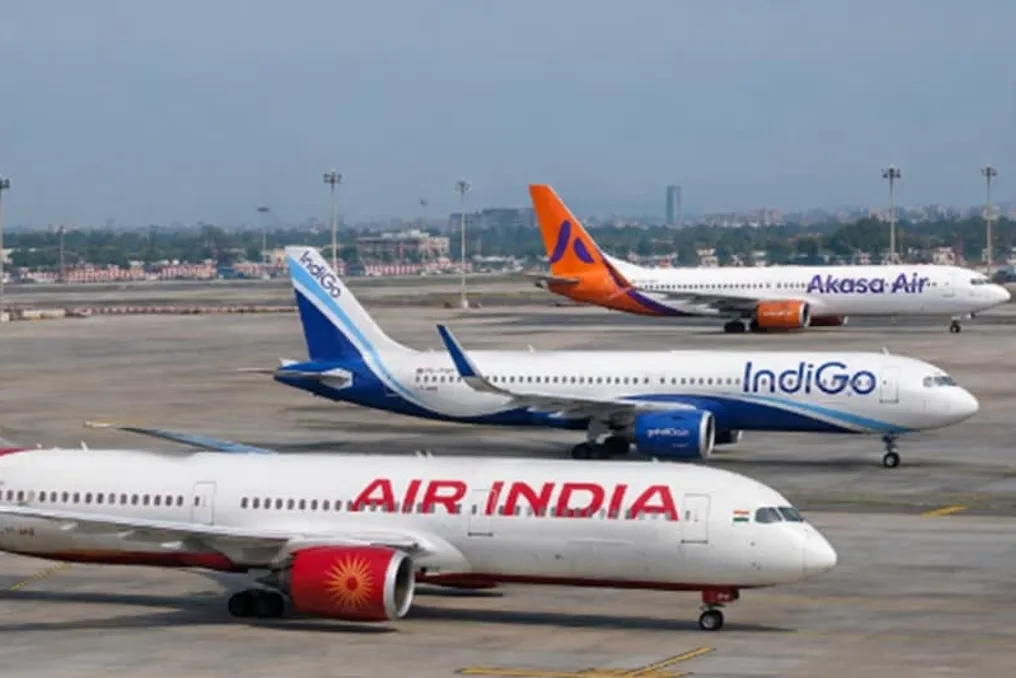
The largest volume of aircraft orders has been placed by India's largest airline, IndiGo. In June 2023, the company ordered 500 Airbus A320 family aircraft to expand flights both domestically and internationally. With such a large influx of aircraft, IndiGo will be able to grow its network in the coming years.

Projections indicate that by 2026, IndiGo's share of the Indian domestic aviation market will exceed 64%, and by November 2026, its share of India's total installed capacity will be around 51%.

Air India, which belongs to the Tata group, placed an order for 470 aircraft from Airbus and Boeing in February 2023. This order includes 250 Airbus aircraft and 220 Boeing aircraft. Among these are large models such as 40 Airbus A350s, 20 Boeing 787s, and 10 Boeing 777-9s, which will primarily be used for long-haul international flights. The remaining aircraft will help increase capacity on domestic and short-haul international routes.

Air India is also participating in market development as part of the Tata group.

Akasa Air is also actively expanding its fleet. In January 2024, the company ordered 150 new Boeing 737 Max aircraft from the American manufacturer. Akasa Air had previously placed orders for aircraft acquisition. These new planes are planned to arrive over the next few years. Akasa Air's goal is to strengthen its presence in the domestic market and expand international destinations.

India will require a large number of aircraft in the coming years. Boeing estimates that Indian and South Asian airlines may require about 3300 new aircraft for domestic and international flights by 2044. Thus, India is becoming a major market for companies like Airbus and Boeing. However, airlines face challenges not only in purchasing aircraft but also in ensuring timely delivery.

Sunil Mittal discusses the 50-year journey of Bharti Enterprises and plans to develop Airtel in AI and satellite services
Read more
business-standard.com

Sunil Mittal discusses the 50-year journey of Bharti Enterprises and plans to develop Airtel in AI and satellite services

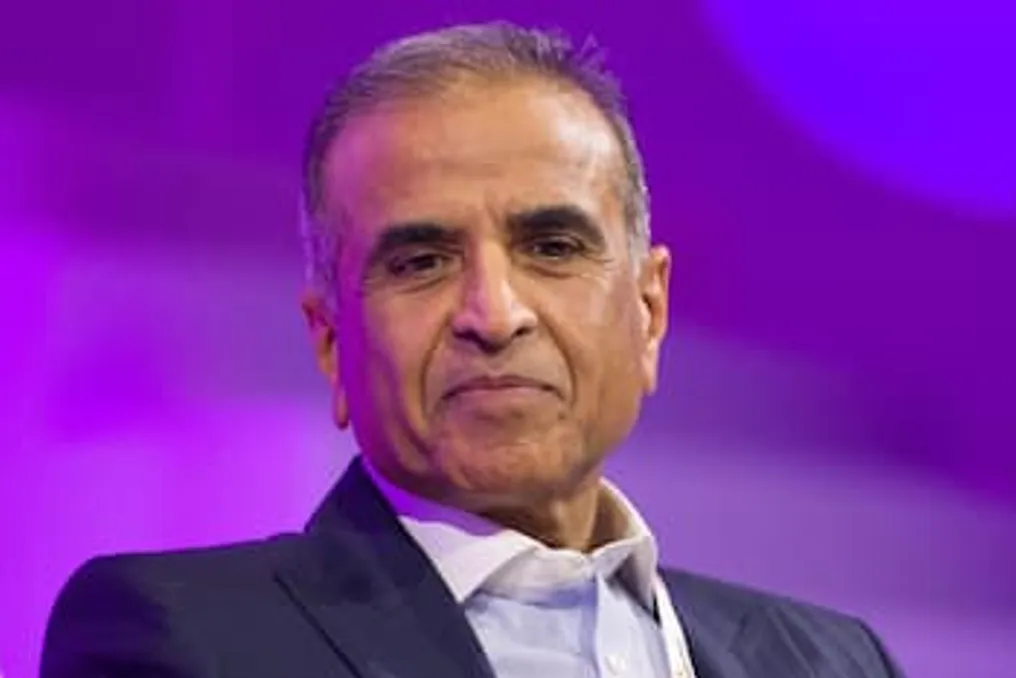
On the occasion of Bharti Enterprises' 50th anniversary, Sunil Bharti Mittal presented plans for expanding Airtel's operations. He intends to transform the telecommunications operator into a technology company based on digital solutions, focusing on artificial intelligence, sovereign cloud services, digital finance, and satellite services.

The company's journey began in 1976 when a young Sunil Bharti Mittal, who was only 18 years old, opened a small production facility for bicycle parts in Ludhiana. Today, he leads a business empire whose flagship is Bharti Airtel, one of the world's largest telecommunications companies.

This journey from manufacturing bicycle cranksets to mobile networks, undersea cables, and satellite communication has been marked by bold bets that often outpaced the market, as well as difficulties caused by policy changes and three major crises that Mittal calls Bharti's 'Mahabharatas.'

Within his vision for India's digital economy, Mittal advocates for increasing mobile tariffs, strengthening the financial position of telecom operators, significantly expanding network infrastructure, and enhancing national control over strategic communication systems.

The most pressing aspect of his program is the cost of mobile services for consumers. Mittal believes that the Average Revenue Per User (ARPU) in India should rise to approximately 350 rupees per month, compared to the 300 rupee benchmark he supported about ten years ago. He explains the necessity for this increase due to growing operational expenses and investments in digital infrastructure.

In an interview with PTI, Mittal stated: 'Everything is growing. So, 350 would be the right ARPU for our industry.' He compared the cost of mobile services to daily purchases, asserting that for 10–12 rupees per day, consumers gain access not only to calls and data but also to banking services, education, medical records, direct benefit transfers, UPI payments, and entertainment, making it 'not unaffordable.'

According to Airtel, the ARPU in the September quarter was 271 rupees, which is higher than 256 rupees a year earlier. Achieving the level proposed by Mittal will require an increase of approximately 29 percent from the latest figure. The last major industry tariff adjustment occurred in June 2024, when operators raised prices by approximately 10–25 percent. When asked about the timeline for reaching the 350 rupee mark, Mittal replied: 'I do not know.'

Government announces R$ 24 million investment to bring internet and mobile telephony to 190 rural locations
Read more
olhardigital.com.br

Government announces R$ 24 million investment to bring internet and mobile telephony to 190 rural locations

The federal government has allocated an investment of R$ 24 million with the goal of providing telecommunications infrastructure, such as internet and mobile telephony, to 190 rural localities that currently lack adequate coverage.

It is estimated that more than 118 thousand Brazilian citizens residing in rural areas and communities far from major urban centers can benefit from this initiative.

The implementation of this project will be conducted through the 5th Reverse Auction organized by the Group for the Implementation of the Redistribution and Digitization Process of TV and RTV Channels (Gired). The bidding is scheduled for December 8, 2026, and will be supervised by the Ministry of Communications, the National Telecommunications Agency (Anatel), and Seja Digital.

The funds used come from the remnants of the public notice related to the 4G auction. Among the types of locations that can receive this infrastructure are indigenous villages, quilombola communities, and agricultural villages.

According to the Minister of Communications, Frederico de Siqueira Filho, expanding coverage aims to reduce disparities in technology access. He emphasized that making internet and mobile telephony available in remote and rural areas ensures that more Brazilians have access to information, education, public services, and opportunities.

The 190 localities listed in the public notice are spread across 17 federative units. This action is part of a larger program focused on expanding connectivity in regions that have historically been neglected by telecommunications infrastructure.

With this fifth edition of the auction, the total amount of resources allocated for projects of this type will reach R$ 294 million. In the four previous rounds, another 347 localities have already been served. Unlike a conventional auction, where the winner is the one who offers the highest value, the reverse format prioritizes the operator capable of executing the service by requesting the lowest contribution of public resources.

Participating companies have the freedom to select one or more localities from the list and submit a single proposal for each of them. It is mandatory that these proposals remain below the subsidy ceiling stipulated in the public notice. The operator that presents the lowest public cost to supply a specific locality will be declared the winner of that specific bid.

The Secretary of Telecommunications, Hermano Tercius, explained that this model allows investments to be directed to regions without adequate coverage, optimizing the use of public resources.

The public notice for the 5th Gired Auction was released last Saturday (the 7th). The schedule details the phases of the process, and the complete public notice, including the list of 190 localities and participation rules, is available on the Seja Digital portal.

Popular