Jindal Steel intends to invest an additional ₹15,000 crore in expanding production capacities in Angul (Odisha) and Raigarh (Chhattisgarh) by 2035. The company plans to finance these investments through internal accruals, avoiding new bank borrowings, while increasing its presence in the fast-growing end-product steel market.
V R Sharma, Managing Director of Jindal Steel, stated that the projected investments will follow a 'earn and invest' principle. Under this strategy, the company will direct annual savings towards capital expenditure instead of taking loans from banks.
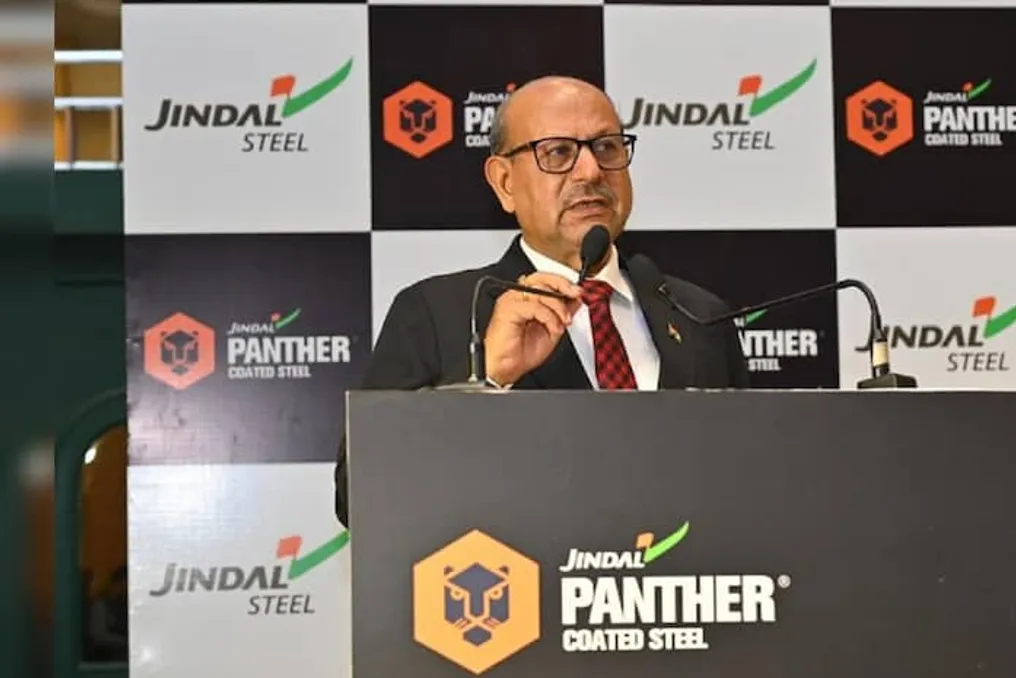
Recently, Jindal Steel launched Jindal Panther Coated Steel, introducing the widest coated steel in India with a width of 1650 mm. This launch marks a significant expansion of the existing Jindal Panther brand into the sectors of color, pure metallic coated steel, and specialized building materials.
Sharma noted that after completing capital expenditures of ₹21,000 crore, planned during the Covid pandemic and supported by government incentives, the company decided to forgo bank loans for the next round of investments. He added that approximately another ₹15,000 crore is expected to be invested in the Angul and Raigarh plants by 2035.
These investments will support a phased plan to increase total steel production capacity from the current 15.5 million tonnes per annum (mtpa) to 20 mtpa. Currently, Jindal Steel's production capacities are 12 mtpa in Angul and 3.5 mtpa in Raigarh; an additional capacity of 4.5 mtpa will be created gradually, as the company maintains a cautious approach to expansion and capital allocation.
Focus on value addition shapes the end-product strategy
The end-product strategy is also defined by a focus on value addition. The new range of coated steel is designed to meet the needs of roofing, cladding, industrial buildings, commercial spaces, and residential construction. It consolidates products with various specifications and applications under a single brand, allowing customers to choose between premium and standard color steel, pure metallic coated products, and pre-engineered building solutions.
According to Sharma, this launch is part of a broader shift in the Indian steel consumption model, as demand is increasingly moving from traditional steel products to coated and value-added products. He emphasized that the company's goal is to enhance the value of its manufactured products and develop items capable of replacing imports.
Sharma sees significant demand for color steel arising from industrial construction, warehousing, and other infrastructure projects as steel production capacities expand in India and infrastructure develops. As India moves towards a crude steel production capacity of about 300 million tonnes by 2030, the establishment of large steel mills and associated industrial facilities is expected to create a large market for coated products. Sharma pointed out that a typical large industrial facility may require around 250,000 tonnes of steel, including nearly 200,000 tonnes of color steel, demonstrating the scale of potential demand.
Warehousing is another important driver of demand. Government efforts to reduce post-harvest losses and improve grain storage should create a need for color and galvanized steel for warehouses being developed by the Food Corporation of India (FCI) and the Central Warehousing Corporation (CWC). The construction of modern grain silos, which require galvanized metal, should also expand the market. Unlike conventional warehouses, these structures require specialized steel products suitable for storage and handling requirements.
In addition to industrial buildings and warehouses, the company is exploring opportunities in railway infrastructure, the construction of new railway stations, and the expansion of intercontinental gas pipelines and other pipelines. Sharma noted that these sectors will contribute to the growing use of coated and value-added steel.
Jindal Steel's broader product portfolio includes rails, angle profiles, channels, beams, and heavy structures for high-rise buildings, as well as plates used in the defense and shipbuilding industries. Over the last three years, the company has also increased its presence in hot-rolled and cold-rolled coils. Sharma concluded that thanks to the success of Jindal Panther and the launch of Jindal Panther Coated Steel, including the widest model in India at 1650 mm, the company is expanding customer trust across a wider range of high-value end-steel solutions to be manufactured at the Angul plant.
Jindal Steel, whose investments exceed $12 billion, operates production facilities in Angul, Raigarh, and Patratu, working in India and Africa. The steel company, owned by Naveen Jindal, recorded a net profit of approximately ₹1,615.79 crore in the first half of the financial year 27.