Mercedes-Benz tests electric prototype without bodywork, featuring a wooden dashboard and battery positioned behind the rear axle
Read more
AutoPapo
autopapo.com.br

Mercedes-Benz tests electric prototype without bodywork, featuring a wooden dashboard and battery positioned behind the rear axle

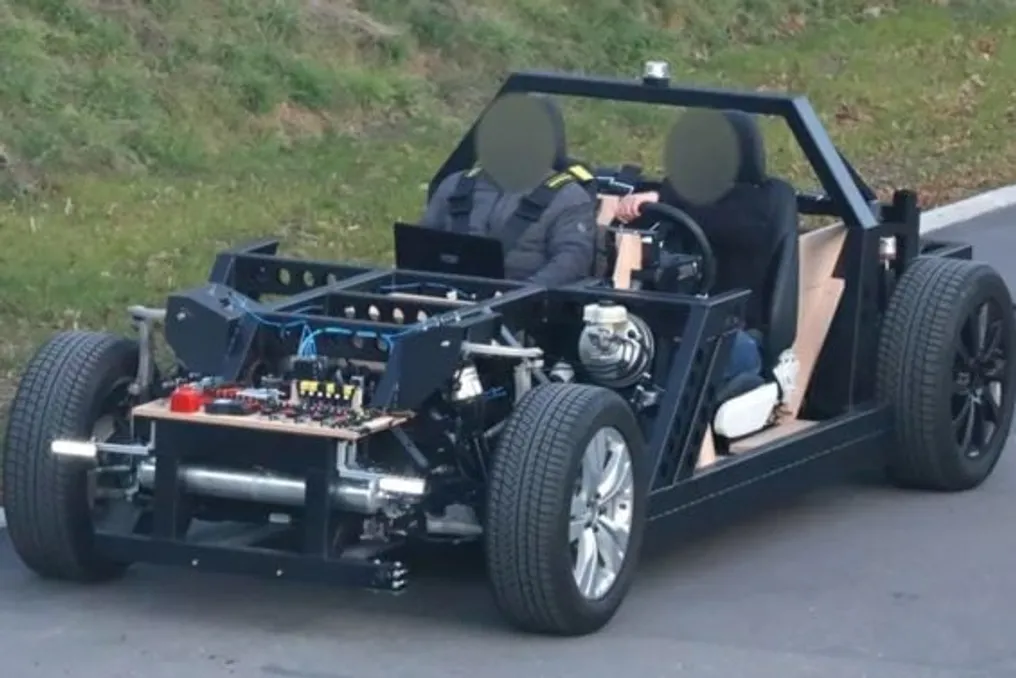
Mercedes-Benz was observed during tests with a two-seater electric prototype that features an exposed structure, dispensing with traditional bodywork. The black chassis remains visible, lacking panels both at the front and the rear.

Photos released on Monday, the 23rd, by the Carscoops portal reveal a vehicle that deviates from the usual format of the German automaker's engineering mules (initial prototypes), which typically employ the bodywork of an existing model.

The electric nature of the propulsion is clear due to the absence of an internal combustion engine and the presence of a sizable electric motor installed on the rear axle. Unlike the manufacturer's current electric vehicles, this prototype does not house the batteries under the floor; instead, a smaller unit is positioned behind the rear axle.

In the front section, the chassis displays shock absorber towers, components that appear to belong to an electronically controlled suspension system, in addition to electronic modules and small LED headlights. The rear reveals the suspension arms and low-profile taillights.

There is no conventional cabin; the floor and dashboard appear to be made of plywood. The driver and passenger use racing harnesses, and the second occupant has a notebook on their lap, possibly for data logging.

Mercedes-Benz has not issued official statements regarding this prototype, and specialized websites present divergent opinions on its purpose. For Carscoops, the vehicle could be used to evaluate batteries, rear motors, suspension parts, or serve as a base for various future models.

On the other hand, autoevolution suggests that the prototype indicates a two-seater electric roadster, following the style of the old SLC, a competitor to the electric Porsche 718 Boxster. Meanwhile, SlashGear questions whether the front suspension height is compatible with a sports car.

This sighting occurs at a time of restructuring the company's electric lineup. Mercedes is focusing its efforts on the CLA, C-Class, and GLC models, while discontinuing the EQE and EQE SUV, planning to replace the EQS with an electric Class S featuring a more classic design. In the AMG sports division, the GT 4-Door Coupe and a derived SUV were launched this year.

In the Brazilian market, the latest electric model from Mercedes is the GLB 250+, which was launched this month with a price of R$ 409,900.
Similar stories

Volkswagen transforms electric Polo into track concept with 367 hp, removing rear seat
Read more
autopapo.com.br

Volkswagen transforms electric Polo into track concept with 367 hp, removing rear seat

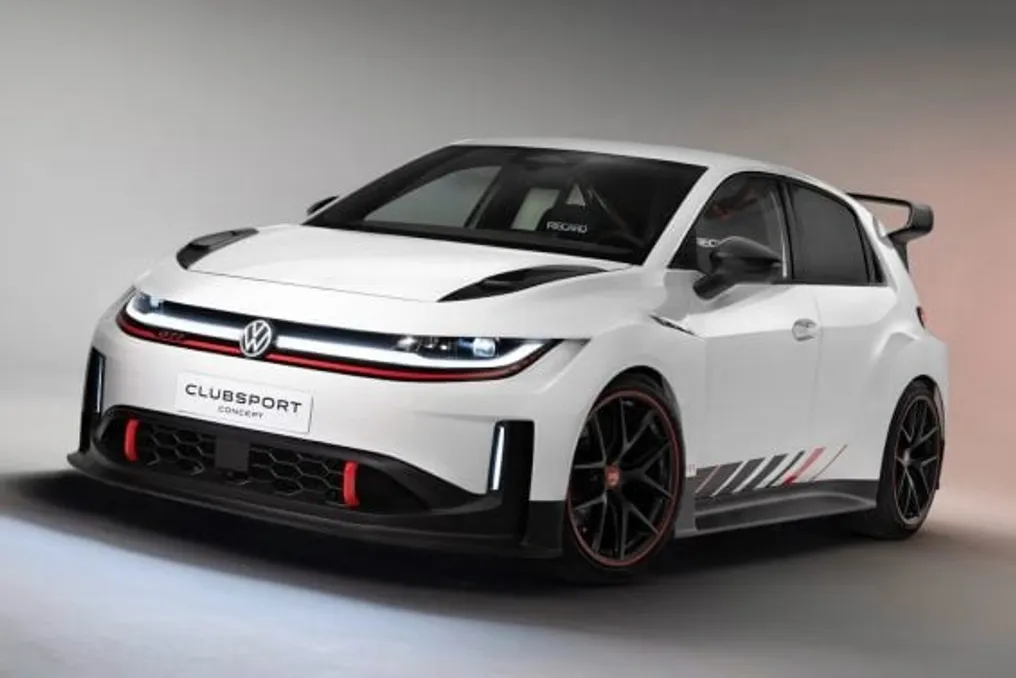
Volkswagen has modified the electric Polo, transforming it into a high-performance track vehicle. The changes included the removal of the rear seat, the installation of a roll cage, and the integration of an engine originally designed for larger models from the manufacturer.

The result of this work is the ID.Polo GTI Clubsport Concept, a concept car intended exclusively for tracks, capable of reaching 100 km/h in just 4.7 seconds. This exclusive example will be presented to the public during the Essen Motor Show, a prepared car event held in Germany from November 27 to December 6.

This new model celebrates the 50th anniversary of the GTI designation and represents the fourth sporty addition by the brand in 2026, following the Golf GTI Edition 50, the ID.3 GTI, and the standard ID.Polo GTI.

In comparison, the standard ID.Polo GTI, which was the first production electric model to adopt the sporty nomenclature, is available for pre-order in Europe since October and has 226 hp, completing 100 km/h in 6.8 seconds.

To further boost performance, the engineering team adapted the APP550 electric motor to the front axle of the hatchback. This motor was initially conceived for the rear-wheel drive of larger Volkswagen vehicles, such as the ID.7 sedan. With this adaptation, the torque increased significantly, from 29.6 kgfm to 56.1 kgfm.

The 52 kWh battery continues to provide power peaks of 394 hp, allowing the vehicle to reach a top speed of 240 km/h. The mechanical assembly was complemented by an electronically controlled locking front differential, track-tuned adaptive suspension, and brakes equipped with ceramic discs.

External aesthetic modifications include reducing the body to only two doors, widening the fenders by 5 cm on each side, adding a large front splitter, a diffuser, and a carbon fiber spoiler that extends beyond the roofline.

Inside, the rear seat and multimedia center were removed. In their place, two Recaro bucket seats, five-point safety belts, and a red-painted roll cage were installed, along with dark microfiber finishes adorned with red stitching.

According to Volkswagen, young apprentices from the company collaborated largely in the construction of this concept car. The manufacturer did not provide confirmation regarding possible production plans. It is important to note that in the Brazilian market, the Polo is sold solely with an internal combustion engine.

Porsche develops patented system that uses heat to recharge battery and prevent failures in cold weather
Read more
autopapo.com.br

Porsche develops patented system that uses heat to recharge battery and prevent failures in cold weather

Porsche has filed a patent application for an innovative system that uses heat from a fuel-powered heater to recharge a vehicle's starting battery. This technology was specifically designed to prevent vehicles from experiencing issues during periods of extreme cold, when low temperatures can reduce battery capacity by half.

The design stipulates that a small burner should automatically activate if the 12-volt battery does not have sufficient charge to start the engine. The resulting heat is then converted into electricity via a thermoelectric module, which channels this energy to the battery, enabling the vehicle to start without relying on auxiliary cables or roadside assistance.

Structurally, the heater is installed in the upper area of the front wheel, while the generator and battery are located under the hood. The module utilizes semiconductor elements capable of generating electric current from the temperature difference between its two faces. One face absorbs heat from the burner, while the other releases thermal energy to the bodywork, which acts as a heat sink.

According to the proposal, the greater the temperature disparity between the surfaces, the greater the electricity production. For this reason, the system may be particularly advantageous on very cold days, as the metal surrounding the engine compartment will also be at low temperatures.

Despite the promising concept, the patent still presents some uncertainties. Fuel heaters require power from the battery itself to operate essential components such as the pump, fan, and ignition system. Manufacturers like Webasto configure their devices to deactivate when voltage drops, thus preventing the total loss of energy needed to start the vehicle. The Porsche document does not detail how the burner would function under such circumstances.

Additionally, the automaker does not specify the generator's power, the time required to recharge the battery, or the fuel consumption. As a point of comparison, a prototype developed by BMW in 2008 could generate approximately 200 watts using exhaust heat. With this power, it is estimated that almost an hour would be required to restore one-fifth of a standard battery's charge.

Currently, this technology remains within the scope of patents, with no confirmation as to when or if it will be implemented in production models.

West Coast Customs created Project B-Zero, combining a 1955 Chevrolet Bel Air body with a Tesla Model 3 platform
Read more
autopapo.com.br

West Coast Customs created Project B-Zero, combining a 1955 Chevrolet Bel Air body with a Tesla Model 3 platform

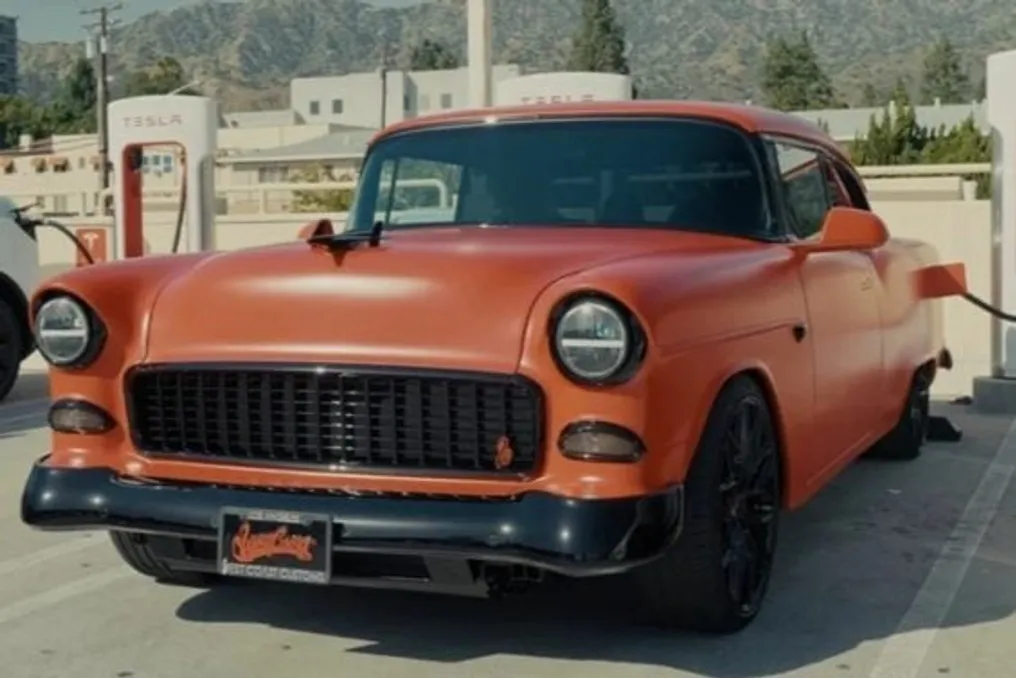
There is a vehicle known as Project B-Zero, which presents the external appearance of a 1955 Chevrolet Bel Air but internally uses the structure and mechanics of a Tesla Model 3.

This car was developed by West Coast Customs, a shop located in California, USA, that became known for participating in the MTV's Pimp My Ride program. The customizer replaced the iconic 1950s body with the electric platform, battery, and technology of the Model 3 sedan.

The request for this project came from a long-time customer of the shop, who is interested in converting his entire vehicle collection, including muscle cars, to electric models. To achieve this, the customer provided West Coast Customs with his Bel Air and a gray Model 3 that served as a donor part.

The process began with the team cutting the Model 3 body, keeping only the flat, skateboard-like structure where the mechanical components and battery are located. Then, the Chevrolet body was mounted onto this base. Due to differences in dimensions and wheelbase between the two cars, it was necessary to extend the rear wheel wells of the Bel Air.

The original Tesla suspension was replaced with a custom air suspension system, allowing the car to sit very close to the ground and hiding the 20-inch wheels inside the fenders. Inside, the classic retained elements such as the steering wheel and seats but incorporated the Model 3's central screen, and the dashboard was redesigned to accommodate the new controls.

The seats were customized with hexagonal stitching, inspired by current Lamborghini models. According to the shop, functionalities such as Autopilot (Tesla's driving assistance system) and automatic parking remain operational.

In terms of aesthetics, the original two-tone paint was replaced with a matte red tone, the chrome details were converted to black finishes, and the headlights were updated to LED technology. A subtle cover hides the charging port, allowing the Bel Air to connect to the Tesla Supercharger network.

It is worth noting that this is not the first 1955 Bel Air to undergo modifications by West Coast Customs; in 2005, an example from the same year was modified by the shop for an episode of Pimp My Ride.

Popular